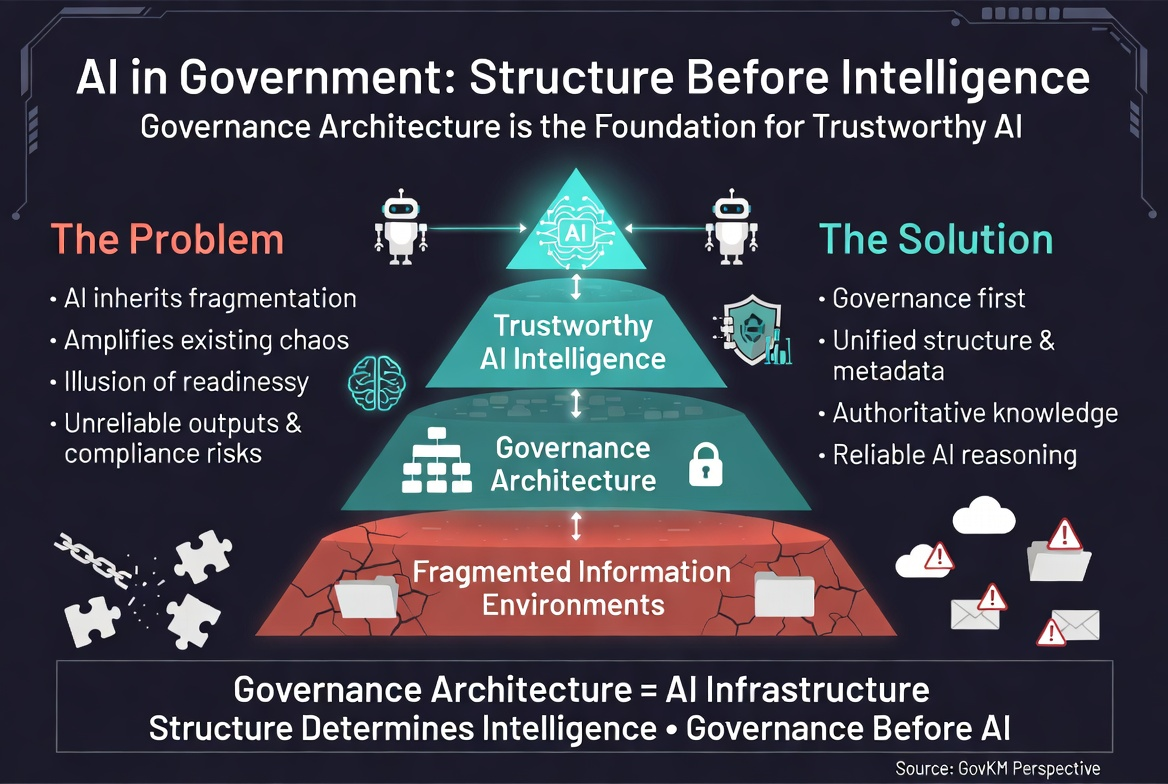
Automated Government Records Management Already Exists — The Real Problem Is Architecture
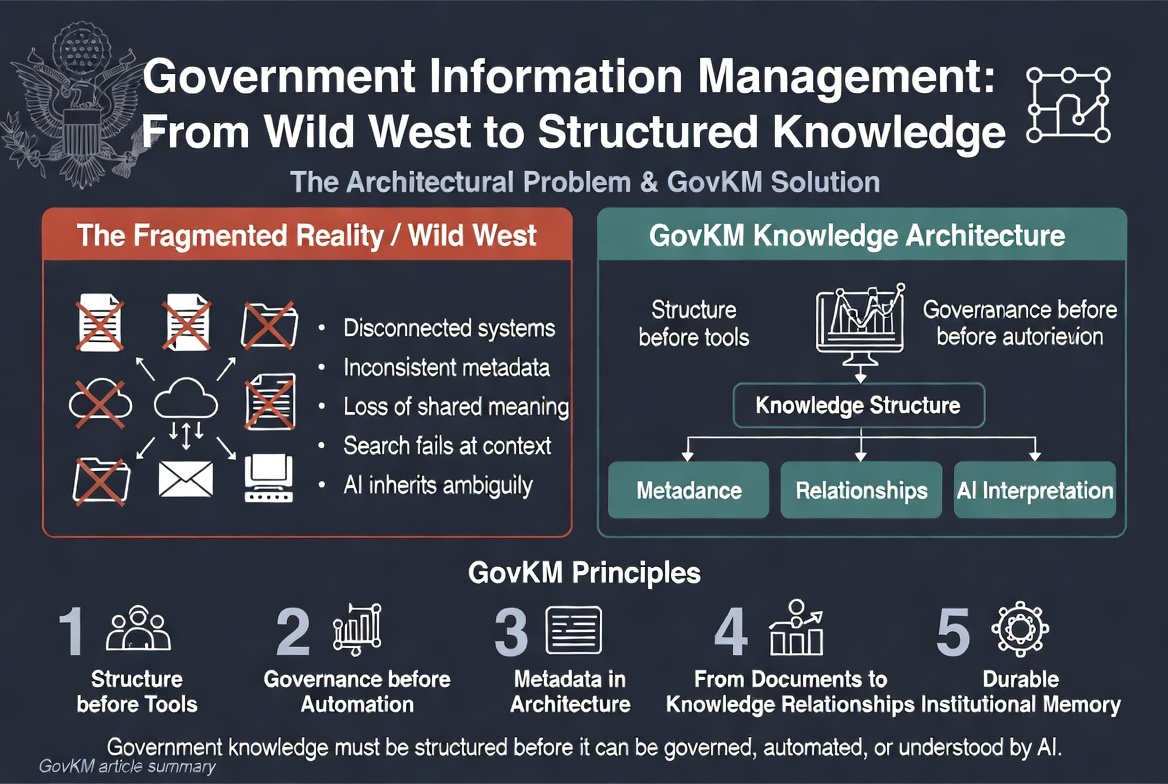

Government Information Management Is Still Operating in the Wild West
Government agencies generate enormous volumes of information every day, yet most organizations still manage that information using disconnected systems, inconsistent structures, and locally invented practices. Despite decades of investment in document management systems, records management platforms, collaboration tools, and search technologies, government information environments remain fragmented and difficult to govern.
The problem is not simply technological. It is architectural.
Government information management today resembles a digital frontier: different offices organize content differently, metadata standards vary between systems, governance rules are inconsistently applied, and institutional knowledge becomes dependent on tribal understanding rather than structured meaning. Agencies continue attempting to solve these problems through additional tools, new repositories, or more aggressive search strategies, but the underlying structural issues remain unresolved.
GovKM begins from a different premise:
Government knowledge must be structured before it can be governed, automated, explored, or meaningfully understood by AI systems.
The Fragmented Reality of Government Information
Most agencies operate across multiple disconnected environments simultaneously:
- Shared network drives
- SharePoint sites
- Email repositories
- Records management systems
- Collaboration platforms
- Cloud storage environments
- Localized office structures
- Program-specific databases
Each environment evolves independently. Offices create their own folder structures, naming conventions, metadata approaches, and retention interpretations. Over time, agencies accumulate overlapping repositories that may contain duplicate, contradictory, or contextless information.
The result is not a unified knowledge environment. It is a patchwork of disconnected organizational memory systems.
This fragmentation creates several systemic problems:
- Information becomes difficult to locate consistently
- Meaning becomes dependent on tacit organizational knowledge
- Metadata quality deteriorates over time
- Governance enforcement becomes inconsistent
- Search retrieves files but not institutional context
- Automation efforts fail due to structural inconsistency
- AI systems inherit organizational ambiguity rather than authoritative meaning
The issue is not that government lacks information. Government possesses too much disconnected information and too little structural coherence.
Why Search Alone Cannot Solve the Problem
Many organizations attempt to solve information chaos through enterprise search platforms. While search tools can improve retrieval speed, they do not solve the deeper architectural problem.
Search operates reactively. It retrieves content that already exists within fragmented systems. It does not establish authoritative relationships between concepts, records, categories, governance structures, or decision paths.
Search can answer:
“Where is the file?”
But it often cannot answer:
- What authoritative category does this belong to?
- How does this information relate to other concepts?
- What governance rules apply?
- What retention obligations exist?
- What organizational decisions led here?
- Which metadata relationships are authoritative?
- Which interpretation should AI systems trust?
Without structured governance architecture, search becomes a retrieval mechanism layered on top of institutional ambiguity.
The Collapse of Shared Meaning
One of the most overlooked problems in government information management is the breakdown of shared semantic understanding.
Individuals naturally create organizational systems that make sense locally. Folder paths, naming conventions, and ad hoc metadata structures emerge because they reduce immediate cognitive effort. These systems work surprisingly well for the individuals or small teams who created them.
However, they fail at organizational scale.
As personnel rotate, offices reorganize, systems migrate, and programs evolve, locally understood structures lose their original context. Meaning becomes dependent on historical memory rather than explicit governance architecture.
Over time:
- Different offices classify identical information differently
- Metadata fields lose consistency
- Folder structures diverge
- Retention interpretation varies
- Duplicate taxonomies emerge
- Governance becomes decentralized unintentionally
The organization gradually loses authoritative control over its own information environment.
This is the hidden cost of unmanaged structural drift.
Metadata Without Architecture Fails
Many modernization efforts recognize the importance of metadata but misunderstand the role metadata actually plays.
Metadata is not governance by itself.
Metadata only becomes meaningful when it exists inside a coherent structural model that defines:
- Categories
- Relationships
- Hierarchies
- Governance inheritance
- Lifecycle logic
- Contextual meaning
- Organizational authority
Without architecture, metadata fields become isolated labels rather than components of a larger knowledge system.
This explains why many large metadata initiatives struggle. Organizations attempt to enforce metadata consistency without first establishing the conceptual architecture that gives metadata meaning.
The result is often:
- Low user adoption
- Inconsistent classification
- Governance fatigue
- Redundant tagging
- Conflicting taxonomies
- Automation failure
- AI misinterpretation
Government Knowledge Requires Structural Governance
Government information environments are fundamentally different from typical commercial content systems.
Government content must support:
- Legal accountability
- Public transparency
- Records retention obligations
- Policy interpretation
- Operational continuity
- Historical preservation
- Cross-organizational coordination
- AI-assisted analysis
- Long-term institutional memory
These requirements demand more than storage and retrieval. They require structured governance architecture.
GovKM approaches this challenge by separating:
- Knowledge structure
- Governance logic
- Exploration systems
- Automation systems
- Presentation layers
- AI interpretation layers
This separation allows organizations to establish authoritative meaning independently from any single technology platform.
Tools become interchangeable.
Structure remains authoritative.
From Documents to Knowledge Architecture
Traditional systems treat information primarily as documents.
GovKM treats information as structured knowledge relationships.
This distinction is critical.
Documents are containers. Knowledge exists in the relationships between concepts, categories, governance rules, evidence, decisions, and operational meaning.
Once knowledge is structured:
- Governance becomes enforceable
- Metadata becomes coherent
- Retention becomes automatable
- Search becomes contextual
- AI systems gain interpretive clarity
- Decision paths become traceable
- Organizational memory becomes durable
The objective is not simply better file management.
The objective is establishing authoritative knowledge architecture for government information environments.
The GovKM Response
GovKM proposes a different model for government information management:
- Structure before tools
- Governance before automation
- Metadata before AI interpretation
- Relationships before retrieval
- Knowledge architecture before interface design
This approach transforms information systems from disconnected repositories into navigable governance ecosystems.
The goal is not to eliminate complexity. Government information environments will always be complex.
The goal is to make that complexity structurally understandable, governable, and explorable.
Only then can automation, AI systems, records governance, and knowledge navigation operate reliably at scale.
Conclusion
Government information management remains trapped between legacy organizational behavior and modern technological expectations. Agencies continue layering new tools onto fragmented structures while the underlying architectural problems remain unresolved.
The future of government knowledge management will not be determined by which repository, search engine, or AI platform an organization adopts.
It will be determined by whether the organization establishes authoritative structural governance over its information environment.
That is the transition GovKM is designed to support.
Continue Exploring
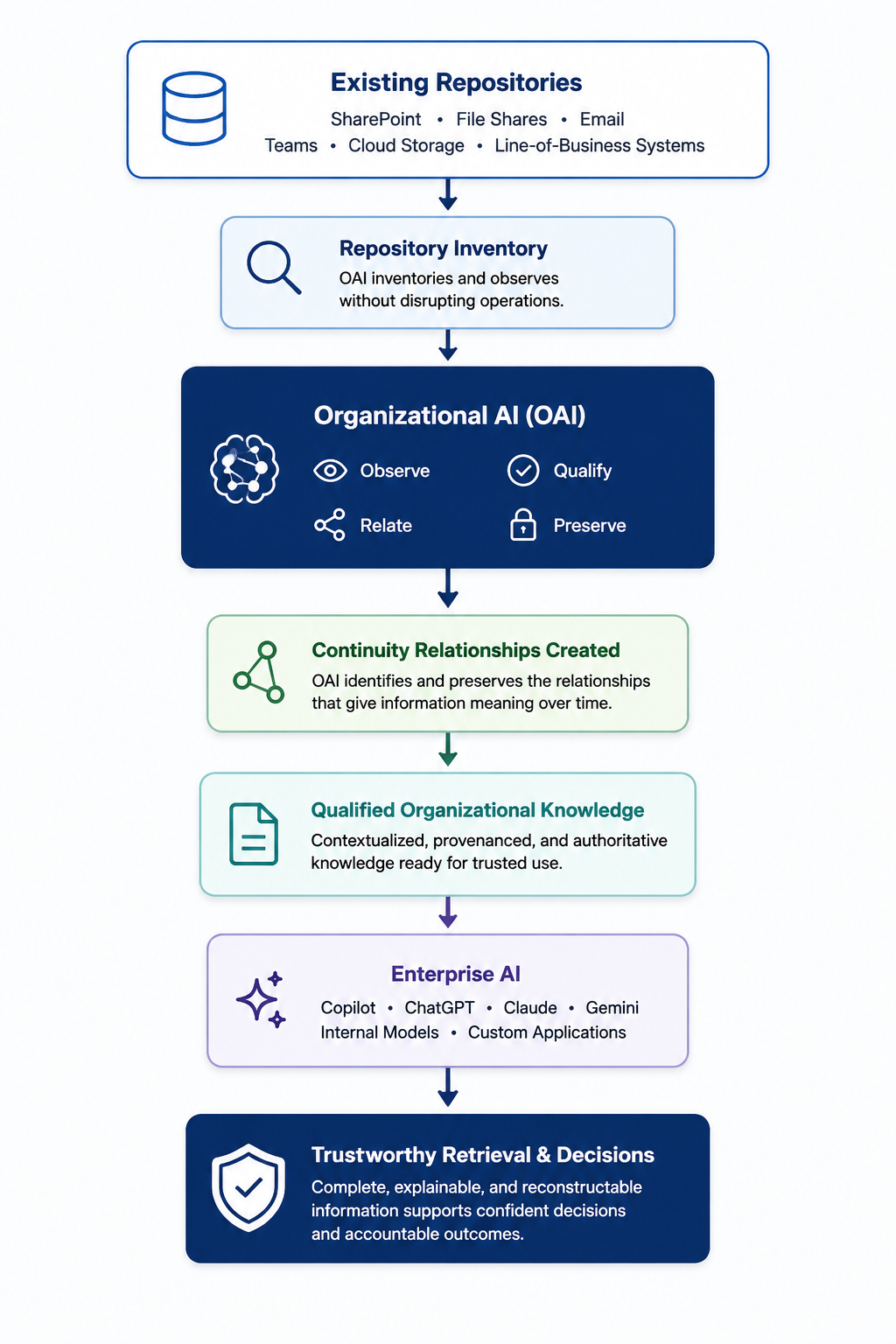
The Agent Was Asked to Fix the App. It Changed the Model.
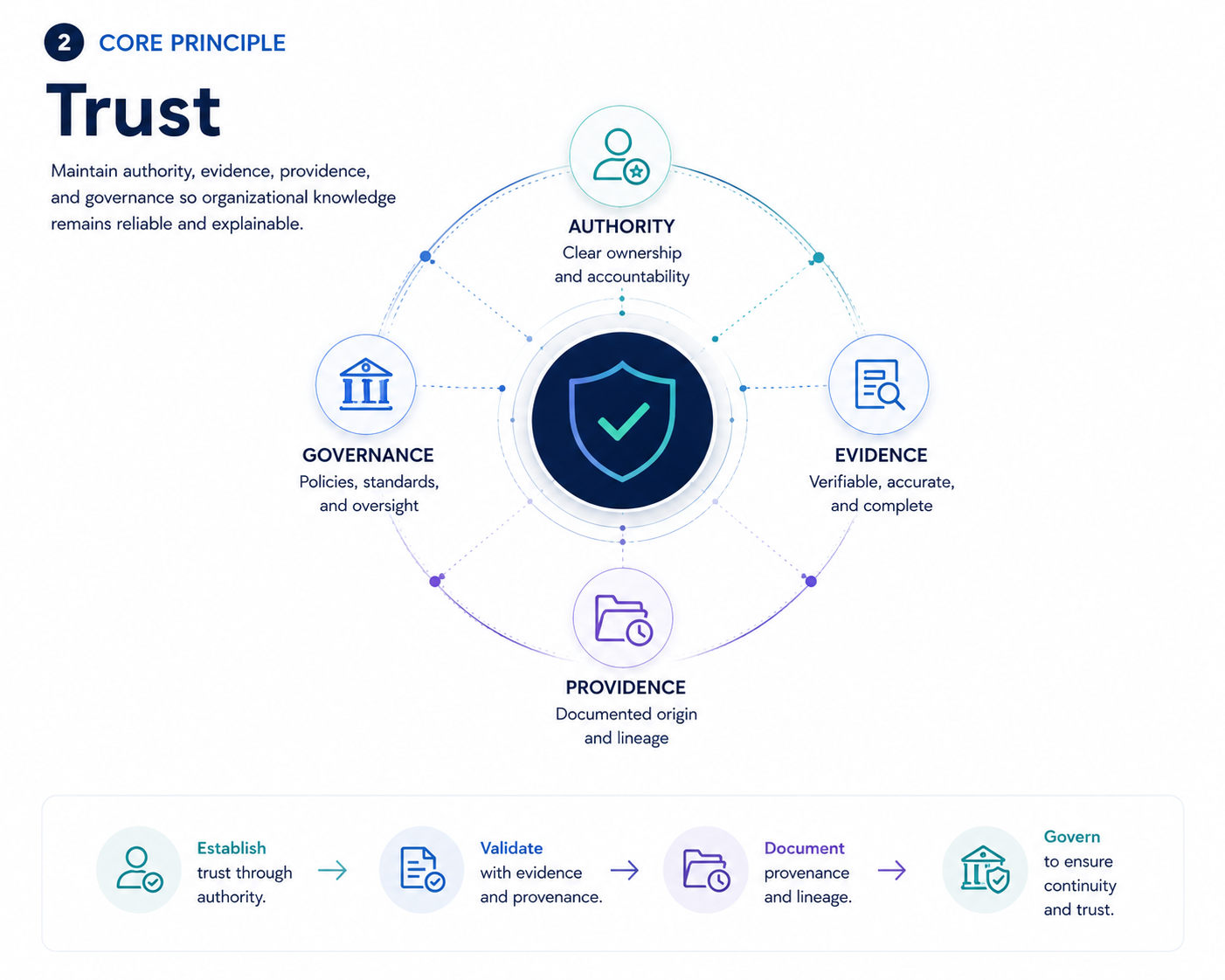
The Government Email Was Real. The Authority Wasn’t.