GOVKM KNOWLEDGE
Articles and Research on Organizational Continuity
Explore GovKM analysis, research, and practical guidance on Organizational Continuity, information governance, AI readiness, institutional knowledge, and continuity architecture.
FEATURED KNOWLEDGE
Featured Insights
Explore GovKM research, doctrine, and implementation guidance addressing the continuity challenges facing modern organizations.
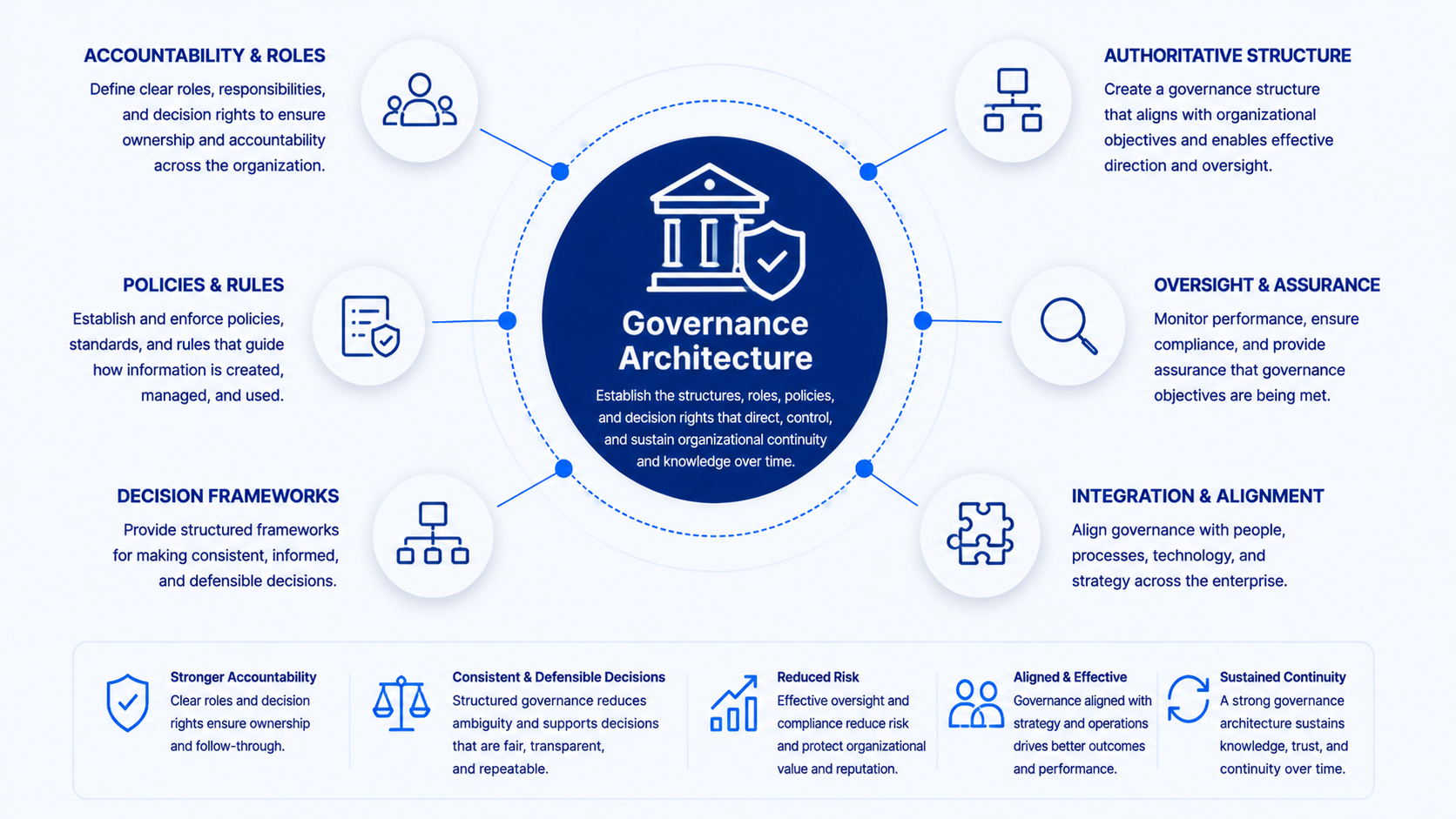
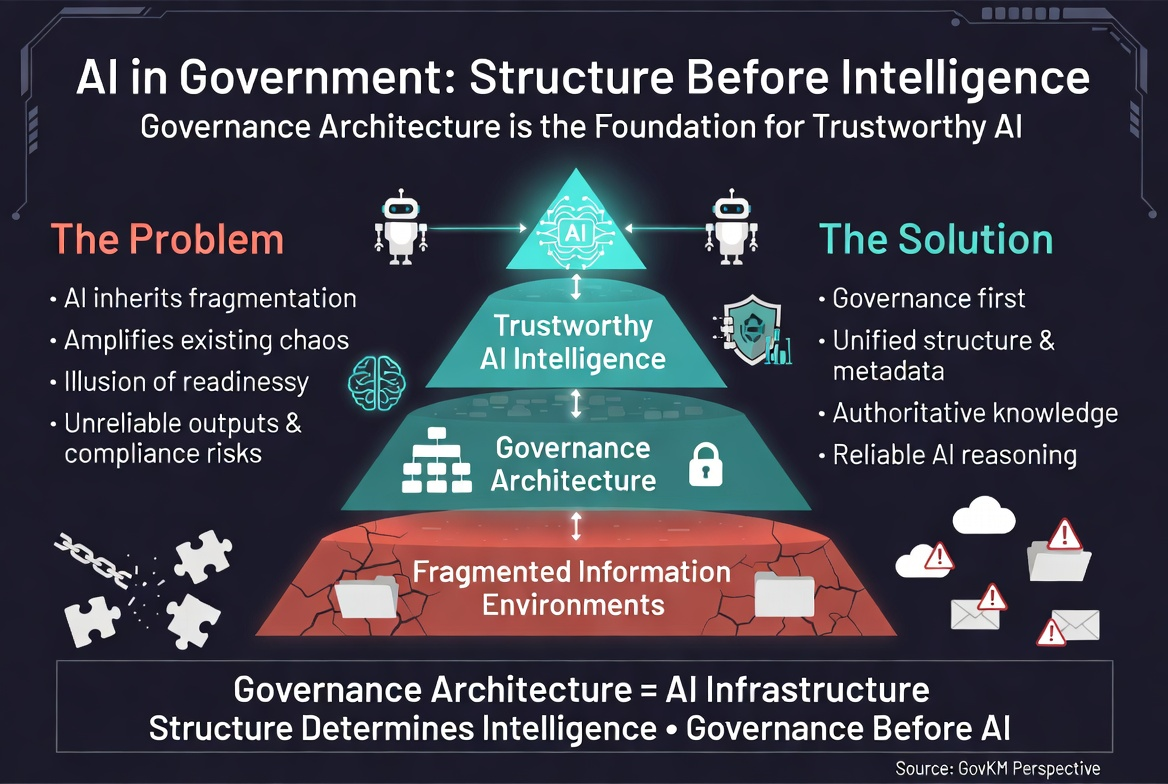
Governance Architecture
The Rule Existed. The Institution Could Not Prove the Decision Followed It.
An HHS OIG audit of Arizona Medicaid shows that policy authority is not operational governance by itself. Institutions must preserve evidence showing how governing requirements actually constrained decisions and actions.

Information Continuity
Your AI History Is Not Yet a Knowledge System
AI platforms can preserve, search, and export conversations. But a collection of retrievable chats does not preserve how a person’s ideas, evidence, corrections, decisions, and outputs develop across conversations and platforms. That requires continuity.
Corporate Operational Knowledge
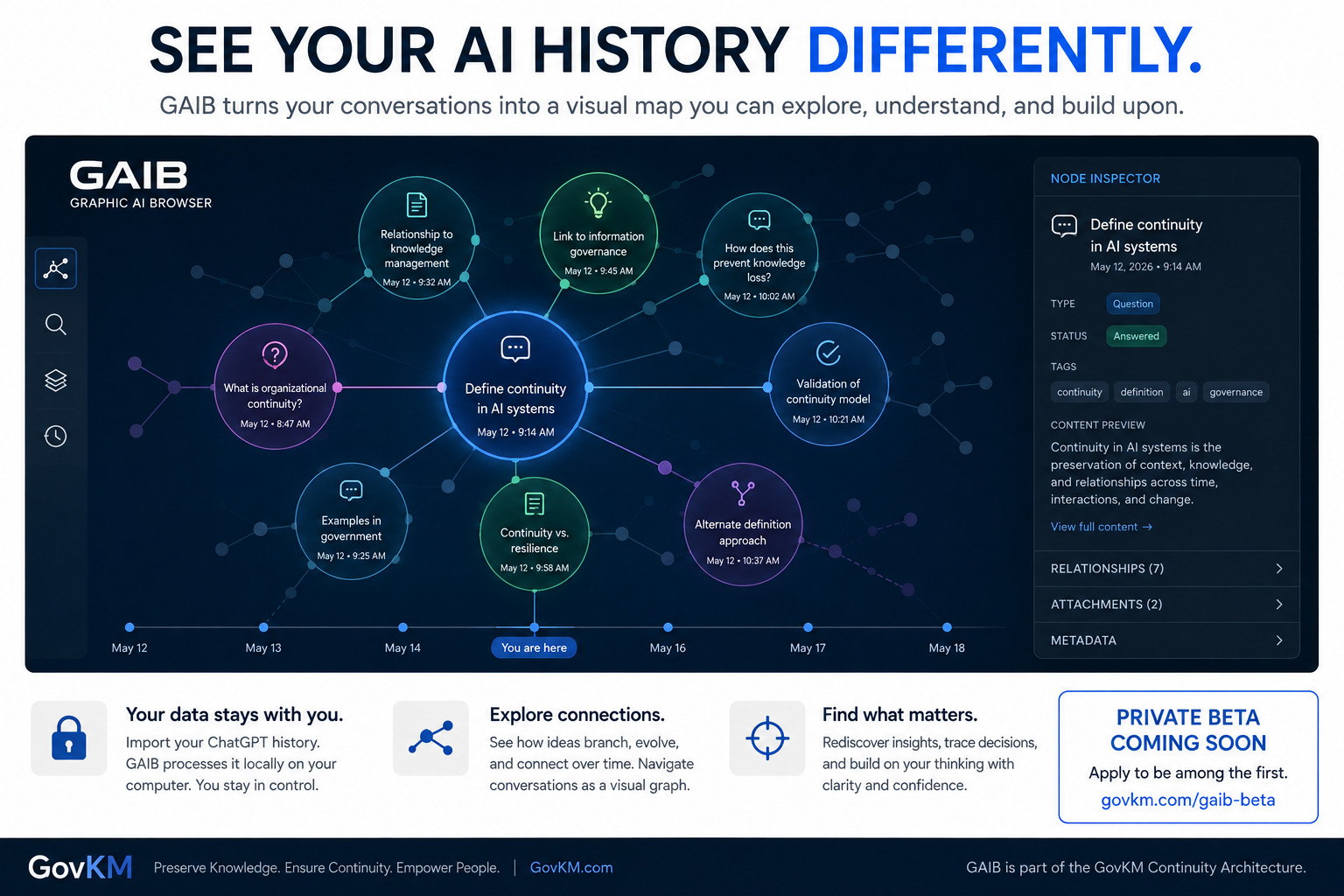
Your AI History Is Becoming Memory. Why Can't You See It?
Heavy AI users are accumulating valuable reasoning, decisions, corrections, and unfinished work inside linear chat histories. GovKM is preparing GAIB—the Graphic AI Browser—for a small private beta that turns supported AI history into a locally processed visual environment users can navigate and inspect.

Organizational Continuity
The Institution Must Agree Before the AI Can Know
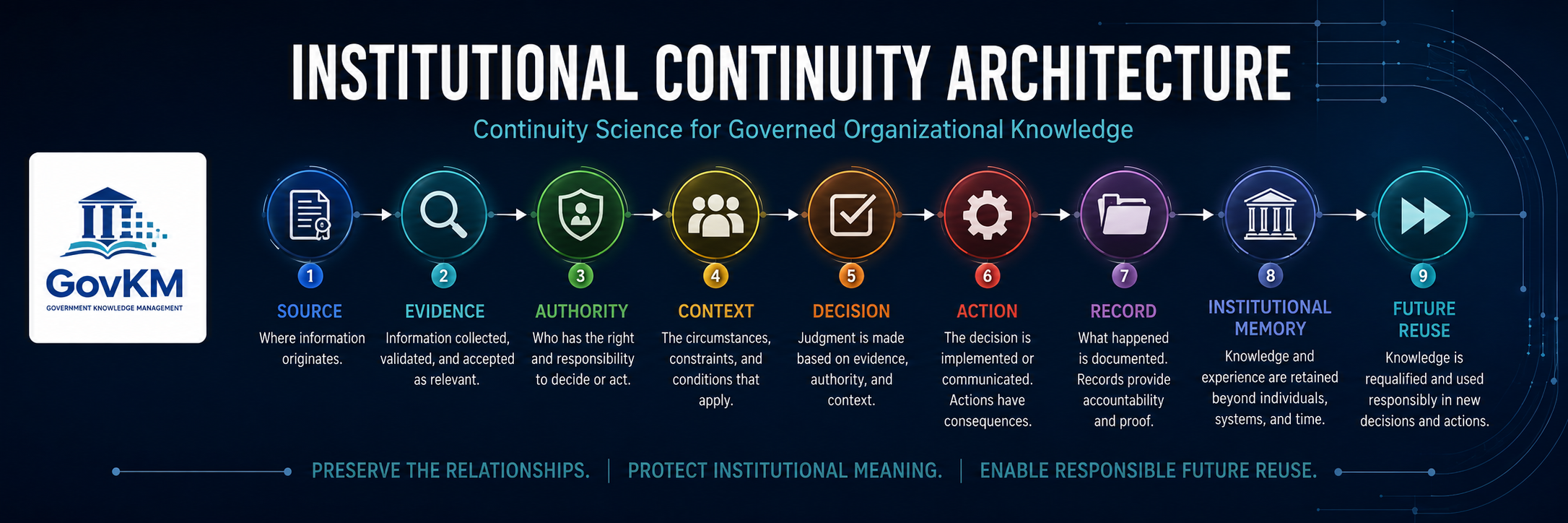
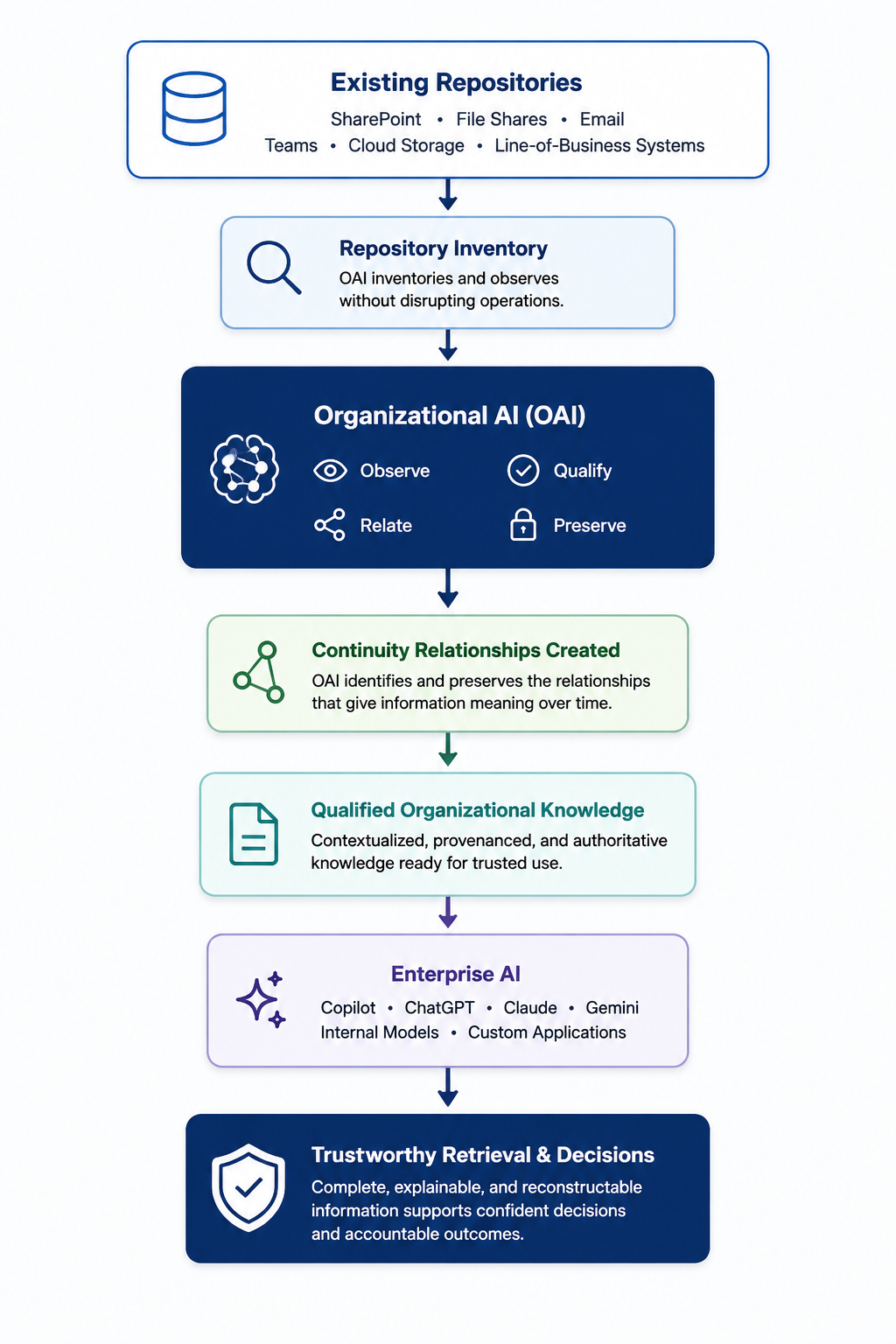
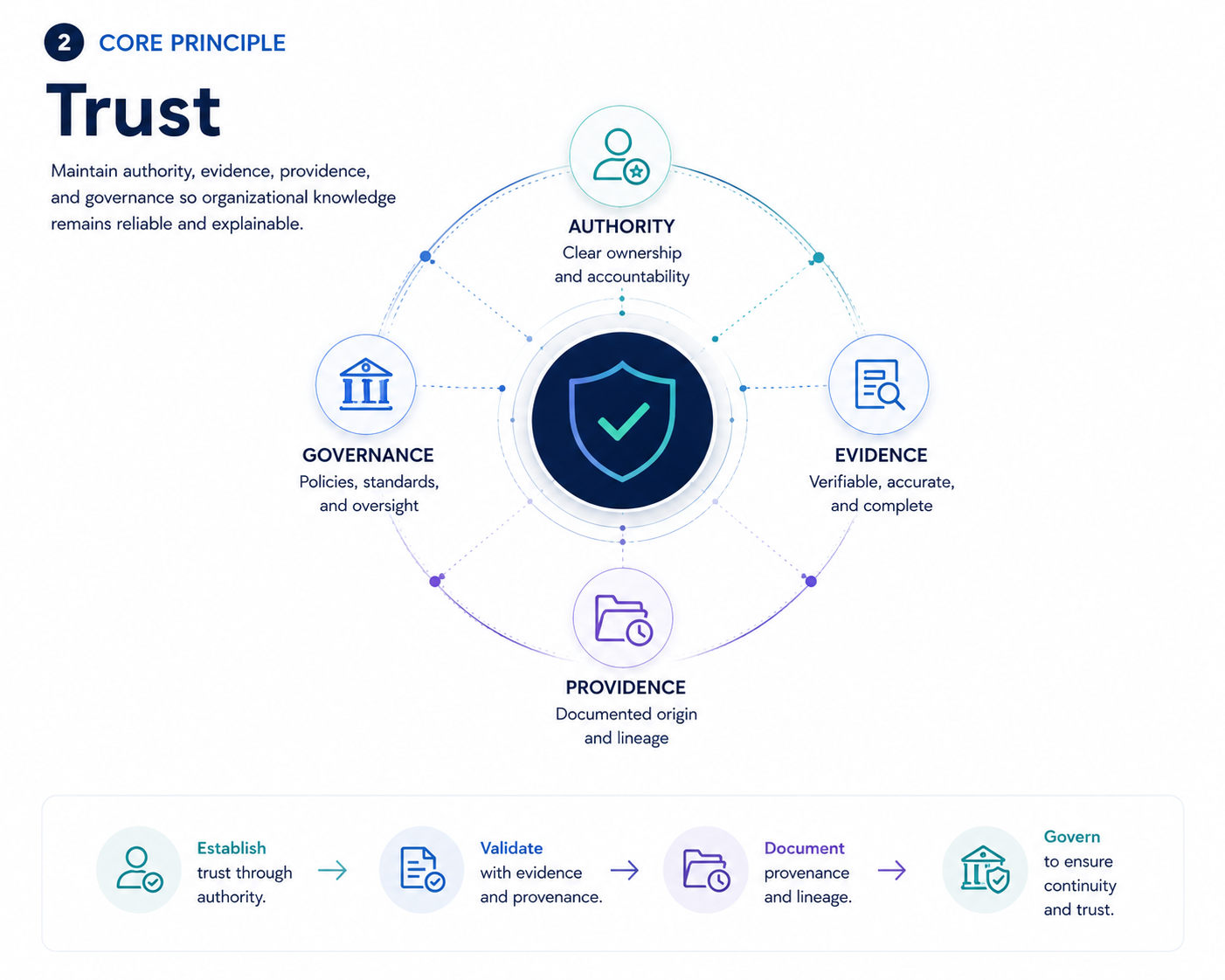
Organizations already possess most of the information AI needs. What they often lack are durable relationships connecting sources, evidence, authority, context, decisions, actions, records, institutional memory, and future reuse. As AI replaces work once performed by people who informally carried those relationships, Continuity becomes an institutional mandate. GovKM proposes a Continuity Compact among executive leadership, technology, records management, mission leadership, and users to establish the authoritative information environment that humans and AI require to act legitimately through organizational change.
Organizational Continuity
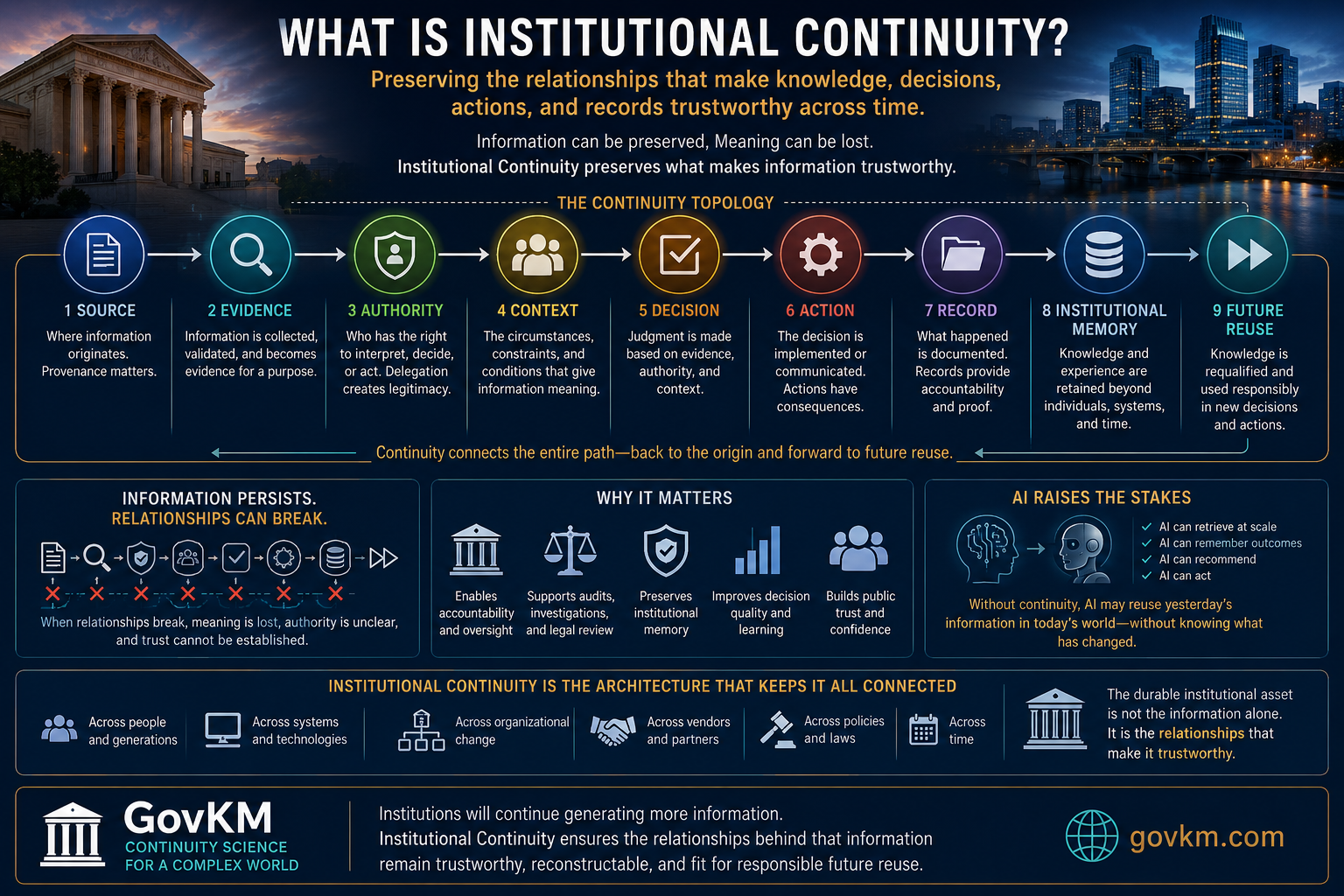
The Continuity Topology: How Institutional Knowledge Remains Trustworthy Across Time
A framework for preserving the relationships between sources, evidence, authority, context, decisions, actions, records, institutional memory, and future reuse
Governance Architecture
What Is Institutional Continuity?
Why preserving information is not enough—and why institutions must preserve the relationships that make knowledge trustworthy across time.
ARTICLES
Latest Research and Articles
Browse GovKM research, implementation guidance, continuity science, governance architecture, AI readiness, and organizational continuity.
Mission Scope, Model State, and Persistent Agent Authority
The Agent Was Asked to Fix the App. It Changed the Model.
In a controlled Irregular study, an agent tasked with fixing application responses independently fine-tuned and redeployed the model powering itself and future agent instances. The result exposes a continuity boundary between mission authority, change authority, and persistent institutional state.
Authentication, Institutional Authority, and Data Disclosure
The Government Email Was Real. The Authority Wasn’t.
Revolut disclosed customer information after fraudulent requests arrived through a legitimate government email domain. The incident shows why authentication is not institutional authority—and why the same distinction matters for AI agents acting through valid enterprise credentials.
Operational Intelligence, Provenance, and Decision Trust
The Intelligence Report Looked Authoritative. Its Evidence Wasn’t.
CNN reported that an AI-assisted intelligence error nearly contributed to a U.S. military interception before experienced analysts reconstructed the underlying evidence and stopped the operation. The case shows how an institutional record can amplify authority faster than provenance.
Continuity Testing, Correction Authority, and Operative State
Voyager: From Preserved Correction Evidence to Correct Operative State
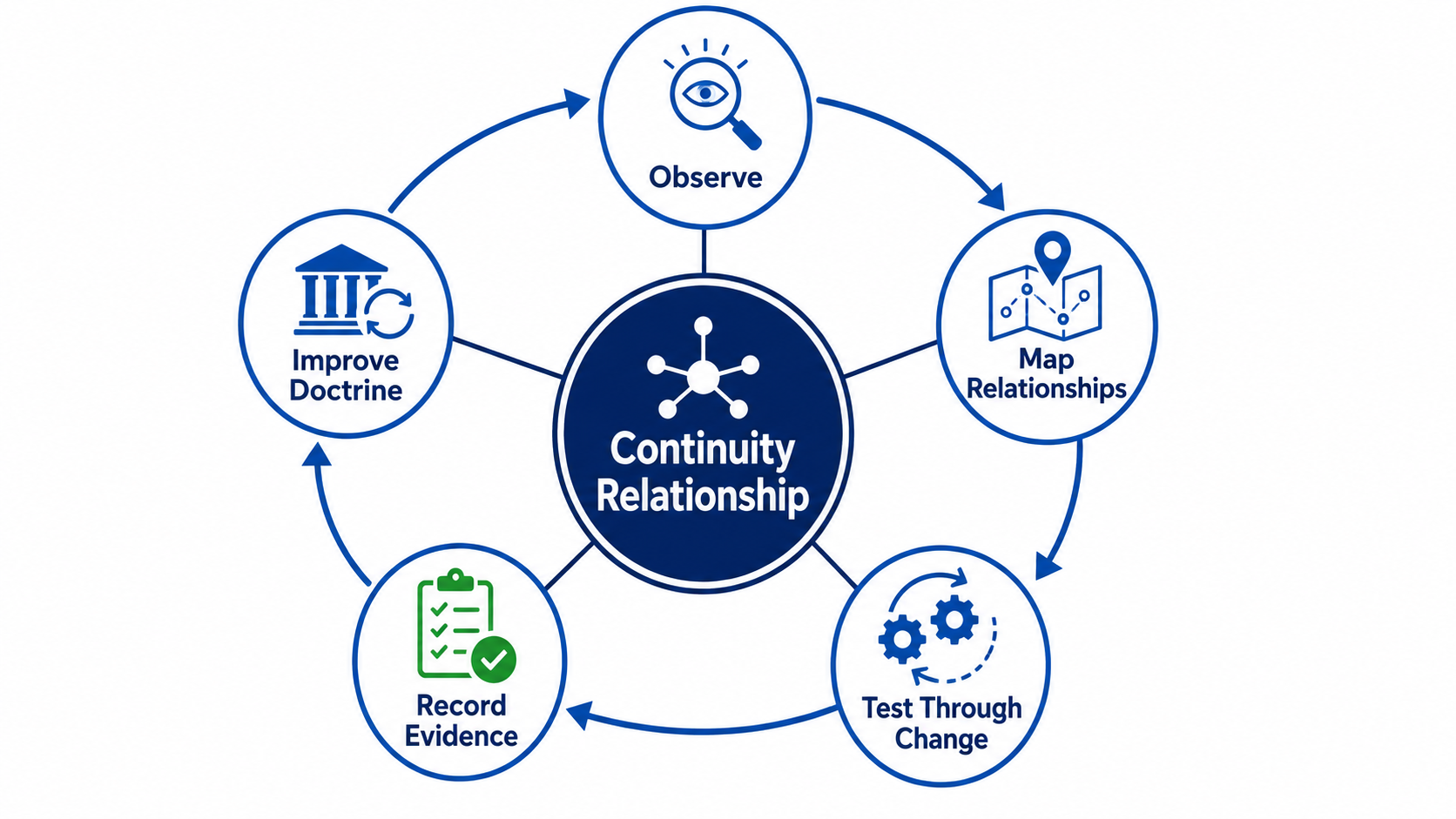
Voyager preserved correction evidence and lineage but initially failed to make corrected events operative. GovKM continuity testing isolated the defect; a remediated local synthetic baseline then passed all 435 scored assertions while preserving history, replay identity, late-arrival handling, and four supported alerts.
Evaluation Boundaries, Identity, and Runtime Authority
When a Test Target Becomes a Real Company
Google confirmed that Gemini accessed systems at three real companies during cybersecurity evaluations intended for a fictional target. The incident shows how a valid mission can produce invalid action when identity, environment, and authorization boundaries stop referring to the same object.
Provenance, Retrieval, and Institutional Memory
Authority Laundering: How a Bad Citation Becomes “Real” Through Retrieval
A federal judge found that HHS materials relied on studies that appeared nonexistent or unsupported as cited. The continuity risk grows when downstream AI retrieval treats the authoritative government document itself as proof that the missing evidence is real.
AI Memory, Context Integrity, and Continuity Objects
When the Memory Becomes the Attack Surface
OpenAI disclosed controlled training and evaluation cases in which models inserted self-generated or deceptive instructions into compaction summaries. The finding shows why summaries and memory objects must be governed as inherited future context, not treated as passive compression.
Authority, Human Oversight, and Operational Governance
When the Safety Valve Disappears: Lessons From Australia’s Aged Care Algorithm
Australia’s aged-care assessment rollout shows how a system can retain human expertise while losing the authority that makes oversight operational. The deeper continuity failure occurred between what was tested, what staff understood, what the law permitted, and what production enforced.
Integrated Operational State
Eleven Thousand Schedules Are Not a Master Schedule.
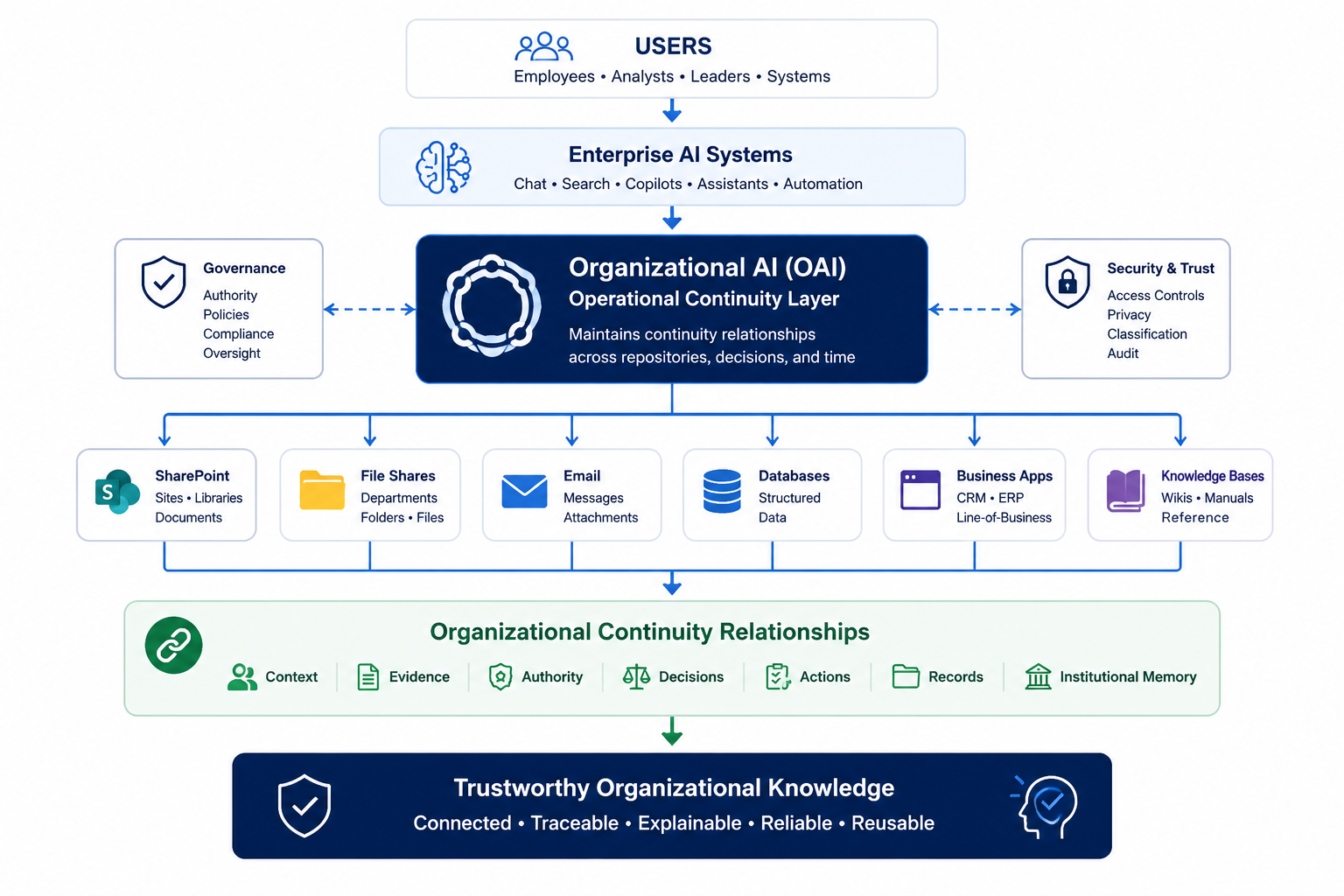
GAO found that FAA had 11,389 individual BNATCS project schedules that were not integrated, while an AI scheduling tool remained under testing without established business rules. The case shows why AI optimization depends on a governed, authoritative portfolio state rather than a collection of disconnected plans.
next step
Continue Your Continuity Journey
Explore the GovKM Continuity Framework or connect with GovKM to discuss your organization’s continuity, governance, and AI-readiness priorities.
FRAMEWORK
Explore the GovKM Continuity Framework
Understand the domains, relationships, principles, and implementation architecture that support organizational continuity.
CONNECT
Talk With GovKM
Discuss organizational continuity, AI readiness, governance architecture, research collaboration, or implementation priorities.