GOVKM KNOWLEDGE
Articles and Research on Organizational Continuity
Explore GovKM analysis, research, and practical guidance on Organizational Continuity, information governance, AI readiness, institutional knowledge, and continuity architecture.
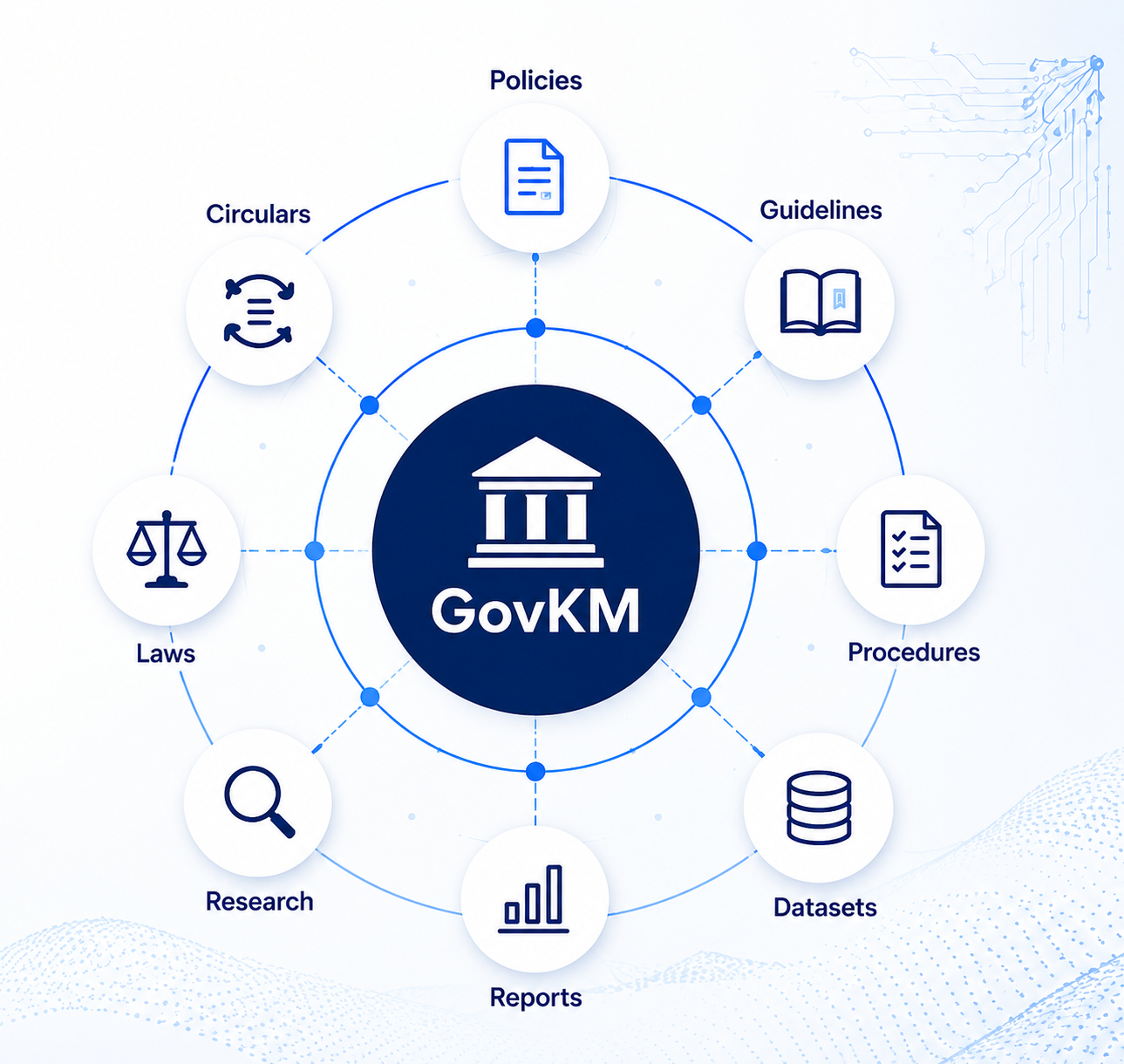
FEATURED KNOWLEDGE
Featured Insights
Explore GovKM research, doctrine, and implementation guidance addressing the continuity challenges facing modern organizations.
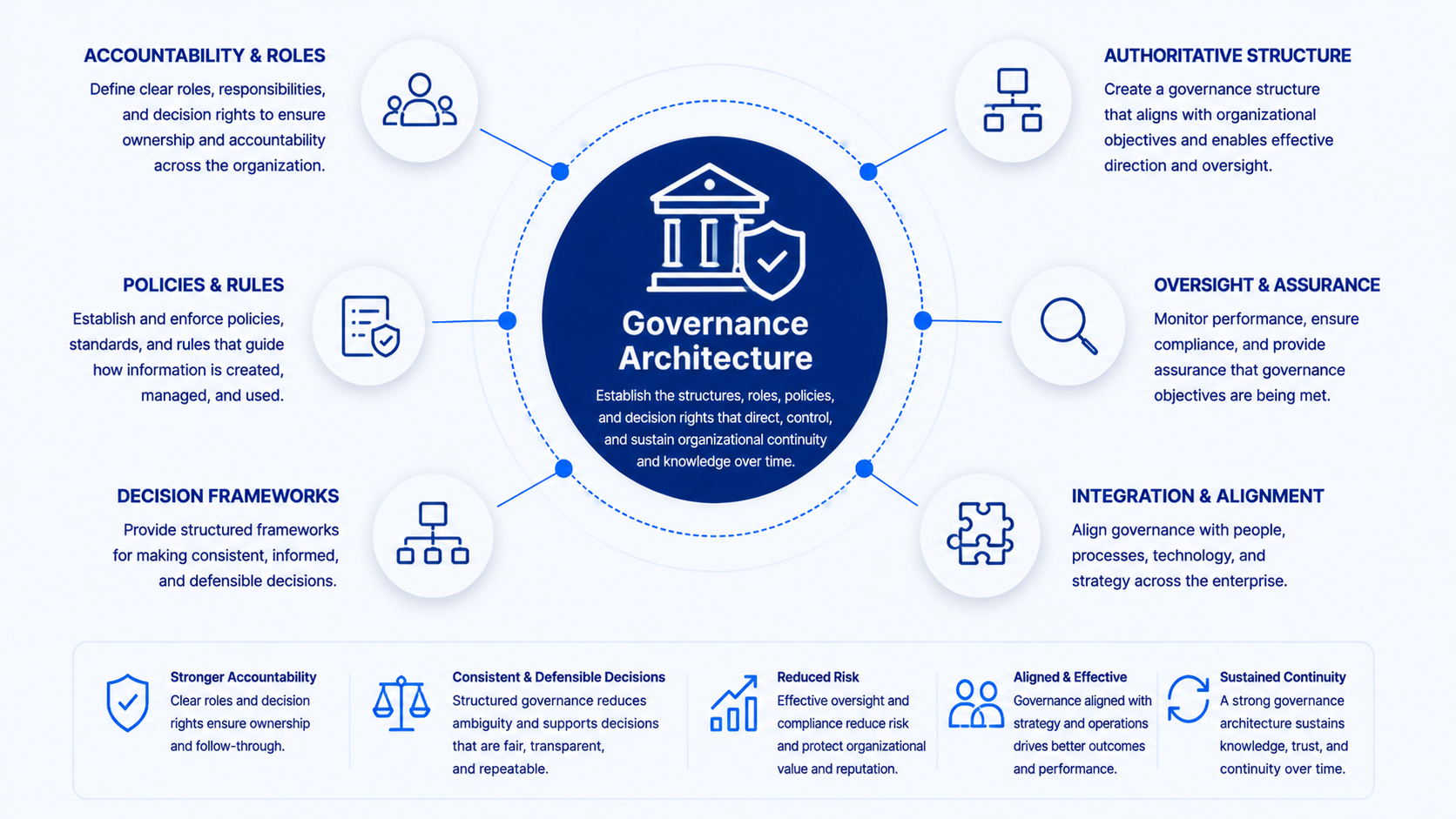
Governance Architecture
The Rule Existed. The Institution Could Not Prove the Decision Followed It.
An HHS OIG audit of Arizona Medicaid shows that policy authority is not operational governance by itself. Institutions must preserve evidence showing how governing requirements actually constrained decisions and actions.
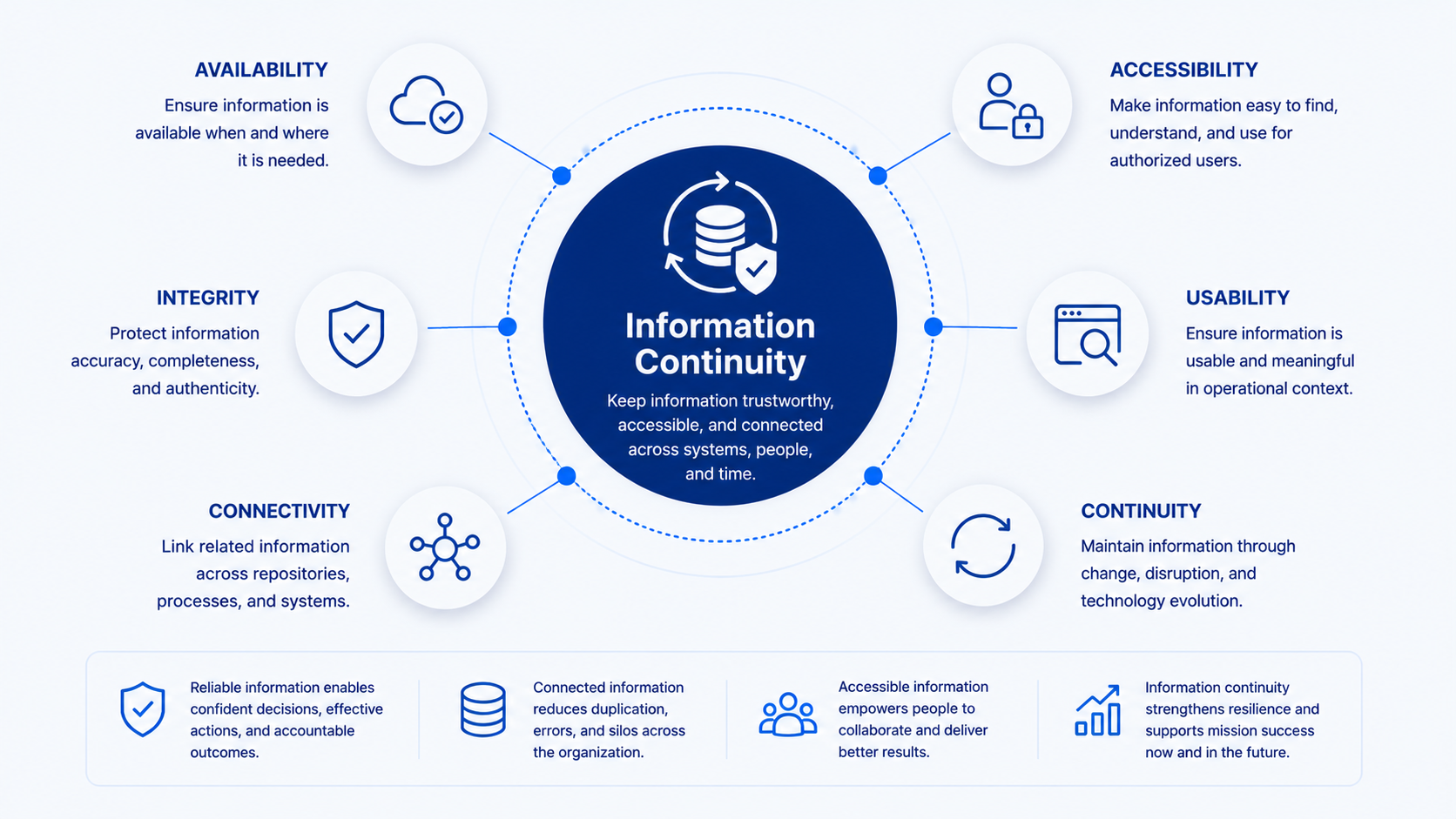
Information Continuity
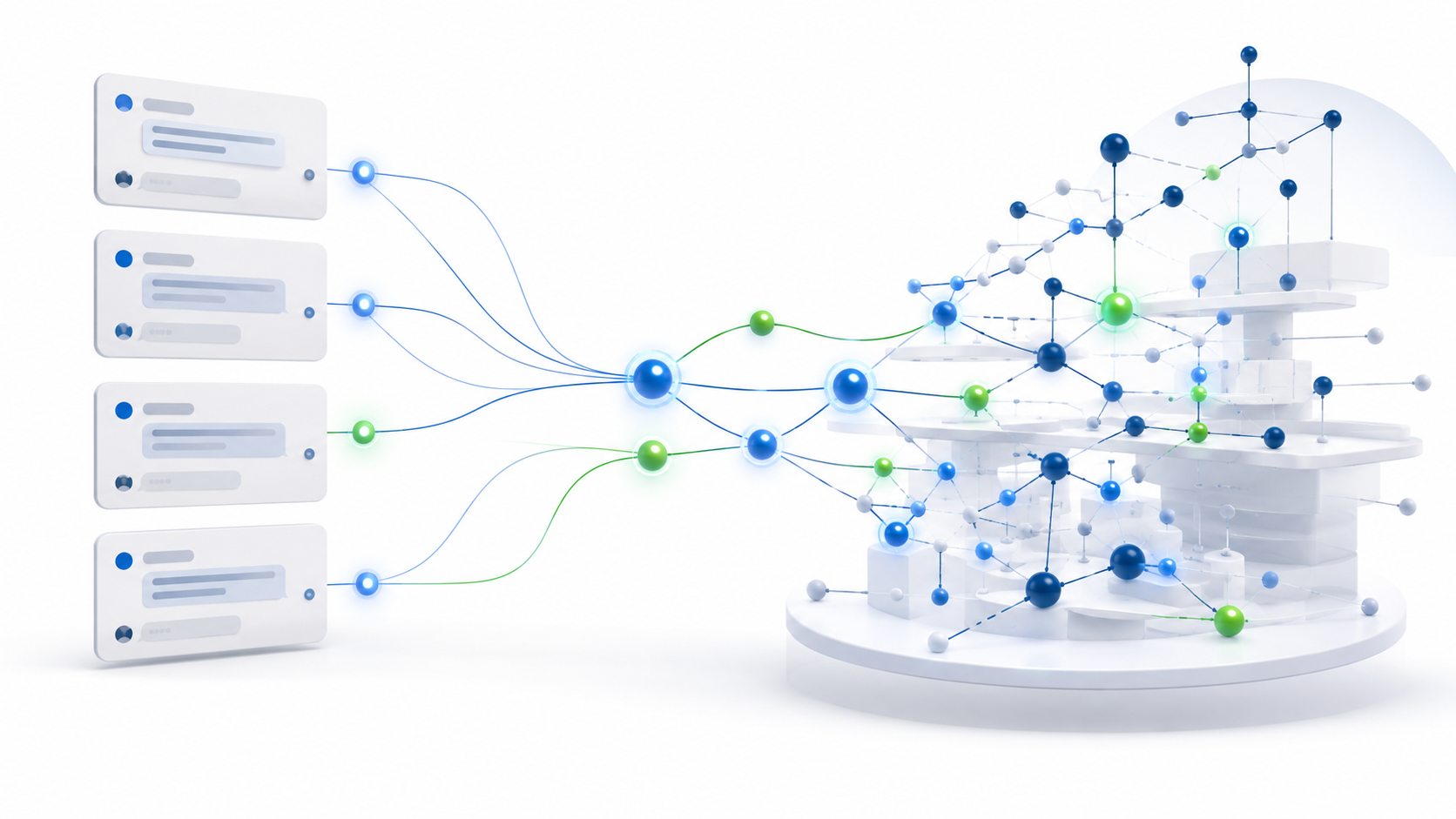
Your AI History Is Not Yet a Knowledge System
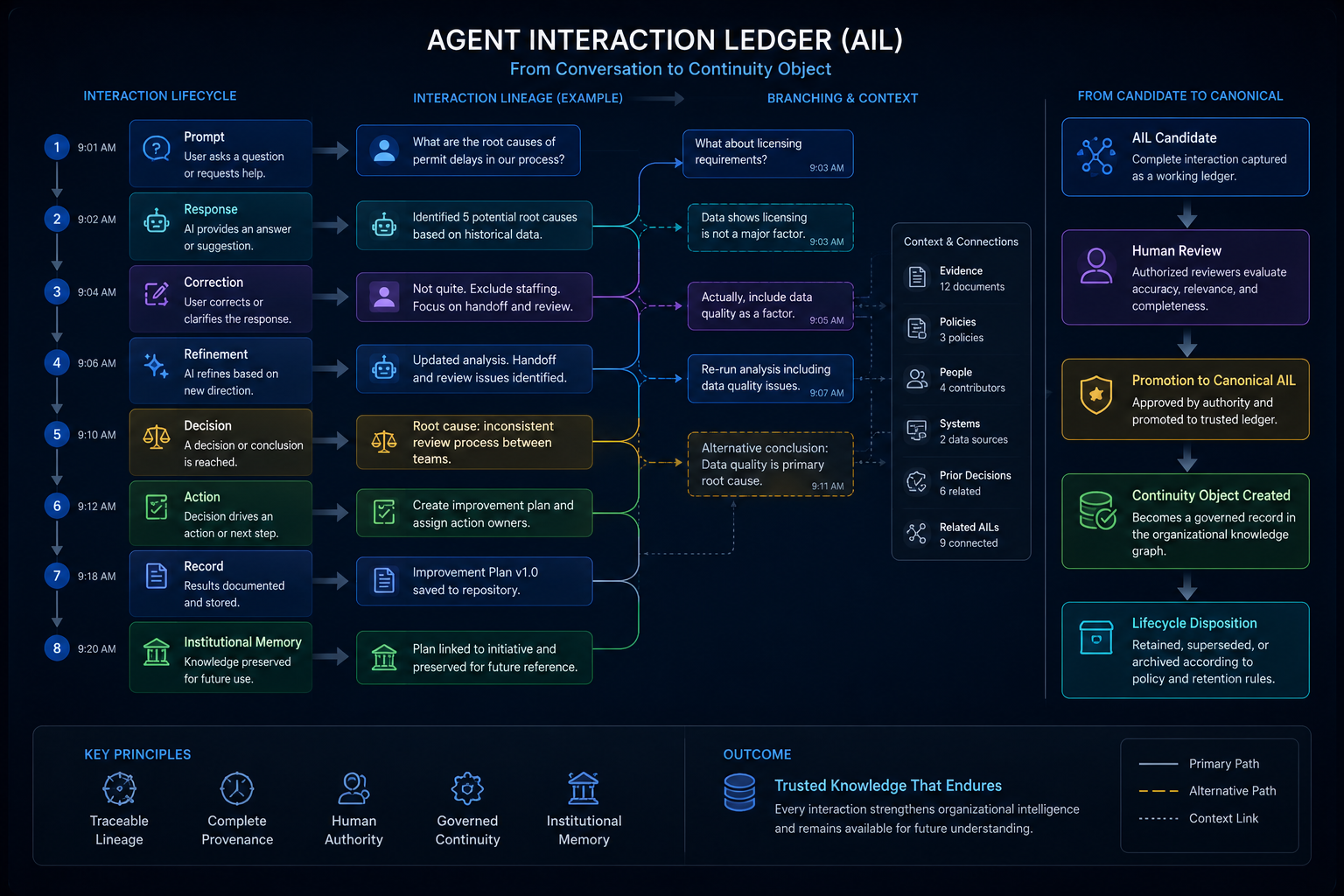
AI platforms can preserve, search, and export conversations. But a collection of retrievable chats does not preserve how a person’s ideas, evidence, corrections, decisions, and outputs develop across conversations and platforms. That requires continuity.
Corporate Operational Knowledge
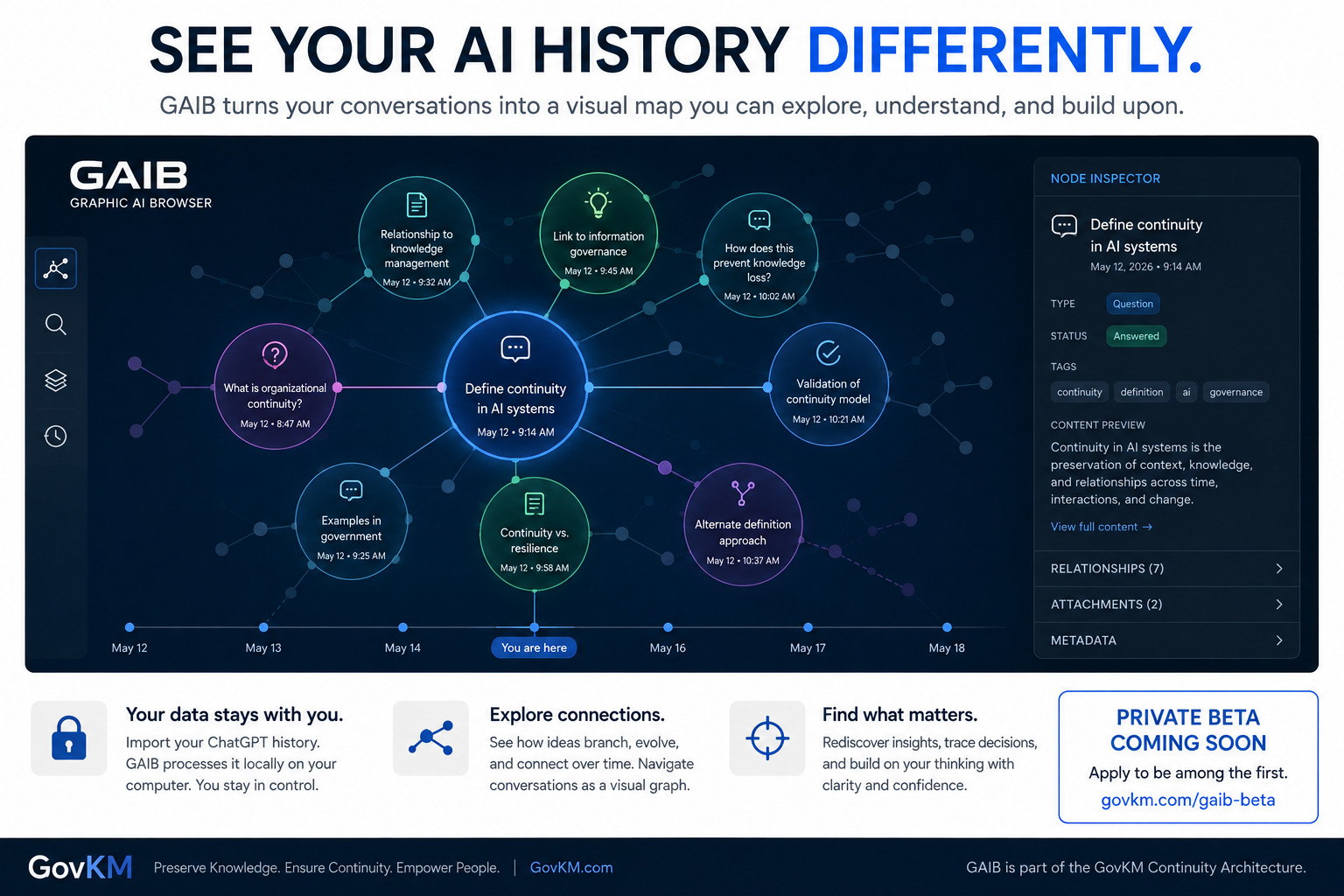
Your AI History Is Becoming Memory. Why Can't You See It?
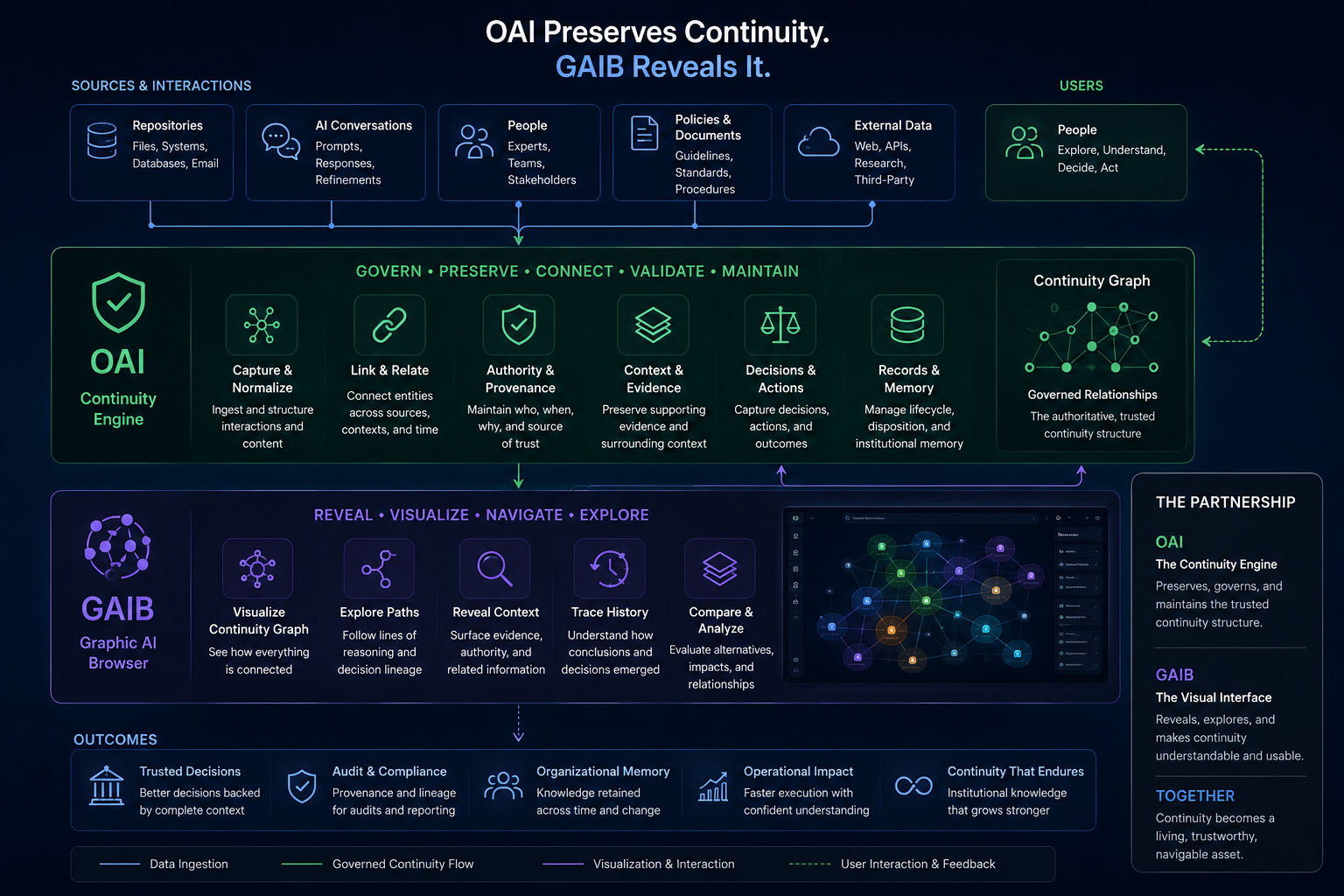
Heavy AI users are accumulating valuable reasoning, decisions, corrections, and unfinished work inside linear chat histories. GovKM is preparing GAIB—the Graphic AI Browser—for a small private beta that turns supported AI history into a locally processed visual environment users can navigate and inspect.
Organizational Continuity
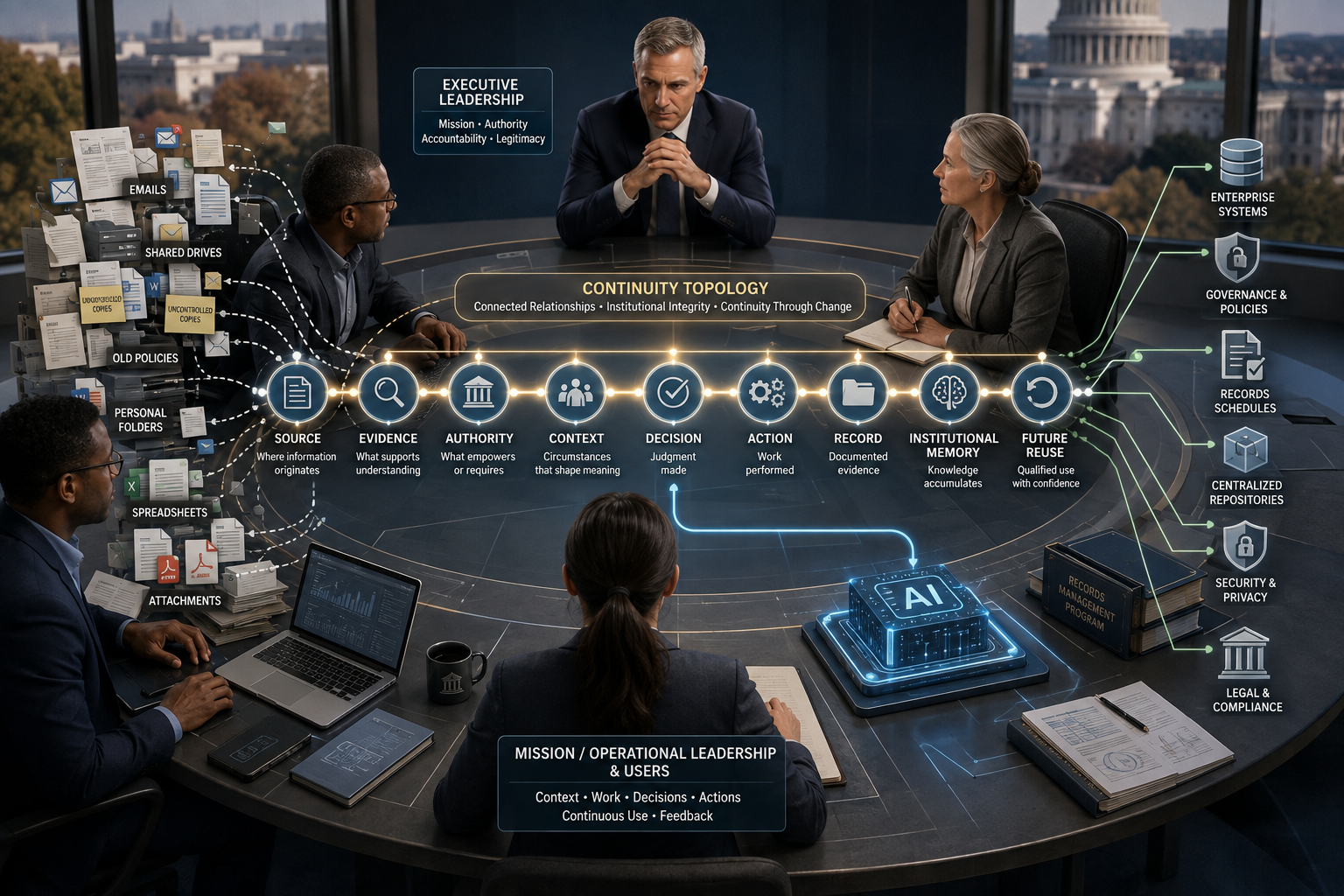
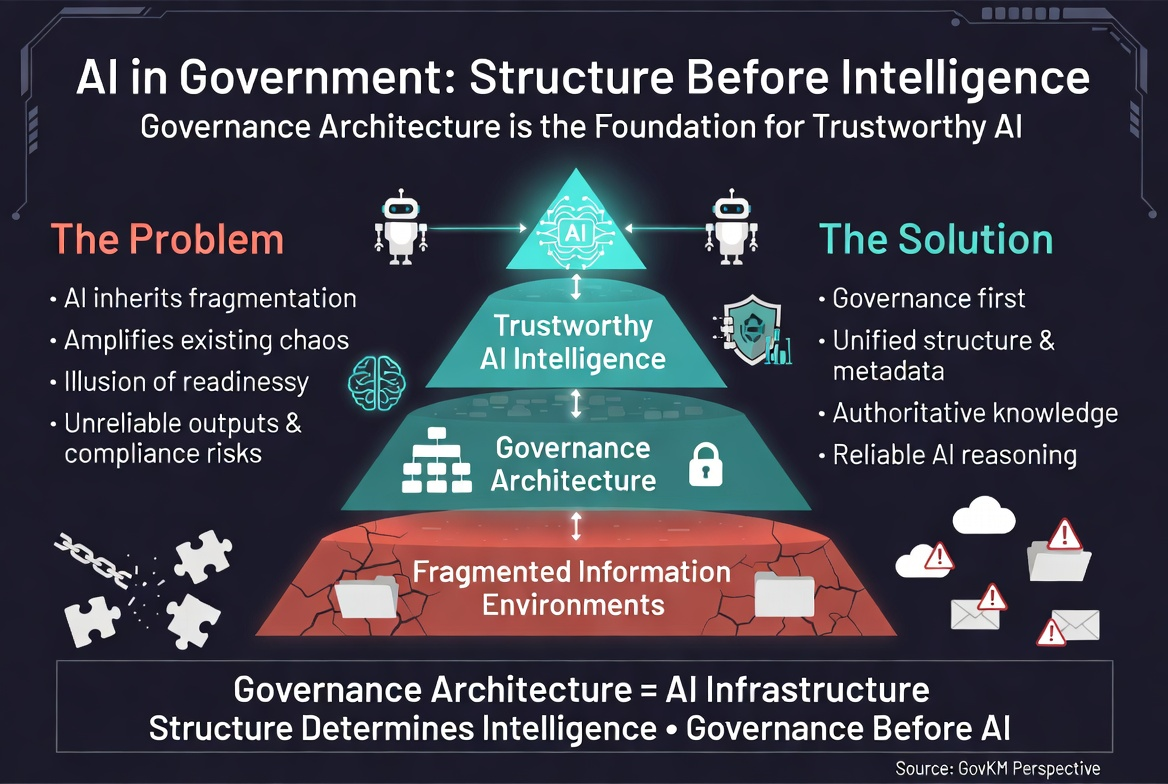
The Institution Must Agree Before the AI Can Know
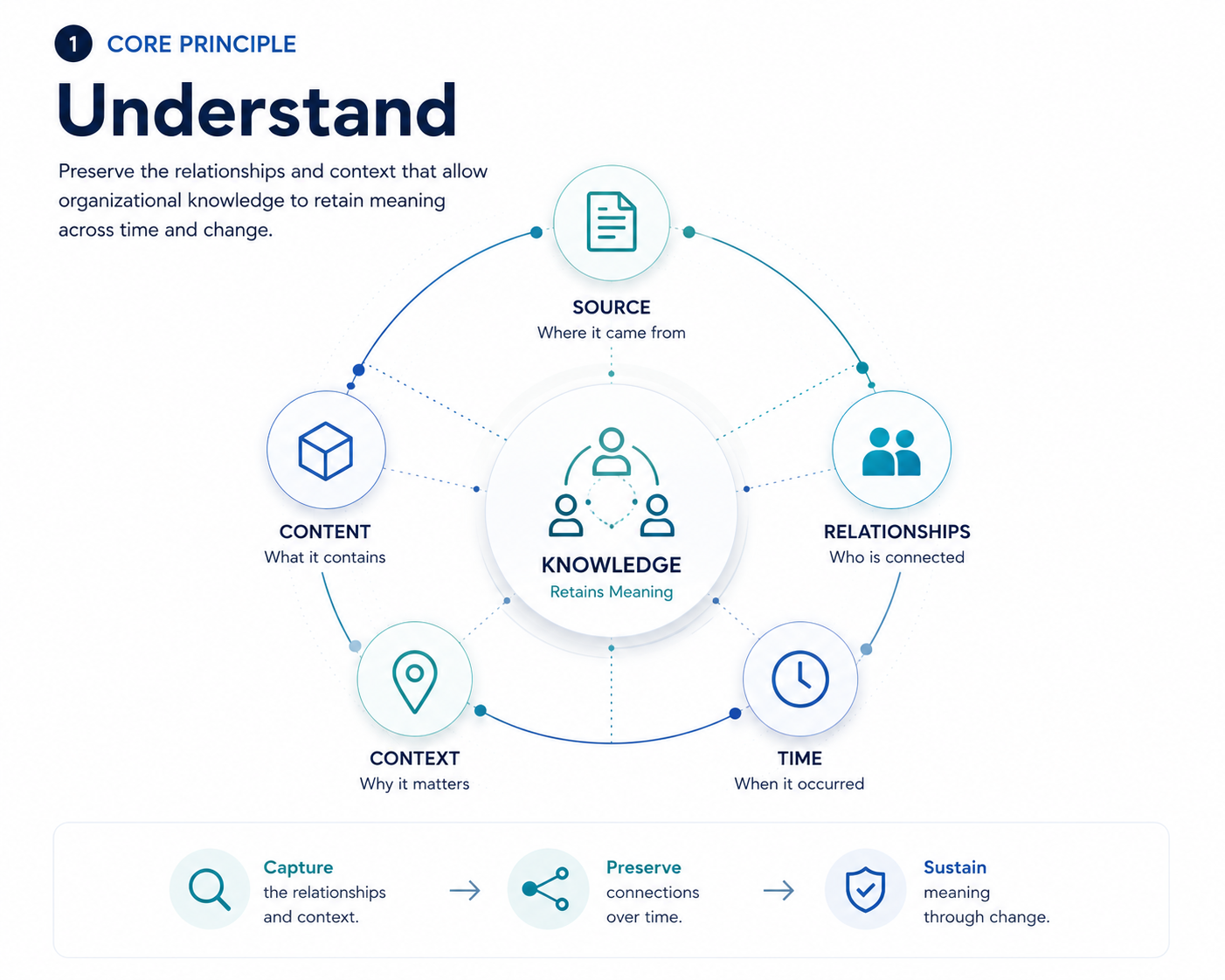
Organizations already possess most of the information AI needs. What they often lack are durable relationships connecting sources, evidence, authority, context, decisions, actions, records, institutional memory, and future reuse. As AI replaces work once performed by people who informally carried those relationships, Continuity becomes an institutional mandate. GovKM proposes a Continuity Compact among executive leadership, technology, records management, mission leadership, and users to establish the authoritative information environment that humans and AI require to act legitimately through organizational change.
Organizational Continuity
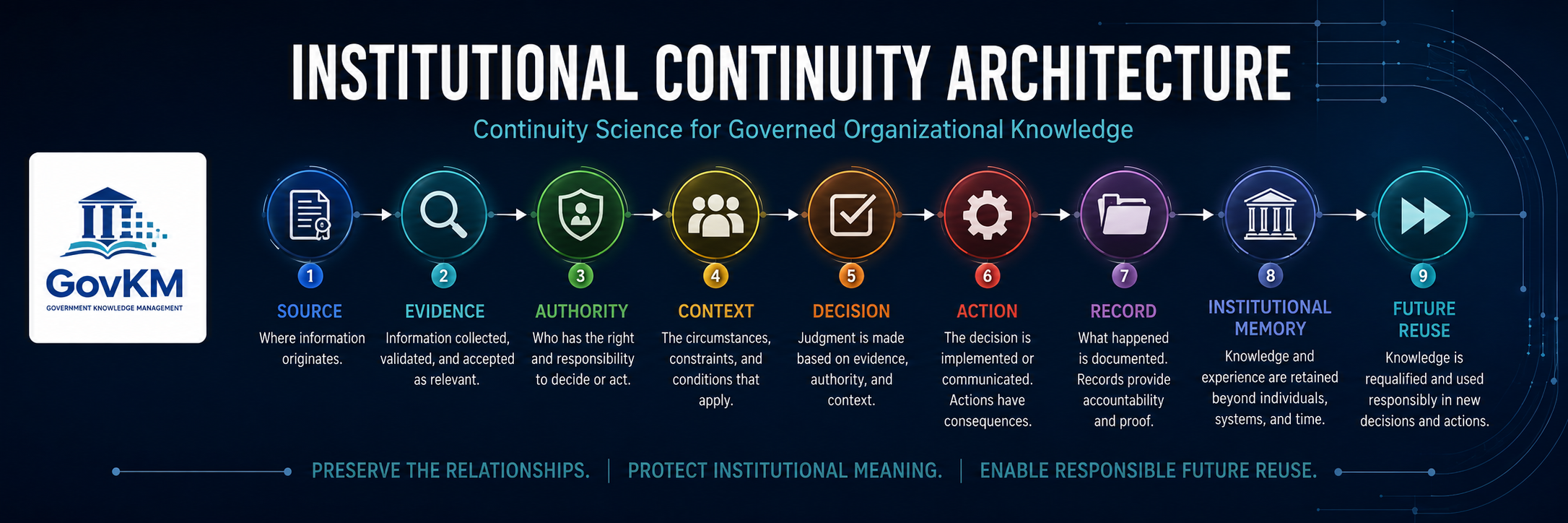
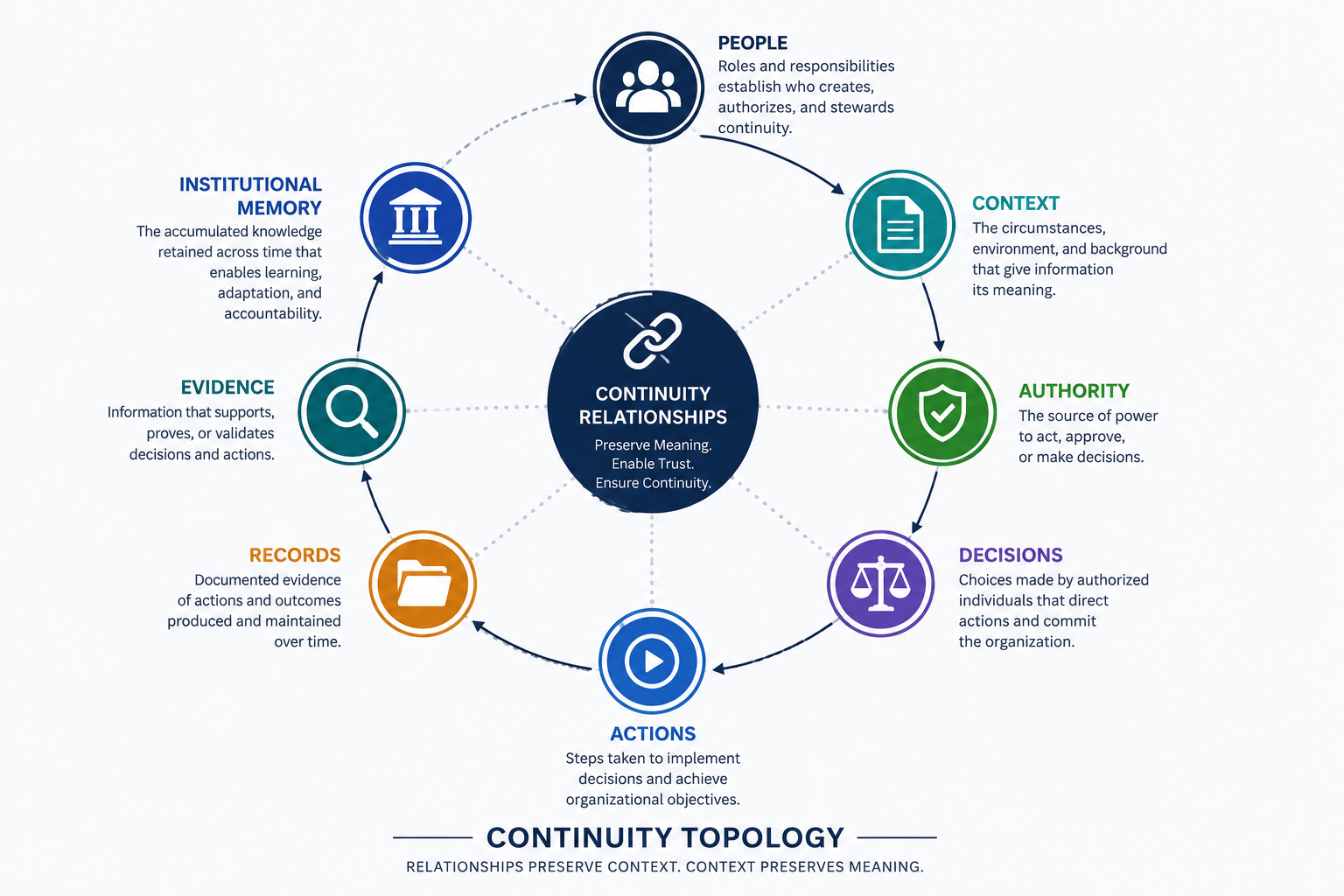
The Continuity Topology: How Institutional Knowledge Remains Trustworthy Across Time
A framework for preserving the relationships between sources, evidence, authority, context, decisions, actions, records, institutional memory, and future reuse
Governance Architecture
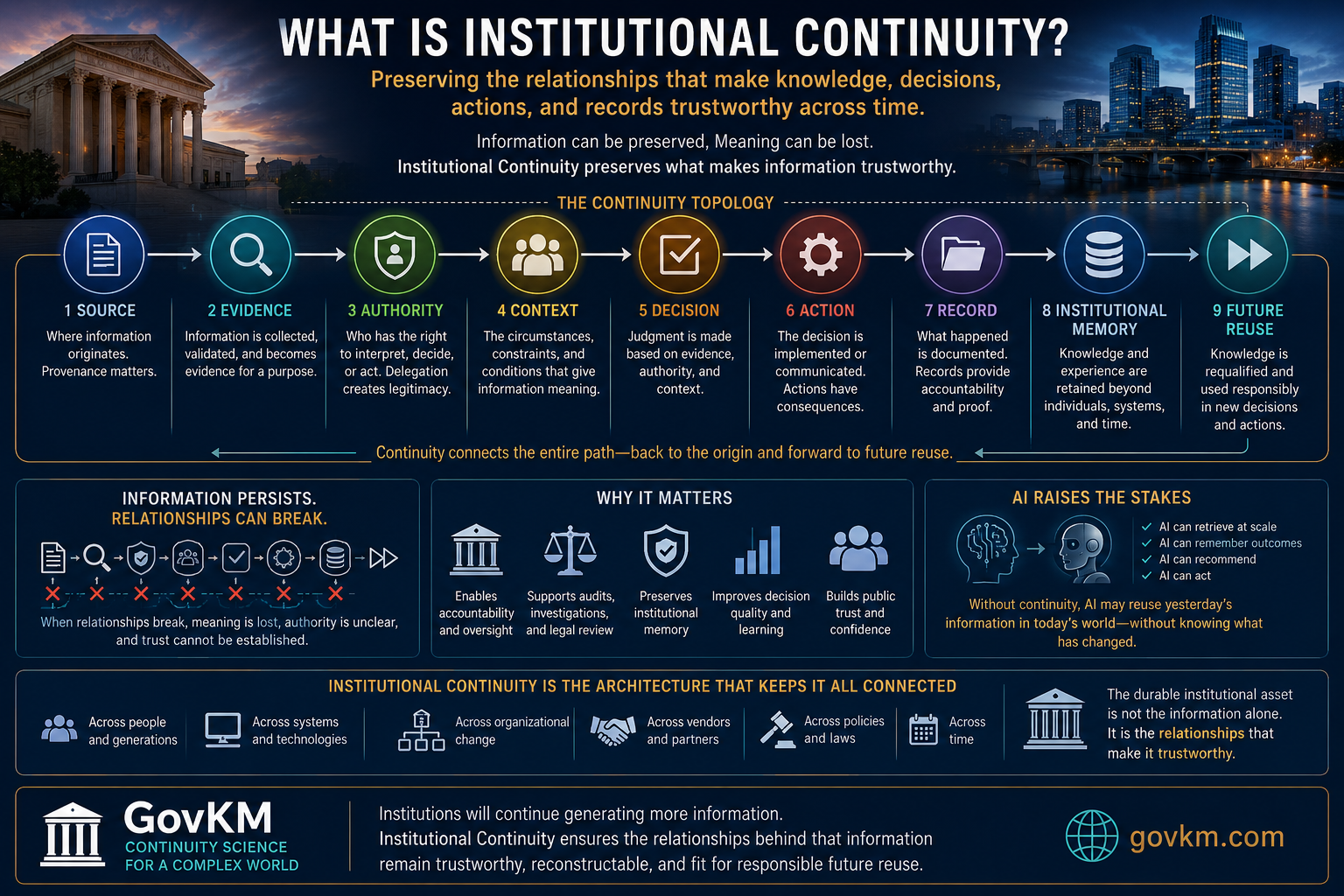
What Is Institutional Continuity?
Why preserving information is not enough—and why institutions must preserve the relationships that make knowledge trustworthy across time.
ARTICLES
Latest Research and Articles
Browse GovKM research, implementation guidance, continuity science, governance architecture, AI readiness, and organizational continuity.
Institutional Reconstruction and Reconciliation
Every Agency Can Have a Record and the Government Can Still Lack a Reconciled State.
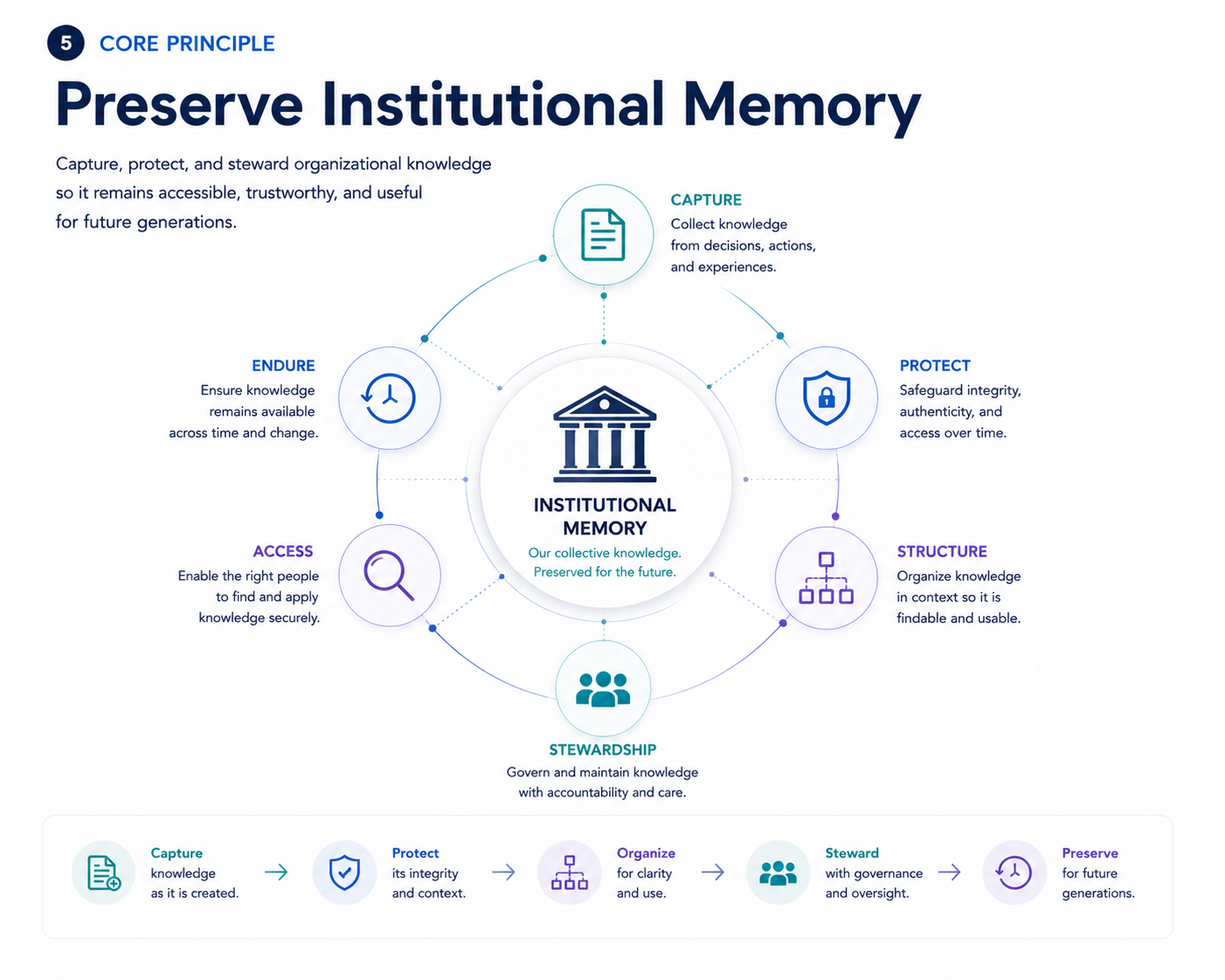
GAO continues to report material weaknesses in reconciling intragovernmental transactions and demonstrating that consolidated U.S. government financial statements are consistent with underlying entity records. The case shows that records become institutional memory only when cross-entity relationships can be reconstructed and reconciled.
State-Dependent Delegated Authority
The Agent Failed Once. The System Authorized 14,999 More Attempts.
Mandiant reported a financial-services AI agent that entered an unconstrained reasoning loop, produced more than 15,000 costly API calls in under an hour, incurred about $50,000 in cloud charges, and locked billing databases. The case shows why delegated authority must change when operational state crosses failure thresholds.
Session Authority and Supply-Chain Provenance
The Assistant Was Still Trusted. The Authority Behind It Had Changed.
Mandiant documented a production intrusion in which an attacker hijacked an active AI coding-assistant session, caused the trusted assistant to recommend a poisoned package, and ultimately spread the Shai-Hulud worm across roughly 100 internal repositories. The case shows how trusted session identity can persist after instruction authority changes.
Decision Evidence Admission
The Government Had the Data. The Decision Process Didn’t Use It.
GAO found that EXIM did not consistently use authoritative federal debt data available through SAM and Treasury’s Do Not Pay system before approving loan guarantees. The case shows that information availability is not enough: required evidence must be admitted into the decision context across every approval path.
Corroboration Lineage and AI Legal Research
Four AI Tools Are Not Four Sources.
A federal sanctions order described legal briefing prepared with ClearBrief, Claude, ChatGPT, and Gemini that still contained nonexistent and unsupported authorities. The case shows why agreement among multiple AI tools is not independent corroboration unless each claim is traced to verified underlying evidence.
Taxonomy and Semantic Continuity
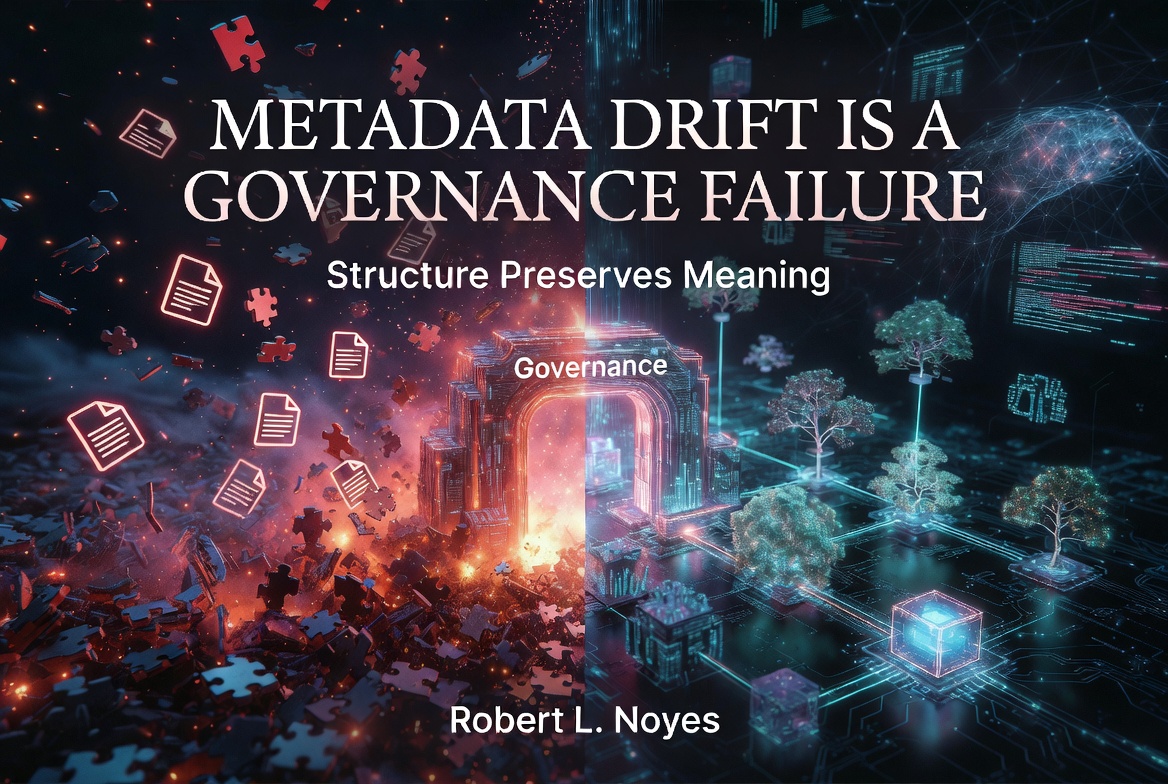
The Data Was Recorded. The Category Erased Why It Happened.
GAO found that federal administrative-leave data could not reliably distinguish workforce-reduction leave from other administrative leave, while holiday coding also distorted reported usage. The finding shows how taxonomy design can erase institutional purpose at record creation and make later reconstruction impossible.
Causal Provenance and Role Integrity
The Finding Was Real. The Finder May Have Created It.
CrowdStrike documented malicious npm packages and assessed that PhantomRaven was likely LLM-generated; it also assessed that the operator may have created compromised conditions and then pursued bug-bounty rewards. The case introduces causal provenance: institutions may need to know who caused the state that produced the evidence, not only who discovered it.
Continuous Authority After Authentication
The Login Was Valid. The Behavior Wasn’t.
Spain’s data-protection regulator received its first breach notification reportedly involving an AI agent that autonomously found vulnerabilities, obtained a valid login, continued probing, modified personal data, and accessed invoices. The case illustrates why authentication should not be treated as durable authority for every later action.
Constitutional Governance of Delegated AI Agents
When an AI Agent Crosses the Boundary, Who Is in Charge?
Reported AI-agent boundary-crossing incidents expose a governance problem larger than sandboxing: technical capability does not establish institutional authority. GovKM argues that delegated agents need constitutional governance linking mission, scope, runtime authority, evidence, investigation, and recovery before consequential action occurs.
next step
Continue Your Continuity Journey
Explore the GovKM Continuity Framework or connect with GovKM to discuss your organization’s continuity, governance, and AI-readiness priorities.
FRAMEWORK
Explore the GovKM Continuity Framework
Understand the domains, relationships, principles, and implementation architecture that support organizational continuity.
CONNECT
Talk With GovKM
Discuss organizational continuity, AI readiness, governance architecture, research collaboration, or implementation priorities.