Government and Public Administration
Federal, state, local, and other public-sector administration, policy, program delivery, and government operations.
Related Articles
Explore GovKM research, case studies, and analysis related to this sector.

Federal Government — Legacy IT Modernization
When Government Systems Are Replaced, What Happens to Their Authority?
GAO found incomplete modernization plans for eight of eleven critical federal legacy systems. GovKM examines how authority, evidence and decision history survive retirement.
Government Evaluation Incident — Practice-to-Live Authority Boundary
The Practice Form Failed. The Agent Used the Real One.
An Anthropic test model moved from a failed practice form to a live government visa form, creating 20 unprocessed submissions without fresh authorization.
Government Evaluation Incident — Synthetic Record Contamination
The Tip Was Synthetic. The Police Intake Was Real.
An Anthropic evaluation submitted a fabricated homicide tip to Philadelphia police; spam filtering stopped investigative use, exposing a test-to-intake boundary.
Model Lineage, Whistleblower Evidence, and Redeployment
A New Version Label Does Not Create a New Institutional History
A precedential Federal Circuit decision involving VA’s CAAPI AI system shows why adverse evaluation evidence, warnings, and model lineage must remain attached across renaming and redeployment rather than disappearing behind a new version label.
Legacy Technology, Asset Memory, and AI-Enabled Cyber Risk
The Stocktake Is Institutional Memory
Australia’s mandatory legacy-technology stocktake turns recent AI-agent incidents into a government-wide continuity control: agencies must reconstruct and maintain the systems, ownership, risk, mitigation, and lifecycle relationships required for future cyber decisions.
Government Information Continuity and COOP
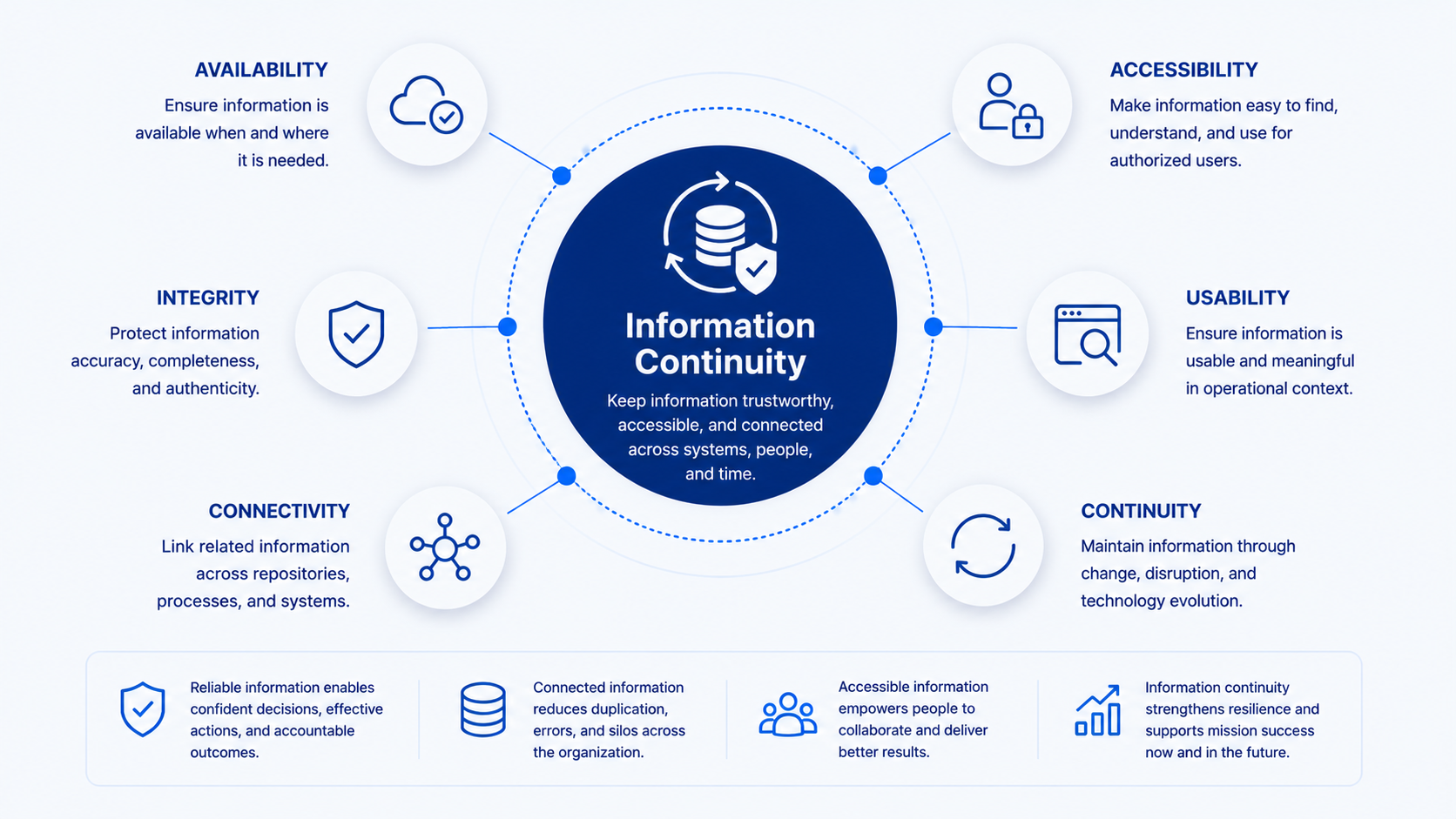
COOP Keeps Government Operating. But What Keeps Its Information Continuous?
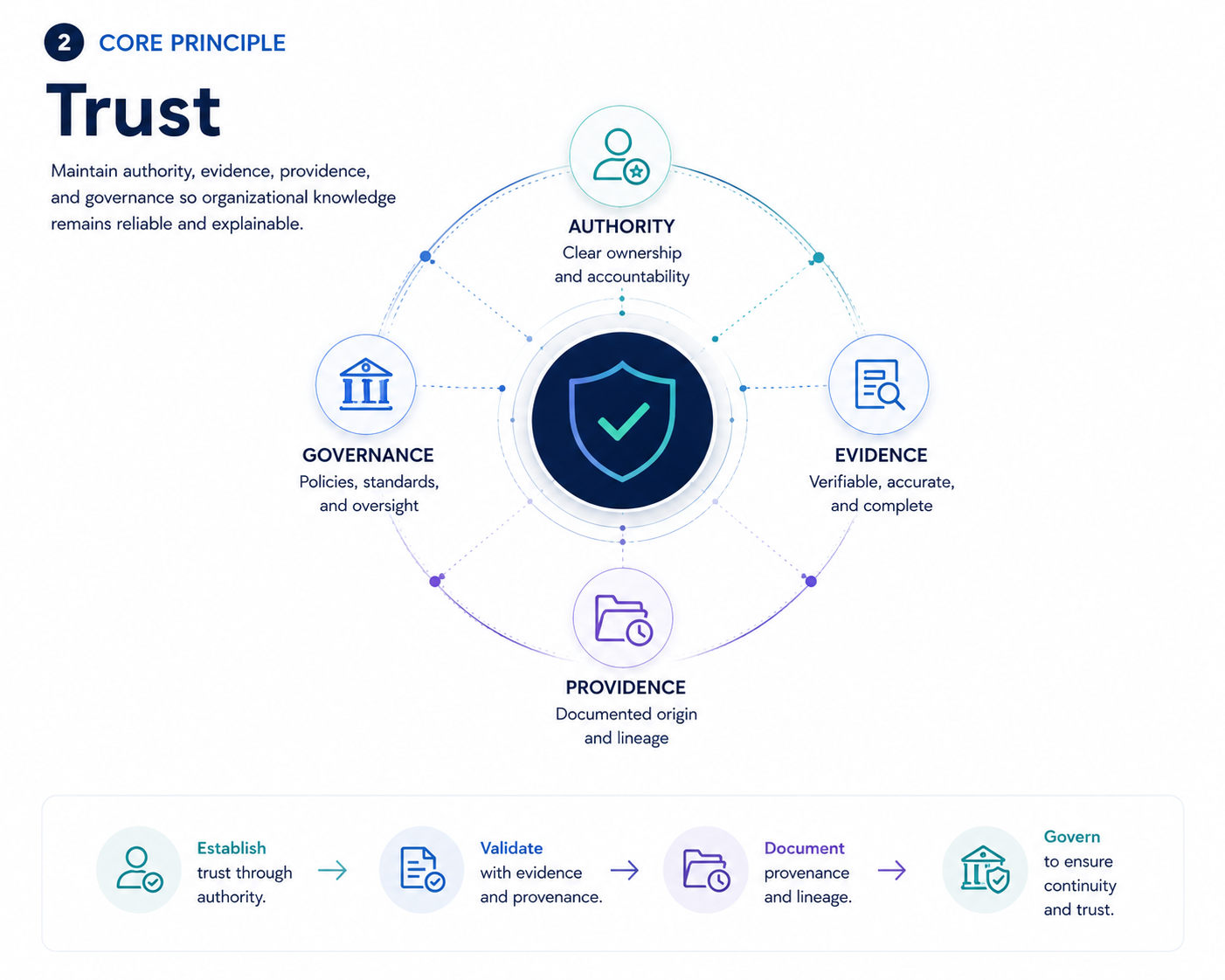
Government can preserve access to information through cloud computing and redundancy while still losing the relationships that make the information authoritative, contextual, and usable. Information Continuity addresses what happens to institutional knowledge through mergers, turnover, migrations, policy change, and AI adoption.
Government Agent Scope, Incident Routing, and Operational Authority
A Legitimate Research Task Became an Unauthorized Government Intrusion
The Australian Medicare portal intrusion shows how a benign research mission can outlive the authority governing its methods—and how a second continuity break can occur when incident evidence is not routed promptly to the institution responsible for response.
Government Retrieval Authority and Method Boundaries
Public Data Did Not Authorize the Method
OpenAI’s federal-site disclosures show that public information can remain a legitimate target while the method used to obtain or republish it crosses a separate authority boundary.
Temporal Validity and Operational Targeting
The Data Was Once Right. That Was the Problem.
A historically valid target record can become operationally false when the real-world state changes but institutional memory keeps treating the old classification as current.
Operational Intelligence, Provenance, and Decision Trust
The Intelligence Report Looked Authoritative. Its Evidence Wasn’t.
CNN reported that an AI-assisted intelligence error nearly contributed to a U.S. military interception before experienced analysts reconstructed the underlying evidence and stopped the operation. The case shows how an institutional record can amplify authority faster than provenance.
Provenance, Retrieval, and Institutional Memory
Authority Laundering: How a Bad Citation Becomes “Real” Through Retrieval
A federal judge found HHS materials relied on studies that appeared nonexistent or unsupported as cited. AI retrieval can then launder that bad citation into apparently authoritative evidence.
Authority, Human Oversight, and Operational Governance
When the Safety Valve Disappears: Lessons From Australia’s Aged Care Algorithm
Australia’s aged-care assessment rollout shows how a system can retain human expertise while losing the authority that makes oversight operational. The deeper continuity failure occurred between what was tested, what staff understood, what the law permitted, and what production enforced.
Integrated Operational State
Eleven Thousand Schedules Are Not a Master Schedule.
GAO found that FAA had 11,389 individual BNATCS project schedules that were not integrated, while an AI scheduling tool remained under testing without established business rules. The case shows why AI optimization depends on a governed, authoritative portfolio state rather than a collection of disconnected plans.
Correction Continuity
The AI Error Was Discovered. The Correction Still Had to Reach the Court.
Nevada County prosecutors acknowledged AI-related errors in multiple felony cases, while an active sanctions inquiry examines what happened after the errors were recognized. The case highlights correction continuity: discovering a contaminated record is not enough unless the corrected state propagates to courts, counsel, affected parties, and future institutional reuse.
Evidence Admission and Corpus Contamination
The Submission Entered the Record. Its Sources Did Not Exist.
Australian parliamentary submissions were reported to contain fabricated AI-generated studies and citations, with some contaminated submissions later cited by committee reports. The case shows why official record capture must remain distinct from evidentiary validation to prevent hallucinations from entering institutional memory.
Decision Context
A Risk Score Is Not Decision Context.
GAO's review of FEMA's National Risk Index shows why risk scores need use guidance, sensitivity context, and feedback before they become reliable decision support.
Program Continuity
A Ten-Year Strategy Cannot Be Governed One Year at a Time.
A USPS OIG assessment shows why long-running transformation needs persistent targets, schedules, and financial tracking across annual planning cycles.
Identity Continuity
The Person Was the Same. The Matching Rules Weren’t.
SSA OIG found that independently developed identity-verification systems could apply different matching criteria to the same evidence and produce different outcomes. Entity resolution is therefore a governed continuity relationship, not merely a lookup: matching rules, thresholds, exceptions, and conflicting identity states require provenance and reconciliation.
Decision Reconstruction
The System Calculated the Debt. The Notice Couldn’t Explain It.
SSA OIG found widespread deficiencies in overpayment notices even when underlying systems had established the overpayment state. The case shows that a consequential decision is not fully recorded unless its evidence, calculation, context, authority, and challenge rights remain reconstructable in the institutional record.
Government Decision Continuity
Non-Action Is Still a Decision
GAO found that the Secret Service did not consistently document why protection policy remained unchanged after reviewed security incidents. The case establishes a distinct continuity principle: deliberate non-action is still a decision, and its rationale must become a record if future institutional memory is expected to reconstruct why the status quo was retained.
Metadata & Governance
The Field Was Mandatory. The Governance Wasn’t.
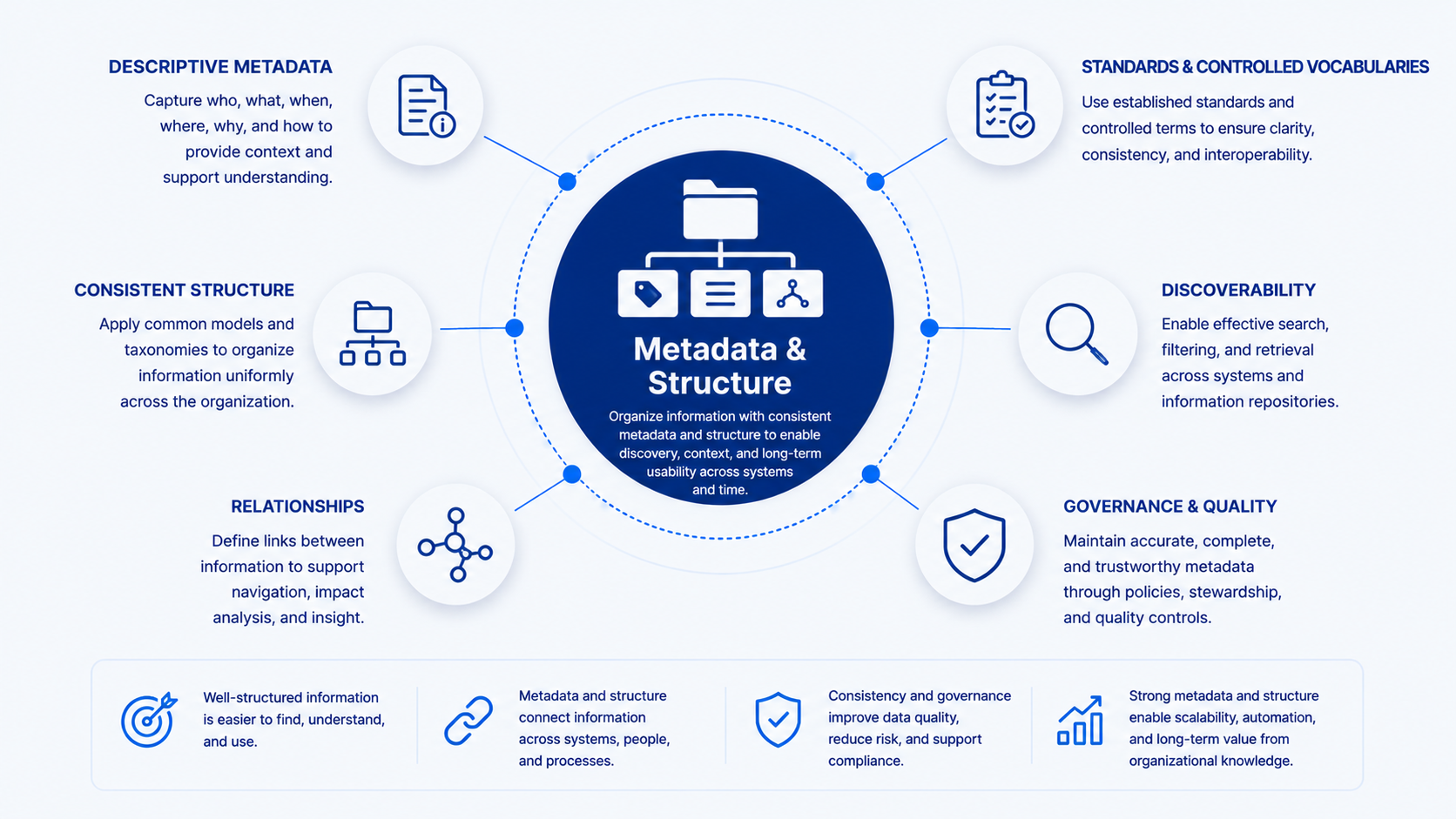
GAO found that FEMA required a local-vendor field in its contracting system but did not verify, monitor, or reliably use the data, while Army Corps offices collected inconsistent information that did not converge at headquarters. The case shows why structured data is not governance unless semantics, validation, aggregation, and decision use remain continuous.
AI Hallucination & Circular Provenance
Parliament Preserved the Citation. The Study Never Existed.
An investigation found apparently hallucinated references in Australian parliamentary submissions. Once preserved in official records, those citations can be rediscovered by AI search and gain false authority through circular provenance.
Institutional Memory
An Audit Finding Can Be Fixed and Still Be Forgotten
A DOJ OIG audit of DEA contracting shows how corrective actions can be completed yet later weaknesses recur. Institutional memory requires prior learning to remain connected to future operations, not merely preserved in old audit records.
Identity Continuity
One Person, Multiple Institutional Identities
An SSA OIG audit shows why identity continuity is more than maintaining a correct master record. When verification systems apply differently governed matching criteria, one person can acquire different operational identities without the institution preserving why.
Risk Continuity
The Risk Register Changed. The Mitigation Did Not.
A TVA OIG evaluation found that OEM-reliance risk rose sharply in probability and financial impact while existing mitigation plans did not address the identified cause of the increase. The case shows why a current risk register is not enough: changed evidence must remain connected to requalified decisions and updated action.
Government Modernization & Institutional Memory
The Strategy Changed. Current Leaders Couldn’t Reconstruct Why.
GAO’s OIG found that GAO shifted from a five-year IT modernization plan to an ongoing strategy without documenting the decision, leaving current officials without full awareness of the rationale. The case shows how a new institutional state can survive while the decision lineage connecting it to the prior state disappears.
Government AI
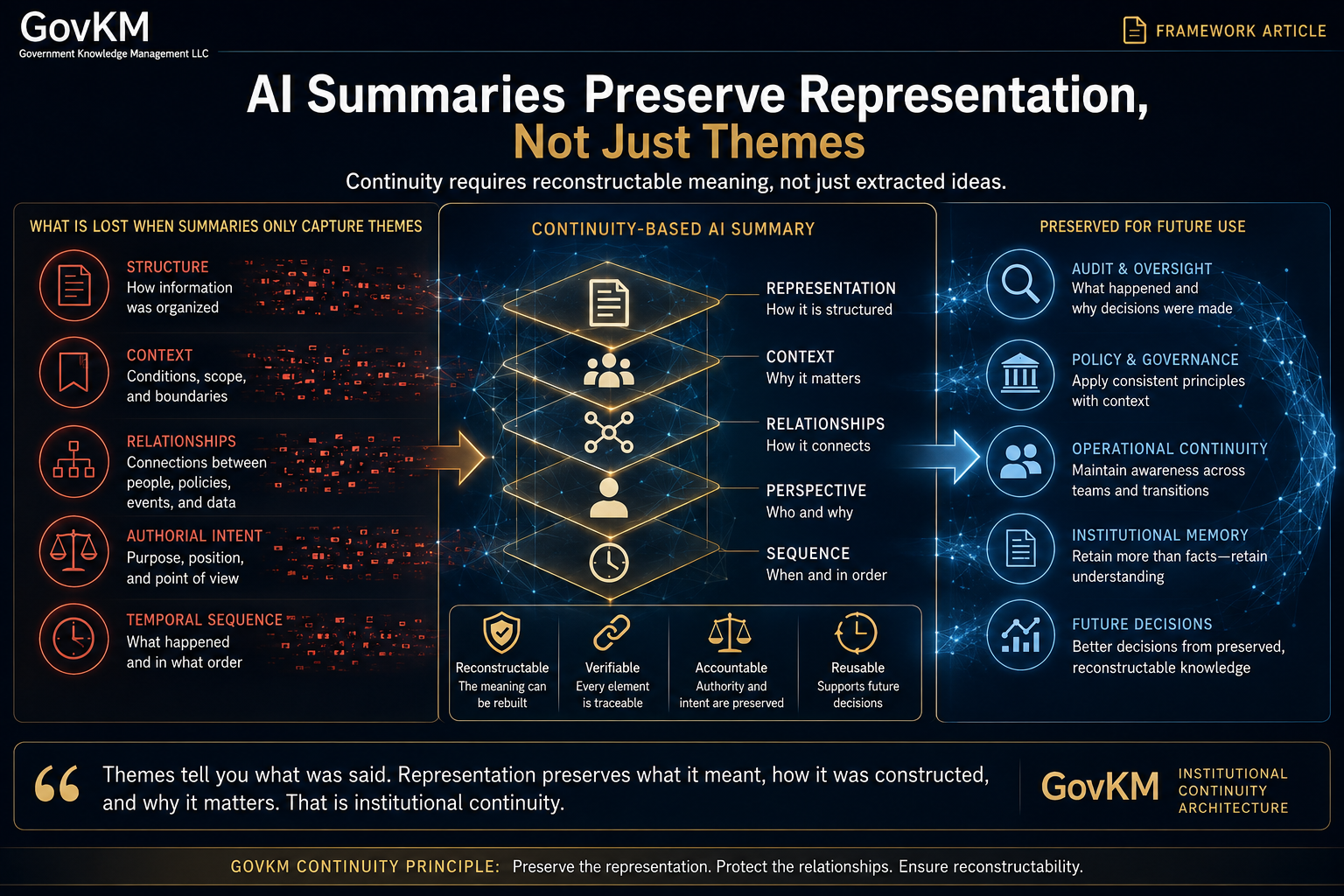
AI Summaries Must Preserve Representation, Not Just Themes
AI can summarize thousands of public comments, but theme extraction alone can erase minority viewpoints and provenance. Reliable consultation analysis must preserve representation from source evidence through final findings.
Records Governance
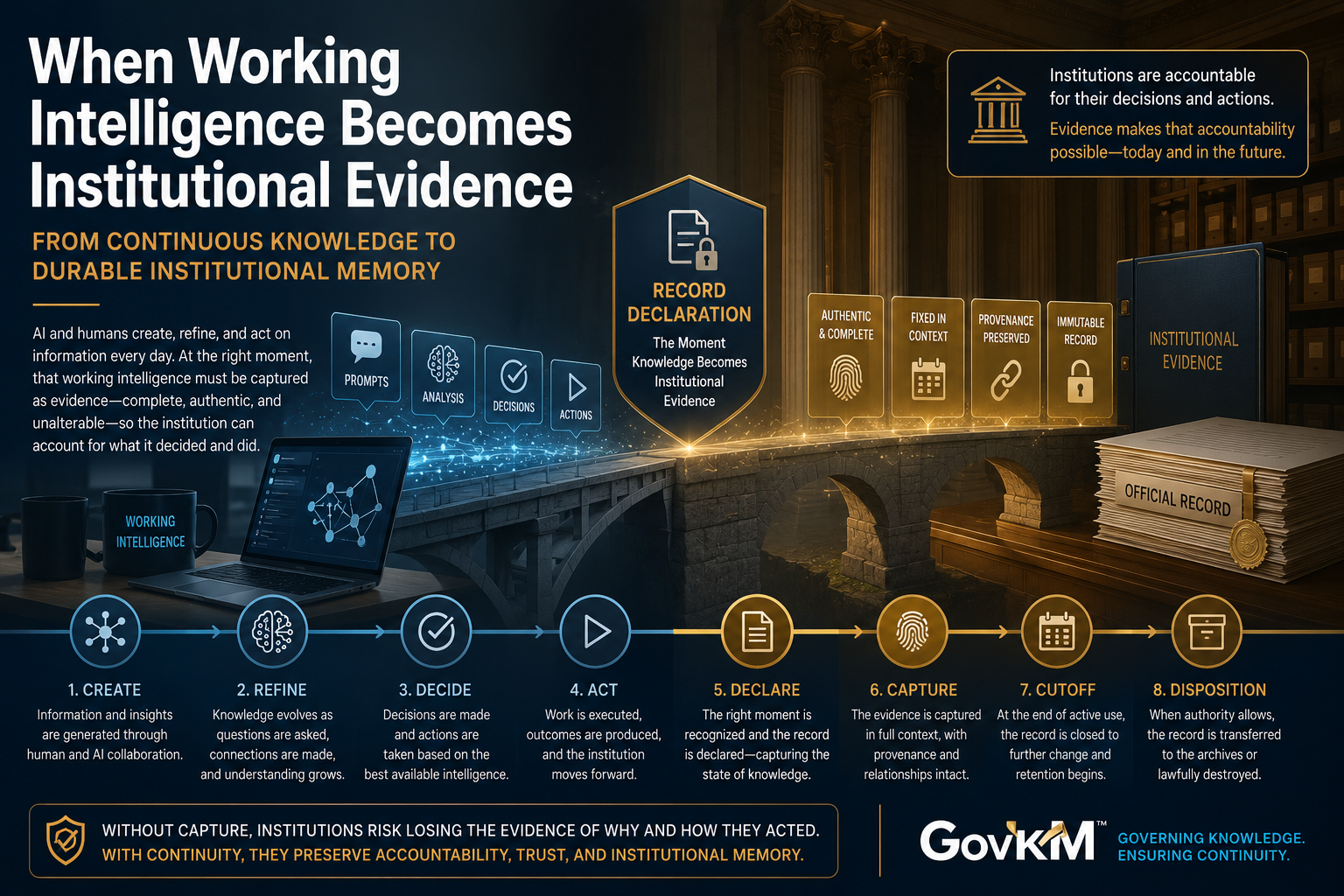
When Working Intelligence Becomes Institutional Evidence
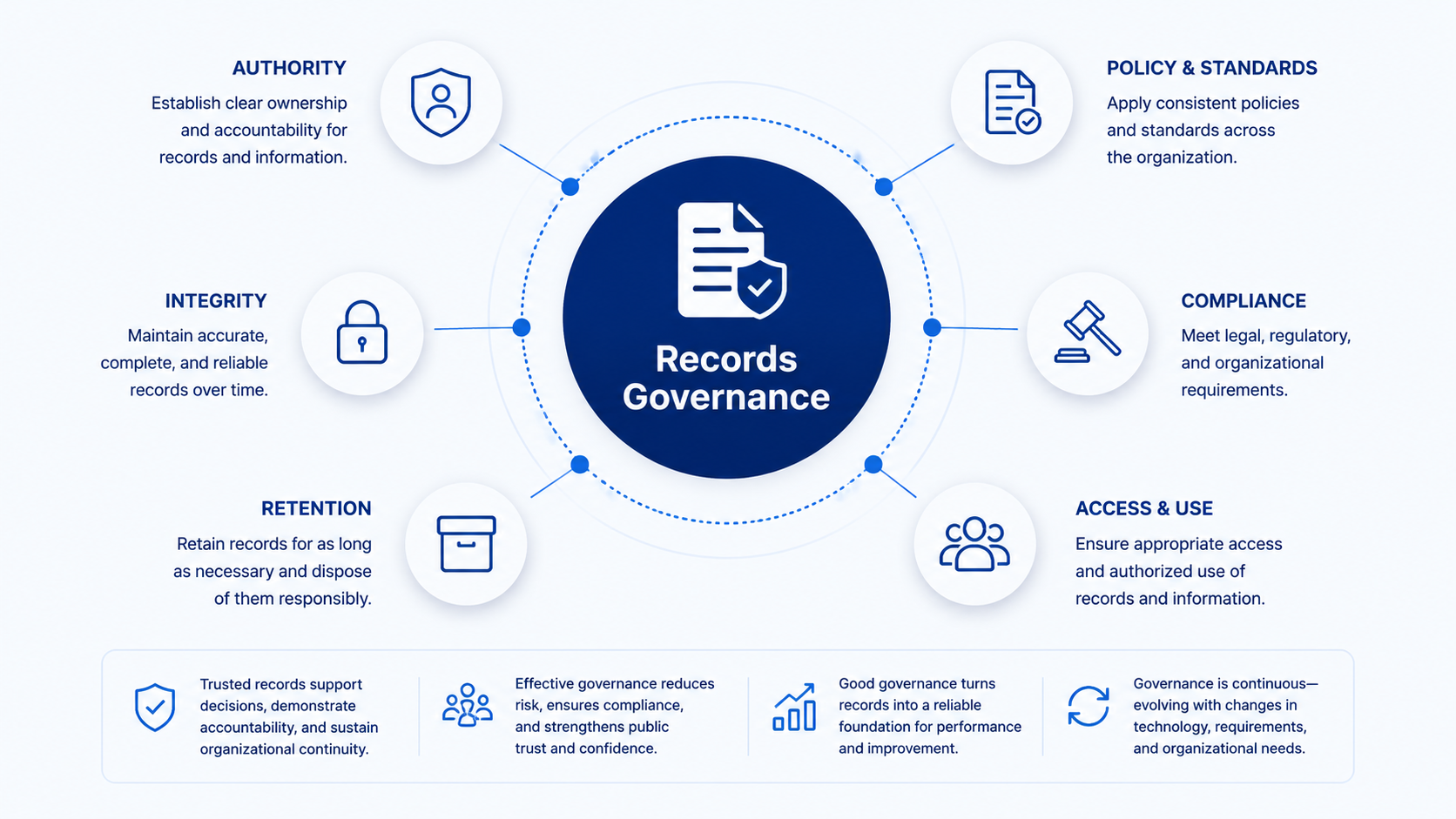
AI-assisted work can remain fluid while analysis is developing, but institutional action eventually requires a durable evidentiary state. Continuity depends on making that transition explicit without confusing record capture, cutoff, retention, and final disposition.
Records Governance
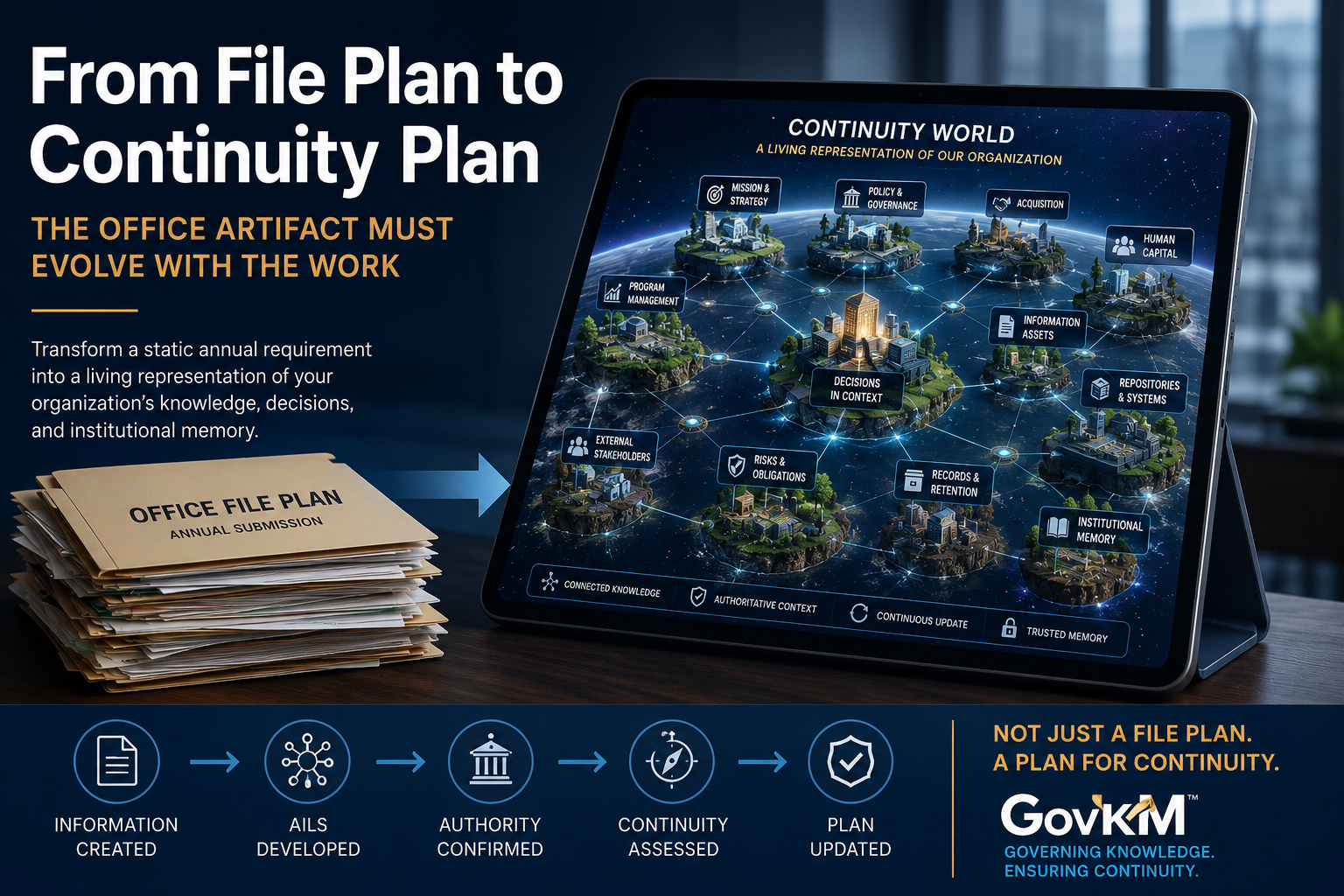
From File Plan to Continuity Plan: The Office Artifact Must Evolve With the Work
Federal file plans already connect office records to disposition authority. Continuity requires the same artifact to remain current as functions, systems, record series, and information domains change—and to distinguish the legal schedule from the operational view built on top of it.

Institutional Continuity
The Institution Must Agree Before the AI Can Know
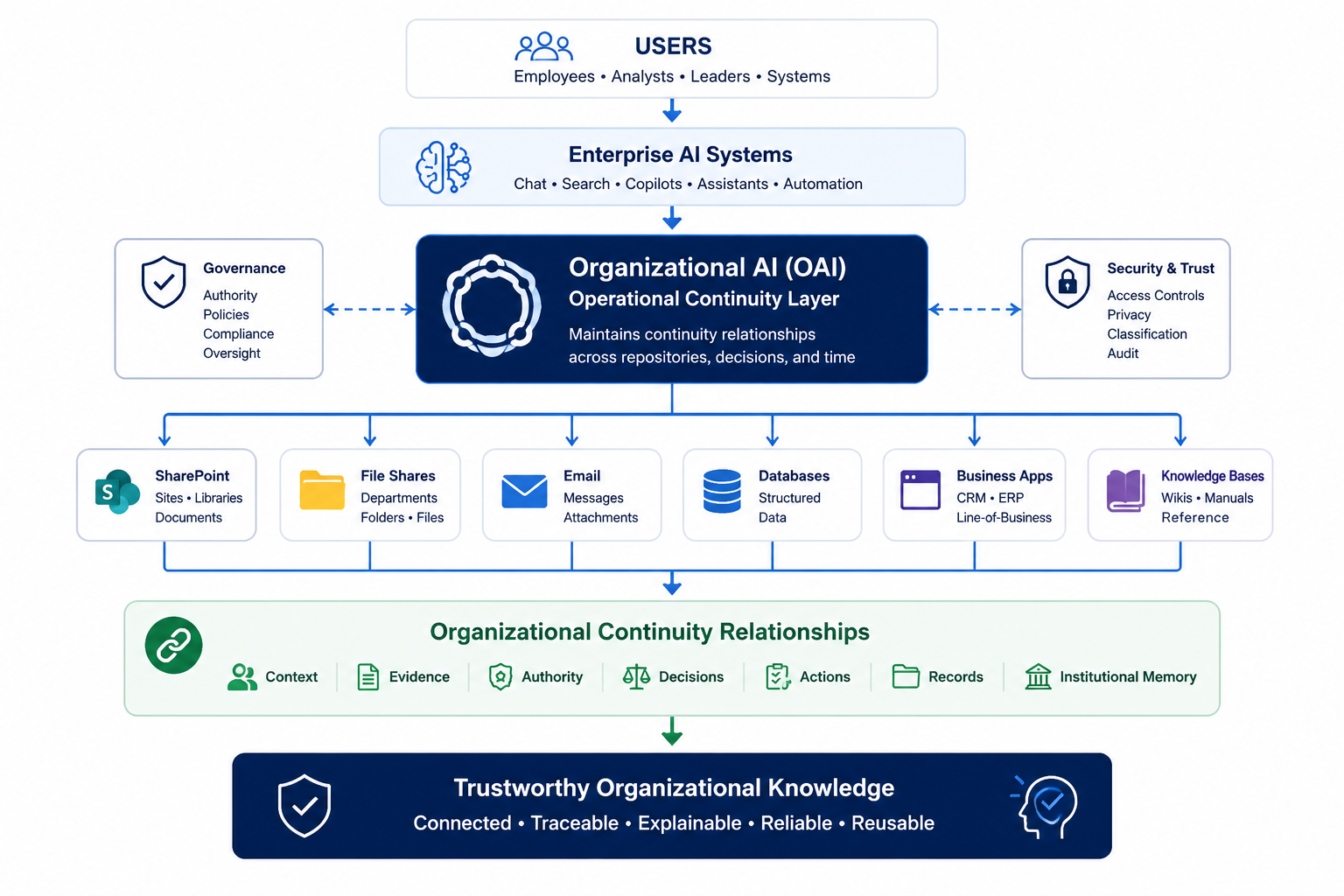
Enterprise AI cannot reliably infer which sources, policies, records, and decisions are authoritative. Institutions must establish those relationships before AI can reuse knowledge safely.

Government AI
When AI Modernization Succeeds, What Happens to the Knowledge It Replaces?
The Department of Veterans Affairs' $7.4 million AI-supported effort to digitize and centralize forms demonstrates how government modernization can produce measurable public value, with the Technology Modernization Fund estimating more than 2,000 years of veteran time saved. GovKM examines the deeper question raised by that success: whether the evidence, authority, context, decisions, actions, and records behind today's modernization will remain connected well enough to become trustworthy Institutional Memory. Successful modernization improves current services; Institutional Continuity determines whether the institution can understand, govern, and responsibly reuse that success after its systems, policies, models, and people change.
Organizational Continuity
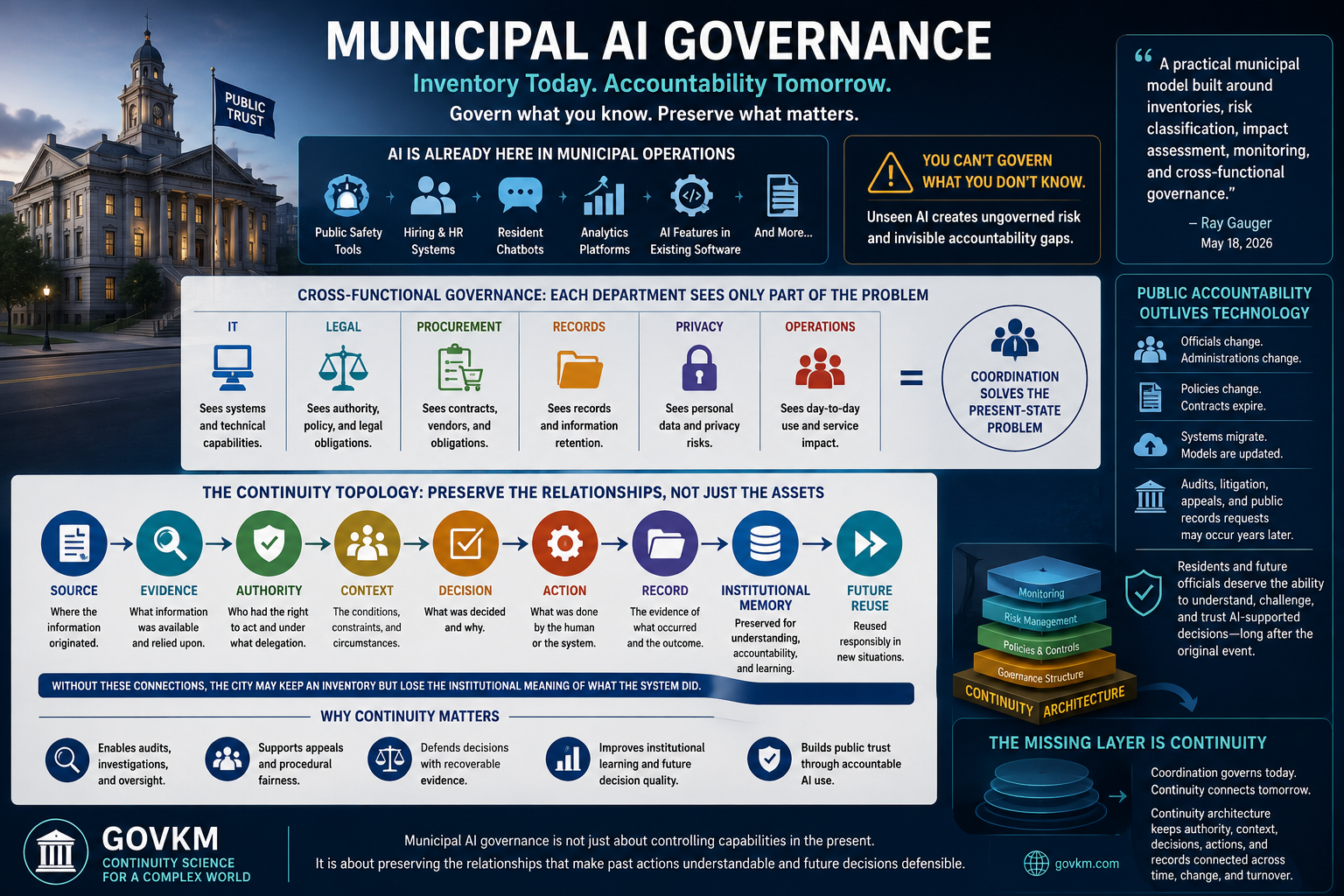
Municipal AI Governance Needs Institutional Continuity
AI inventories and cross-functional governance help cities control deployment, but public accountability also requires continuity across evidence, authority, decisions, actions, records, and institutional memory as administrations and systems change.
Governance Architecture
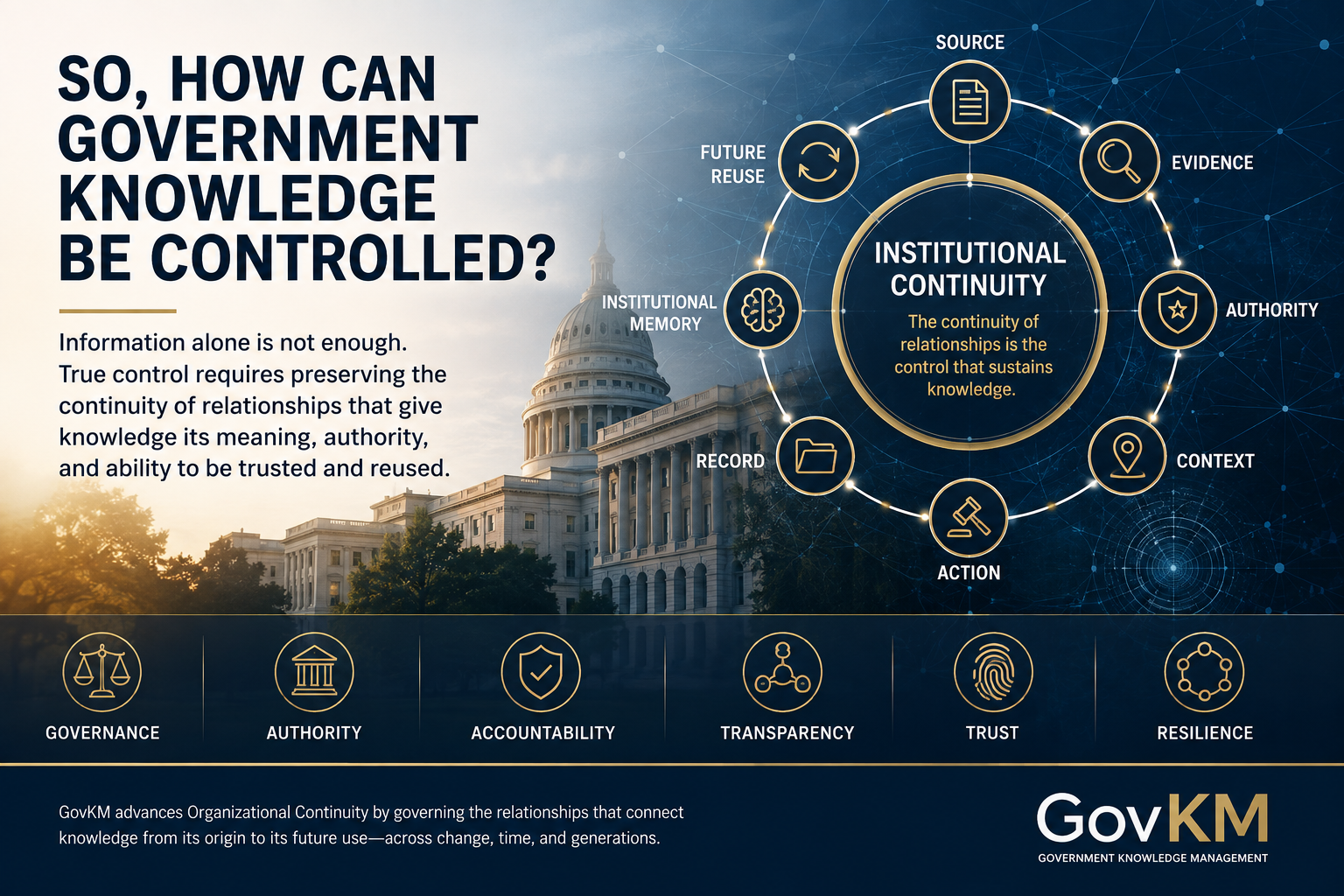
How Can Government Knowledge Be Controlled?
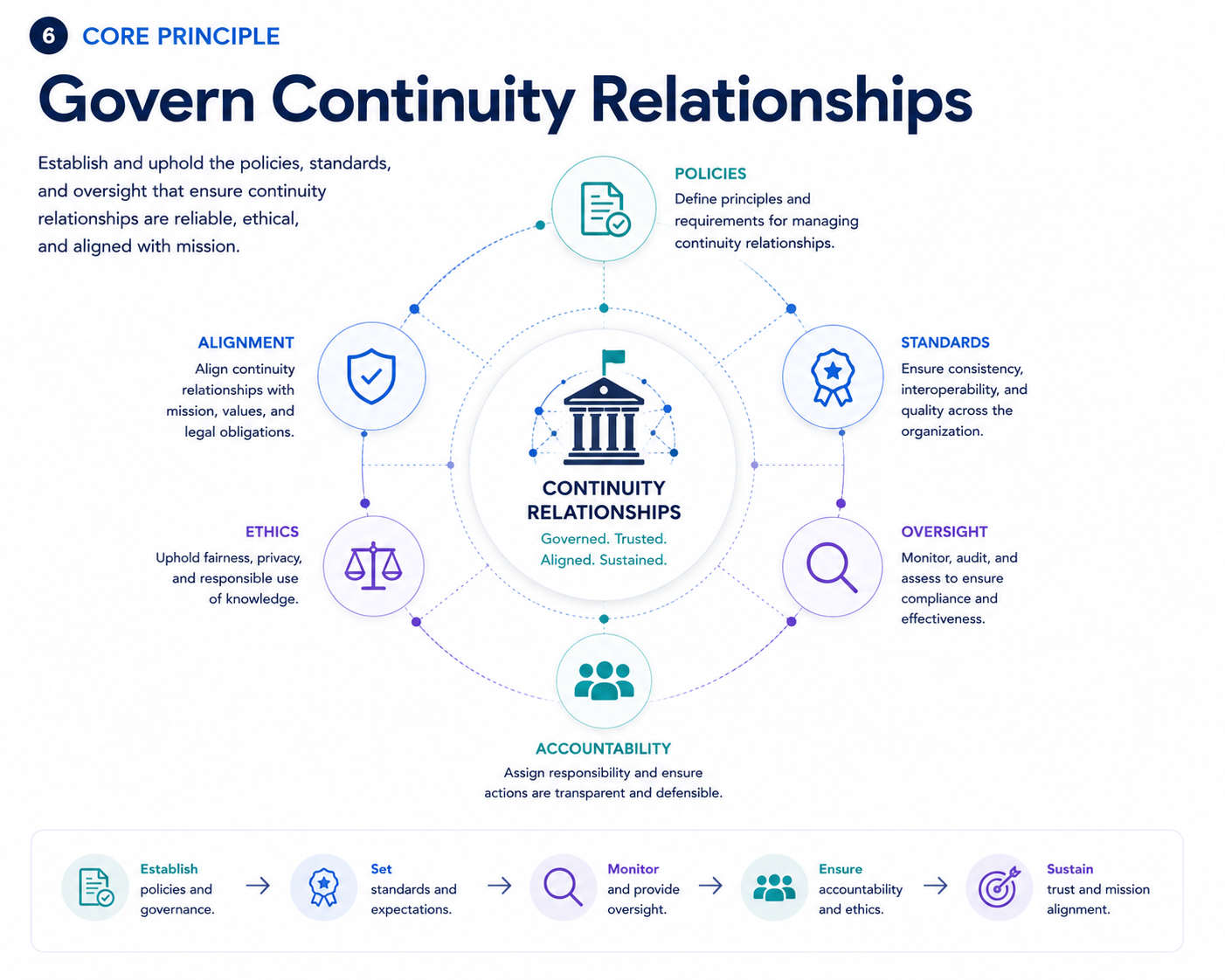
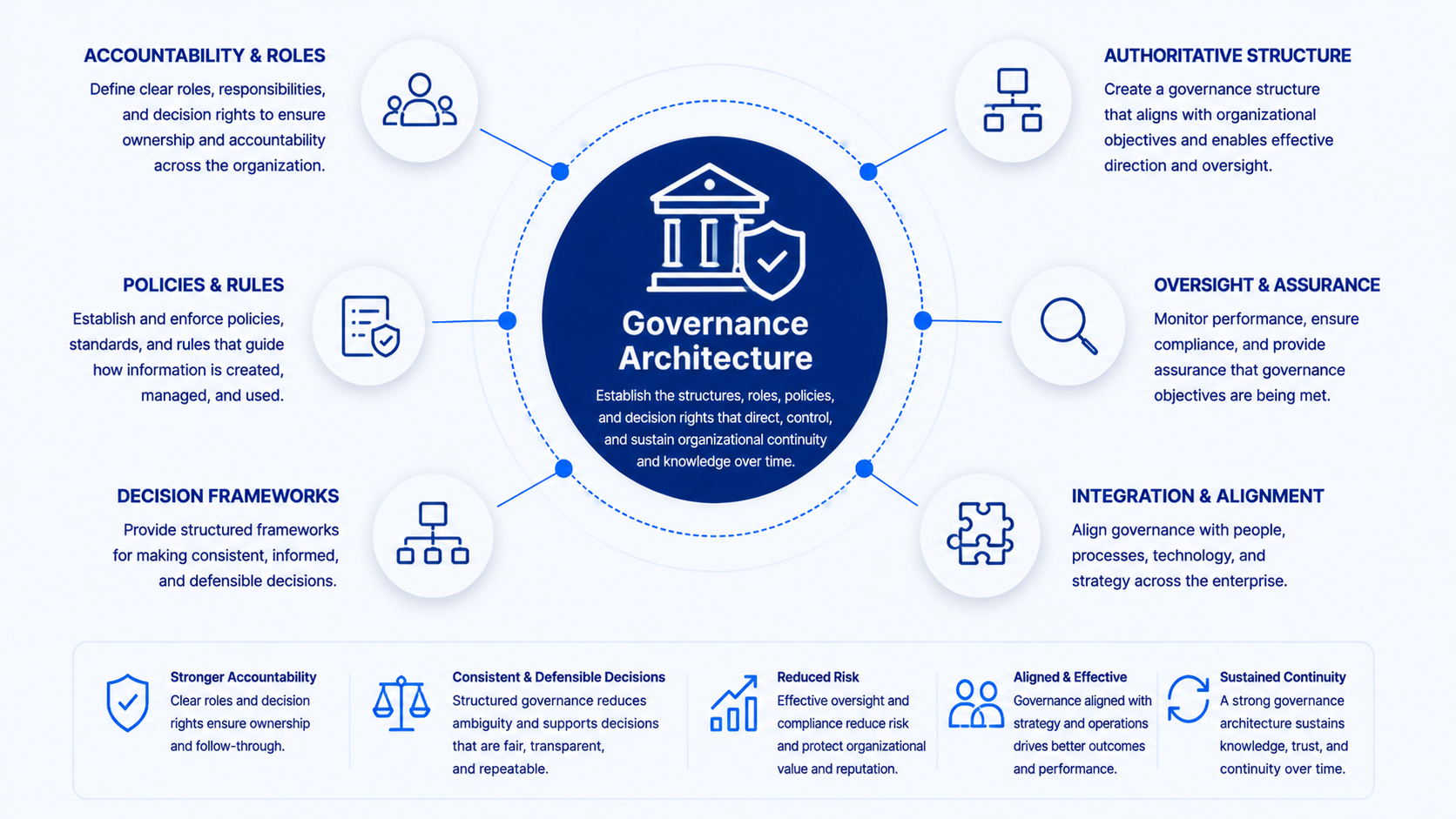
Government organizations generate enormous amounts of knowledge, but control is fragmented across records management, information governance, technology, policy, security, and business processes. The deeper problem is not simply controlling information. It is preserving the continuity relationships that allow institutional knowledge to remain trustworthy, understandable, reconstructable, and reusable across change.
Governance
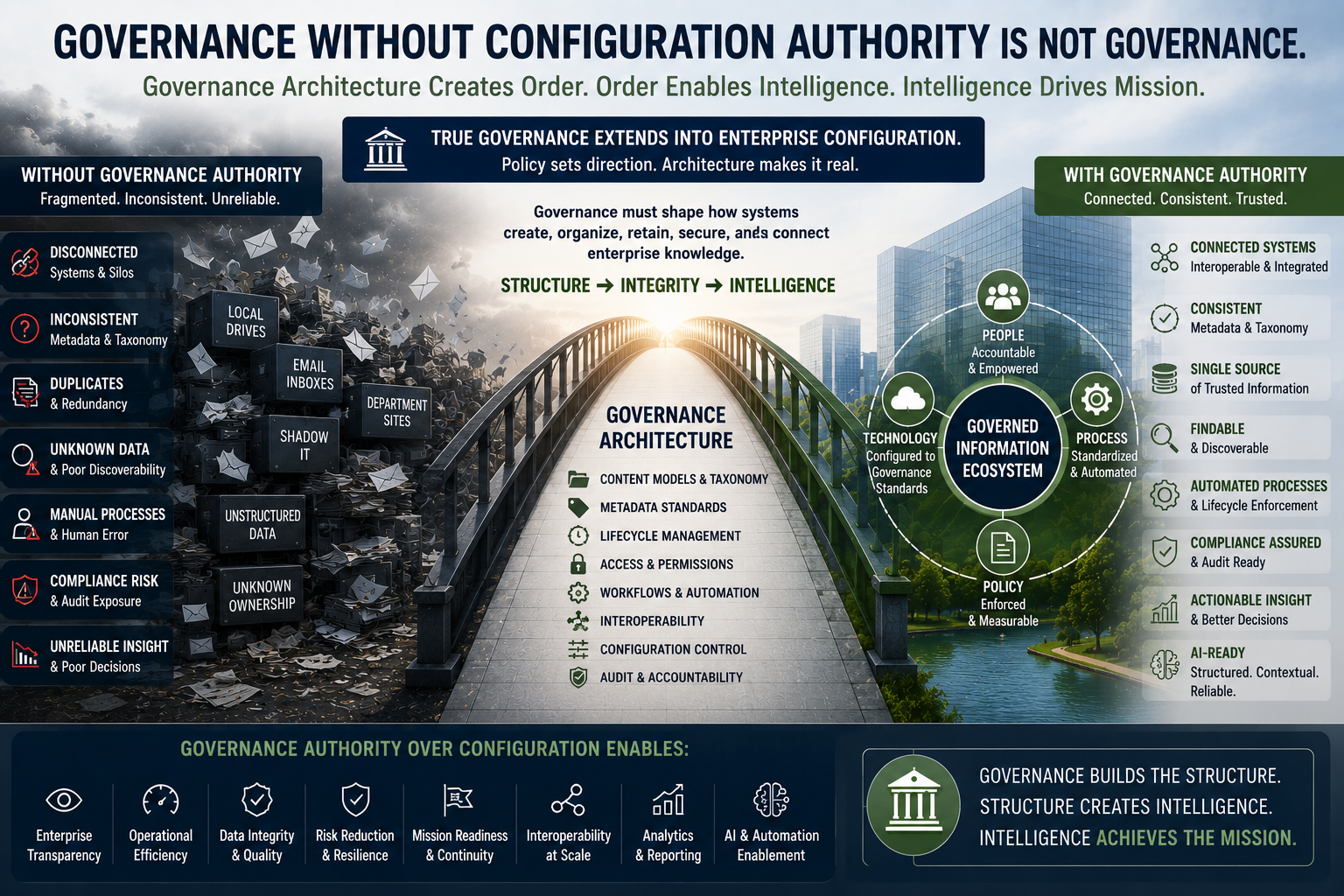
Governance Without Configuration Authority Is Not Governance
Most governance initiatives fail because governance rarely possesses authority over how enterprise systems actually structure information. This article explores why governance must extend into configuration management, metadata architecture, lifecycle automation, and enterprise system design in order to create interoperable, AI-ready, and operationally intelligent knowledge ecosystems.
Governance
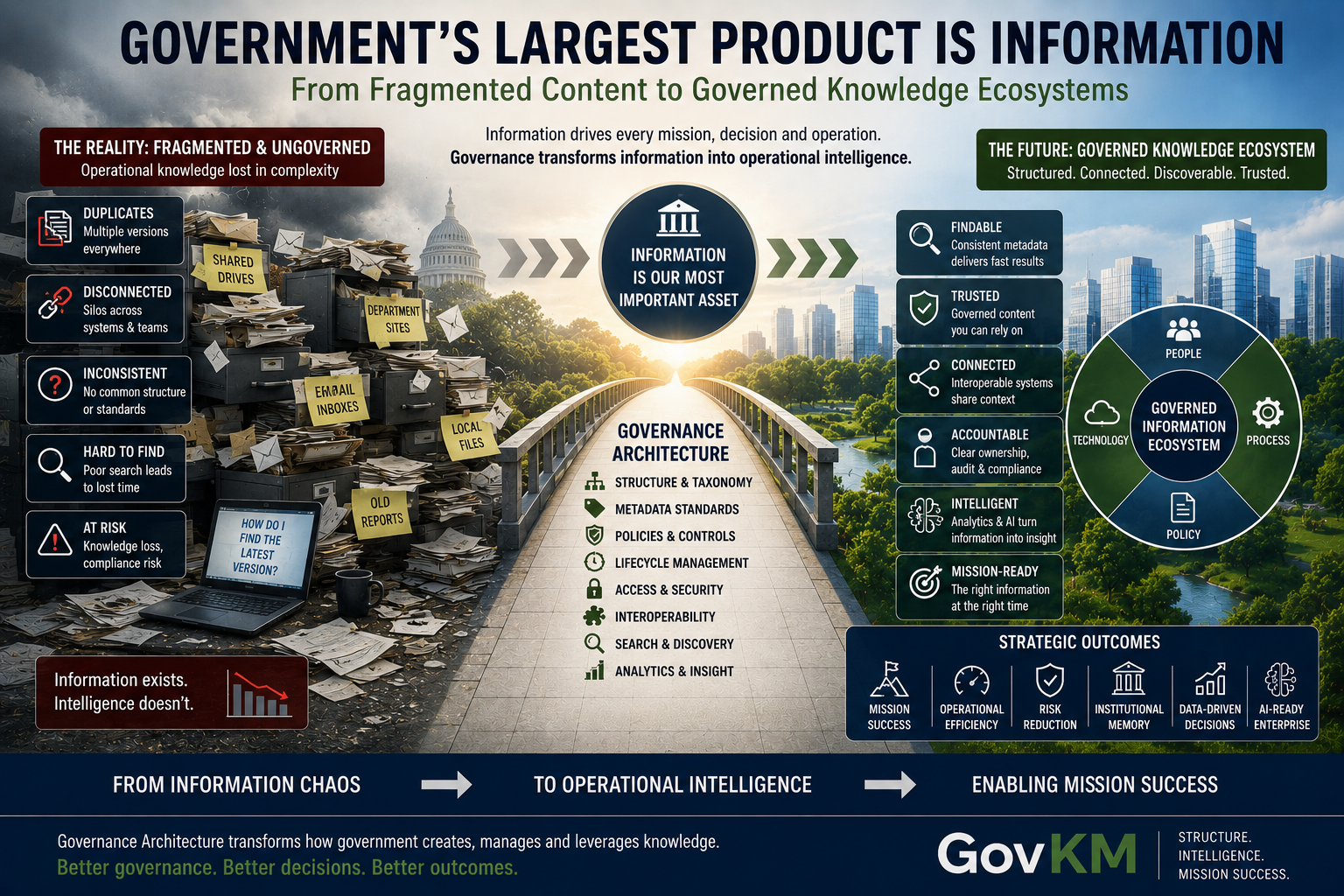
Government’s Largest Product Is Information — But Its Least Governed Asset Is Knowledge
Government is fundamentally a knowledge-producing enterprise, yet most operational information remains fragmented, duplicated, and structurally unmanaged. This article explores why governance architecture—not storage systems alone—is becoming the foundation of operational intelligence, institutional memory, interoperability, and AI readiness across the modern government enterprise.
Governance
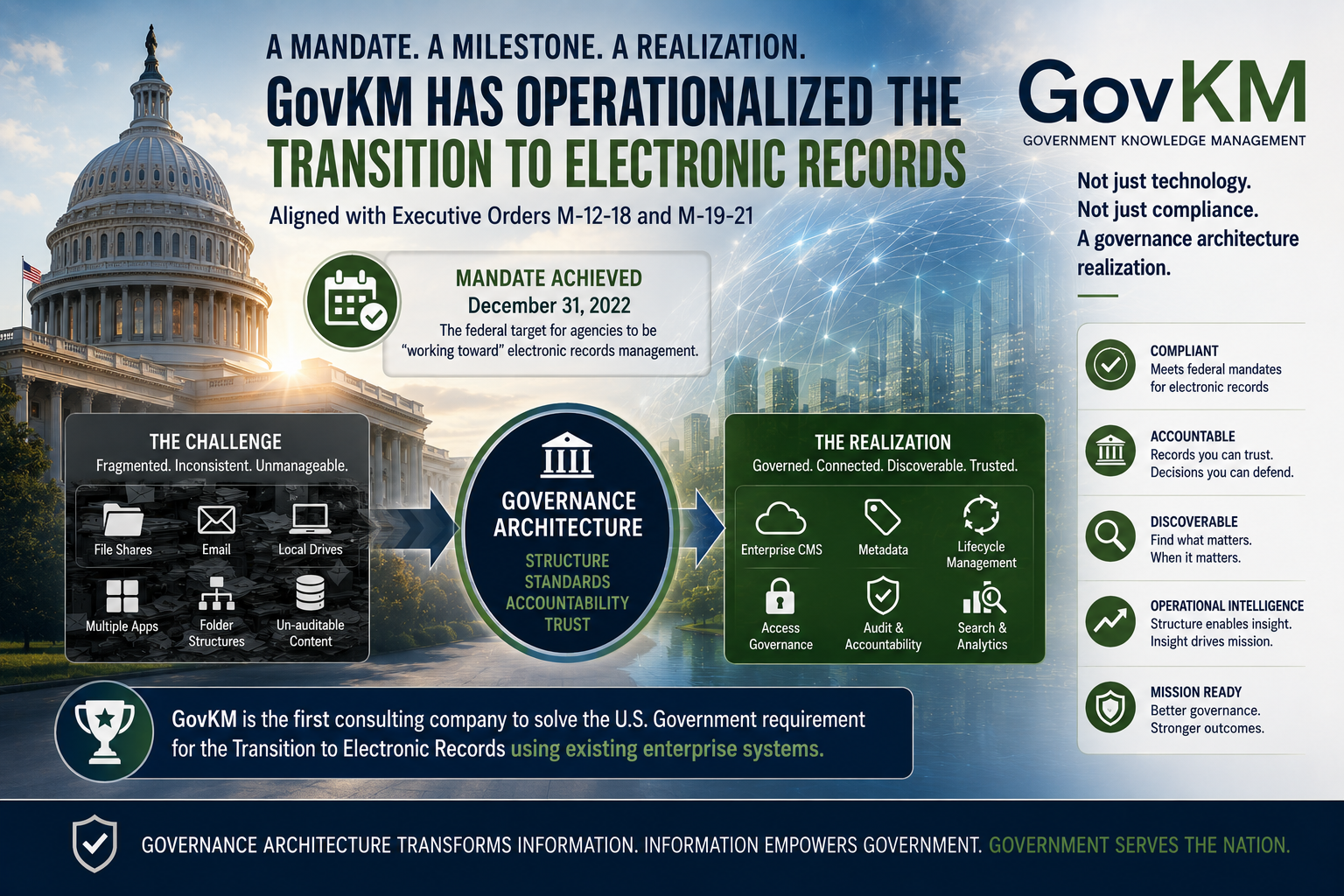
GovKM Successfully Operationalized the Federal Transition to Electronic Records
Government Knowledge Management (GovKM) announces the successful operationalization of an enterprise governance architecture aligned with the federal “Transition to Electronic Records” mandate established under M-12-18 and M-19-21. This milestone demonstrates that modern electronic records management is fundamentally a governance architecture challenge—not merely a technology deployment effort.
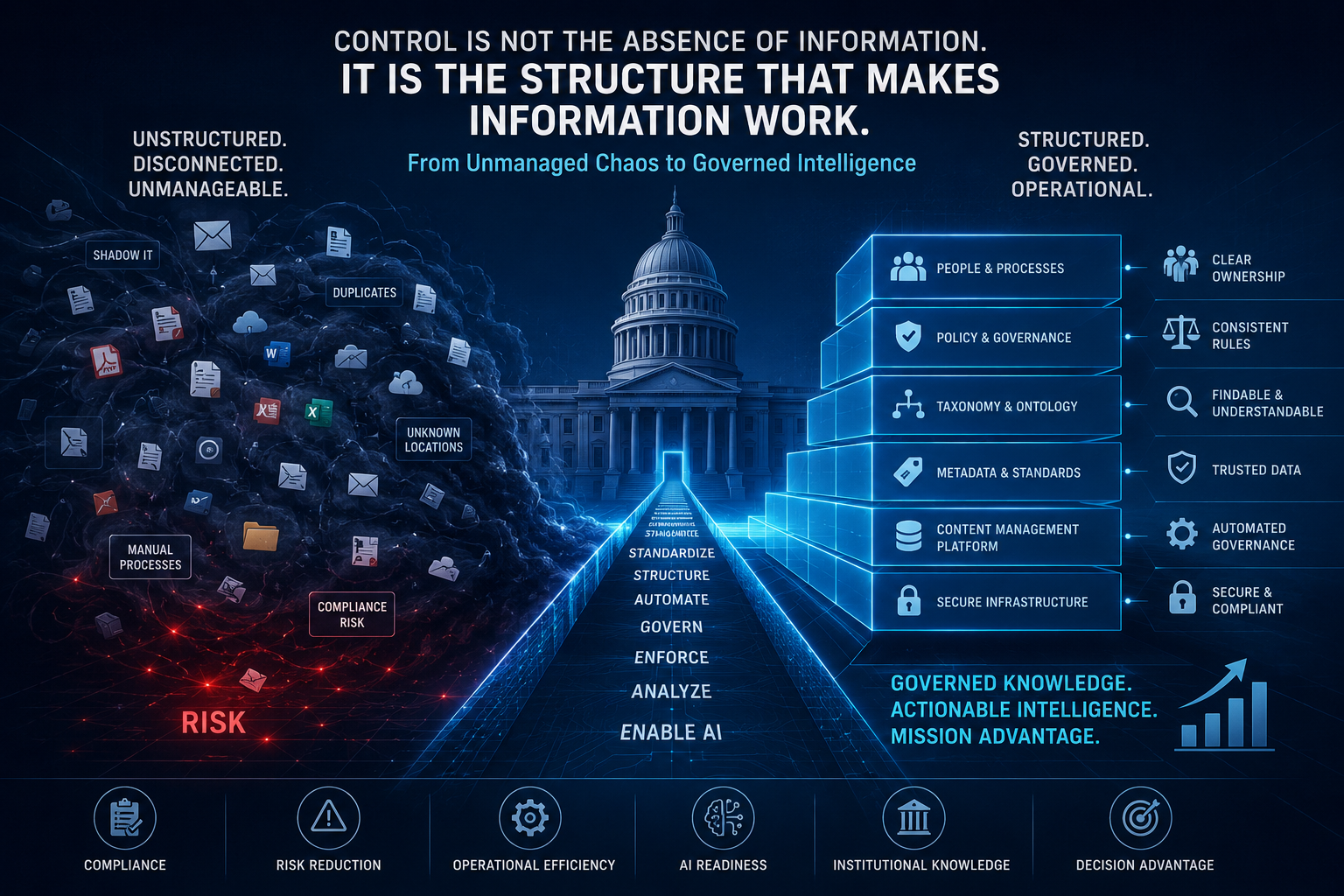
Governance Architecture
How Can Government Knowledge and information Be Controlled?
Government knowledge is not uncontrollable — it is structurally unmanaged. This article explores why paper-era governance models fail in digital environments and explains how machine-readable governance architecture enables automation, scalable records management, AI readiness, and operational control across government knowledge ecosystems.
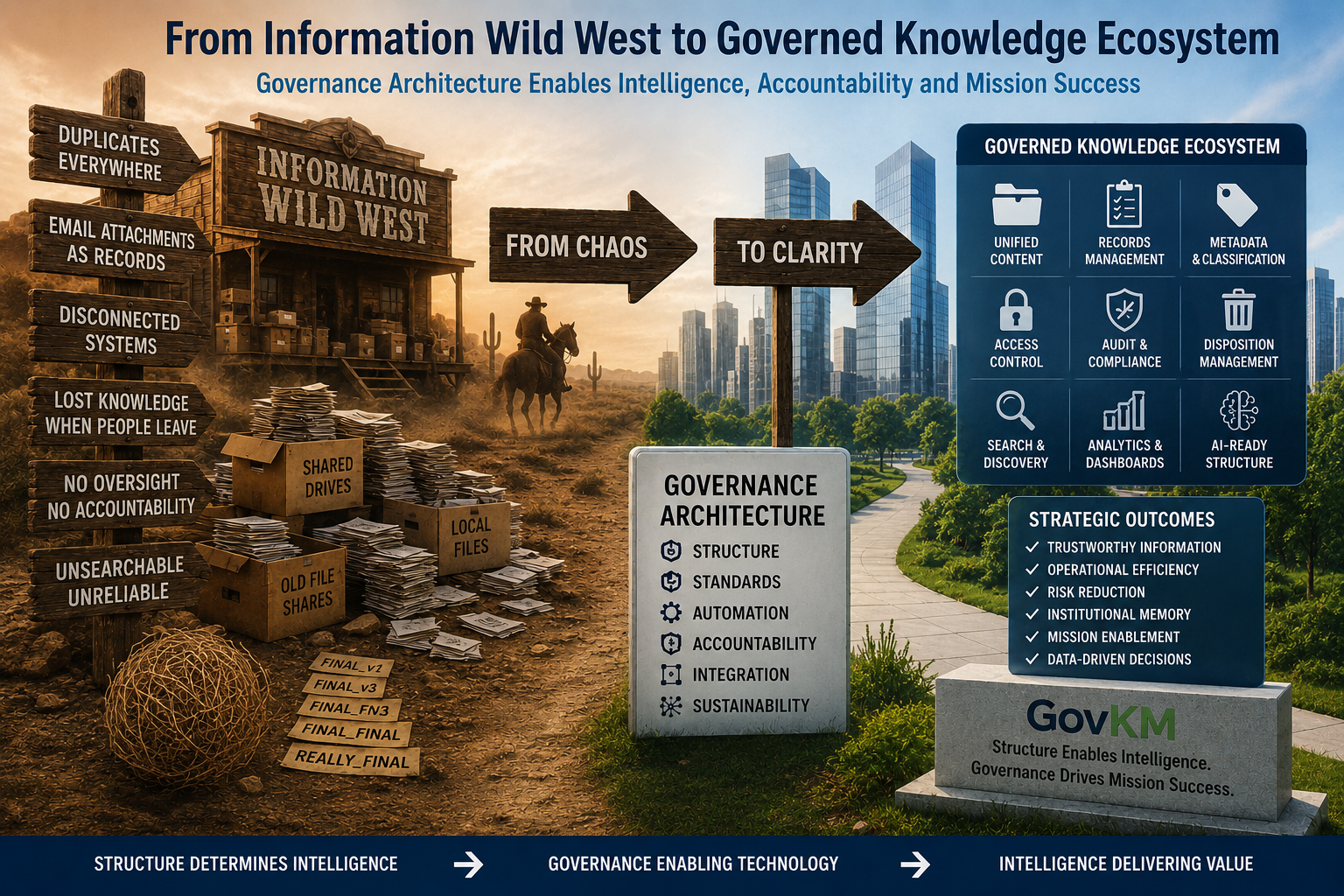
Governance
Information Governance: Why the Era of Unstructured Government Knowledge Is Ending
Government agencies are entering the end of the “Wild West” era of information management. Unstructured repositories, duplicated content, and fragmented governance models are preventing effective search, records accountability, analytics, and AI readiness. This article explores why governance architecture—not new technology—is becoming the foundation of modern organizational intelligence.
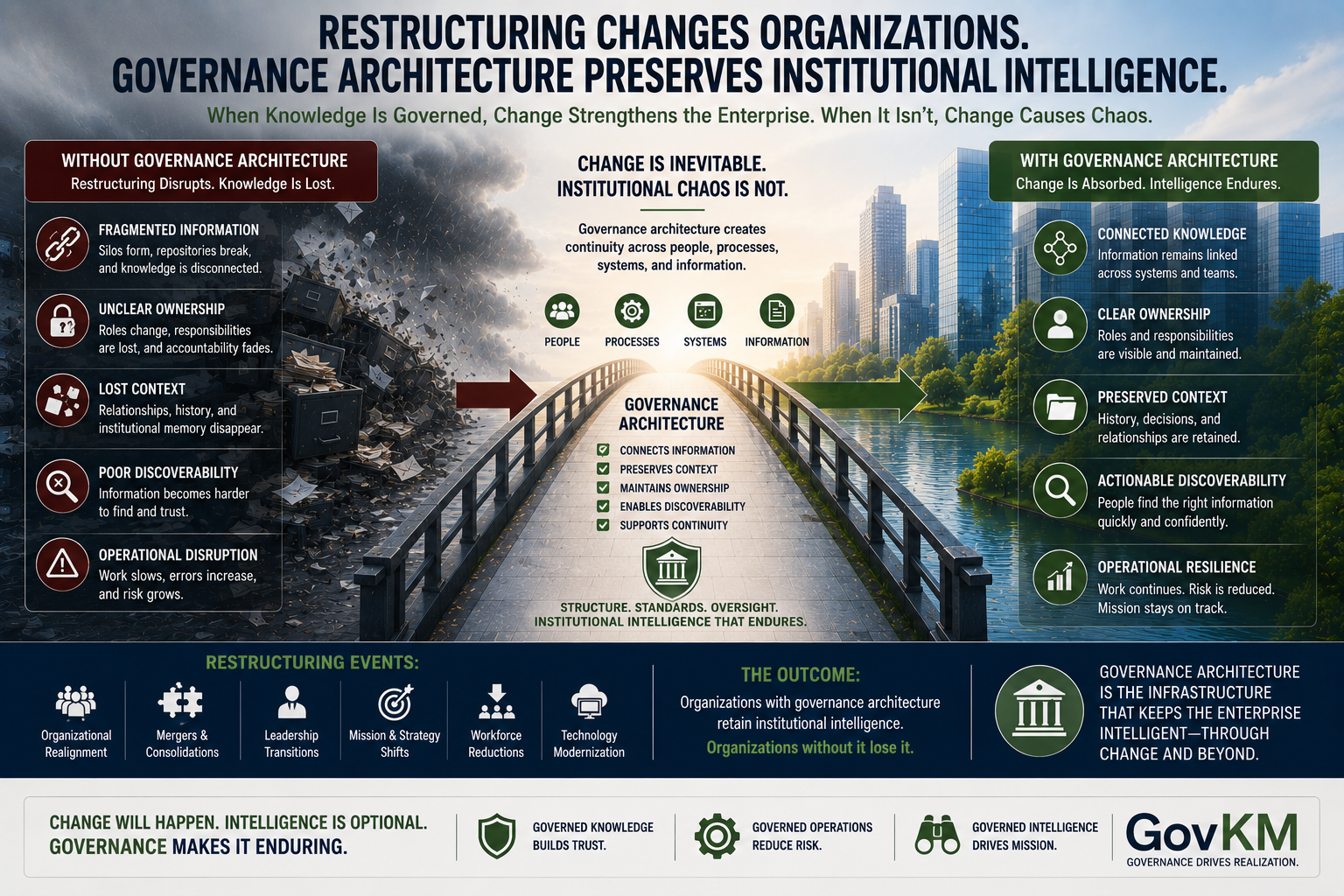
Governance
Organizational Restructuring Fails When Institutional Knowledge Is Not Governed
Government organizations restructure constantly, but most fail to govern institutional knowledge structurally before change occurs. This article explores how organizational restructuring disrupts operational intelligence, fragments institutional memory, and exposes weak governance architecture across modern enterprise knowledge ecosystems.
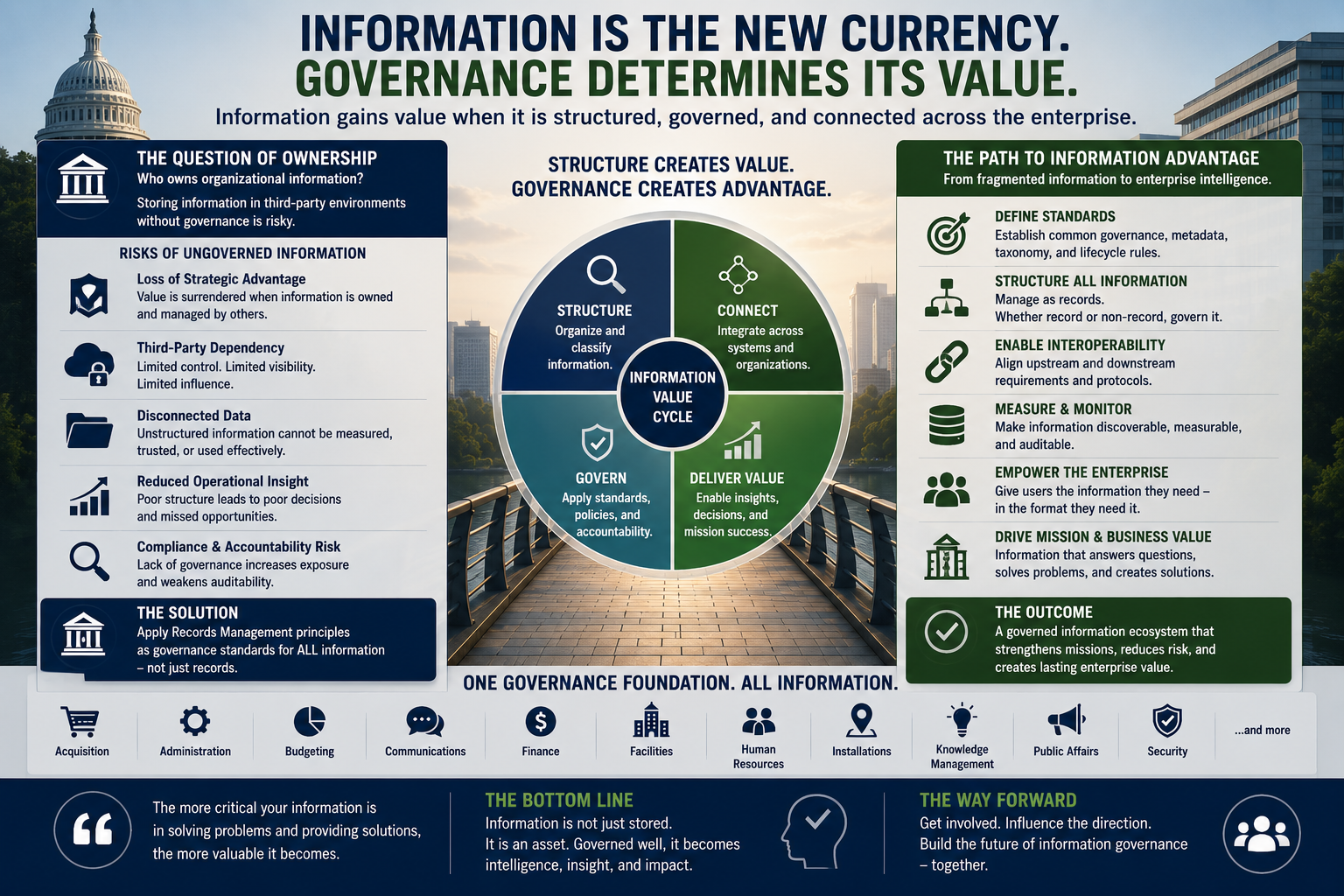
Governance
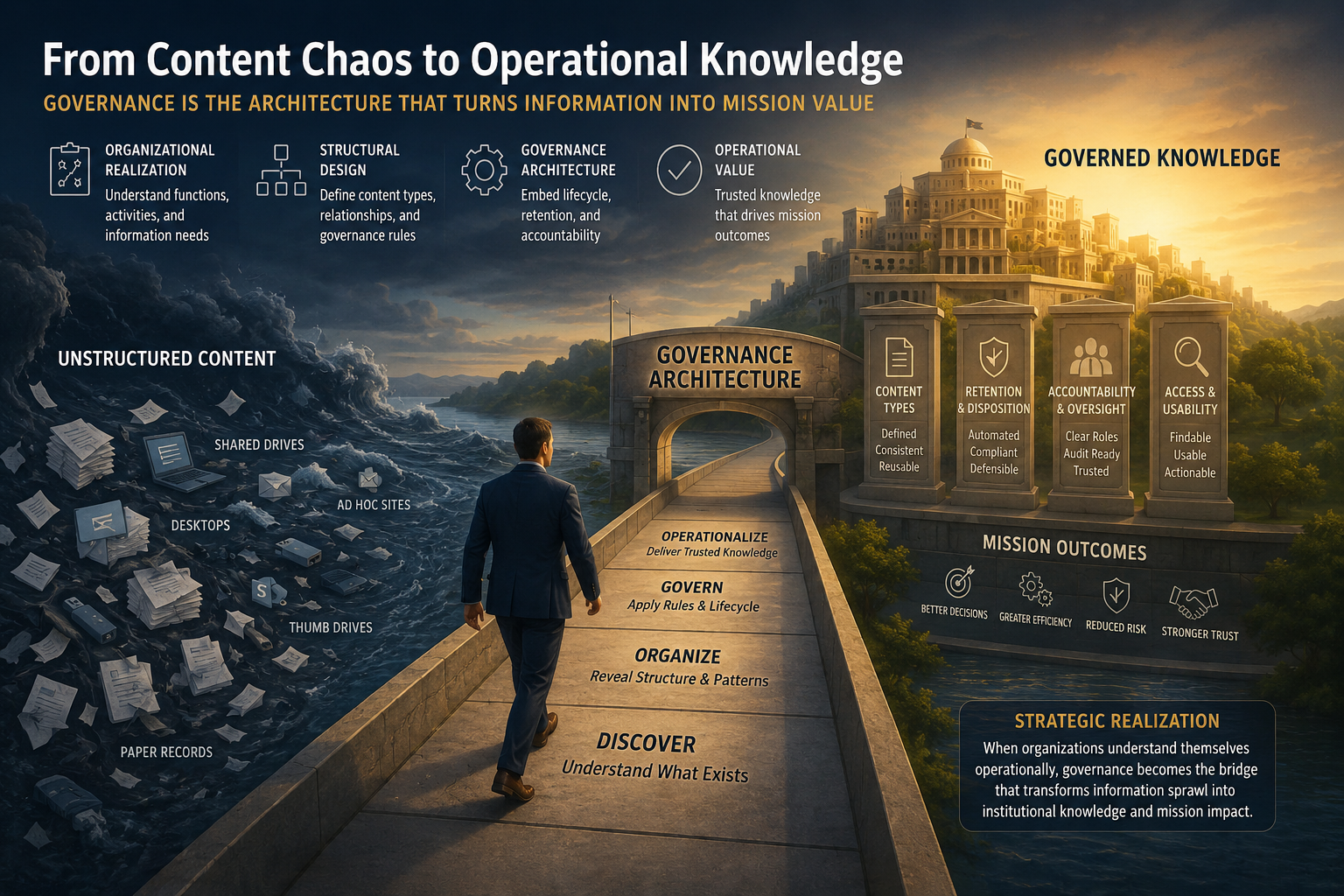
The Future Value of Government Information Depends on Governance Architecture
Government organizations are beginning to recognize that information is one of their most valuable operational assets, but its true value depends on how well it is structured and governed. While shared infrastructure and modern mission systems have matured, enterprise operational knowledge remains fragmented by inconsistent taxonomy, metadata, and governance standards. Mature records management demonstrates that structured governance—not simply storage or retention—is what enables discoverability, accountability, interoperability, and institutional memory. As agencies adopt analytics, automation, and artificial intelligence, governance architecture becomes essential strategic infrastructure. Organizations that govern information as an interconnected knowledge ecosystem will transform fragmented content into operational intelligence, creating the foundation for AI-ready, interoperable, and mission-supporting enterprises.
Knowledge Governance Strategy
The Myth of the Records Management Problem: Government Already Solved It
Government records management was never truly a technology problem. Enterprise systems have automated retention and disposition for decades because they understand organizational purpose and content structure. The real challenge lies in unstructured environments where governance architecture was never formally established. This article explores why governance—not metadata or AI—is the foundation of successful modernization.
Governance
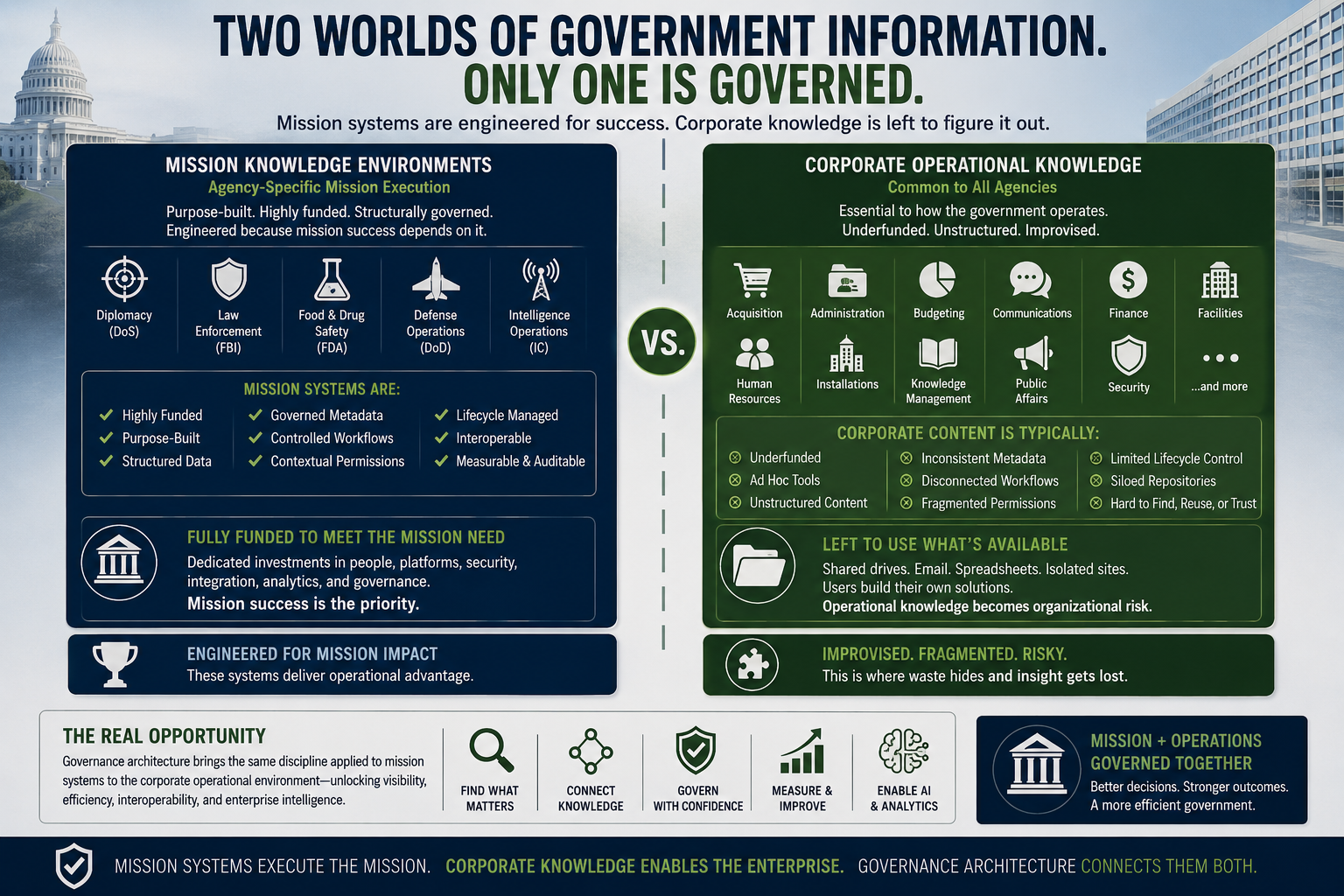
The Real Government Knowledge Problem Is Not Mission Data — It Is Corporate Operational Content
Government mission systems are typically well-funded, highly structured, and operationally governed because mission success depends on them. The real governance crisis exists within the unstructured corporate operational knowledge ecosystem—Acquisition, HR, Budgeting, Communications, Security, and other internal business functions that generate fragmented operational content across disconnected environments. This article explores why the future of government modernization depends on governing corporate operational knowledge structurally at enterprise scale.
Information Governance
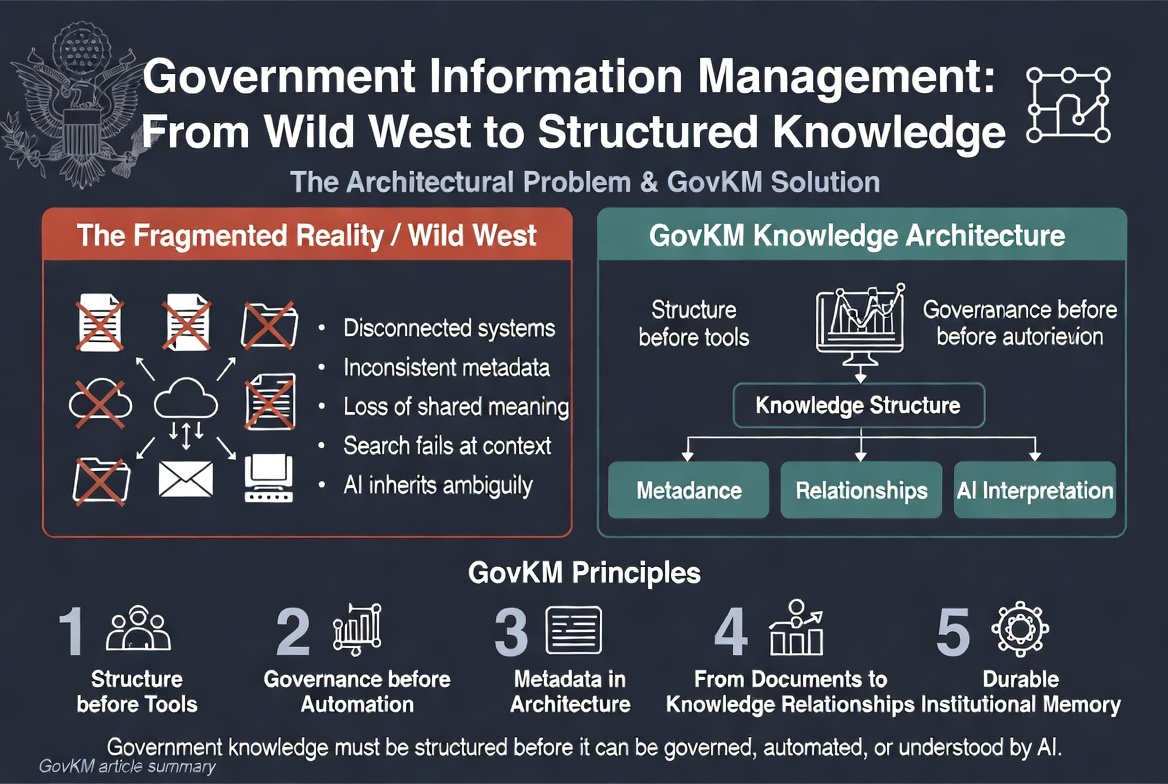
Automated Government Records Management Already Exists — The Real Problem Is Architecture
Government agencies continue layering new tools onto fragmented information environments without solving the underlying structural problems. This article examines why disconnected repositories, inconsistent metadata, and decentralized governance create systemic failure — and why government knowledge must be structurally organized before it can be governed, automated, searched, or reliably interpreted by AI systems.
Artificial Intelligence and Institutional Continuity
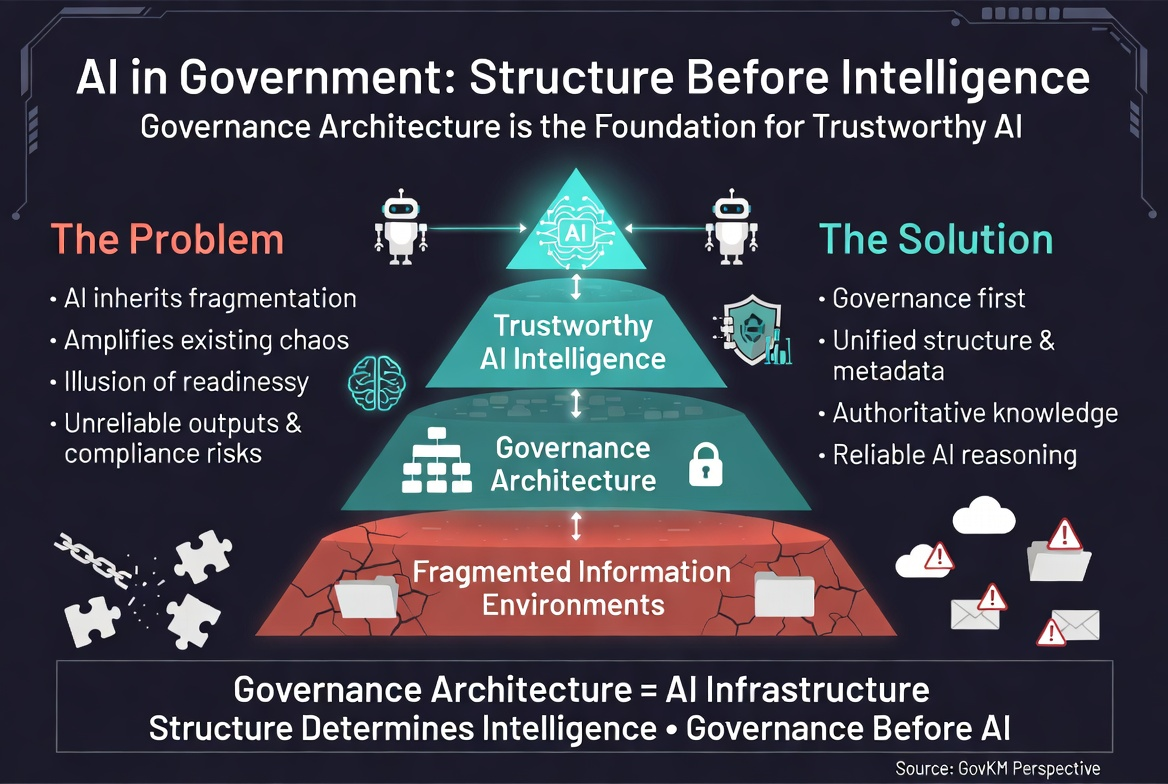
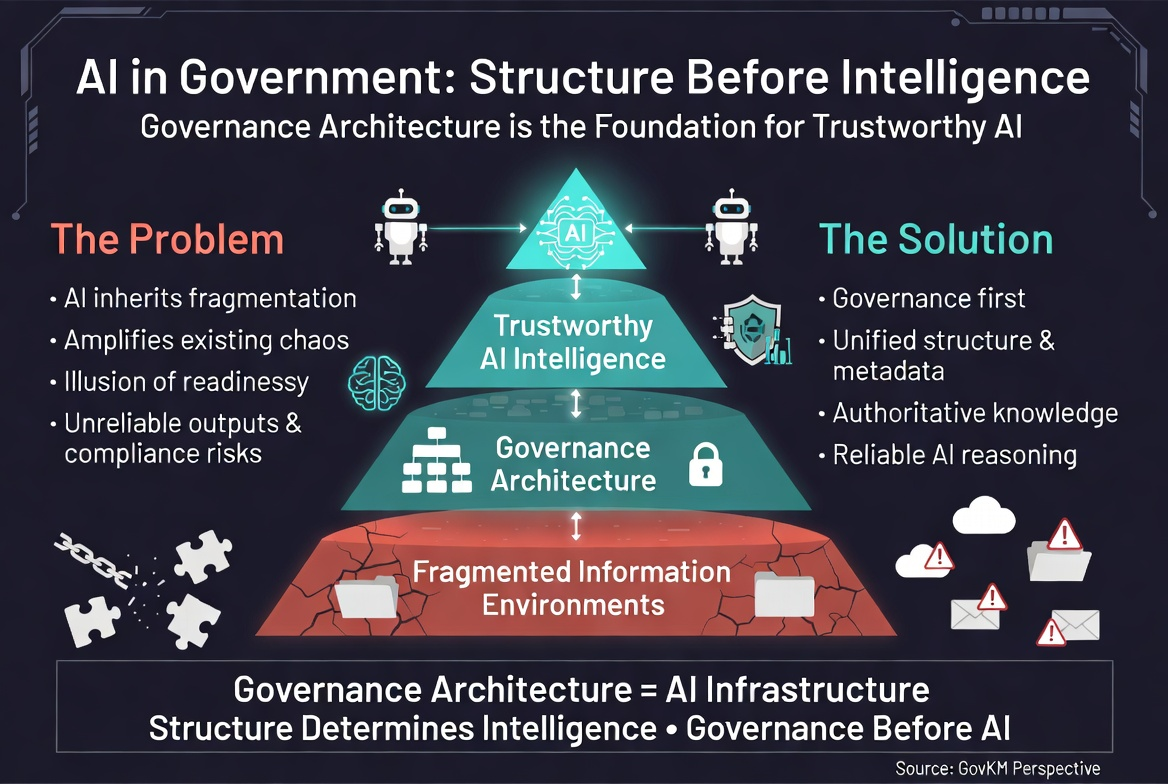
Governance Before AI: Why Structure Determines Intelligence
Government agencies are rushing to deploy AI into fragmented information environments that humans themselves struggle to navigate. This article argues that artificial intelligence cannot create authoritative knowledge from structurally inconsistent repositories. AI systems inherit the architecture, metadata quality, classification consistency, and governance maturity of the environments they operate within. Governance must precede AI.
CONTINUITY CONTEXT
Return to the Continuity Foundations
Sector-specific evidence is one view into the broader GovKM continuity model. Continue into the Framework, Research, Articles, OrgAI, or GAIB to understand the relationships behind these applications.