When the Safety Valve Disappears: Lessons From Australia’s Aged Care Algorithm

A safety mechanism can disappear without changing a single algorithm.
In September 2026, newly released internal emails showed that officials in Australia’s Department of Health, Disability and Ageing learned only days before rollout that assessors would not legally be able to override the Integrated Assessment Tool’s funding classification. Earlier guidance and testing had assumed that experienced assessors could intervene when the algorithm produced an obviously inadequate result. The governing rules did not permit that discretion.
The resulting problem was not simply that an automated assessment might be wrong. The deeper failure was that the system tested, the system staff understood, and the system legally authorized were no longer the same system.
The safety valve existed in context, but not in authority
Human oversight is often treated as a binary property: either a human is “in the loop” or not. This case shows why that description is too weak for consequential systems.
An assessor could recognize an under-assessment. The assessor could understand the person’s circumstances. The assessor could know that the algorithmic classification would not support the person’s actual needs. But if the governing authority did not permit the assessor to change the operative result, that expertise had no executable relationship to the decision.
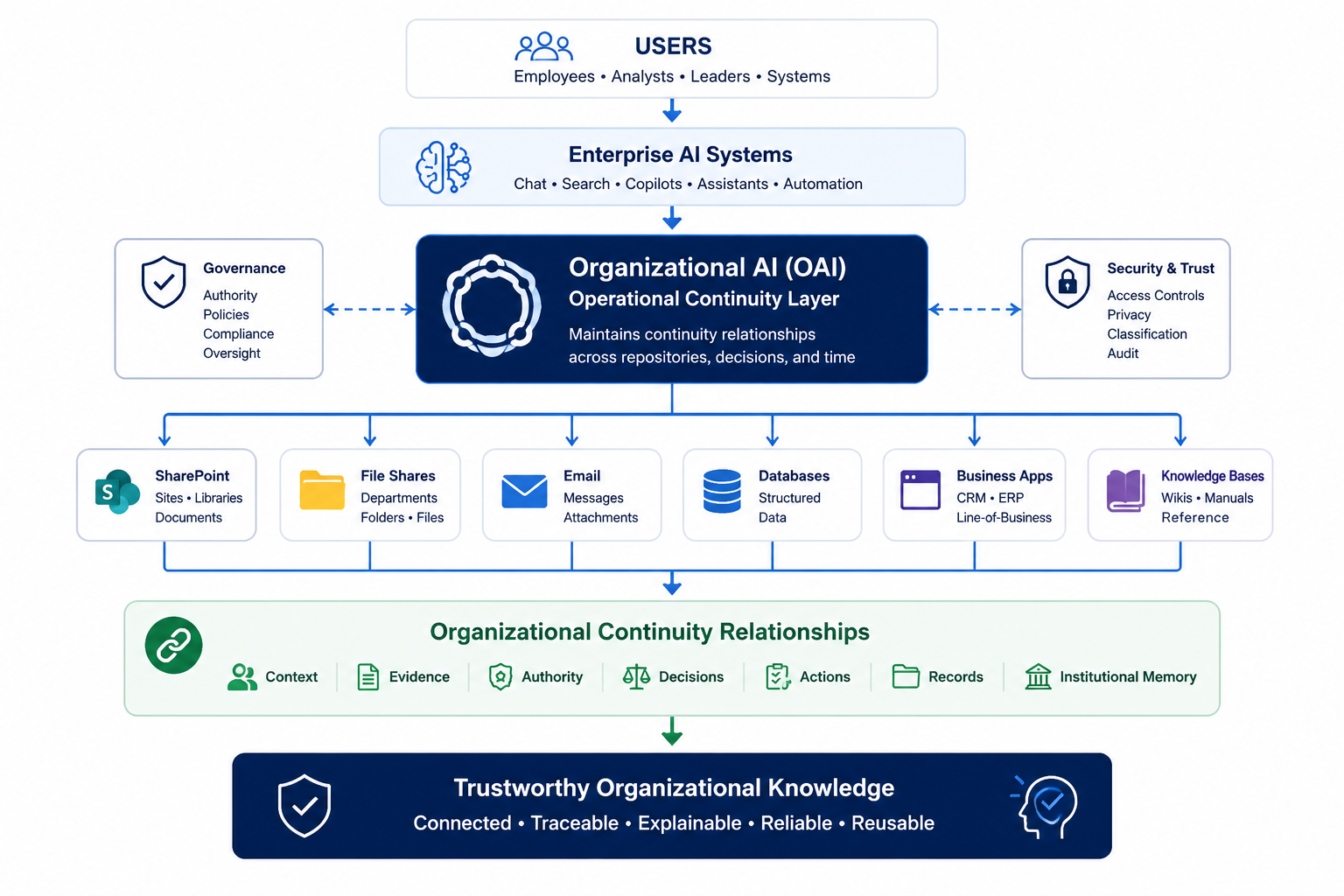
GovKM describes this as an Authority → Context → Decision → Action continuity break. The human still possessed context. The institution had severed the authority relationship that would allow that context to alter the outcome.
Testing can become historically true and operationally false
The distinction becomes more serious because the tool had reportedly been tested with human override available. Removing that override changed the governance state of the system after testing.
A test result therefore remained historically accurate while becoming operationally misleading. “The system was tested” did not necessarily mean “the system now running under the production authority model was tested.”
For continuity architecture, the relevant object is not just software version. It is the combined state of model, rule, authority, workflow, escalation path, and effective date. Change one of those relationships and the institution may no longer be operating the system it believes it validated.
The record can preserve the wrong institutional story
If the resulting assessment is written to the person’s record, downstream users may encounter an apparently authoritative funding classification with no visible indication that an experienced assessor disputed it but lacked authority to intervene.
That creates a second continuity risk: Decision → Action → Record → Institutional Memory → Future Reuse. A decision produced under a fragmented governance state can become durable institutional memory unless the record preserves the disagreement, the authority constraint, and the later corrective state.
The GovKM interpretation
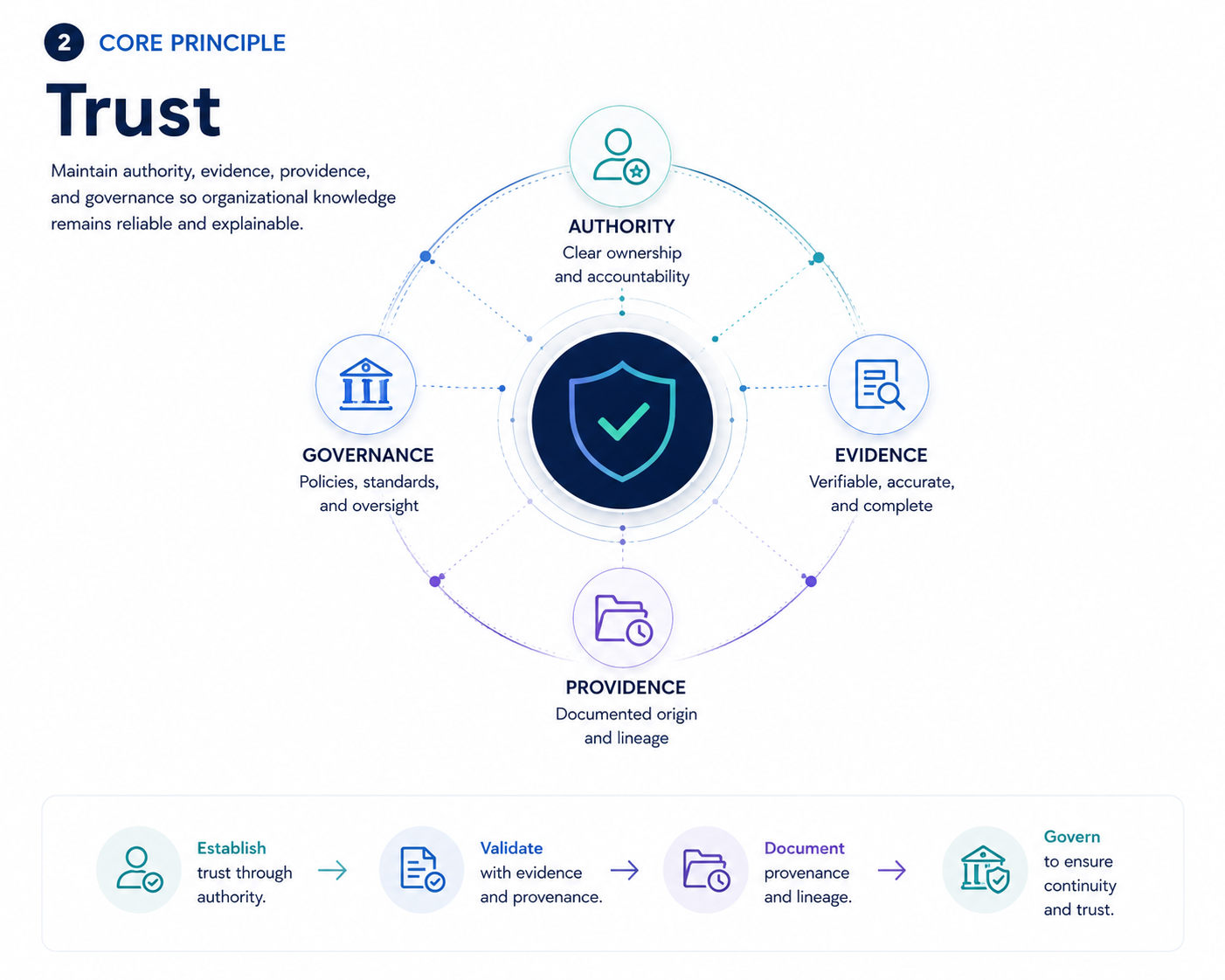
Operational trust requires more than an accurate algorithm. It requires continuity among the source rule, governing authority, staff context, resulting decision, executable action, and institutional record.
The lesson is straightforward: human oversight that cannot exercise authority is observation, not control.
Organizations deploying consequential AI or automated decision systems should be able to prove which governance state was tested, which governance state was deployed, who held override authority at each point in time, and whether later records preserve that distinction.
Sources
The Guardian, “Health officials in turmoil over 11th-hour backflip on aged care algorithm override powers, emails reveal,” September 17, 2026. https://www.theguardian.com/australia-news/2026/sep/17/australian-home-support-assessment-algorithm-aged-care
ABC News, “New aged care algorithm under fire as 800 apply for review,” March 24, 2026. https://www.abc.net.au/news/2026-03-24/aged-care-algorithm-for-home-care-under-fire/106475138
Continue Exploring
Authority Laundering: How a Bad Citation Becomes “Real” Through Retrieval
When the Memory Becomes the Attack Surface