Retail and Commerce
Retail continuity connects product identities, pricing rules, inventory evidence, customer commitments, fulfillment decisions, return policies, and the authority granted to automated agents. A commerce system can retrieve an authentic offer while missing the conditions that govern whether it may still be used. Changes in price, availability, account eligibility, and approval scope need to remain connected to the same transaction history. For example, an agent may receive permission to prepare an order without receiving permission to purchase every item it can retrieve. A later authorized substitution should preserve the original request, the approval, and the resulting fulfillment record. Review questions include which offer version applies, whether a discount remains valid, whether a product identifier changed, and who approved an exception. GovKM's continuity approach makes these relationships reviewable across merchandising, customer operations, and autonomous commerce workflows. The articles below examine related applications. Synthetic retail histories can test expired offers, conflicting inventory updates, identity collisions, refunds, and changes in agent authority. The objective is to determine whether current decisions respect the applicable commitments while historical evidence remains available for explanation and future reuse.
Related Articles
Explore GovKM research, case studies, and analysis related to this sector.
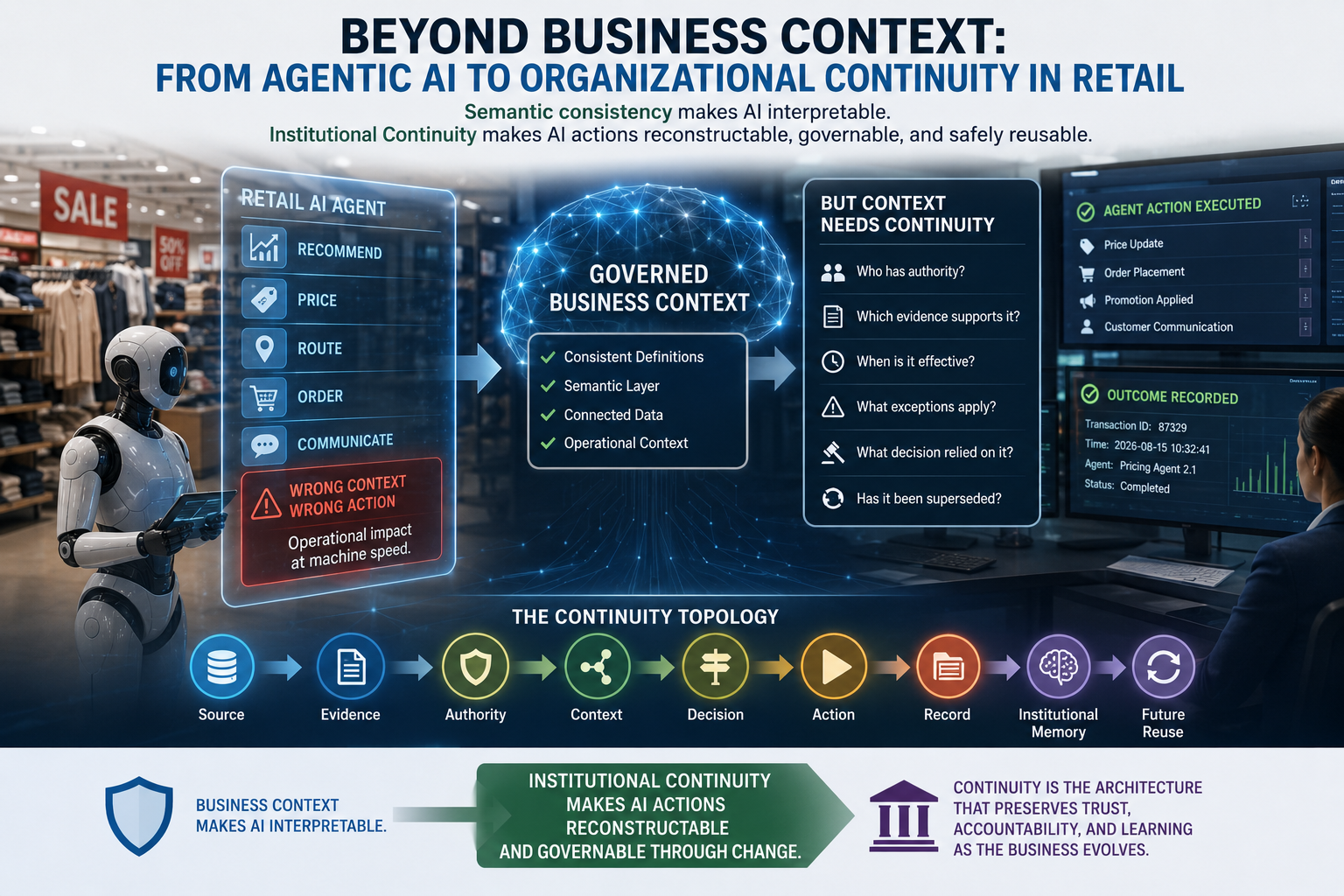
Retail AI Needs More Than Business Context
Return to the Continuity Foundations
Sector-specific evidence is one view into the broader GovKM continuity model. Continue into the Framework, Research, Articles, OrgAI, or GAIB to understand the relationships behind these applications.