Communications
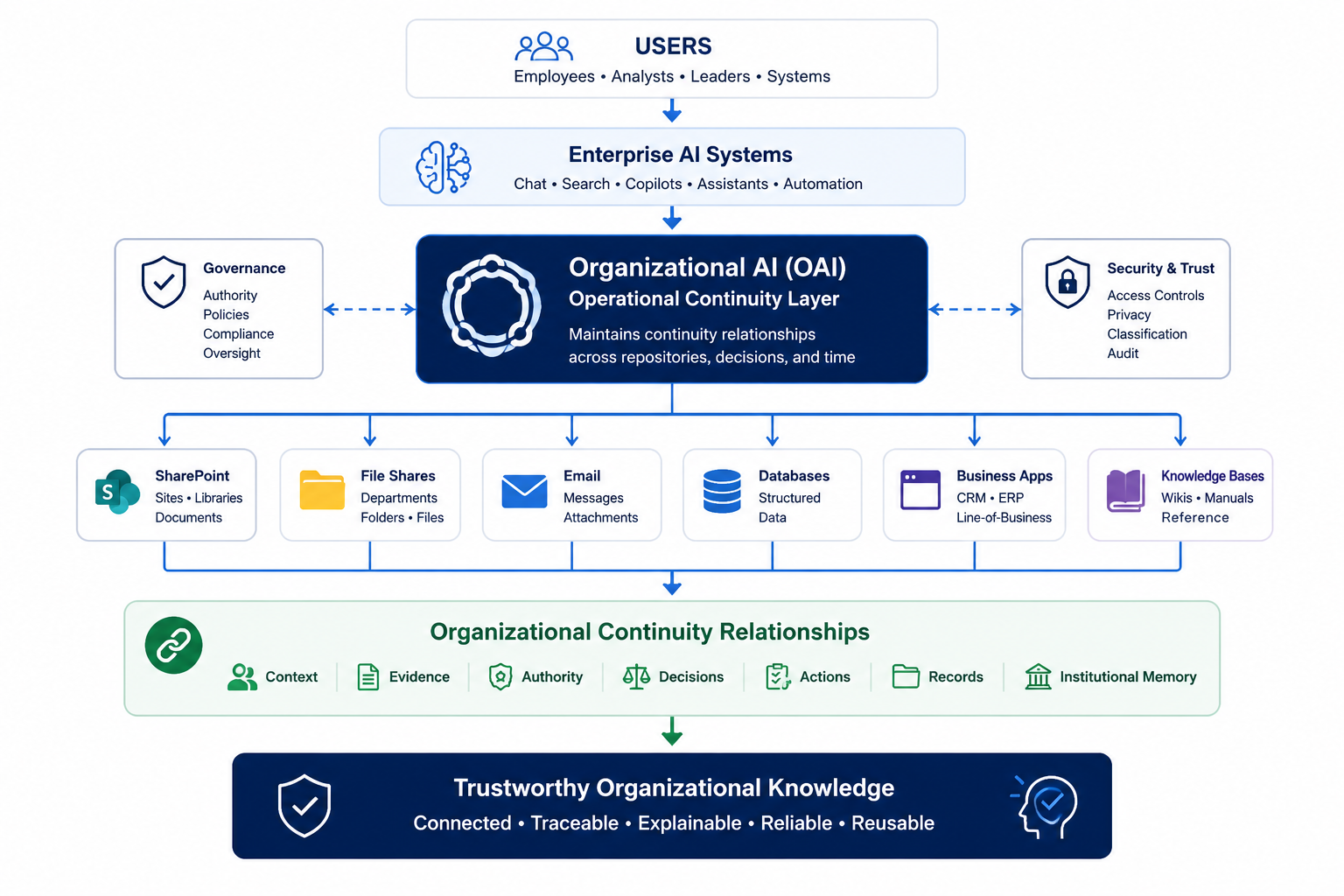
Communications continuity preserves the relationship between a message, the evidence supporting it, its intended audience, the authority that approved it, and the conditions under which it may be reused. A published statement can remain authentic even after the policy or operational facts behind it change. Teams therefore need to distinguish the original approved message from the statement that currently governs public communication. Consider an agency announcement followed by an authorized correction. The correction should reach the website, briefing materials, frequently asked questions, and AI assistants that reuse the announcement. The earlier wording should remain available as historical evidence rather than becoming an unexplained contradiction. Review questions include who approved the message, which source version supplied the figures, whether a quotation remains accurate, and which channels received the correction. GovKM treats these connections as continuity relationships across content operations, strategic communications, outreach, and institutional memory. The articles below provide related analysis. Synthetic test histories can examine stale talking points, conflicting drafts, audience-specific approvals, and whether a communication system abstains when it cannot determine which statement has current authority.
Related Articles
Explore GovKM research, case studies, and analysis related to this sector.
The Transition Finished. GSA Still Couldn’t Prove Continuity Held.
Return to the Continuity Foundations
Sector-specific evidence is one view into the broader GovKM continuity model. Continue into the Framework, Research, Articles, OrgAI, or GAIB to understand the relationships behind these applications.