ORGANIZATIONAL CONTINUITY
Preserving Organizational Intelligence Across Time, Technology, and Change
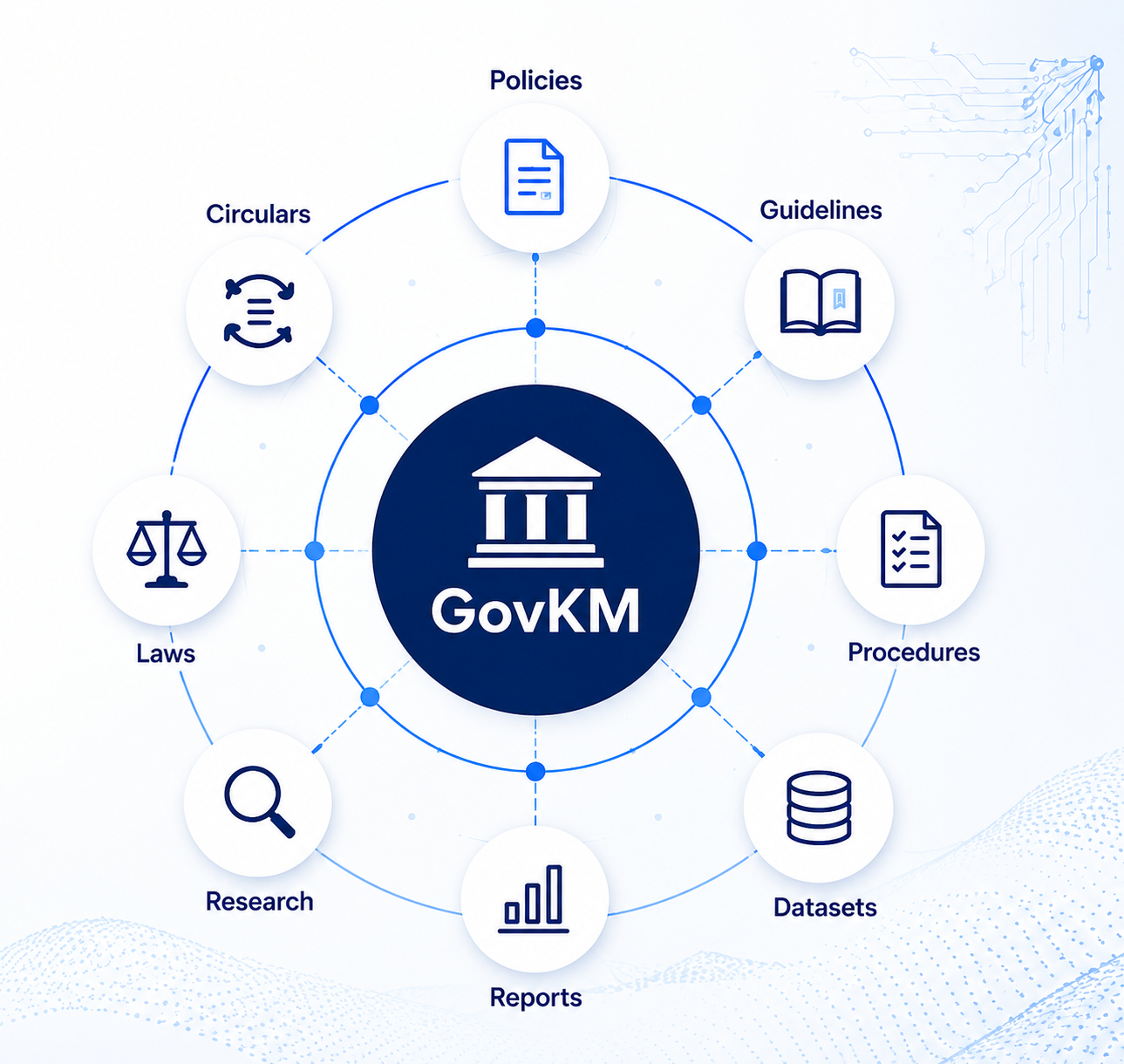
GovKM defines the discipline, architecture, and operating principles required to preserve trusted organizational knowledge as people, systems, technologies, and artificial intelligence change.
FRAMEWORK
What Is the GovKM Continuity Framework?
The GovKM Continuity Framework provides the conceptual foundation for Continuity Science. It defines the principles, relationships, and organizational domains that preserve continuity across people, decisions, information, records, technology, and AI. Rather than treating continuity as isolated repositories or individual artifacts, the framework organizes continuity as an interconnected system of governed relationships that enables organizations to understand the past, operate effectively in the present, and evolve with confidence into the future.
Continuity Framework Hierarchy
Continuity Science
The discipline that studies how organizations maintain continuity over time.
↓
Continuity Framework
The conceptual foundation that defines principles, relationships, and domains.
↓
Core Principles
The six principles that guide how continuity is understood, governed, and preserved.
↓
Continuity Topology
The relationship architecture that defines how continuity is connected.
↓
Framework Domains
The application of the framework across organizational disciplines.
↓
OrgAI - Organizational Artificial Intelligence
Operationalizes continuity by governing relationships across repositories, decisions, and AI.
↓
GAIB - Graphic AI Browser
Visualizes continuity through an interactive graphical AI browser.
It establishes the principles, relationships, and requirements for Organizational Continuity.
It governs continuity across repositories, people, records, decisions, evidence, and artificial intelligence.
It makes continuity visible and navigable as a connected knowledge environment.
A New Way to Understand Organizational Knowledge
Traditional information management focuses on documents, repositories, and systems. The GovKM Continuity Framework shifts the focus to the relationships that connect organizational knowledge over time. Every decision, action, record, policy, and interaction contributes to organizational continuity. When those relationships are preserved, organizations can reconstruct context, maintain trust, and continuously improve how knowledge supports their mission.
The Framework Organizes Continuity.
The Continuity Framework is the conceptual model.
The Continuity Topology defines the relationships.
Framework Domains apply those relationships to specific organizational disciplines.
OrgAI operationalizes the framework.
GAIB makes continuity visible.
The Continuity Topology defines the relationships.
Framework Domains apply those relationships to specific organizational disciplines.
OrgAI operationalizes the framework.
GAIB makes continuity visible.
CONTINUITY CHALLENGE
Why Continuity Matters
Organizations rarely lose information—they lose the relationships that give information meaning. When context, authority, provenance, decisions, and evidence become disconnected, organizational knowledge becomes fragmented, trust declines, and institutional memory erodes. The Continuity Framework addresses these failures by preserving the relationships that enable knowledge to remain understandable and actionable over time.
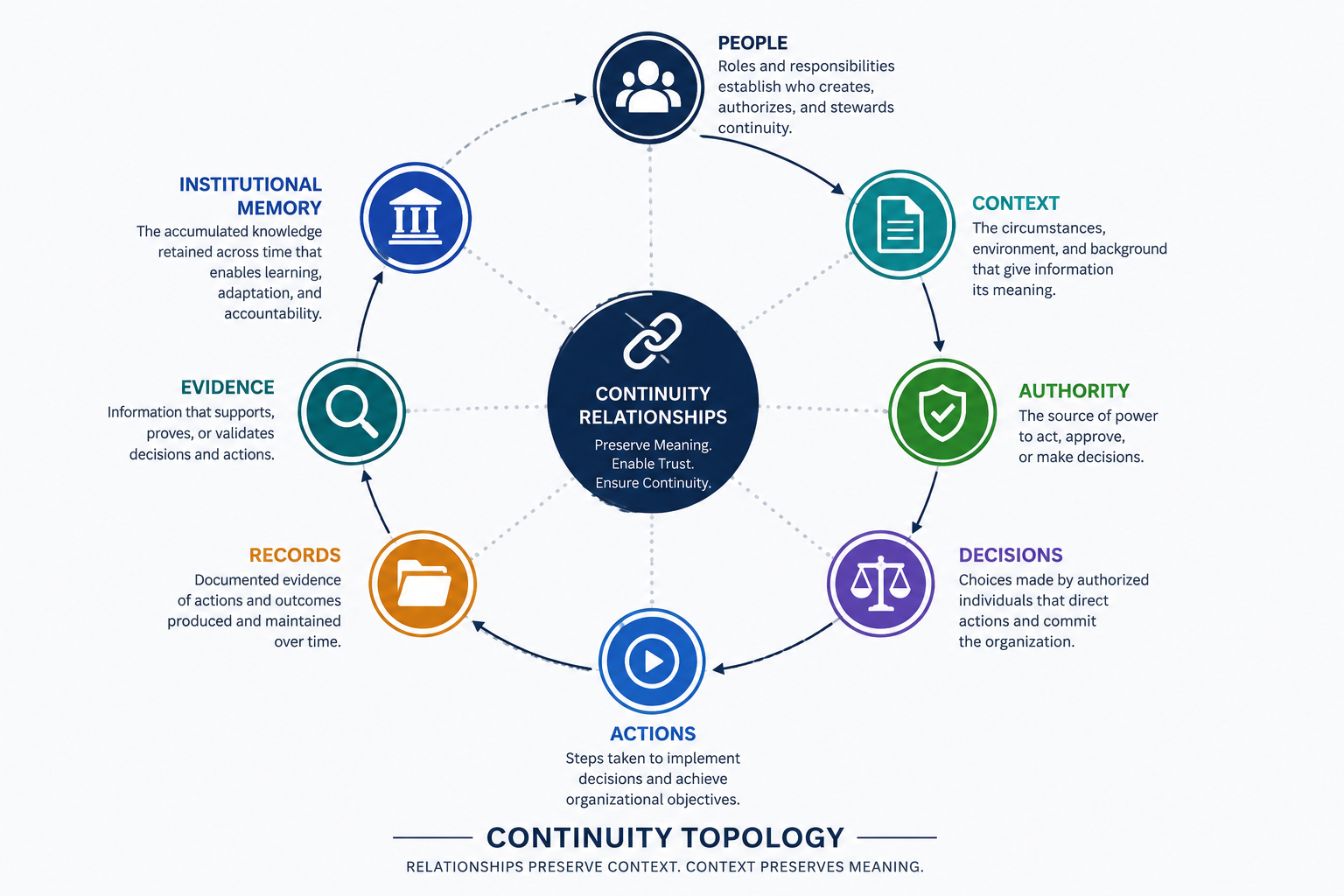

Continuity Relationships
Continuity emerges from the relationships connecting people, authority, evidence, decisions, context, actions, records, and institutional memory—not from isolated information alone.
Information Without Relationships
Modern organizations generate unprecedented volumes of information. Documents, emails, databases, records, AI conversations, and policies continue to accumulate, yet organizations increasingly struggle to reconstruct why decisions were made, who authorized them, what evidence supported them, and how those decisions continue to influence current operations.
Information without continuity becomes disconnected artifacts rather than organizational knowledge.
Information without continuity becomes disconnected artifacts rather than organizational knowledge.
Continuity Preserves Meaning
Continuity preserves:
• Context
• Authority
• Evidence
• Provenance
• Decisions
• Relationships
• Institutional Memory
Together these relationships allow organizations to understand the past, operate confidently in the present, and evolve responsibly into the future.
• Context
• Authority
• Evidence
• Provenance
• Decisions
• Relationships
• Institutional Memory
Together these relationships allow organizations to understand the past, operate confidently in the present, and evolve responsibly into the future.
Continuity is preserved through relationships, not repositories.
The Continuity Topology defines how those relationships connect.
The Continuity Framework governs how those relationships endure.
foundational principles
Core Principles
Organizational Continuity is built upon six principles that preserve trustworthy organizational intelligence across change.
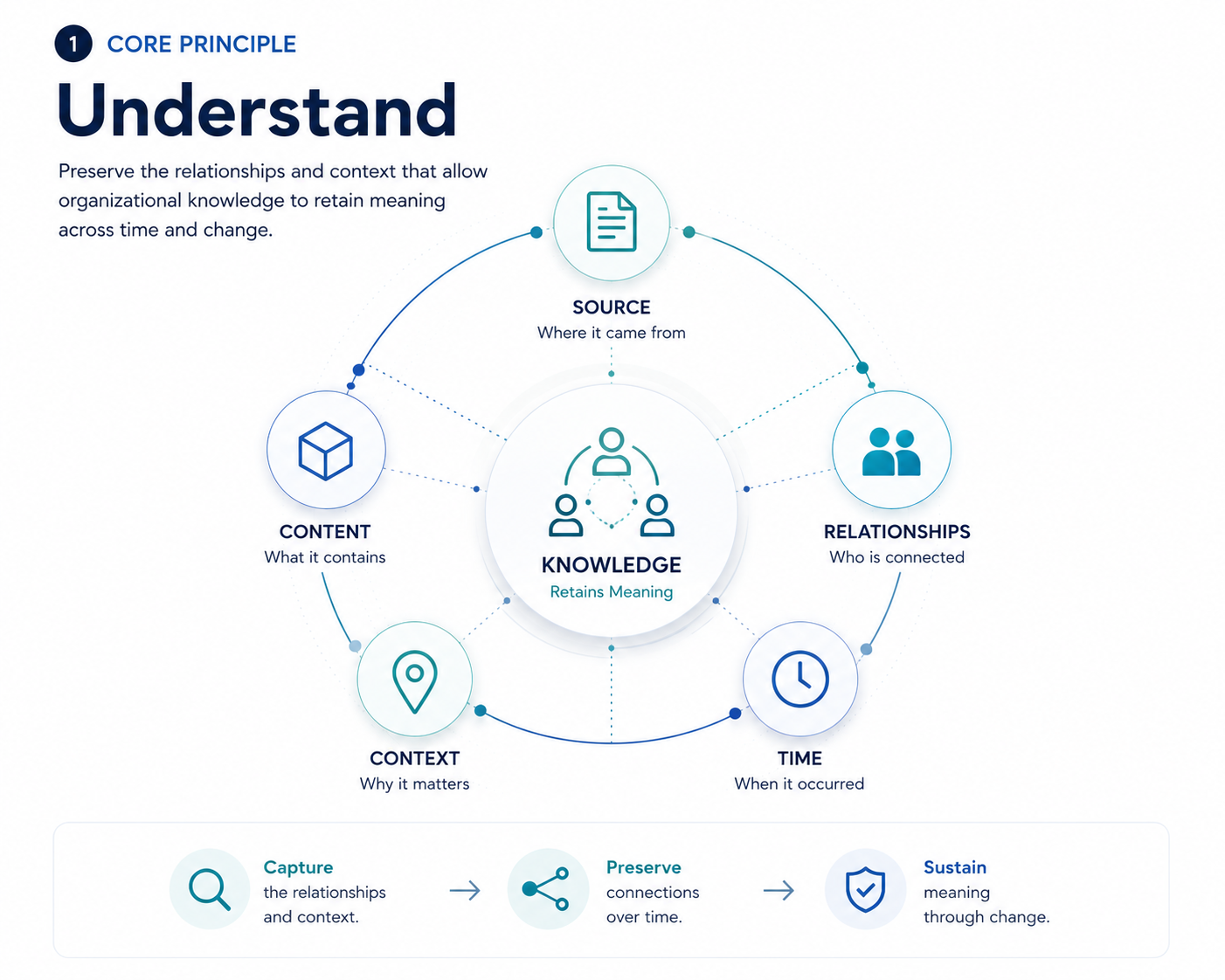
Contextual Understanding
Preserve the relationships and context that allow organizational knowledge to retain meaning across time and change.
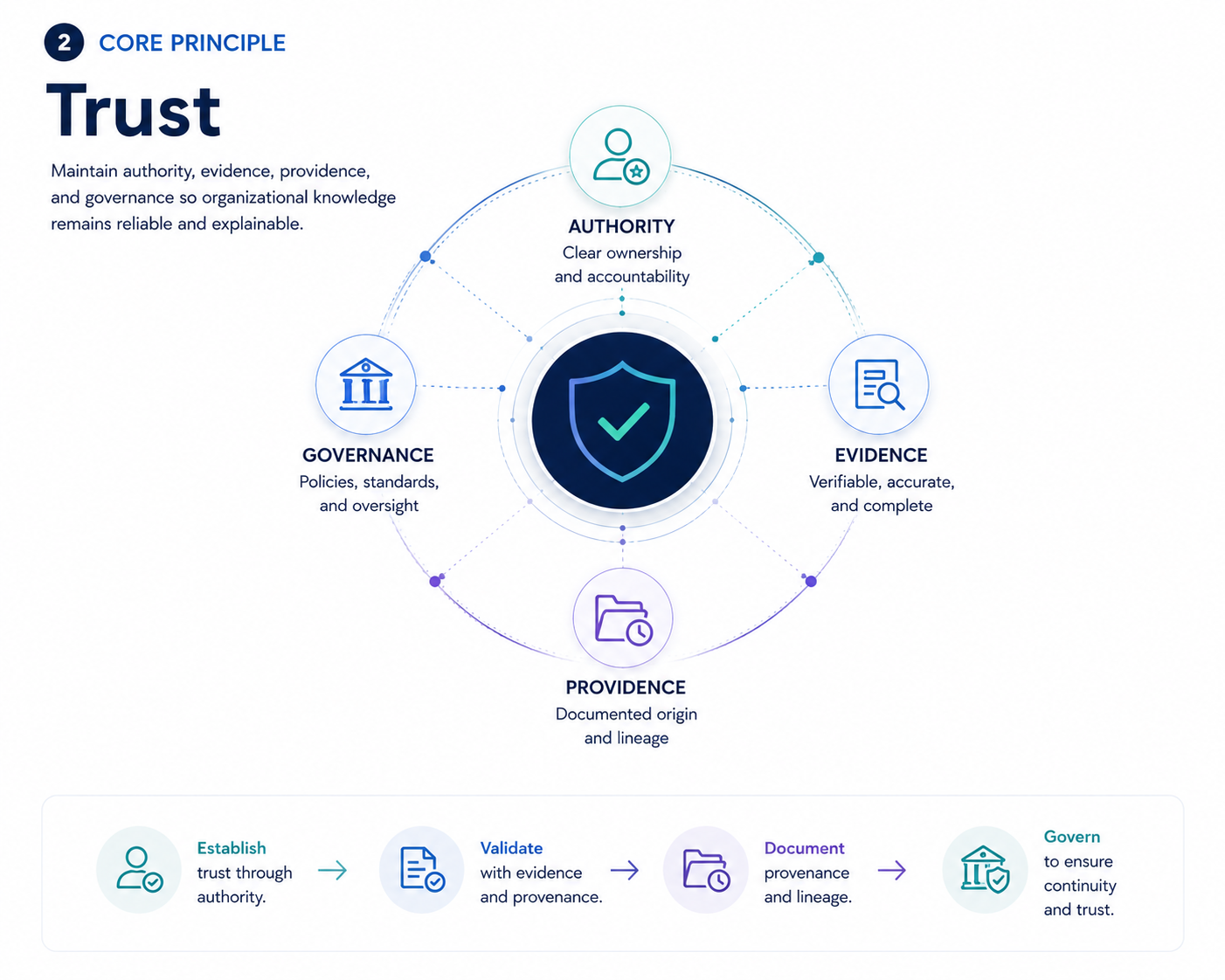
Grounded Trust
Maintain authority, evidence, provenance, and governance so organizational knowledge remains reliable and explainable.
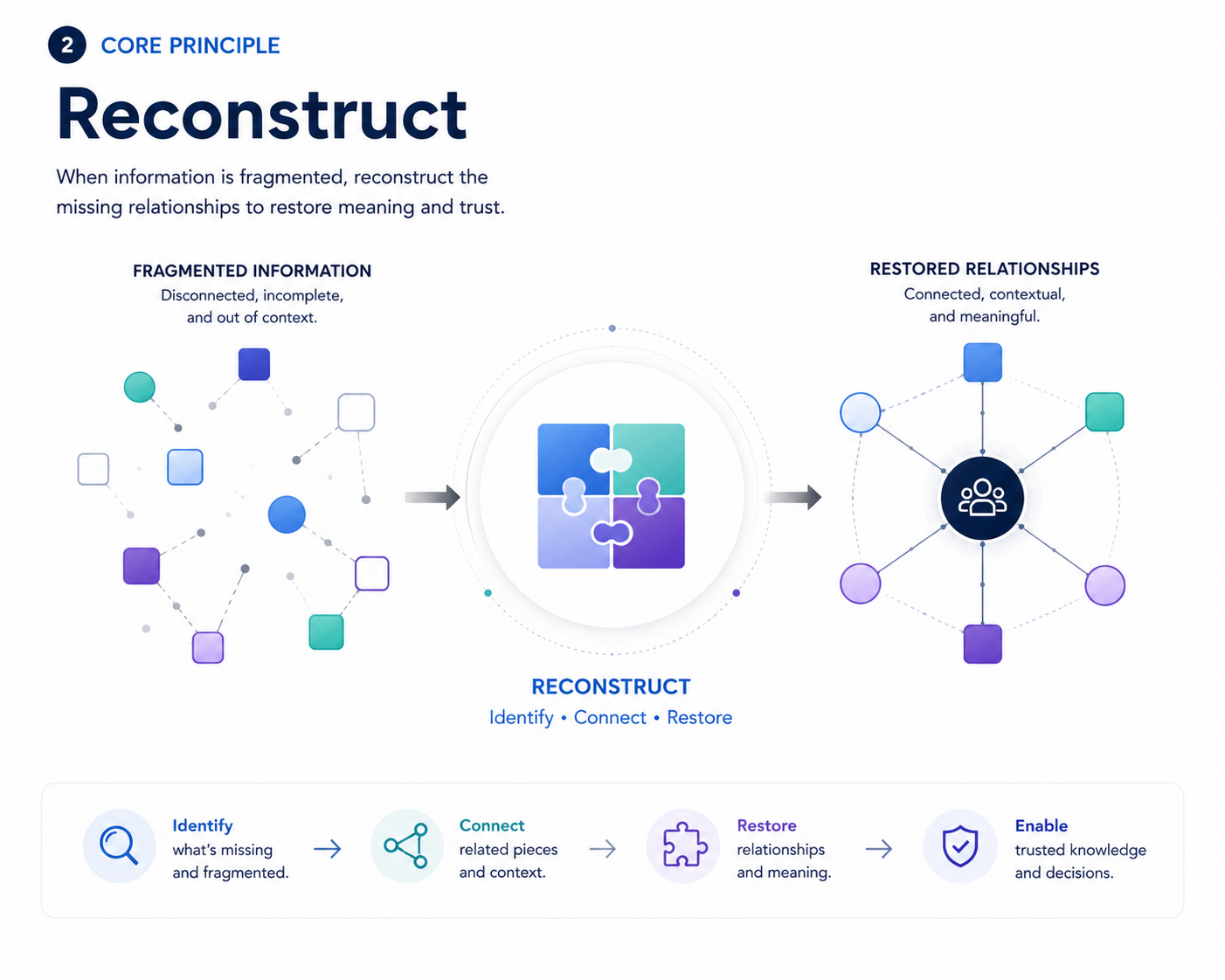
Reconstructability
Enable future personnel to recover the context, reasoning, and decision lineage behind organizational actions.
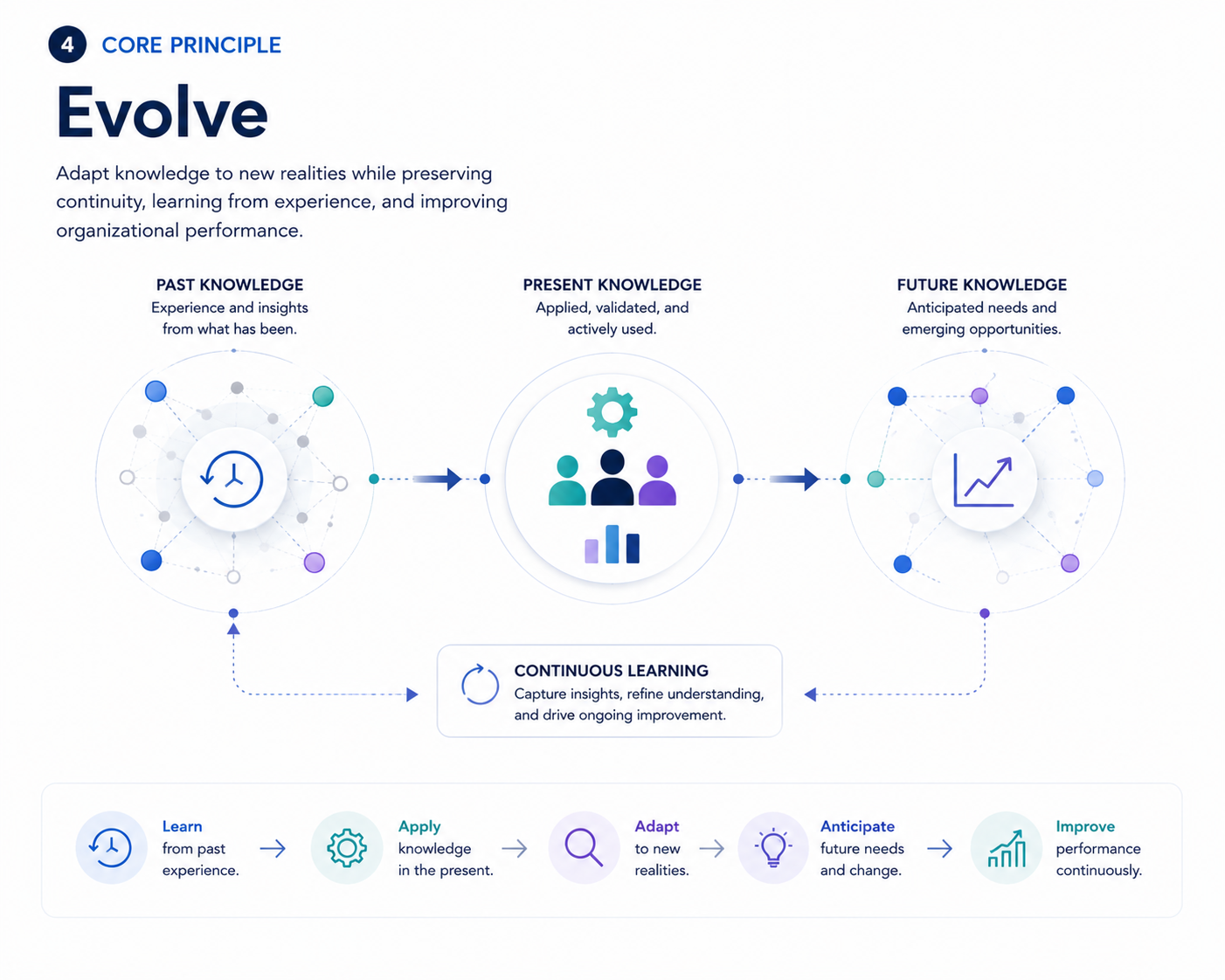
Continuity Through Change
Allow knowledge systems and operating models to change without severing their continuity with prior understanding.
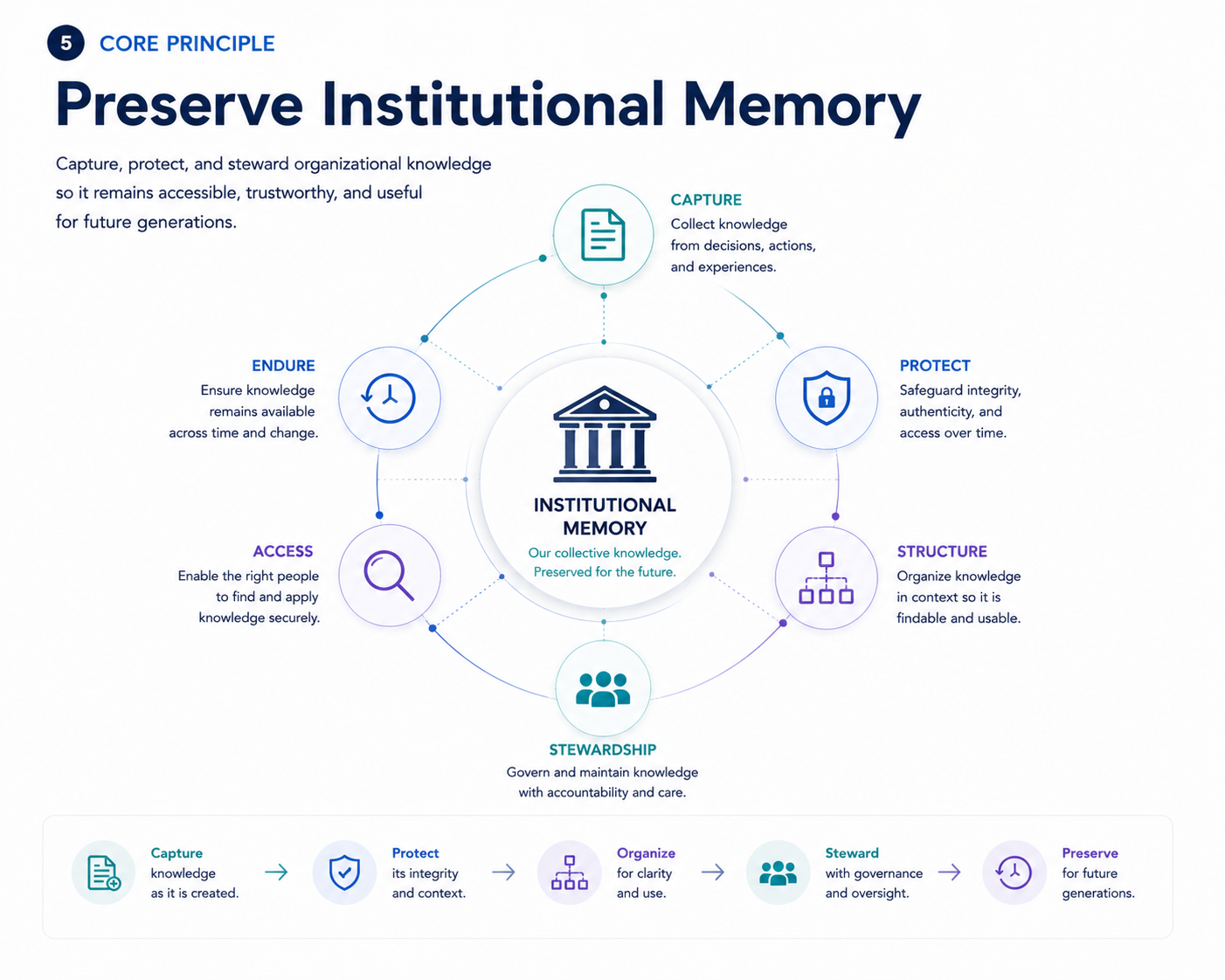
Institutional Memory
Retain organizational learning beyond individual employees, technologies, repositories, and organizational structures.
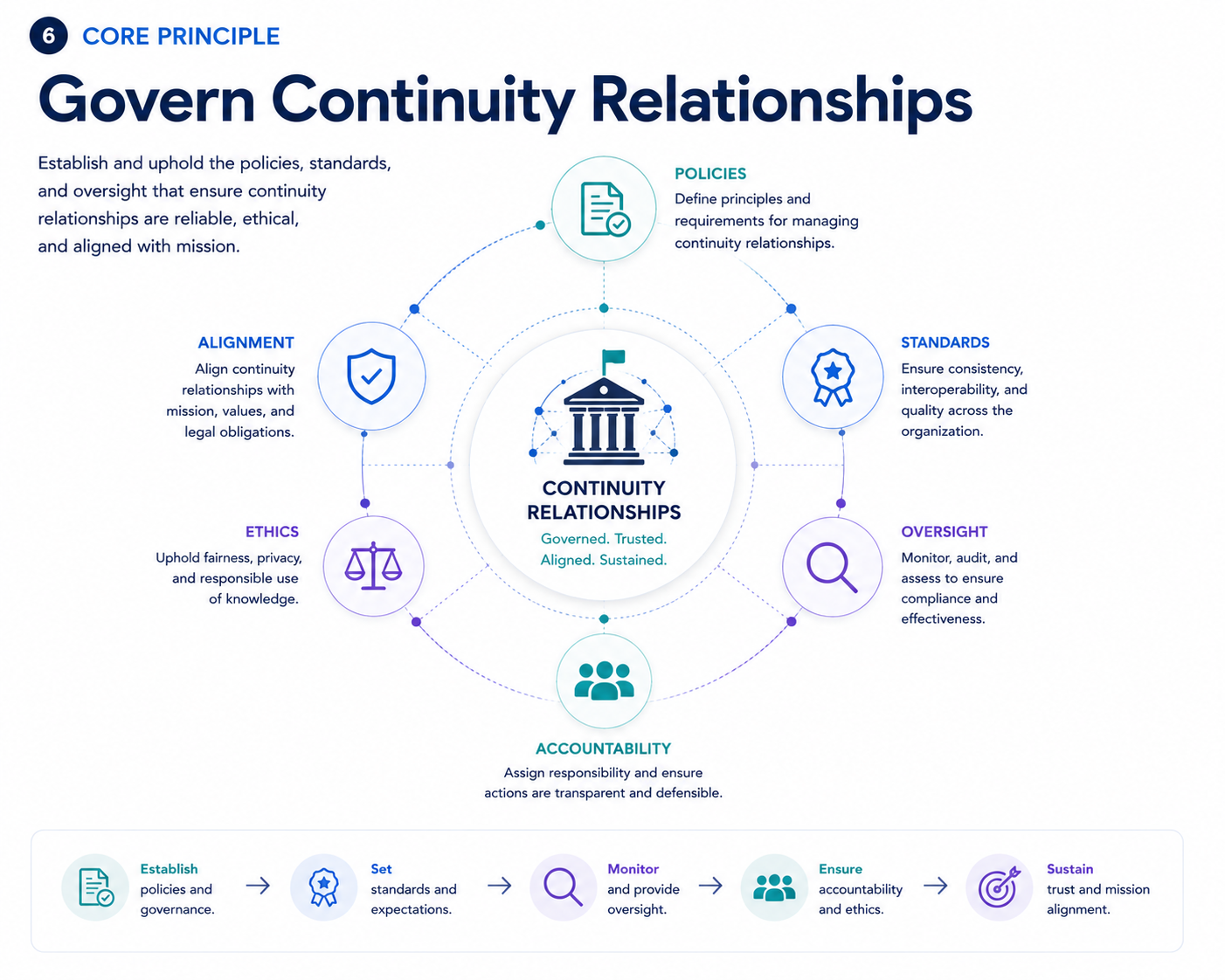
Relationship Governance
Connect information, authority, evidence, context, decisions, actions, records, and institutional memory as one architecture.
CONTINUITY TOPOLOGY
Continuity Is Built on Relationships
The Continuity Topology provides the relationship architecture of the GovKM Continuity Framework. Rather than organizing knowledge by repositories or documents, the topology organizes how people, evidence, authority, context, decisions, actions, records, and institutional memory remain connected across time.
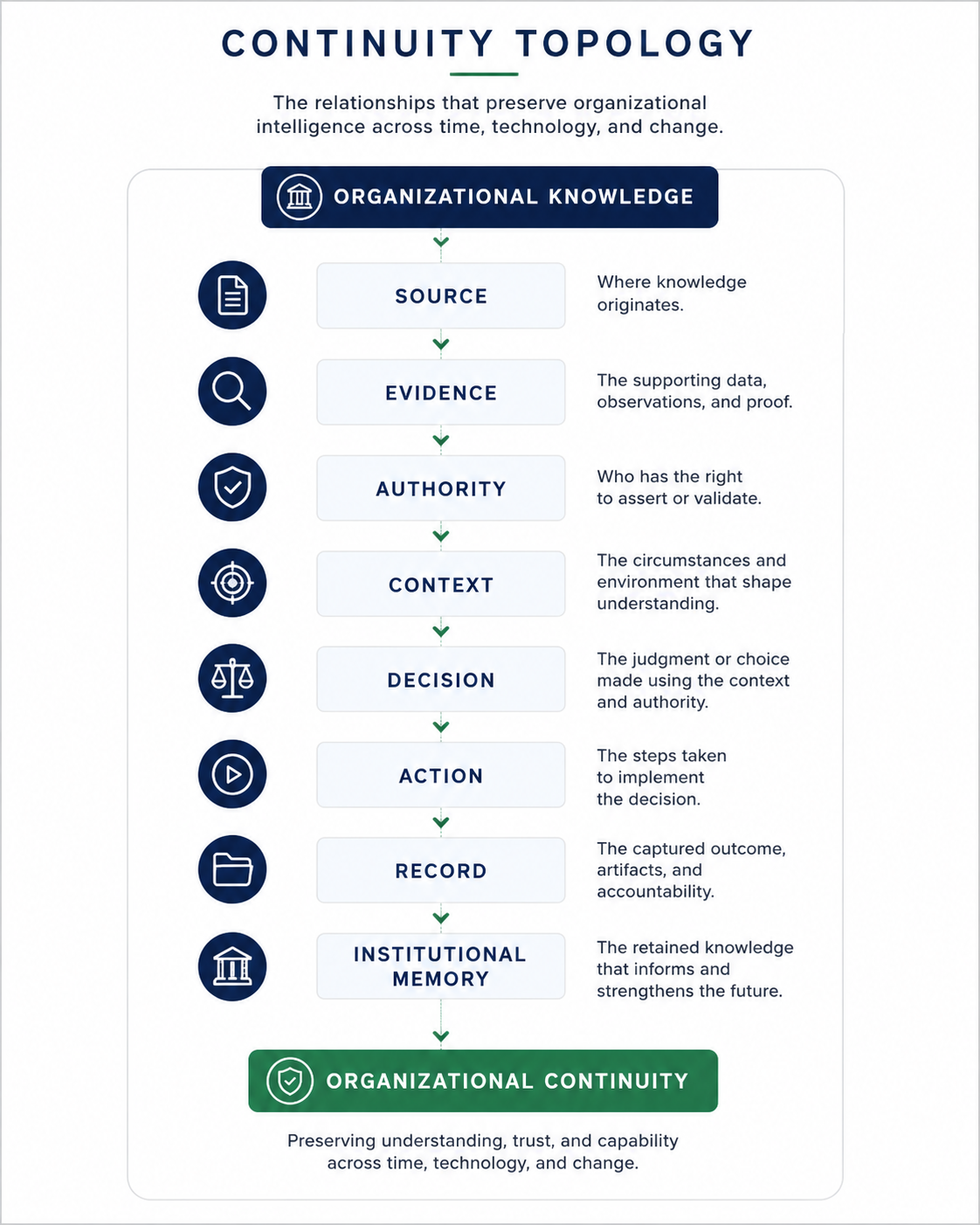
Relationships Are the Architecture
Every continuity object exists because of its relationships to other continuity objects.
- Policies influence decisions.
- Decisions authorize actions.
- Actions generate records.
- Records preserve evidence.
- Evidence establishes trust.
- Trust supports institutional memory.
The Continuity Topology makes these relationships explicit, allowing organizations to visualize, govern, and preserve continuity as an interconnected system rather than isolated information assets.
FRAMEWORK DOMAINS
Framework Domains
Each Framework Domain defines a foundational aspect of Organizational Continuity. Together they establish the relationships required for organizational knowledge to remain understandable, trustworthy, and reusable across time.
Organizational Continuity
Preserve trusted organizational intelligence across people, technology, organizational change, and time.
Organizational Continuity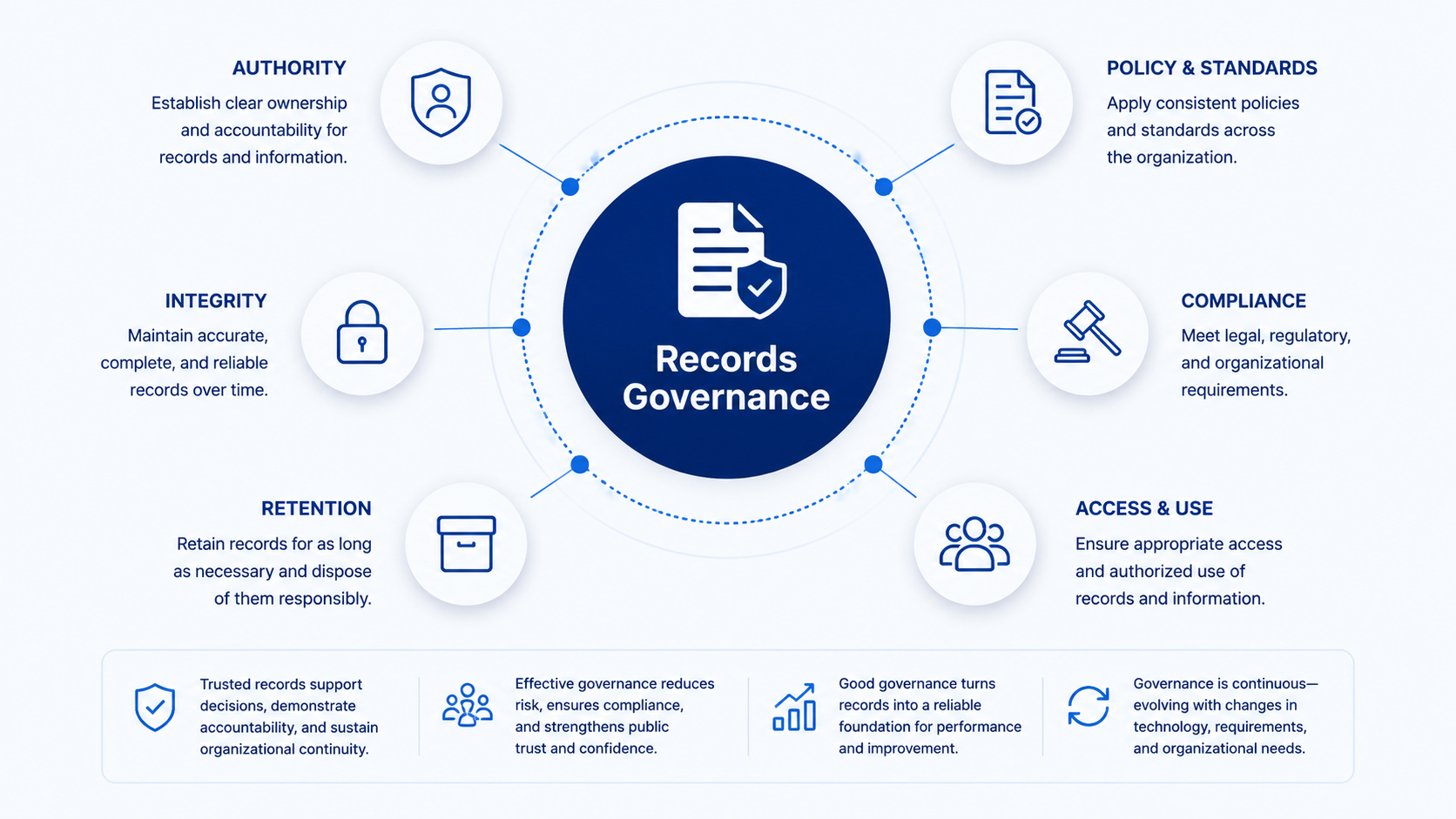
Records Governance
Govern records as authoritative evidence supporting accountability, compliance, and organizational continuity.
Records Governance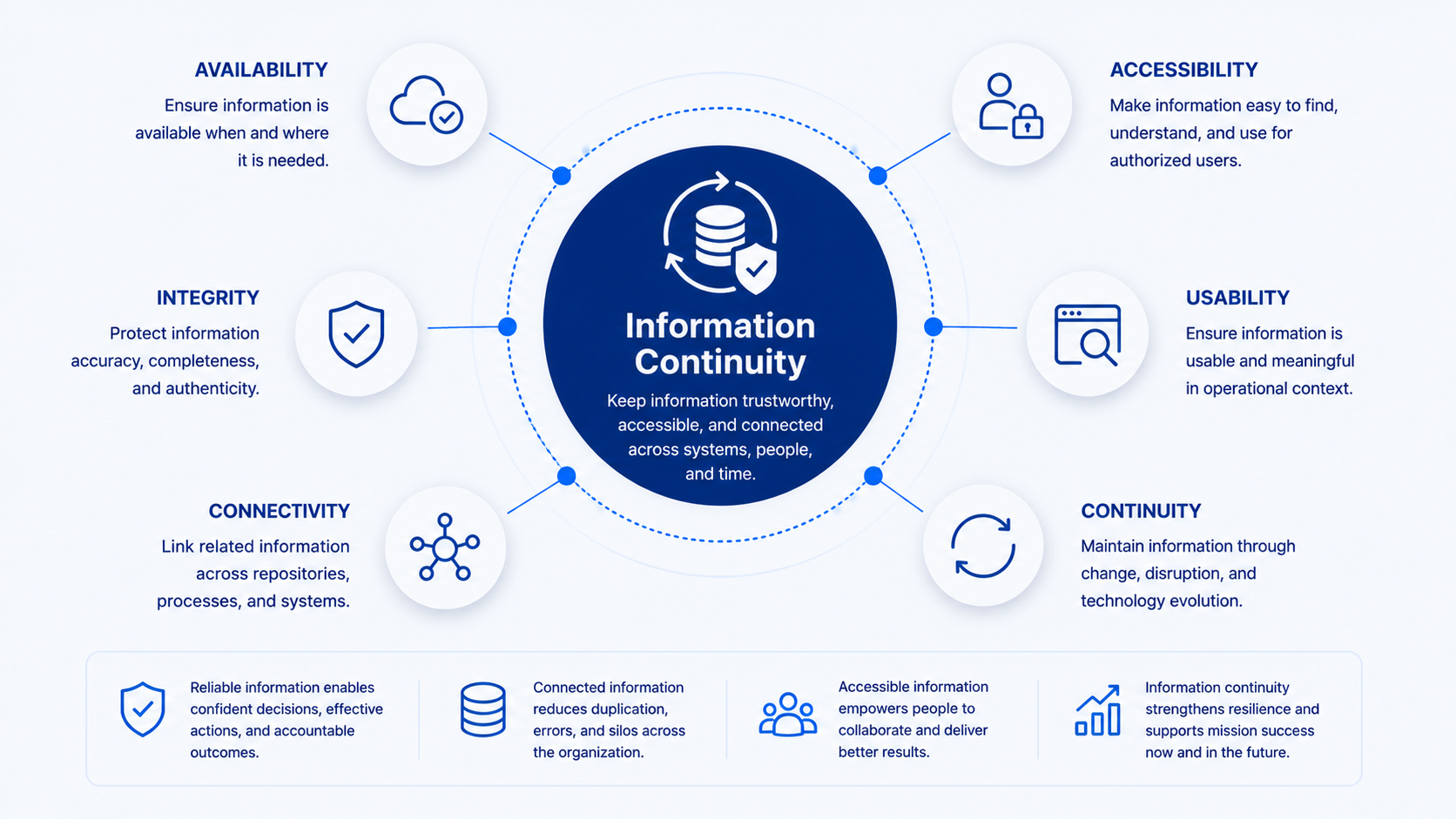
Information Continuity
Keep information trustworthy, accessible, and connected regardless of the technology used to create or manage it.
Information Continuity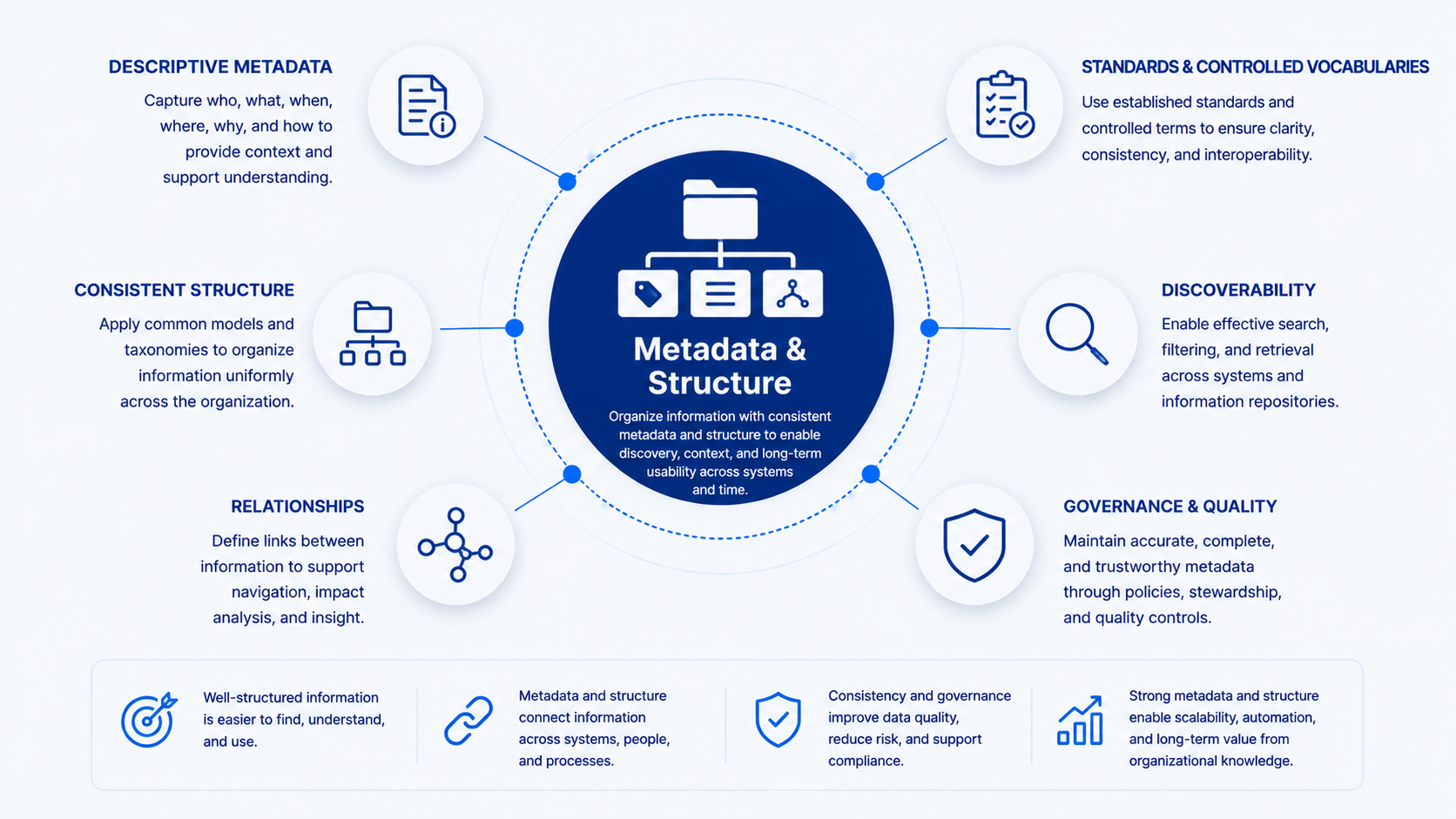
Metadata & Structure
Build consistent metadata and information structures that preserve discoverability and operational meaning.
Metadata & Structure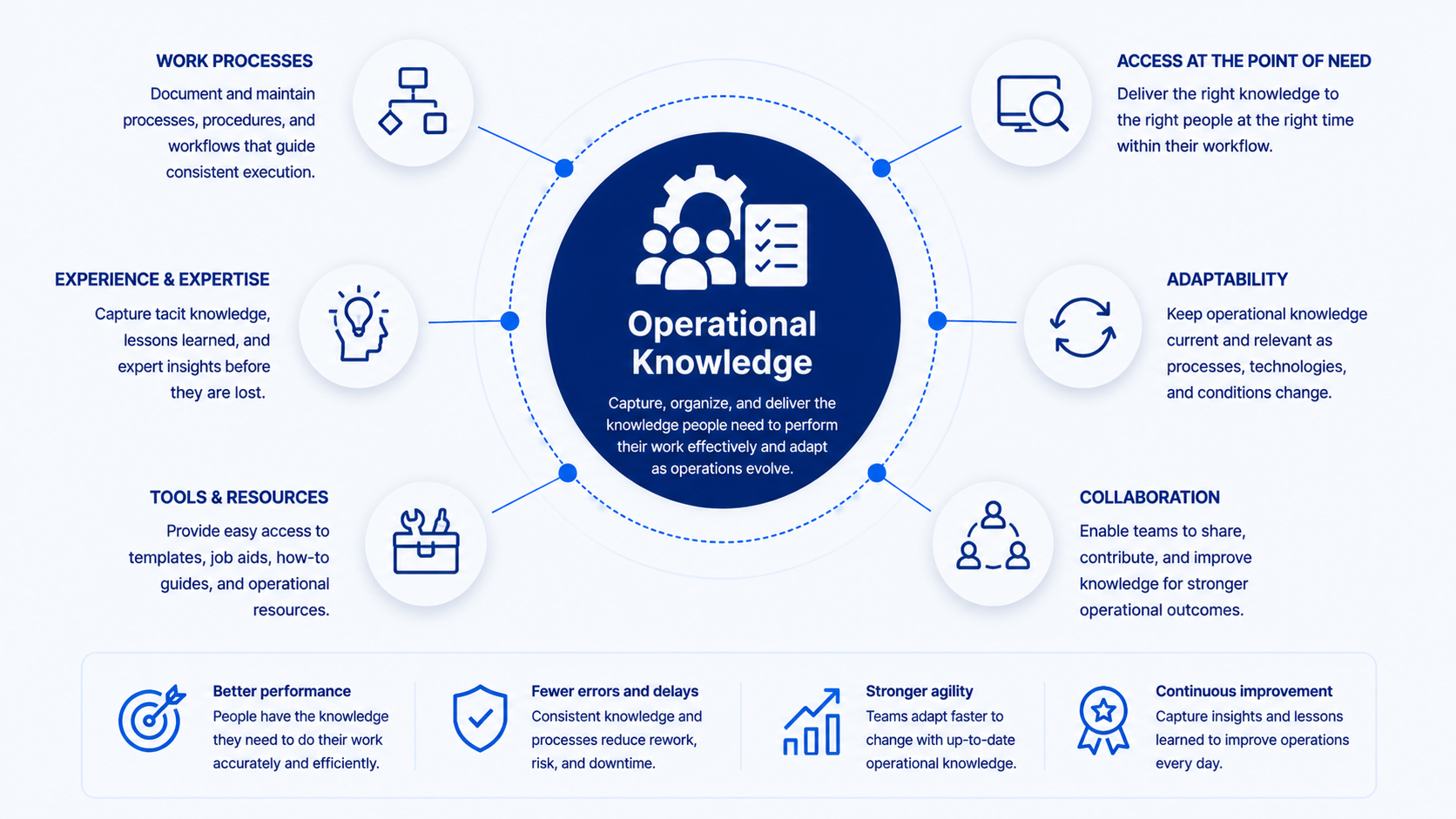
Corporate Operational Knowledge
Transform institutional knowledge into a connected operational asset supporting mission execution.
Corporate Operational Knowledge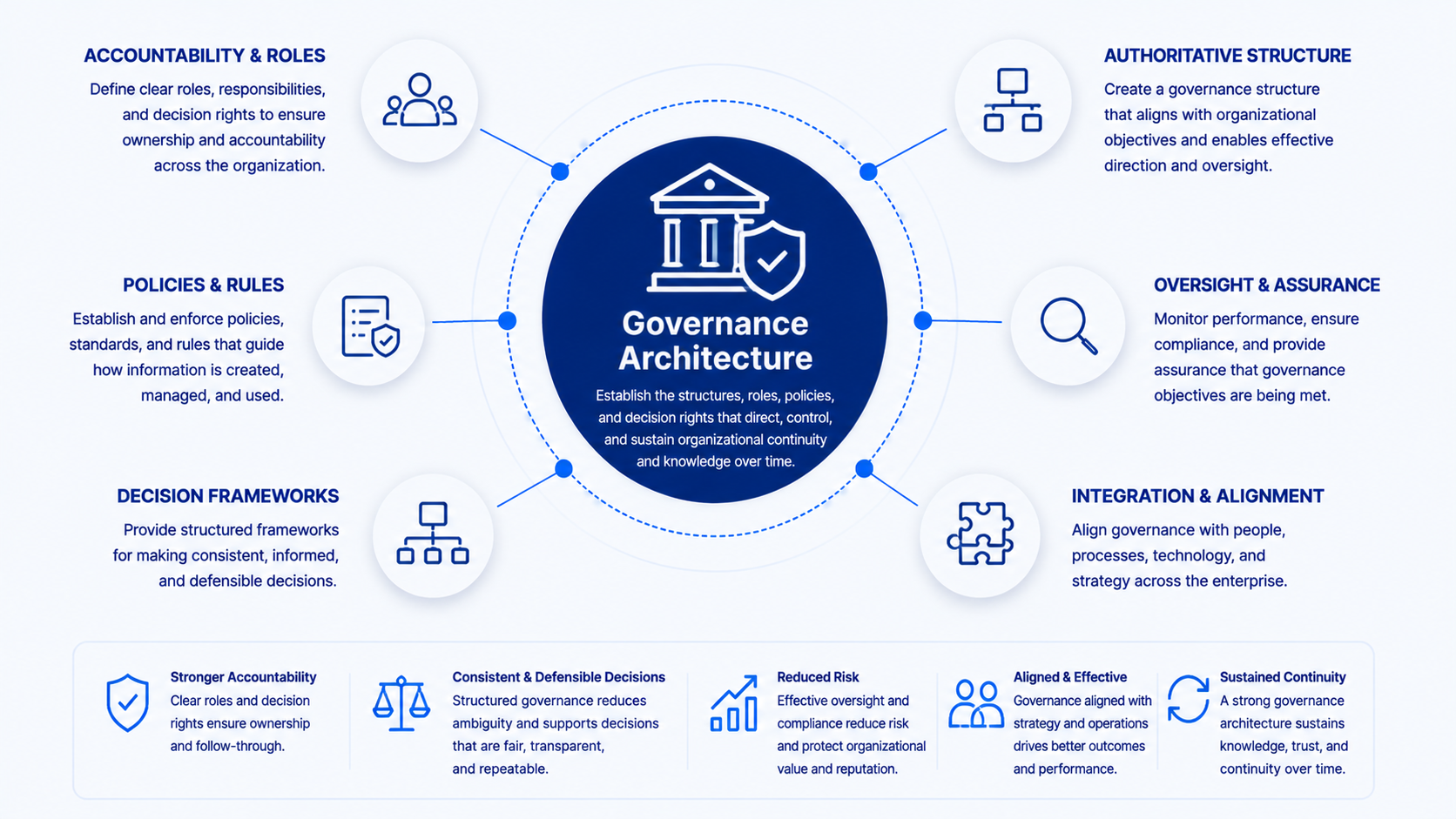
Governance Architecture
Design governance structures that connect authority, policy, evidence, and organizational intelligence.
Governance ArchitectureSPECIFIED ARCHITECTURE
The OrgAI Operational-Continuity Architecture
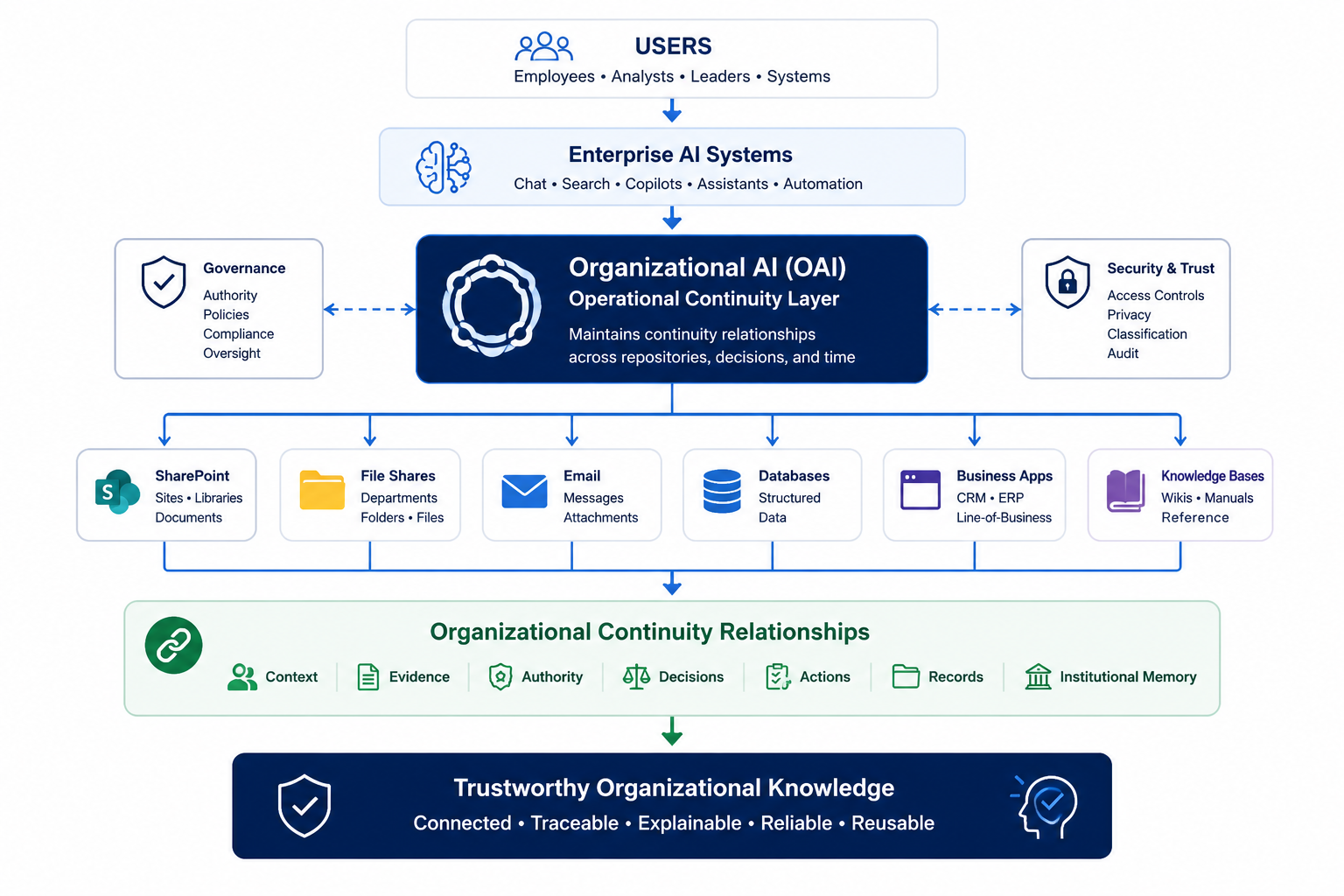
OrgAI is GovKM’s specified operational-continuity architecture between organizational repositories, users, and artificial intelligence. It is designed to preserve the context, evidence, authority, decisions, actions, and records required for trustworthy information across time, systems, and organizational change.
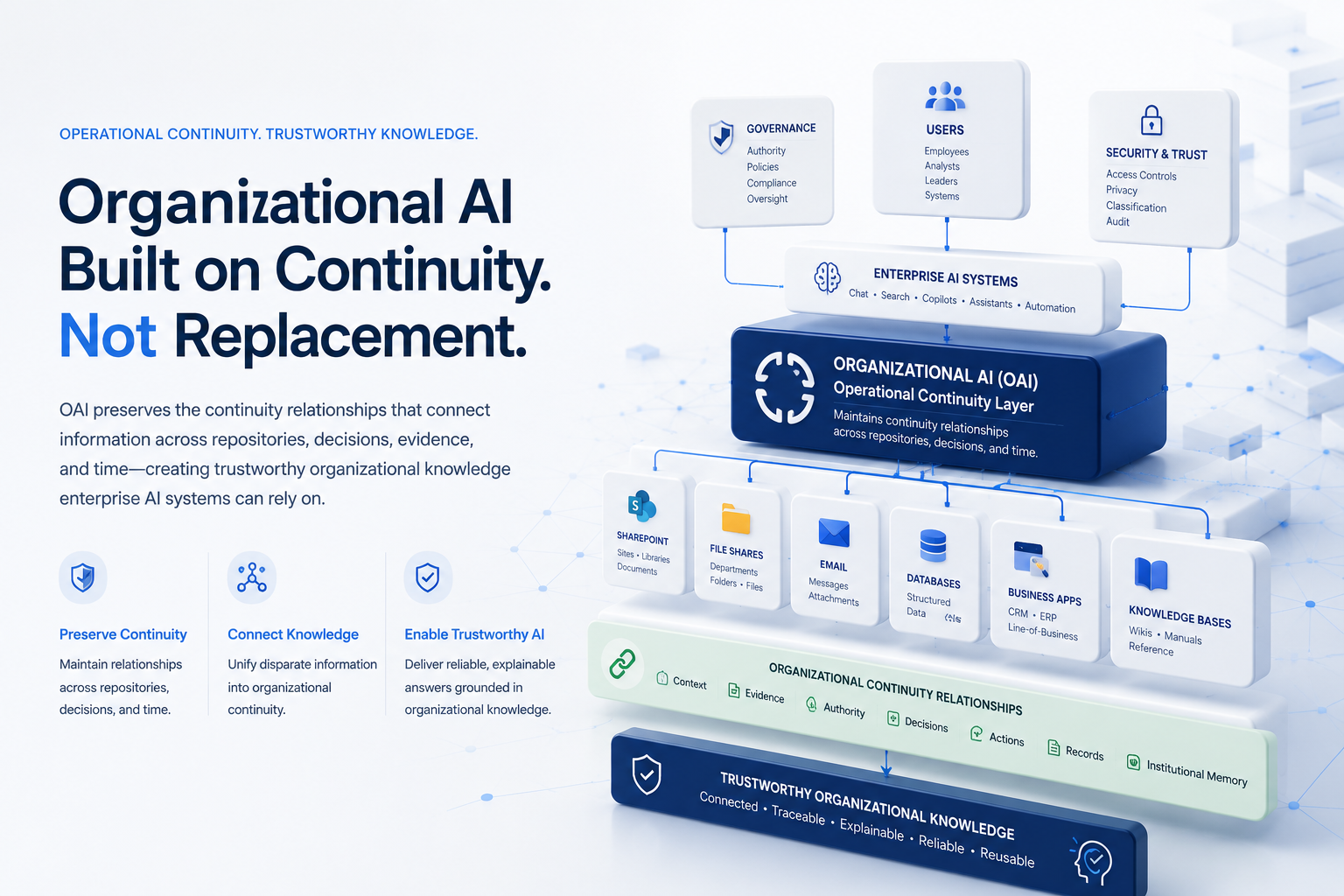
The Operational Continuity Layer
OrgAI transforms the GovKM Continuity Framework from a governance model into an operational capability. It connects repositories, records, decisions, evidence, and human–AI interactions through governed continuity relationships.
Rather than replacing existing systems, OrgAI works across them. It preserves context, authority, provenance, and institutional memory so enterprise AI can rely on knowledge that remains connected, traceable, and understandable over time.
Rather than replacing existing systems, OrgAI works across them. It preserves context, authority, provenance, and institutional memory so enterprise AI can rely on knowledge that remains connected, traceable, and understandable over time.
- Preserve continuity relationships across repositories and systems.
- Connect records, decisions, evidence, and human–AI interactions.
- Maintain context, authority, and provenance across organizational change.
- Protect provenance, evidence, and institutional memory.
- Enable enterprise AI to produce more reliable and explainable results.
Once continuity relationships are operationalized through OrgAI, GAIB makes them visible—allowing users to explore, understand, and interact with continuity as an interconnected system.
DEVELOPMENT IN PROGRESS
Explore the GAIB Visual-Continuity Concept
GAIB is a development-stage interface concept for representing continuity relationships as a three-dimensional environment. Its design goal is to let users explore connected knowledge, relationship lineage, and change over time without treating the current concept as a deployed capability.
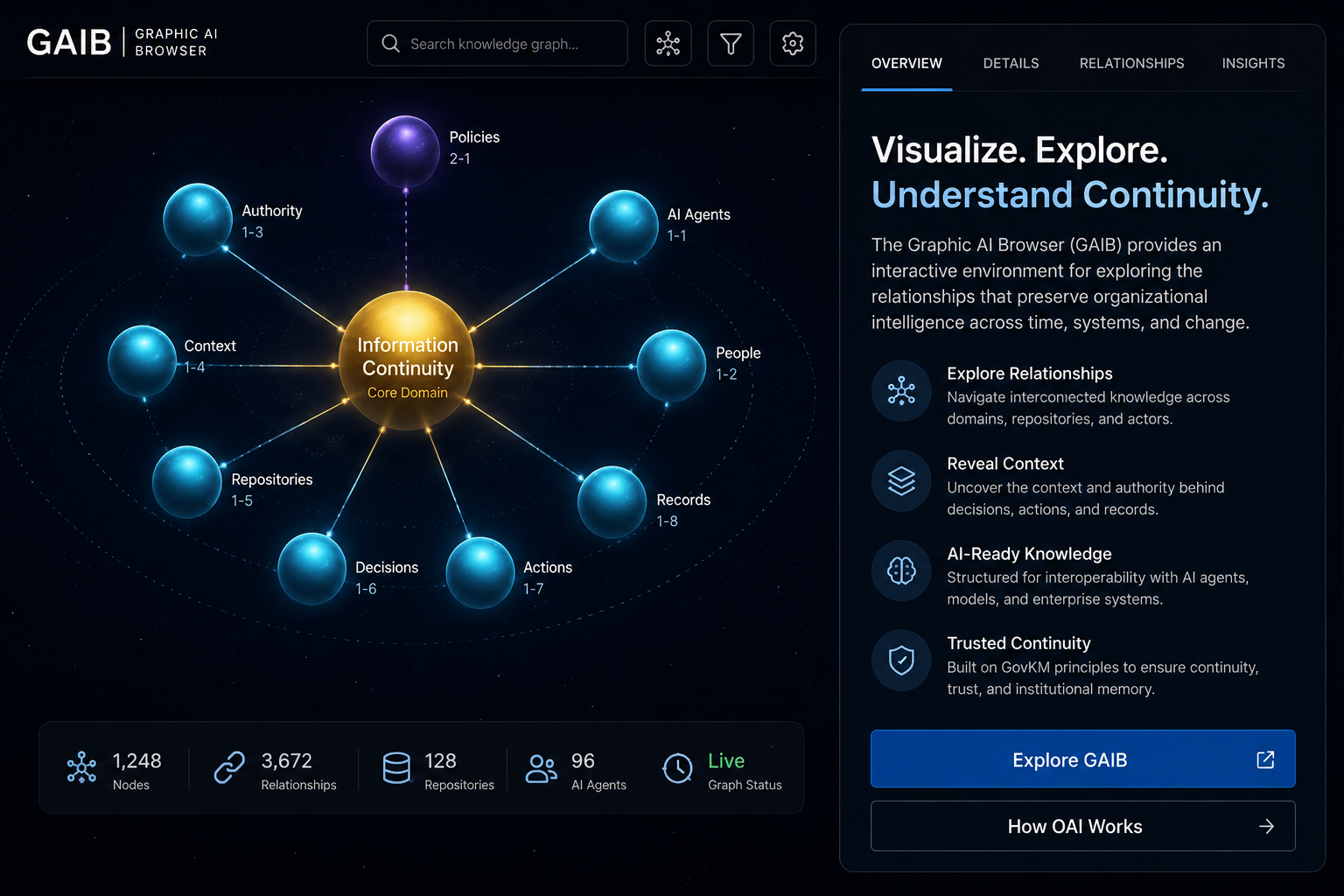
Navigate Continuity as a Connected Environment
GAIB presents continuity relationships as an interactive three-dimensional knowledge environment. Users can move through connected decisions, records, evidence, conversations, and organizational context while preserving the lineage that explains how each continuity object relates to the larger system.
- Visualize continuity relationships.
- Explore interconnected knowledge.
- Trace decision lineage.
- Understand provenance and context.
- Navigate continuity across time.
Organizational Continuity is not another repository, governance framework, or AI platform. It is the architecture that allows all three to function together over time.
NEXT STEP
Continue Your Continuity Journey
Explore the GovKM Continuity Framework, discover the framework domains, or connect with GovKM to discuss your organization's continuity strategy.