
Organizations must change, but change should not make their prior knowledge, decisions, and operating history unintelligible. Continuity Through Change requires new personnel, technologies, structures, policies, and processes to remain connected to the institutional context from which they emerged.
This principle does not require organizations to preserve obsolete methods indefinitely. It requires them to retain the relationships that explain what changed, why the change occurred, which authority approved it, what prior state it replaced, and how existing knowledge should be interpreted afterward.
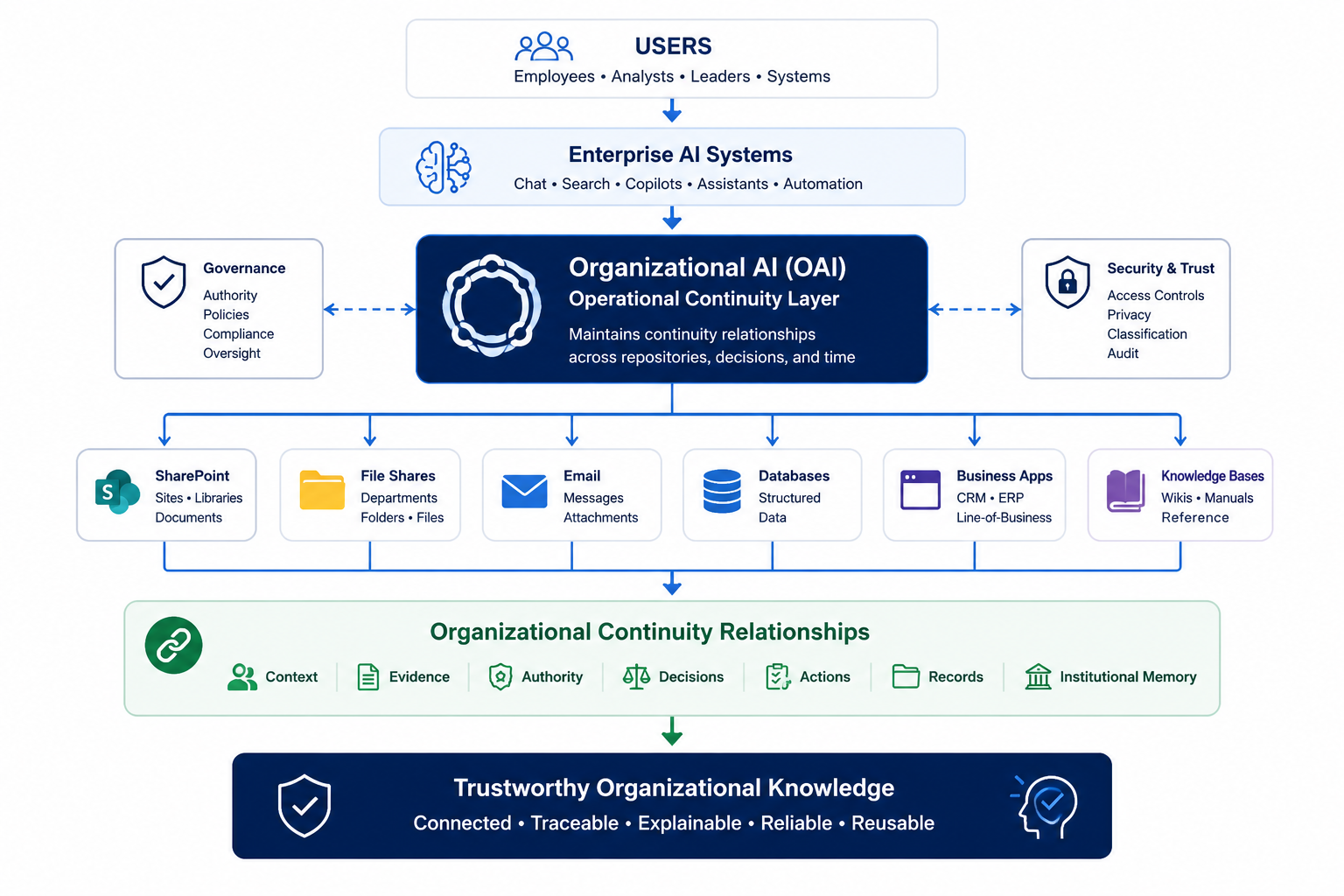
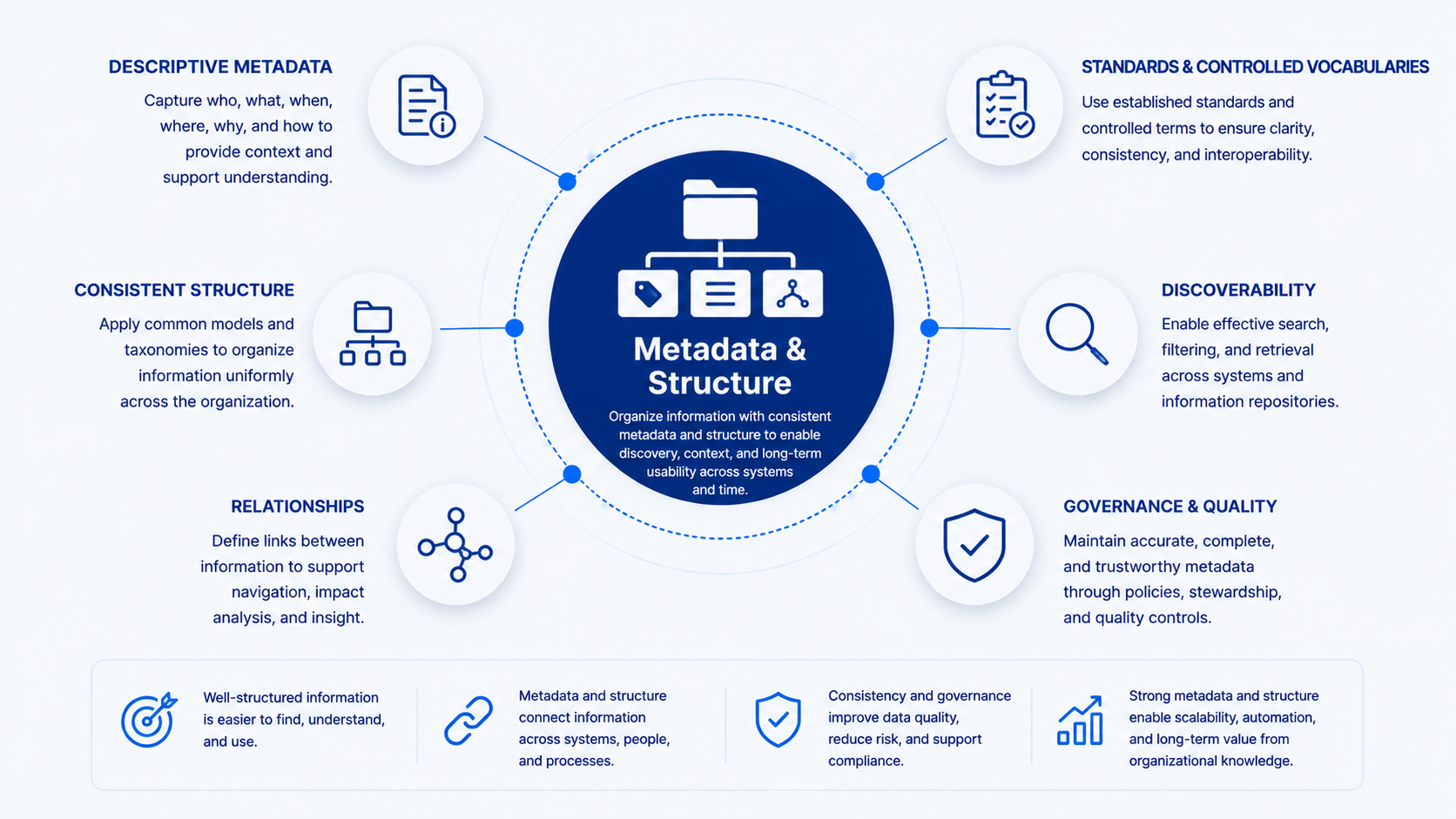
These relationships are especially important during AI adoption, system migration, organizational restructuring, and policy revision. A replacement system may preserve documents while losing their metadata, provenance, relationships, or decision context. Likewise, a new AI capability may produce faster outputs while disconnecting institutional action from the evidence, authority, and reasoning that previously governed it.
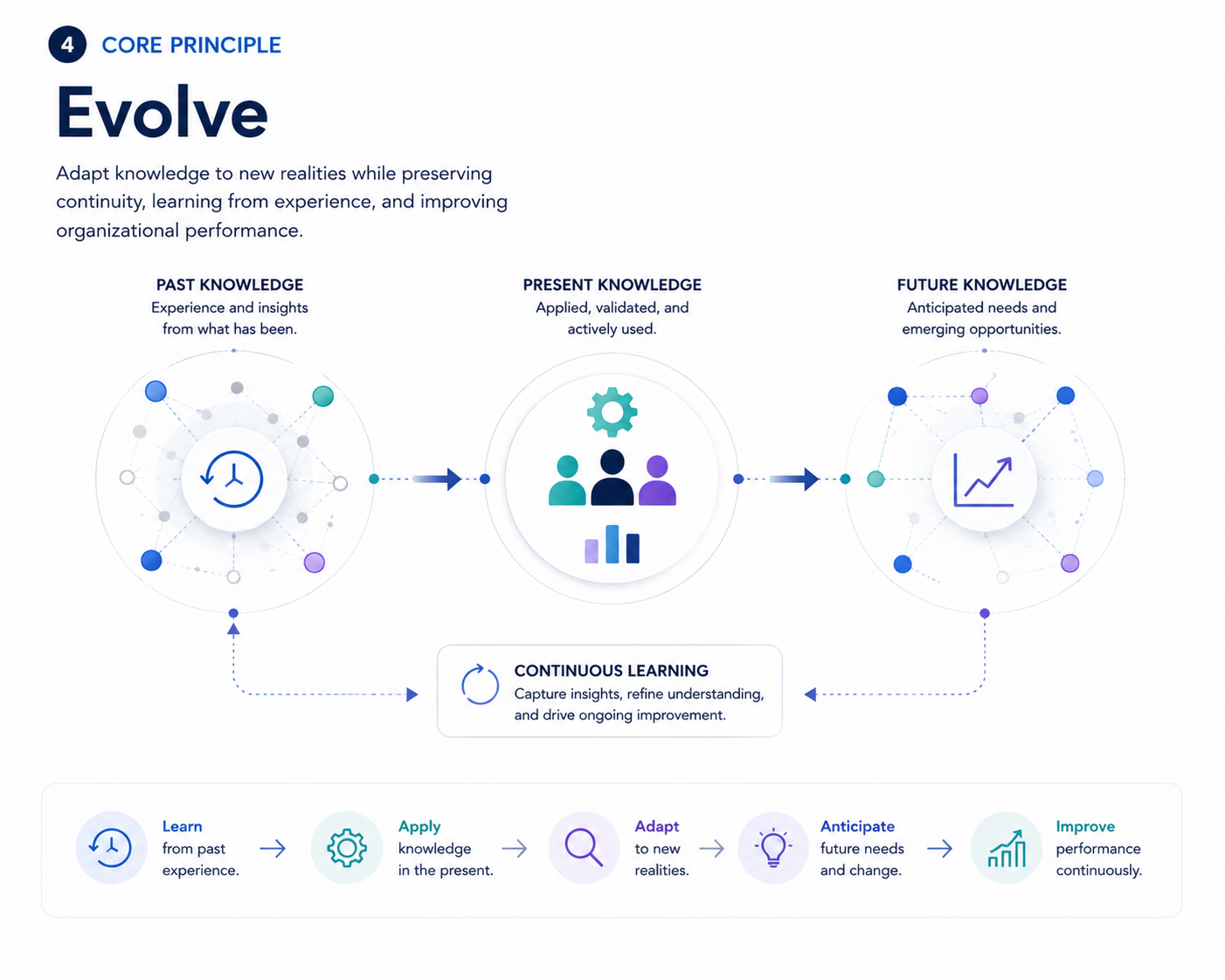
When continuity is maintained through change, organizations can adopt new capabilities without abandoning institutional learning. Prior decisions remain reconstructable, superseded authority remains distinguishable from current authority, and knowledge can be translated into new environments without losing its meaning.
When continuity is severed, transformation becomes institutional amnesia. The organization may retain information while losing the ability to understand how that information relates to current operations.
Continuity Through Change therefore establishes adaptation as a continuity property: the institution can evolve while preserving the lineage necessary to understand, govern, and reuse its knowledge.