Acquisition
Acquisition continuity connects procurement requirements, solicitation versions, evaluation evidence, delegated authority, selection decisions, contract terms, modifications, performance records, and lessons for the next purchase. A supplier recommendation should remain distinguishable from an authorized selection, and a later approved change should supersede the earlier decision without erasing its history. For example, an analyst may recommend a new supplier while the contracting authority has not approved a replacement. An AI assistant must preserve that recommendation as evidence while continuing to identify the supplier that currently governs the procurement. When approval arrives, the system should retain the decision, its effective date, its scope, and the evidence it relied on. Review questions include which requirement version applies, who approved the selection, whether a modification changes delivery obligations, and whether past performance evidence belongs to the same vendor. GovKM's continuity approach makes these relationships inspectable across personnel changes, repository migrations, and repeated procurement cycles. The articles below examine evidence and decision lineage. Organizations exploring the testing beta can use synthetic purchasing histories to examine corrections, conflicting recommendations, late evidence, and the boundary between historical records and current authority.
Related Articles
Explore GovKM research, case studies, and analysis related to this sector.

The Search Found the Documents. It Still Ranked the Wrong Decision First.

FOLLOW-ON ARTICLE: The Last Contract Taught a Lesson. The Next Team Could Not Use It.
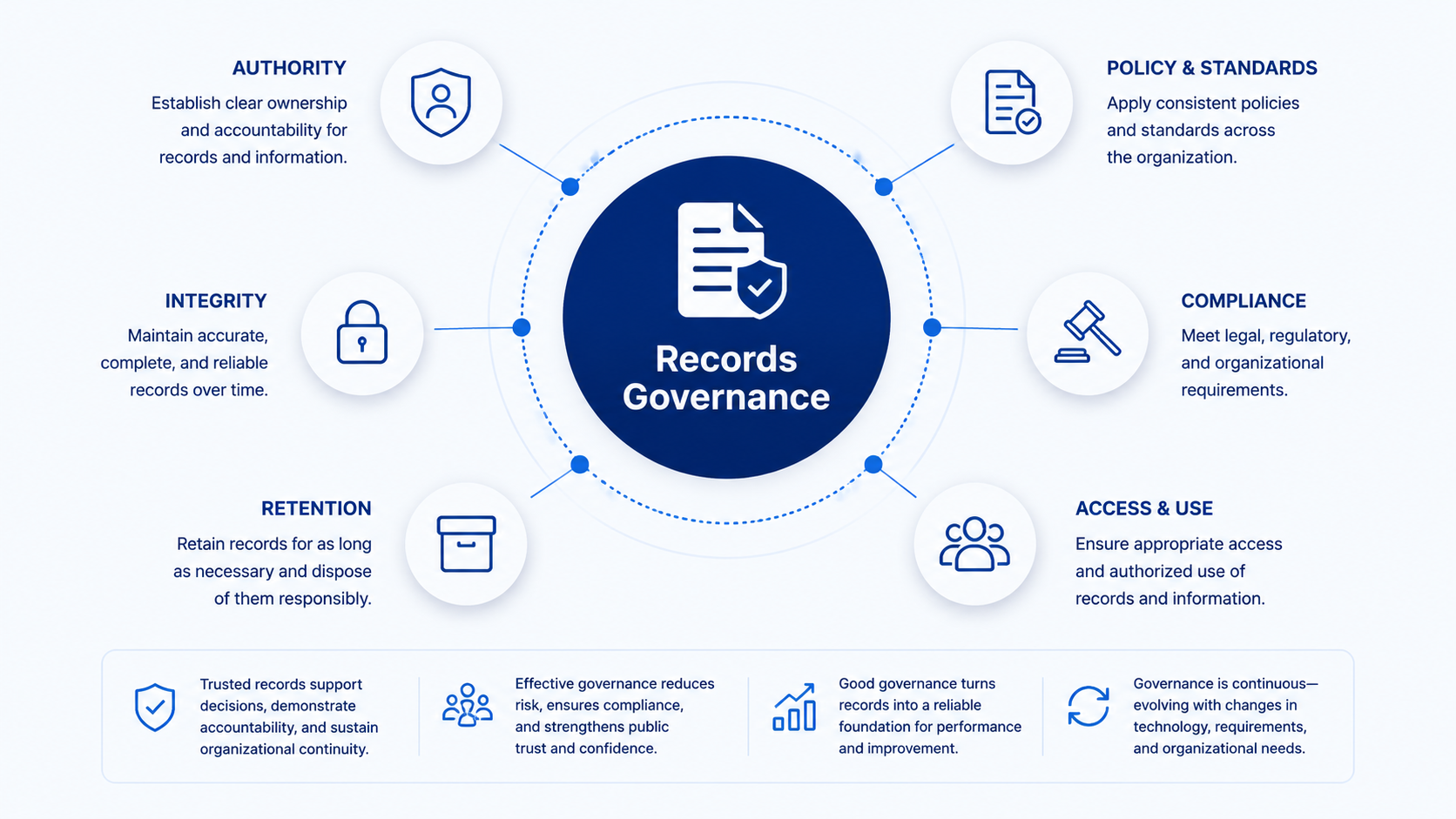
A Decision Memorandum Is Not Decision Provenance.
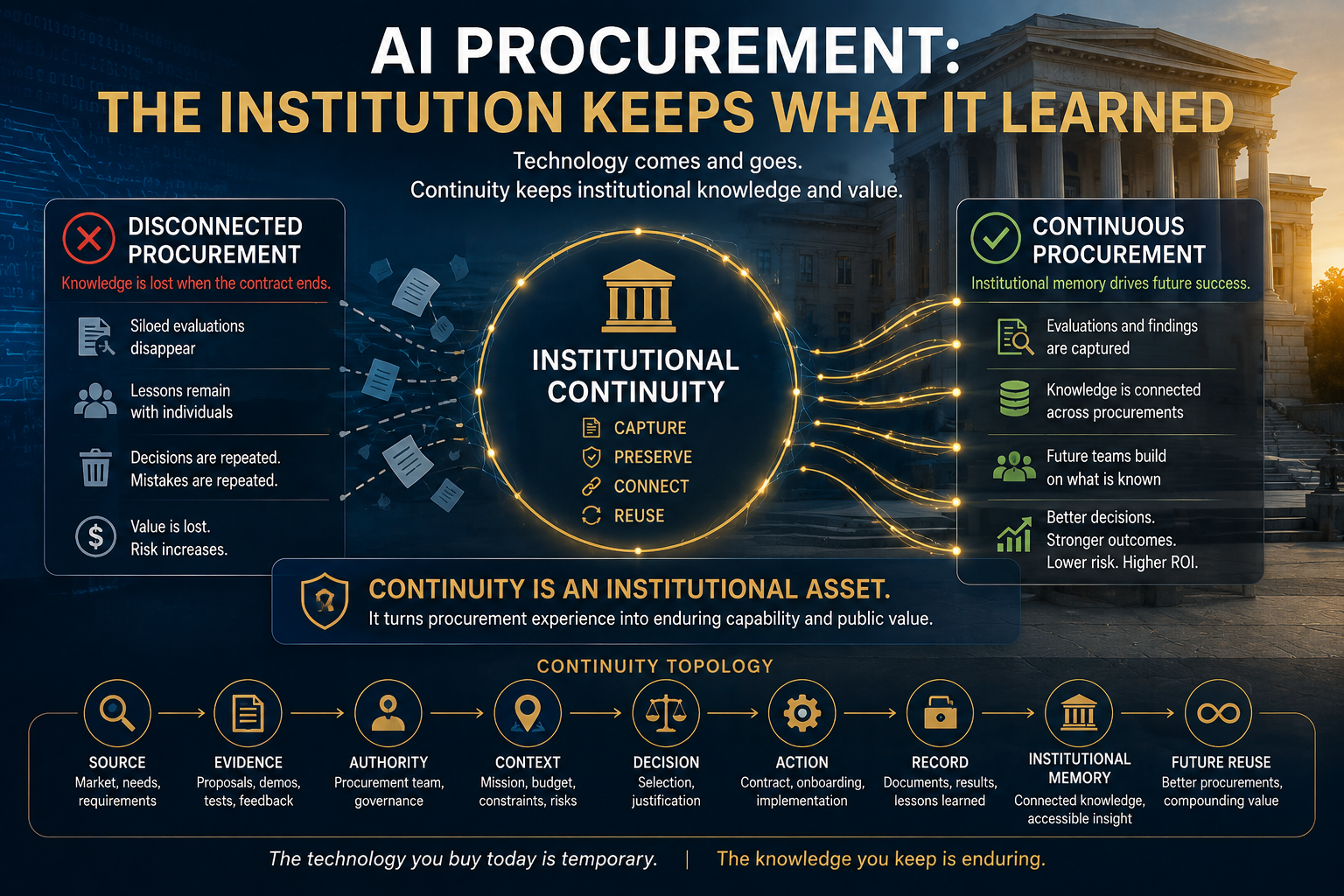
AI Procurement Is Not Complete Until the Institution Keeps What It Learned
Return to the Continuity Foundations
Sector-specific evidence is one view into the broader GovKM continuity model. Continue into the Framework, Research, Articles, OrgAI, or GAIB to understand the relationships behind these applications.