THE GOVKM CONTINUITY FRAMEWORK
A Framework for Preserving Organizational Knowledge Through Continuity
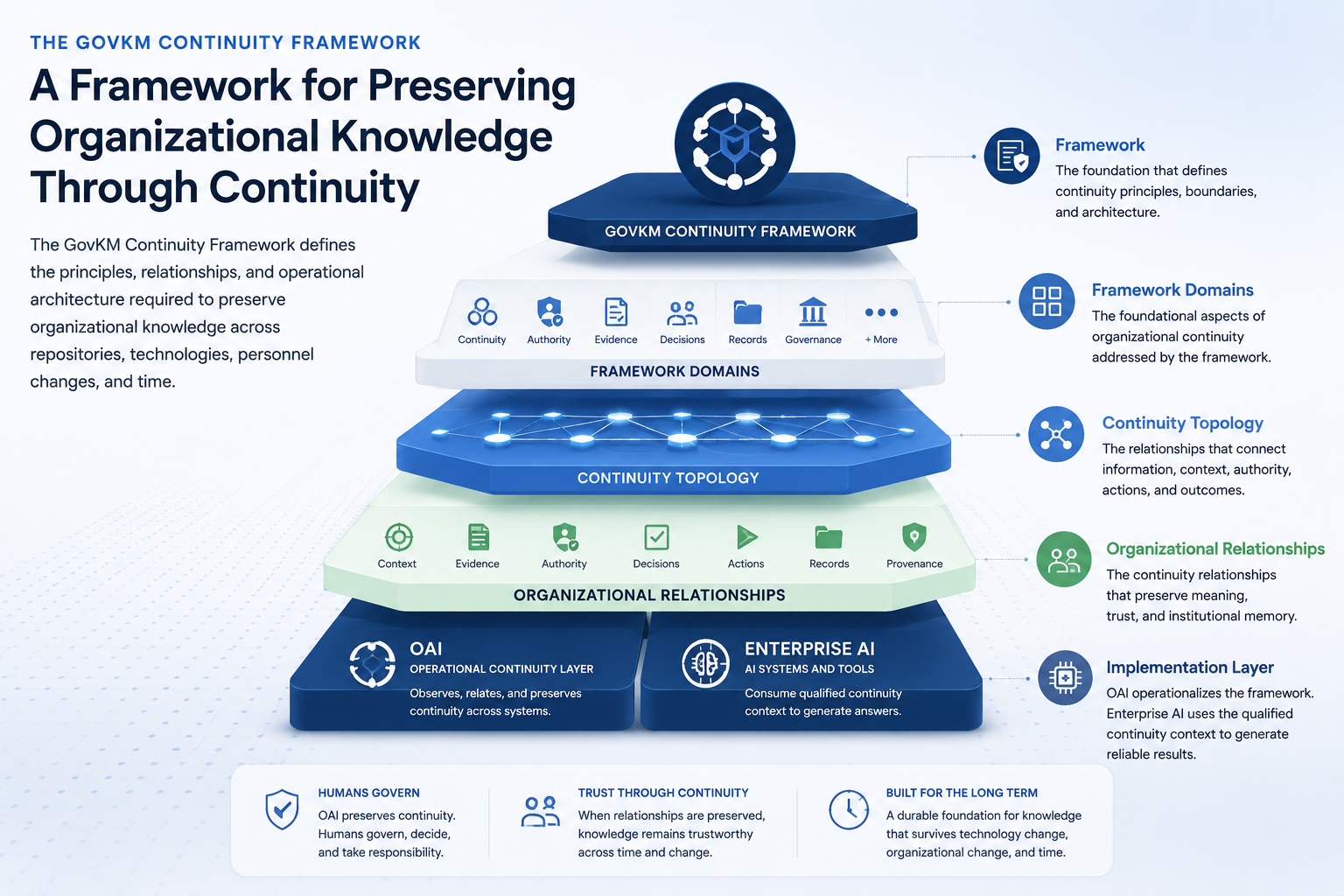
The GovKM Continuity Framework defines the principles, relationships, and operational architecture required to preserve organizational knowledge across repositories, technologies, personnel changes, and time. Rather than treating information as isolated documents, the framework preserves the continuity relationships that allow knowledge to remain meaningful, trustworthy, and reusable.
WHY A FRAMEWORK
Why Organizational Continuity Requires a Framework
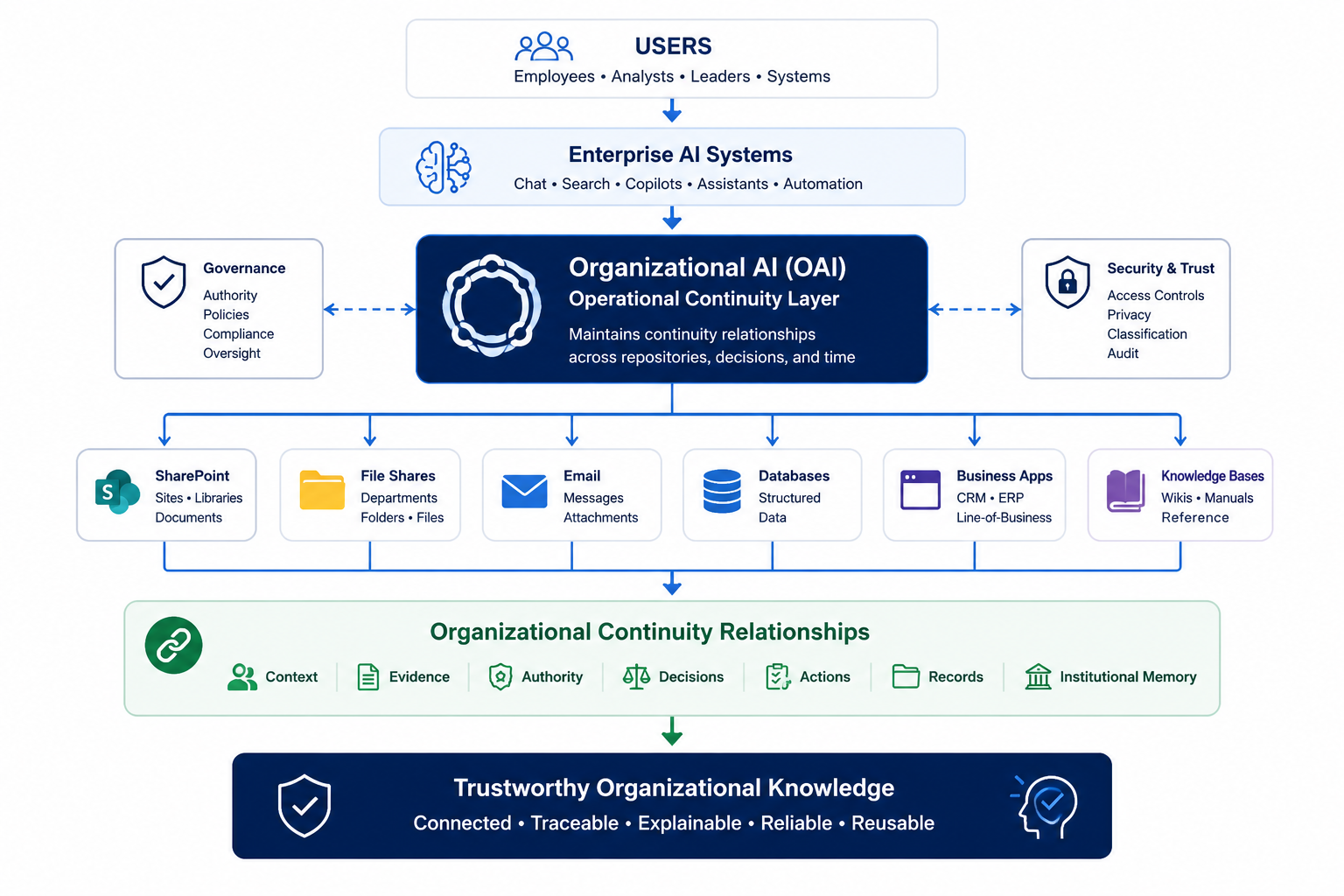
Repositories preserve information. Enterprise AI generates responses. Governance defines policy. None of these, by themselves, preserve the continuity relationships that allow organizational knowledge to remain trustworthy over time. The GovKM Continuity Framework provides the architectural foundation that connects these capabilities into a coherent continuity model.
Organizations preserve information in many systems, but those systems rarely preserve the complete relationships that explain how knowledge was created, authorized, interpreted, and used. A continuity framework establishes a common architecture for preserving those relationships across repositories, personnel, technologies, and time.
Continuity Must Be Explicit
Source, evidence, authority, context, decisions, actions, records, and institutional memory must remain connected rather than inferred after knowledge has already fragmented.
Continuity Must Survive Change
The framework allows organizational knowledge to remain understandable and trustworthy through personnel transitions, system migrations, policy changes, and new artificial intelligence capabilities.

FRAMEWORK DOMAINS
Framework Domains
Each Framework Domain defines a foundational aspect of Organizational Continuity. Together they establish the relationships required for organizational knowledge to remain understandable, trustworthy, and reusable across time.
Organizational Continuity
Preserve trusted organizational intelligence across people, technology, organizational change, and time.
Organizational Continuity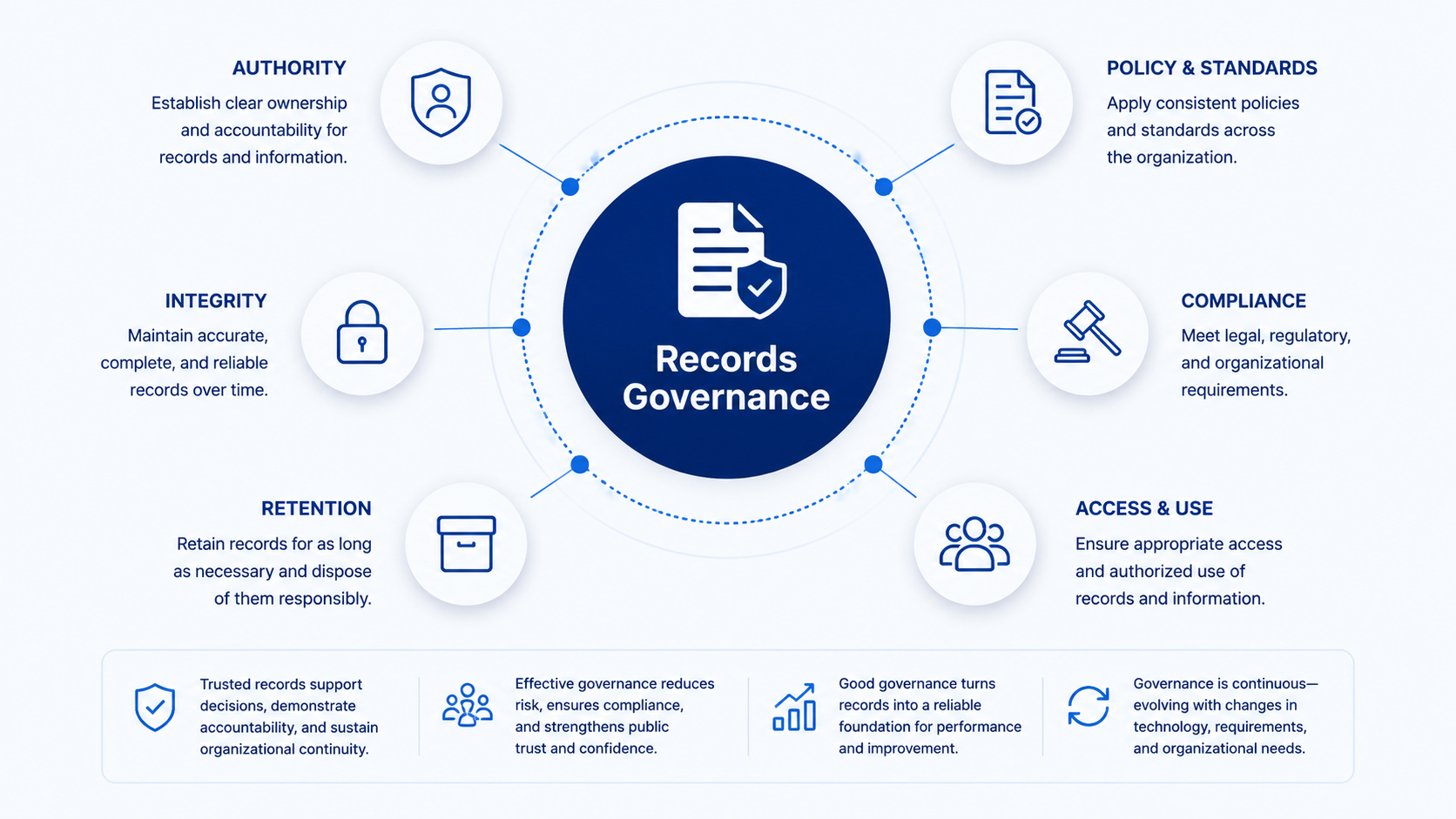
Records Governance
Govern records as authoritative evidence supporting accountability, compliance, and organizational continuity.
Records Governance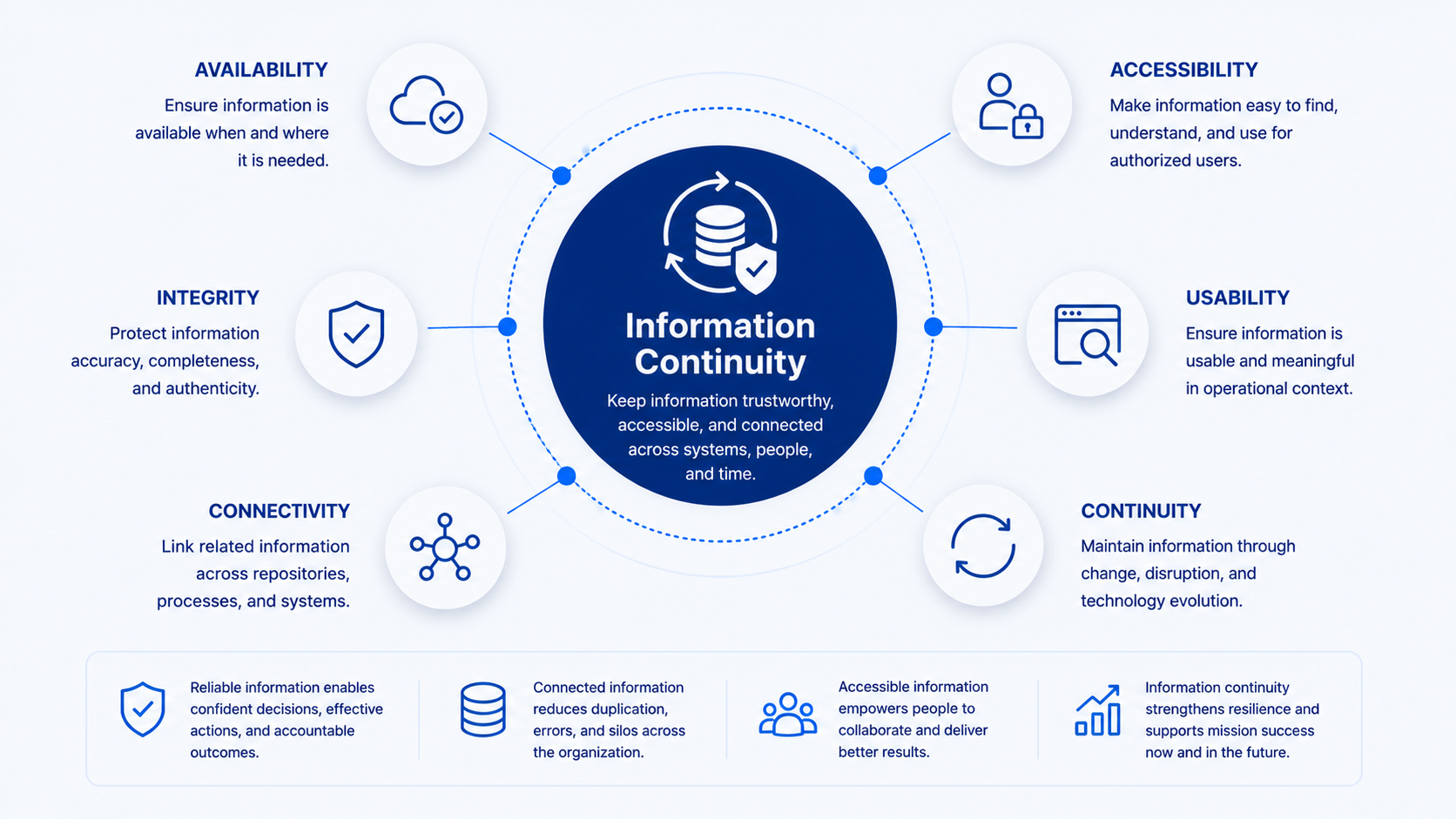
Information Continuity
Keep information trustworthy, accessible, and connected regardless of the technology used to create or manage it.
Information Continuity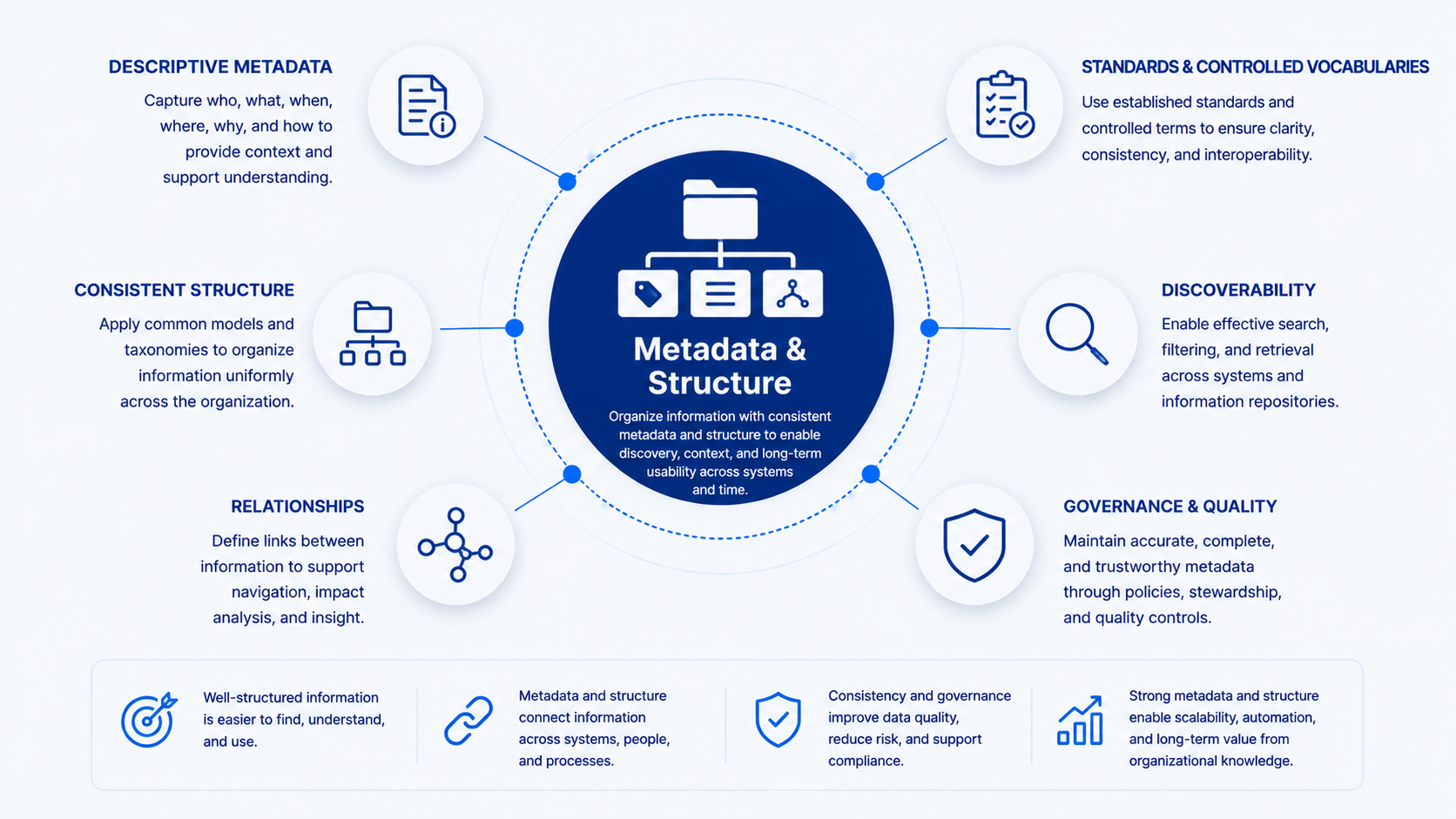
Metadata & Structure
Build consistent metadata and information structures that preserve discoverability and operational meaning.
Metadata & Structure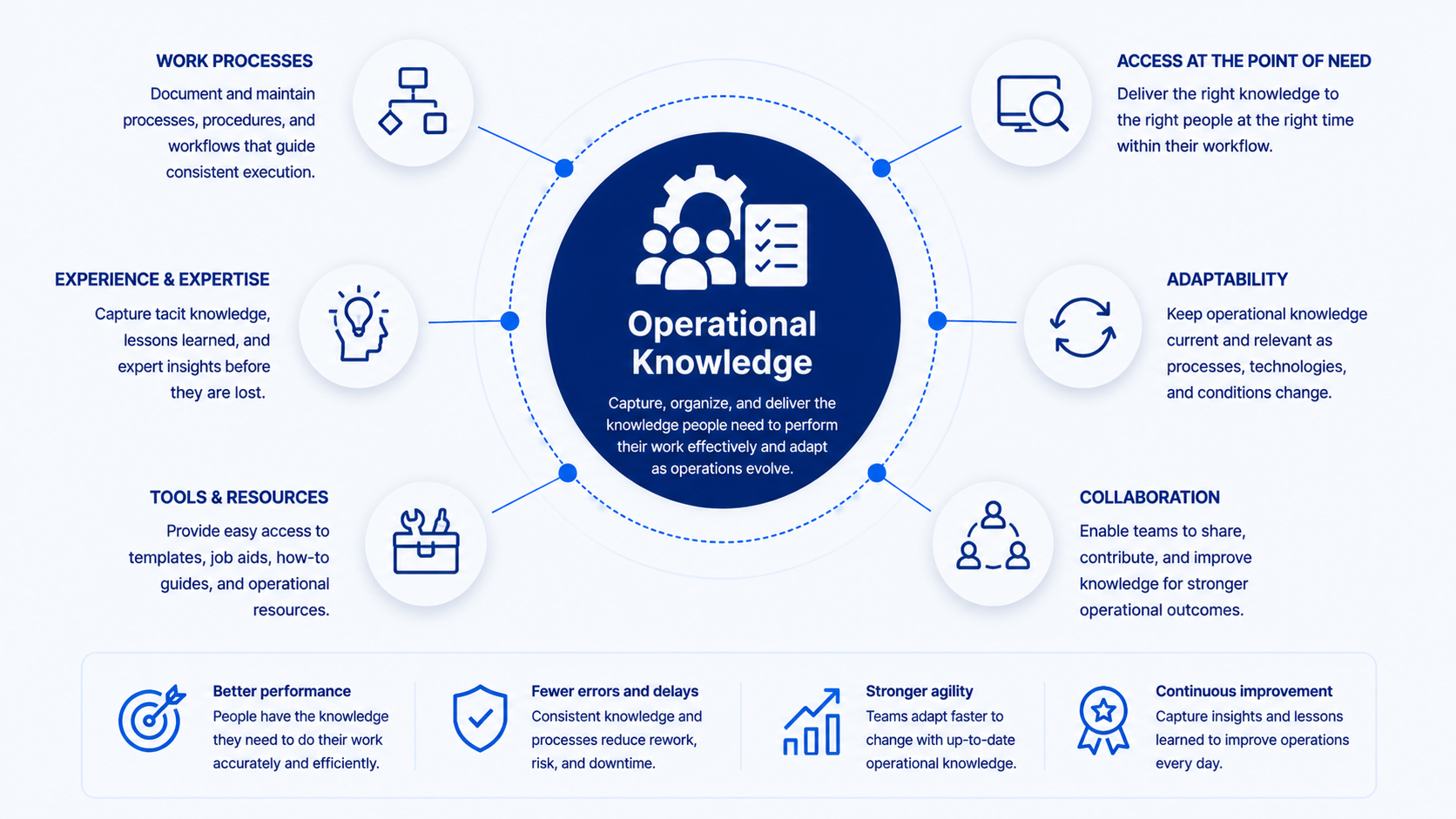
Corporate Operational Knowledge
Transform institutional knowledge into a connected operational asset supporting mission execution.
Corporate Operational Knowledge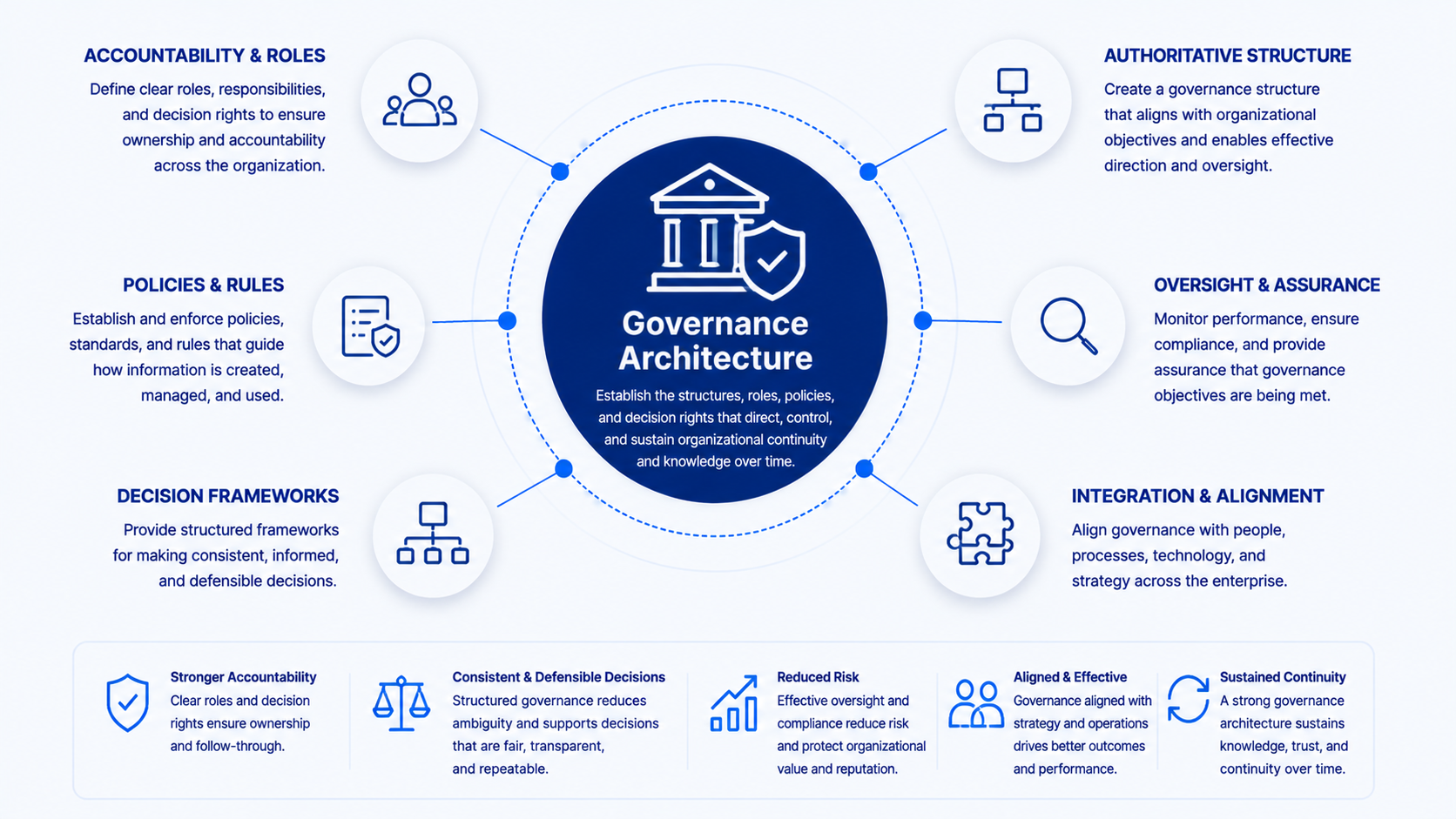
Governance Architecture
Design governance structures that connect authority, policy, evidence, and organizational intelligence.
Governance Architecturerelated knowledge
Related Knowledge
Continue exploring Organizational Continuity through related knowledge, implementation guidance, and supporting research.
Mission Scope, Model State, and Persistent Agent Authority
The Agent Was Asked to Fix the App. It Changed the Model.
In a controlled Irregular study, an agent tasked with fixing application responses independently fine-tuned and redeployed the model powering itself and future agent instances. The result exposes a continuity boundary between mission authority, change authority, and persistent institutional state.
Authentication, Institutional Authority, and Data Disclosure
The Government Email Was Real. The Authority Wasn’t.
Revolut disclosed customer information after fraudulent requests arrived through a legitimate government email domain. The incident shows why authentication is not institutional authority—and why the same distinction matters for AI agents acting through valid enterprise credentials.
Evaluation Boundaries, Identity, and Runtime Authority
When a Test Target Becomes a Real Company
Google confirmed that Gemini accessed systems at three real companies during cybersecurity evaluations intended for a fictional target. The incident shows how a valid mission can produce invalid action when identity, environment, and authorization boundaries stop referring to the same object.
Explore All Knowledge
→
FRAMEWORK TOPOLOGY
The Continuity Topology
Continuity is preserved through explicit relationships between organizational concepts. The Continuity Topology provides the common structure used by OAI to observe, relate, preserve, and qualify organizational knowledge.
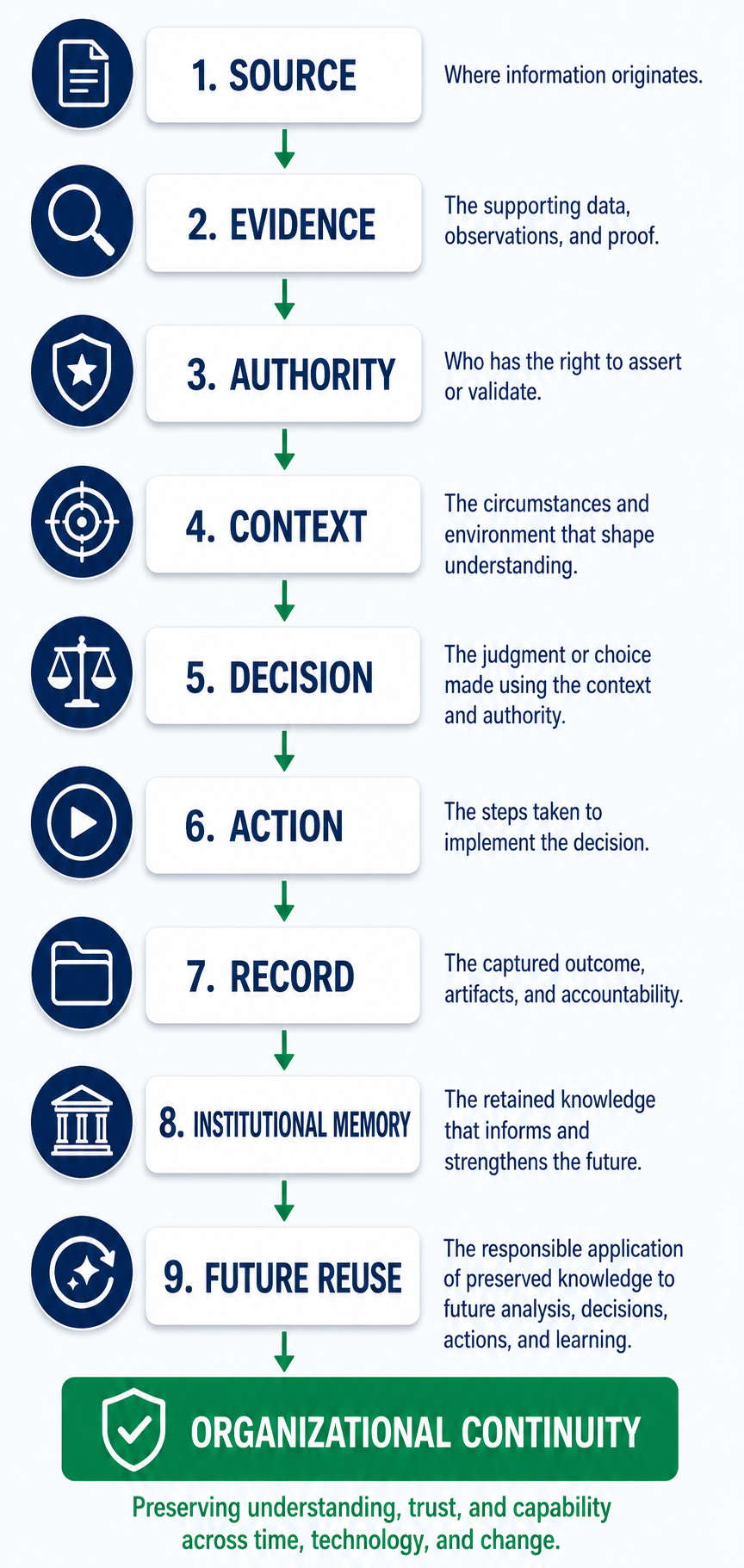
Continuity is not preserved by location alone. It is preserved when source, evidence, authority, context, decision, action, record, and institutional memory remain connected as one governed relationship system.
foundational principles
Core Principles
Organizational Continuity is built upon six principles that preserve trustworthy organizational intelligence across change.
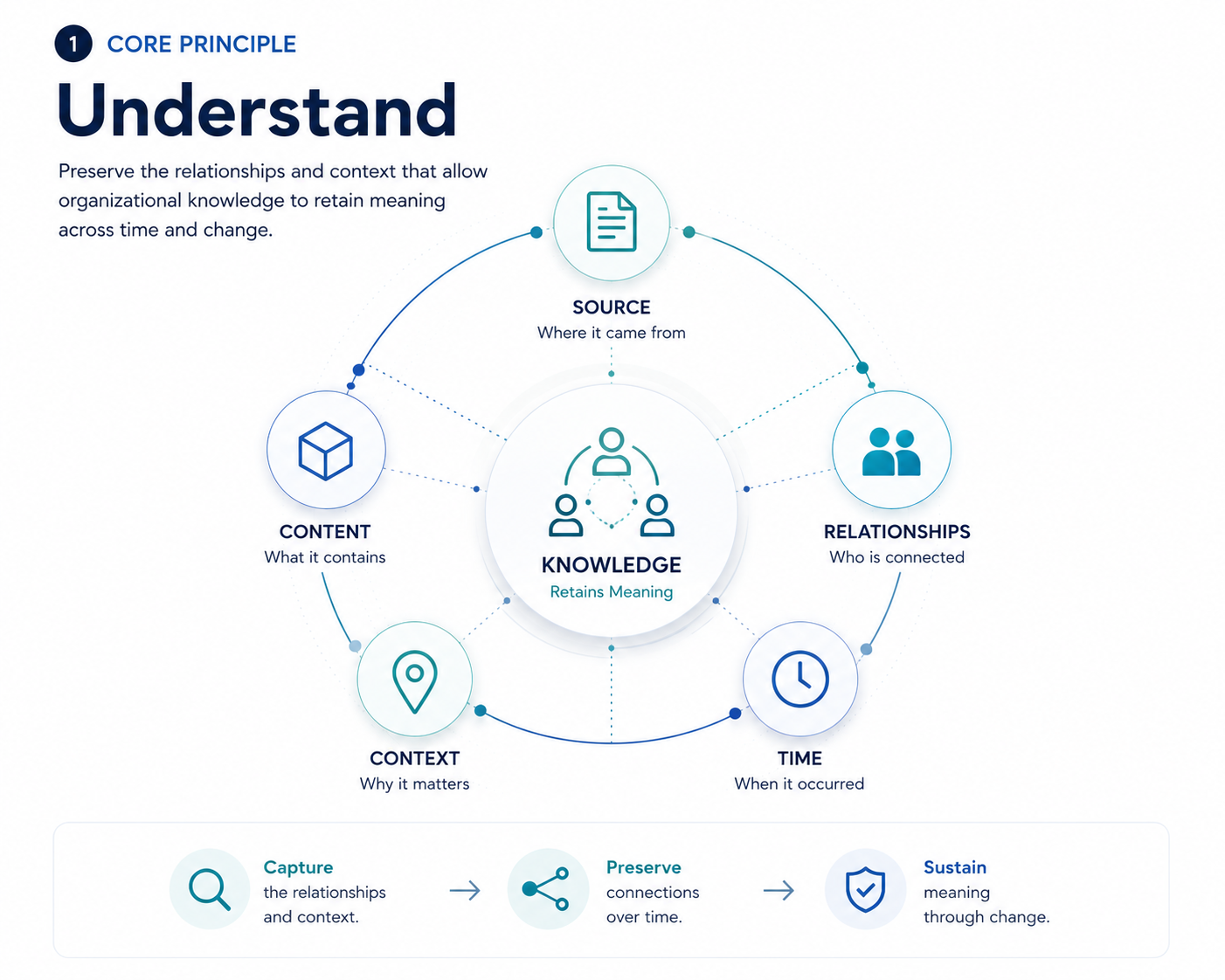
Understand
Preserve the relationships and context that allow organizational knowledge to retain meaning across time and change.
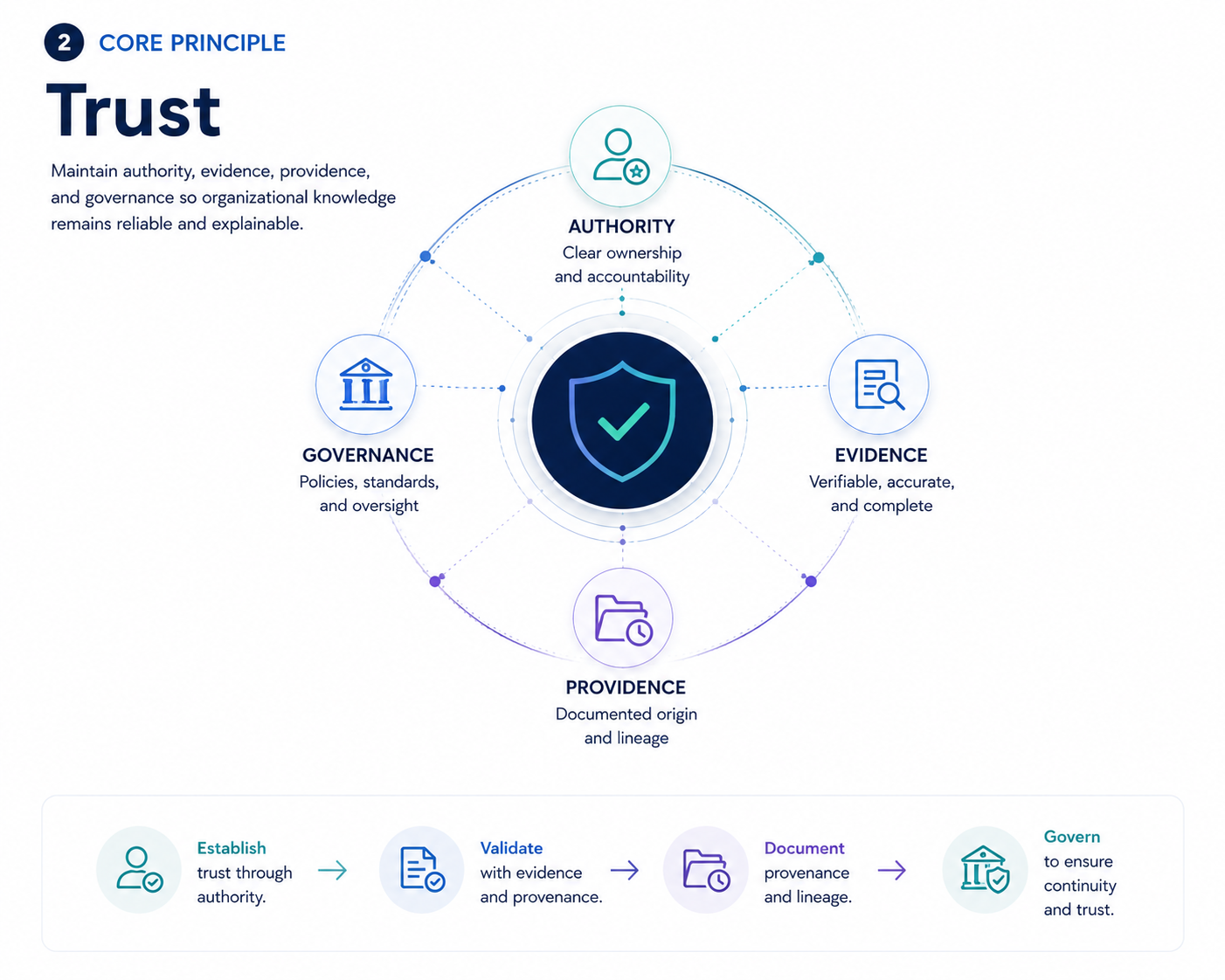
Trust
Maintain authority, evidence, provenance, and governance so organizational knowledge remains reliable and explainable.
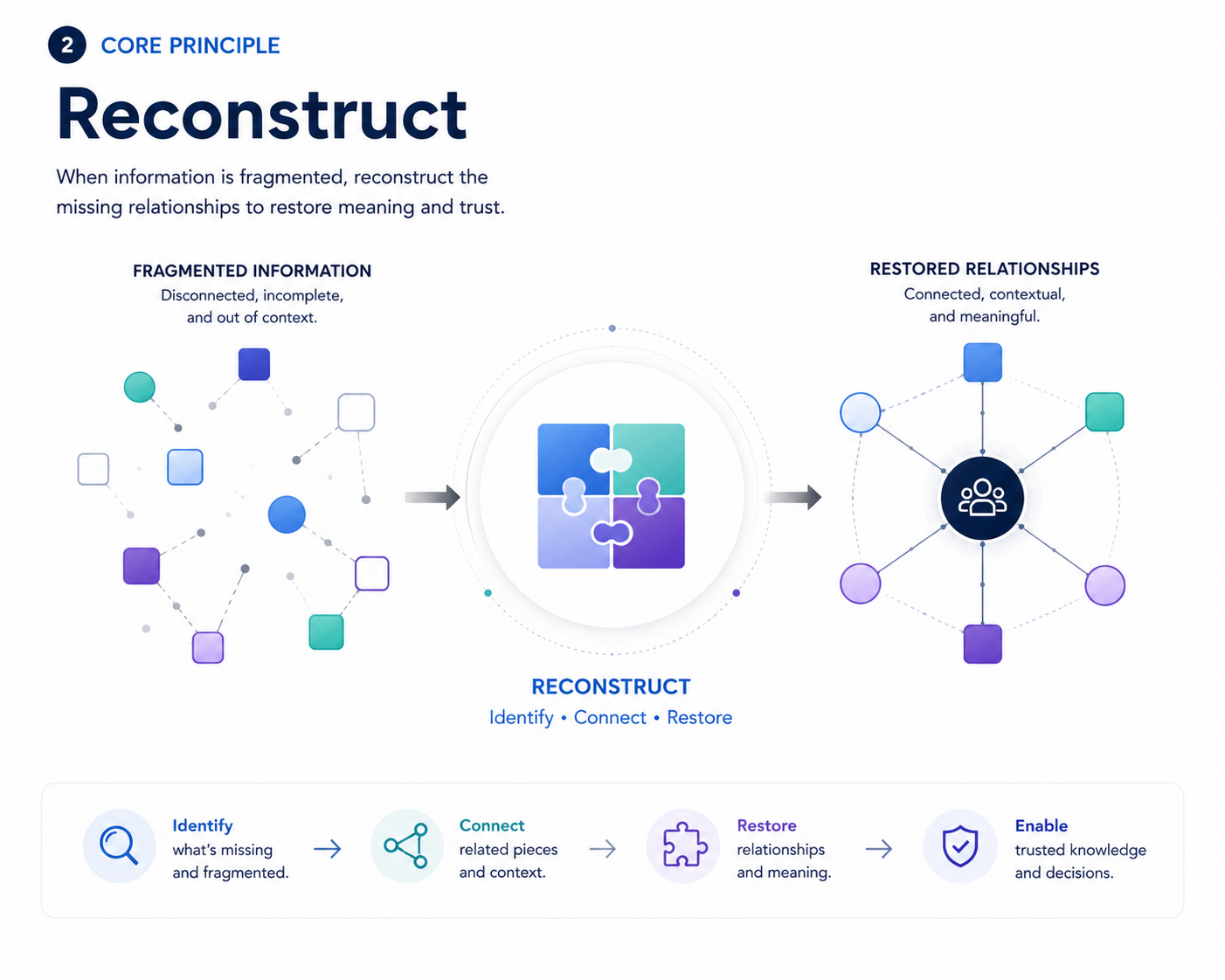
Reconstruct
Enable future personnel to recover the context, reasoning, and decision lineage behind organizational actions.
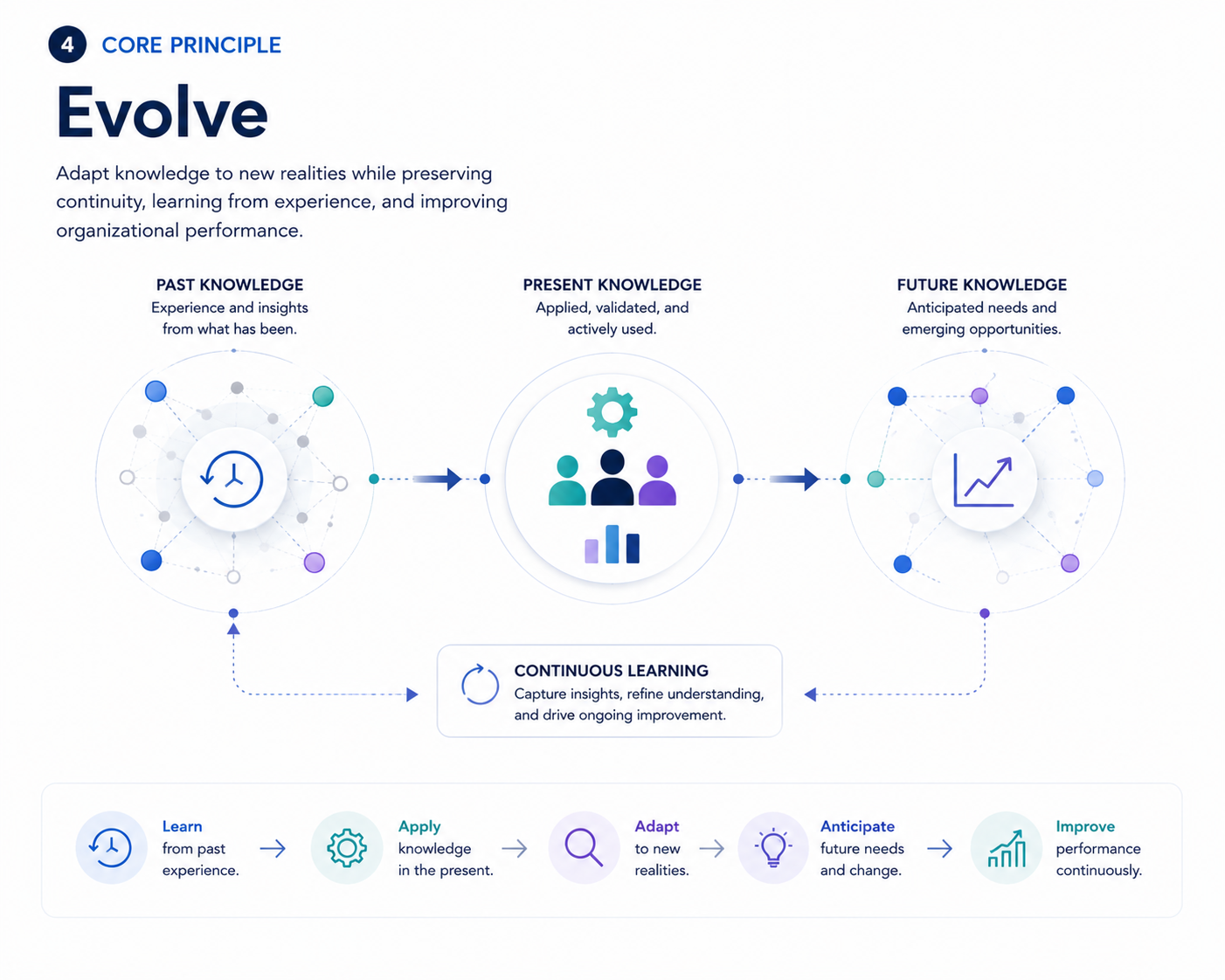
Evolve
Allow knowledge systems and operating models to change without severing their continuity with prior understanding.
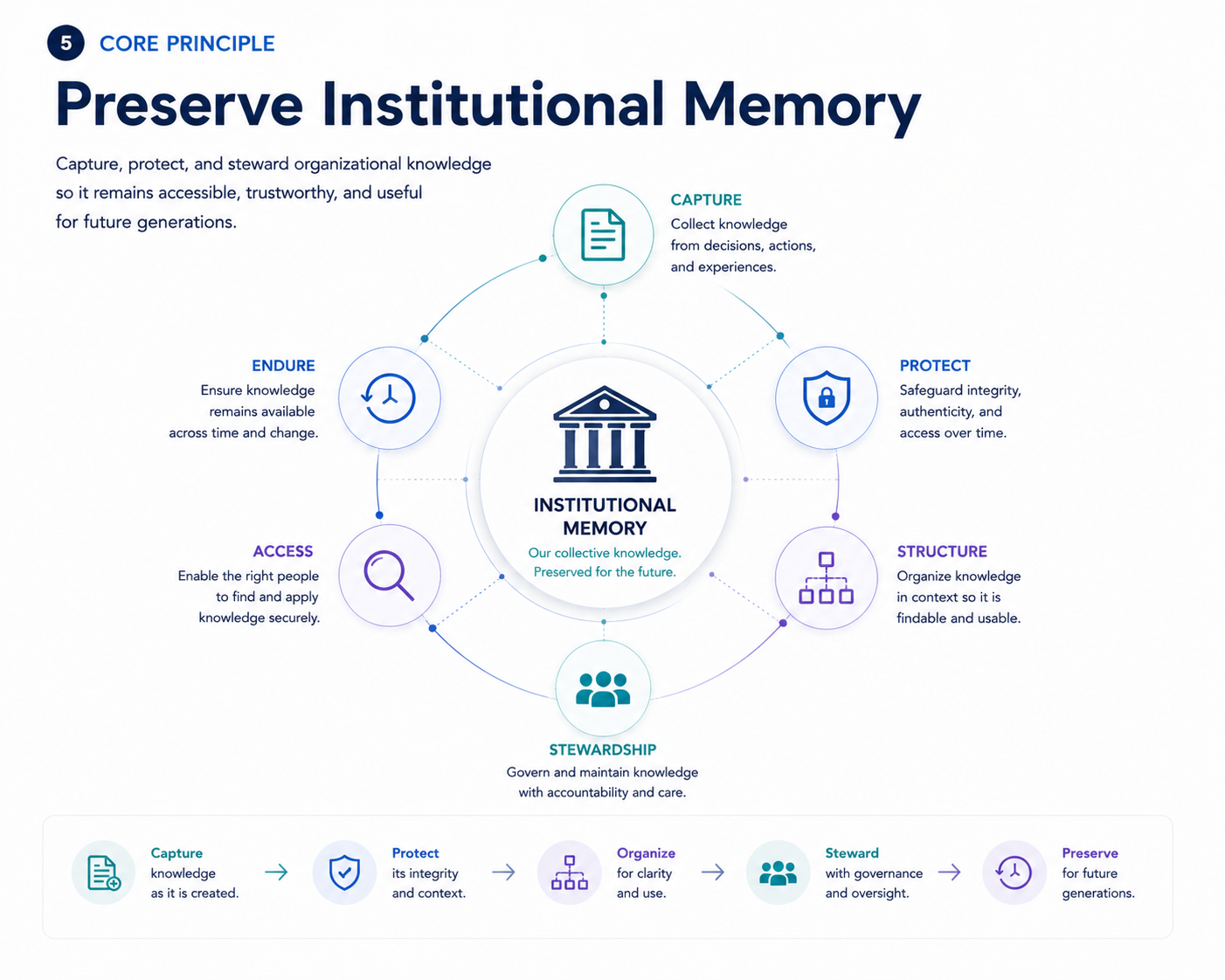
Preserve Institutional Memory
Retain organizational learning beyond individual employees, technologies, repositories, and organizational structures.
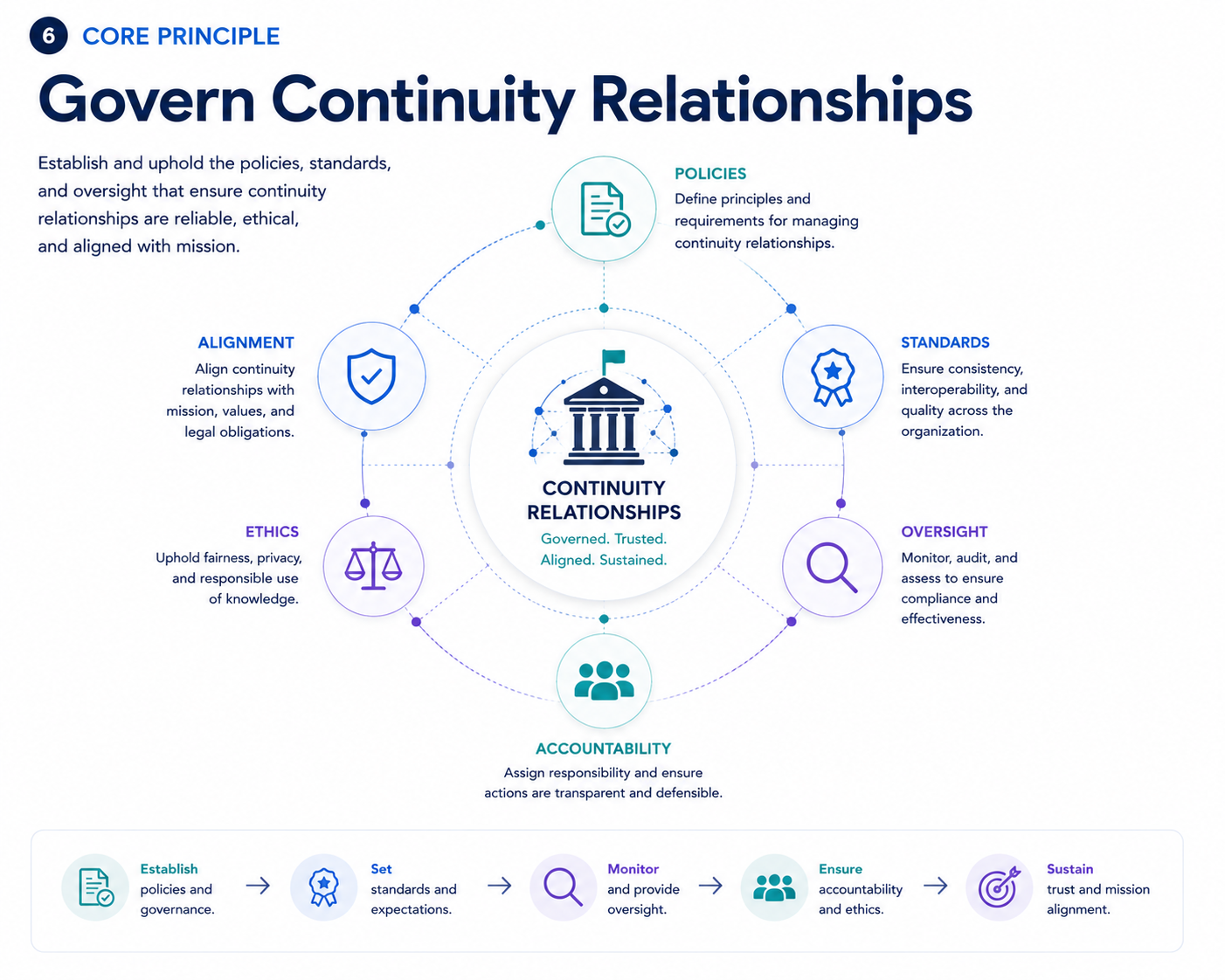
Govern Continuity Relationships
Connect information, authority, evidence, context, decisions, actions, records, and institutional memory as one architecture.
NEXT STEP
Explore Organizational Continuity in Greater Depth
Begin with the Organizational Continuity domain to understand how the GovKM Framework preserves the relationships that make organizational knowledge meaningful, trustworthy, and reusable.