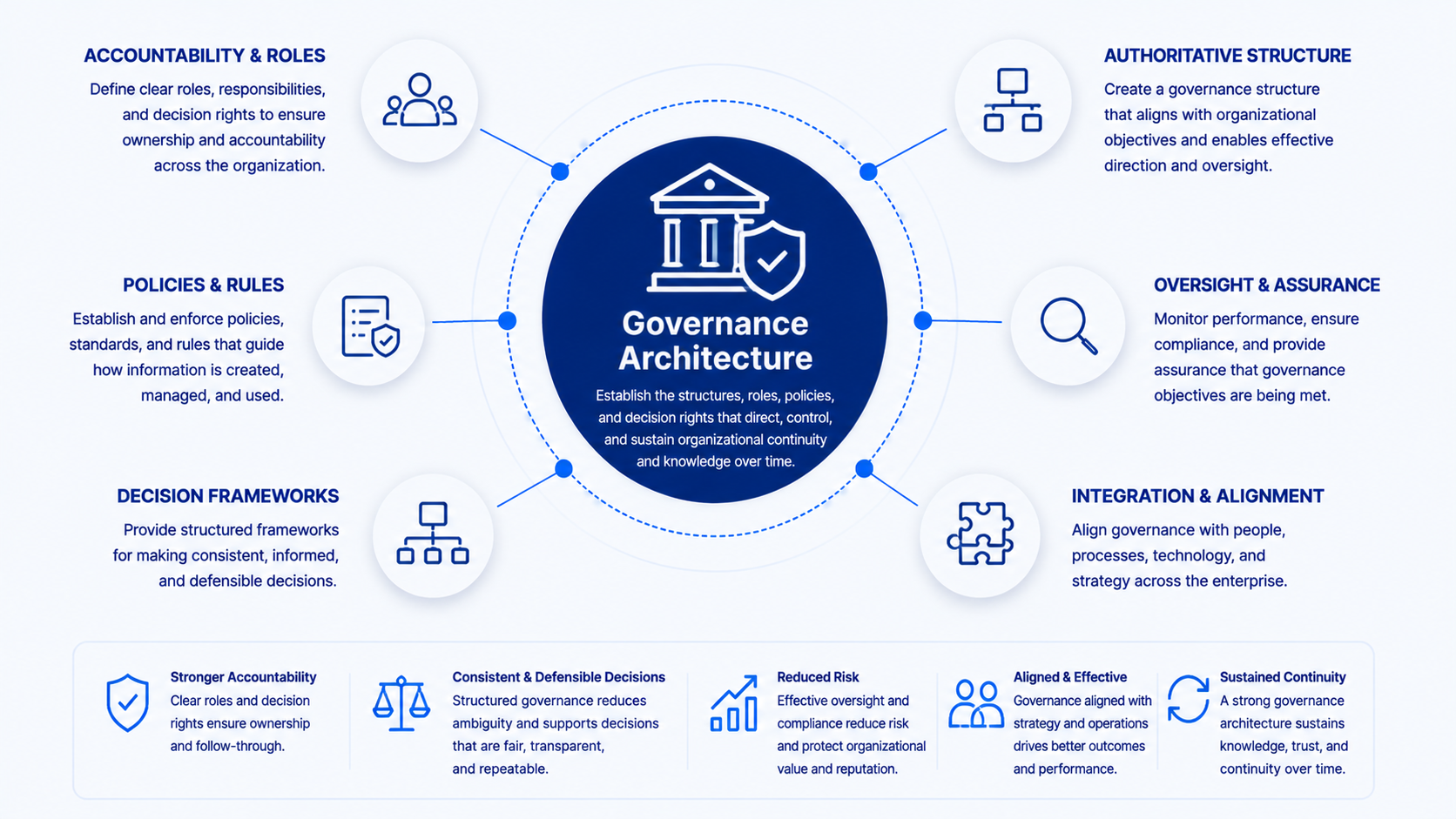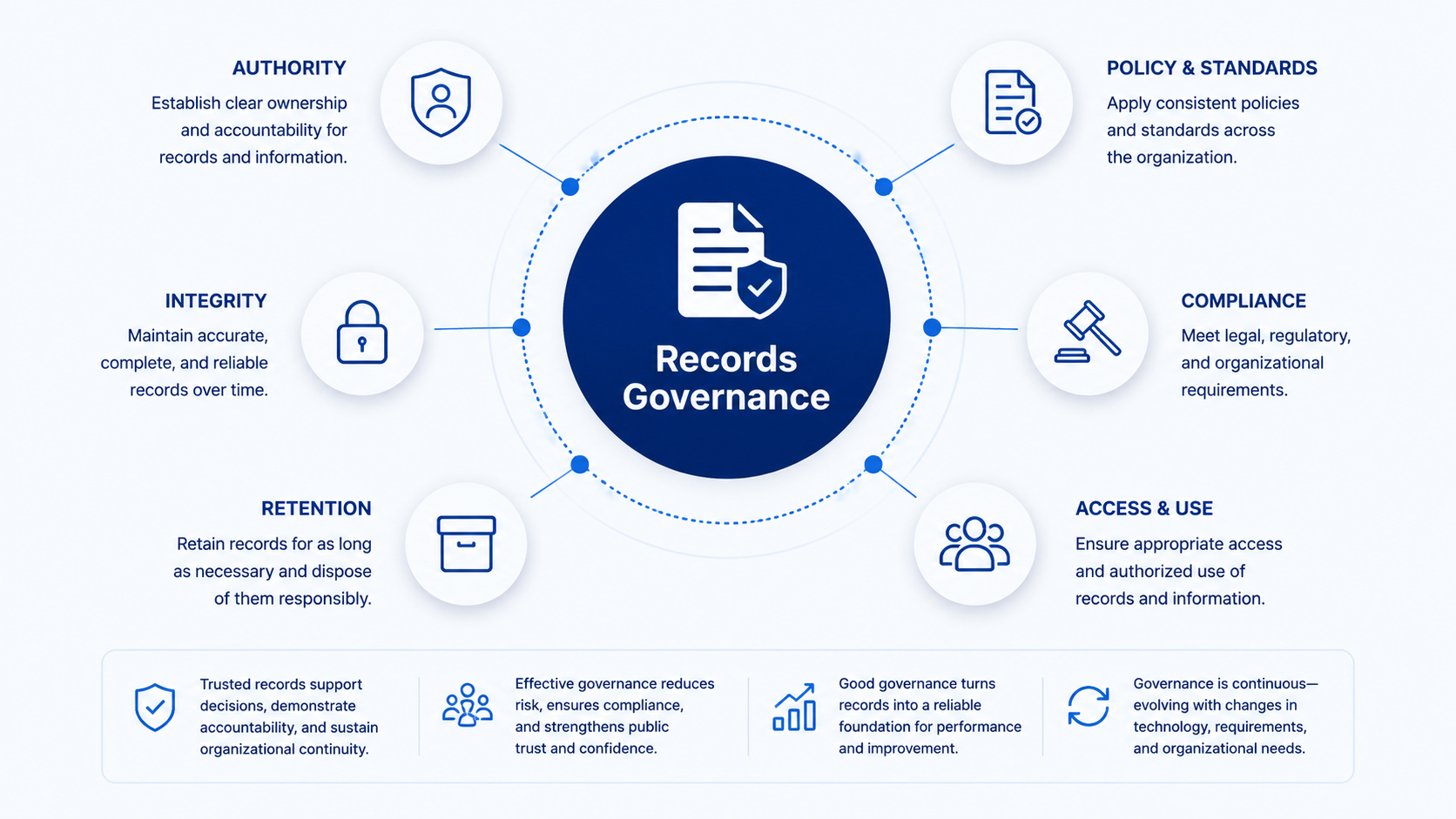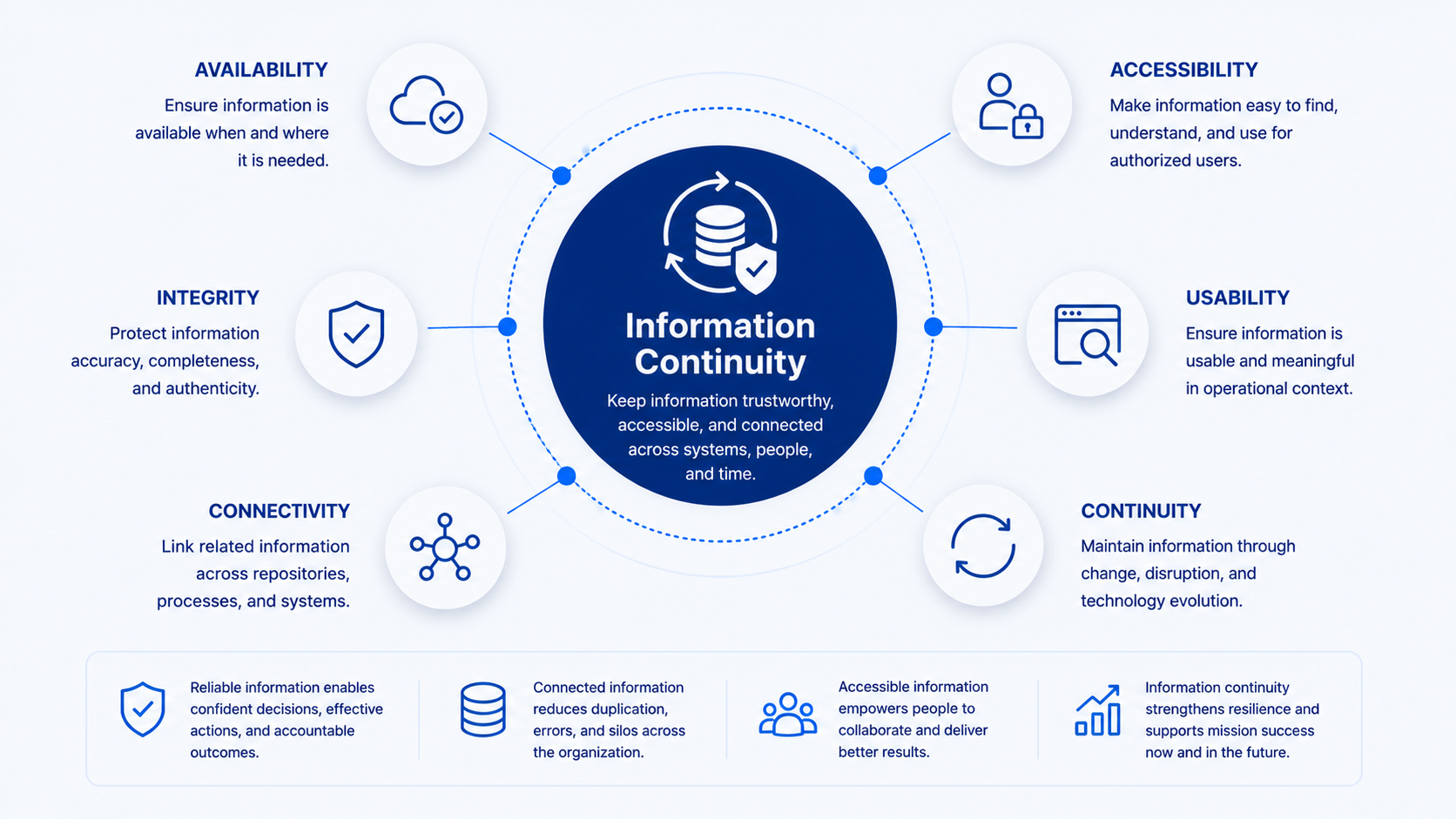

Organizational actions must remain understandable after the people, systems, and circumstances involved have changed. Reconstructability requires the organization to preserve enough connected evidence to recover what occurred, why it occurred, who or what possessed authority, and how the resulting decision led to action.
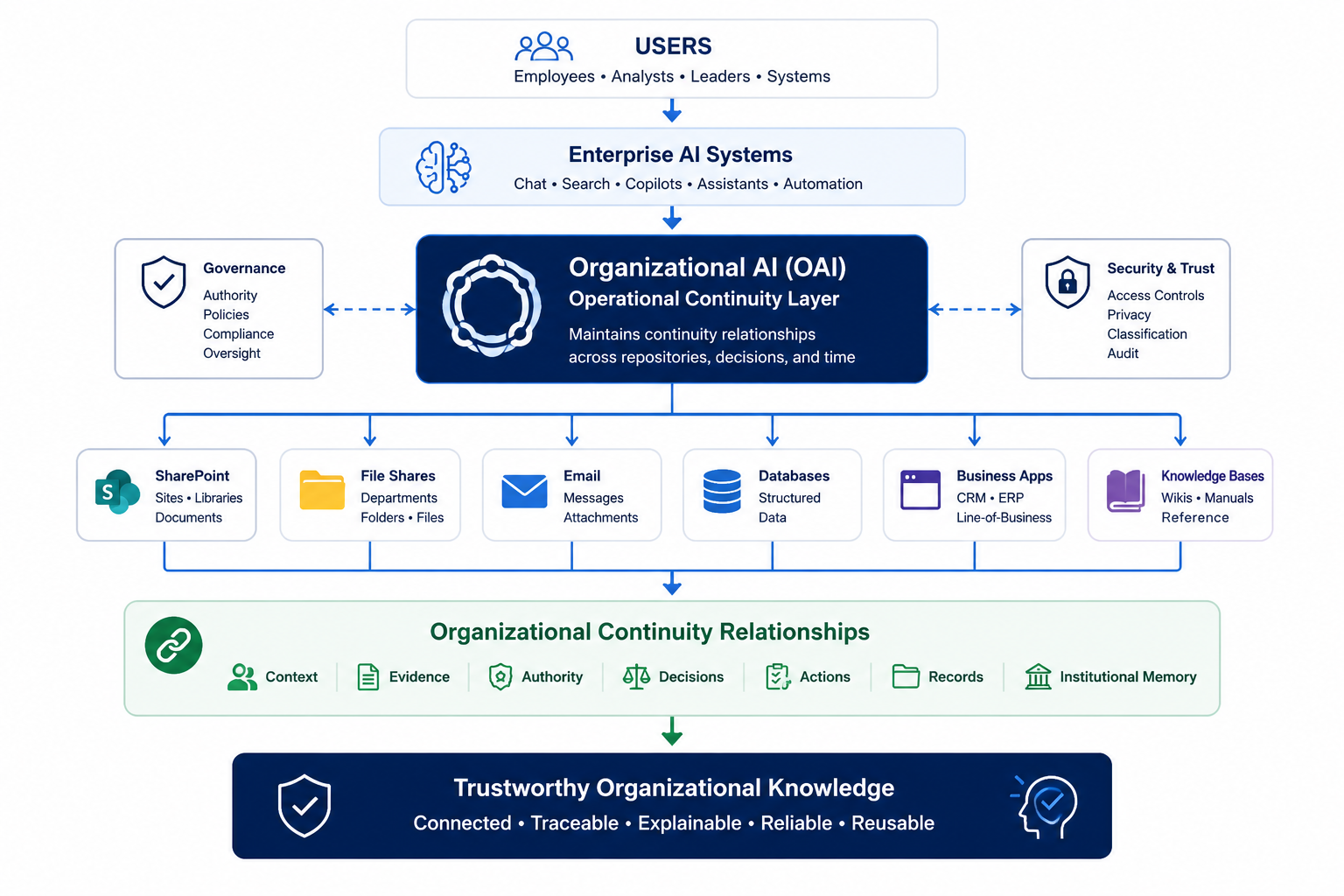
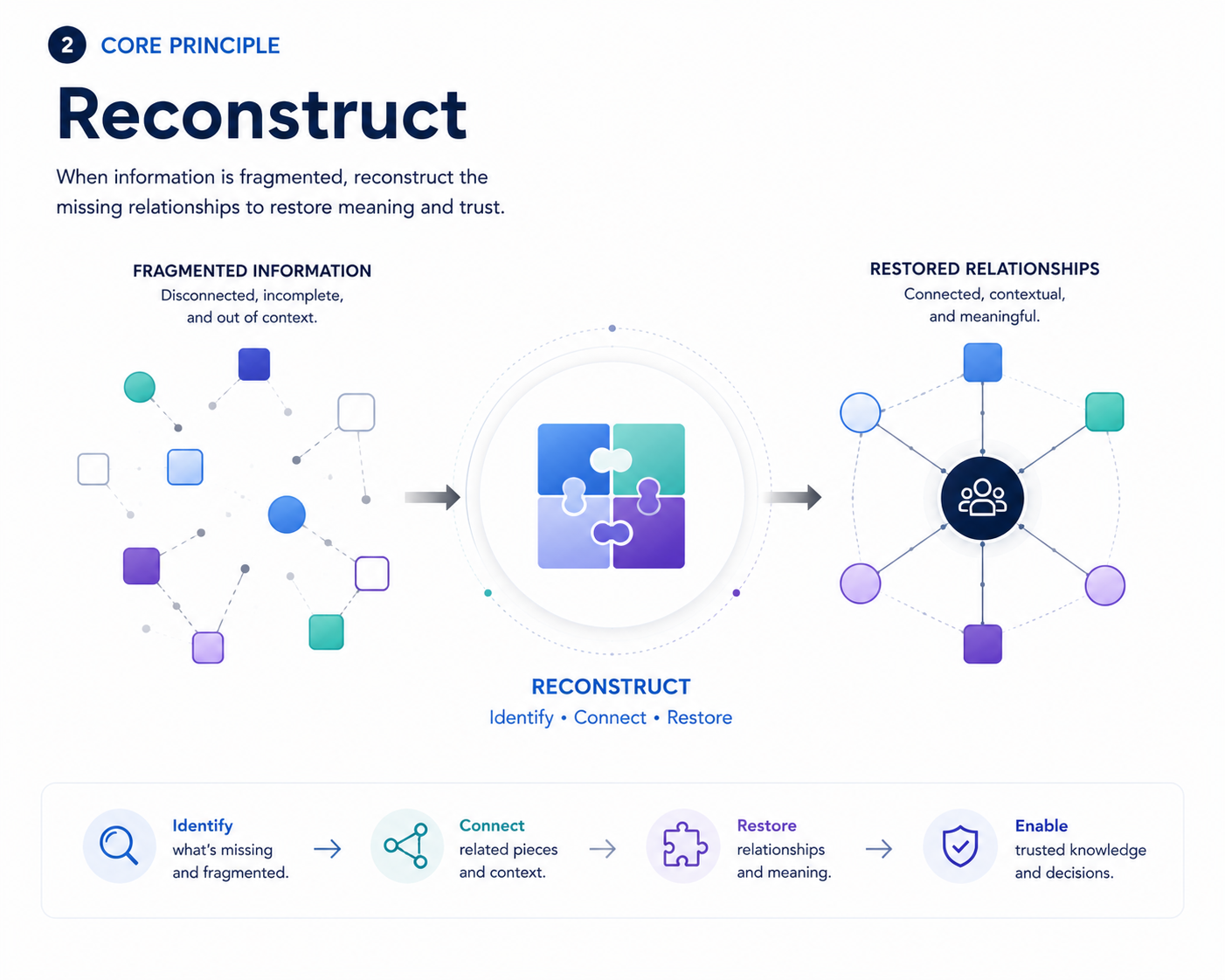
Reconstruction depends upon more than retaining final documents or transaction records. It requires the relationships among sources, evidence, governing authority, operating context, considered alternatives, decisions, actions, and resulting records to remain identifiable.
This principle is especially important when AI systems contribute to analysis or decision support. Preserving only an AI-generated output does not reveal which evidence informed it, which assumptions influenced it, how its recommendations were evaluated, or where human authority entered the process. A reconstructable process retains this lineage so later personnel and systems can distinguish analysis from authority and recommendation from decision.
When organizational activity is reconstructable, decisions can be explained, challenged, audited, reproduced, or corrected without relying on personal recollection. When reconstruction is impossible, records may show what happened while leaving the institution unable to establish why it happened or whether the action remained valid.
Reconstructability therefore establishes recoverable lineage as a continuity property: institutional action remains intelligible because the organization can trace the connected path from its originating basis through its resulting record.