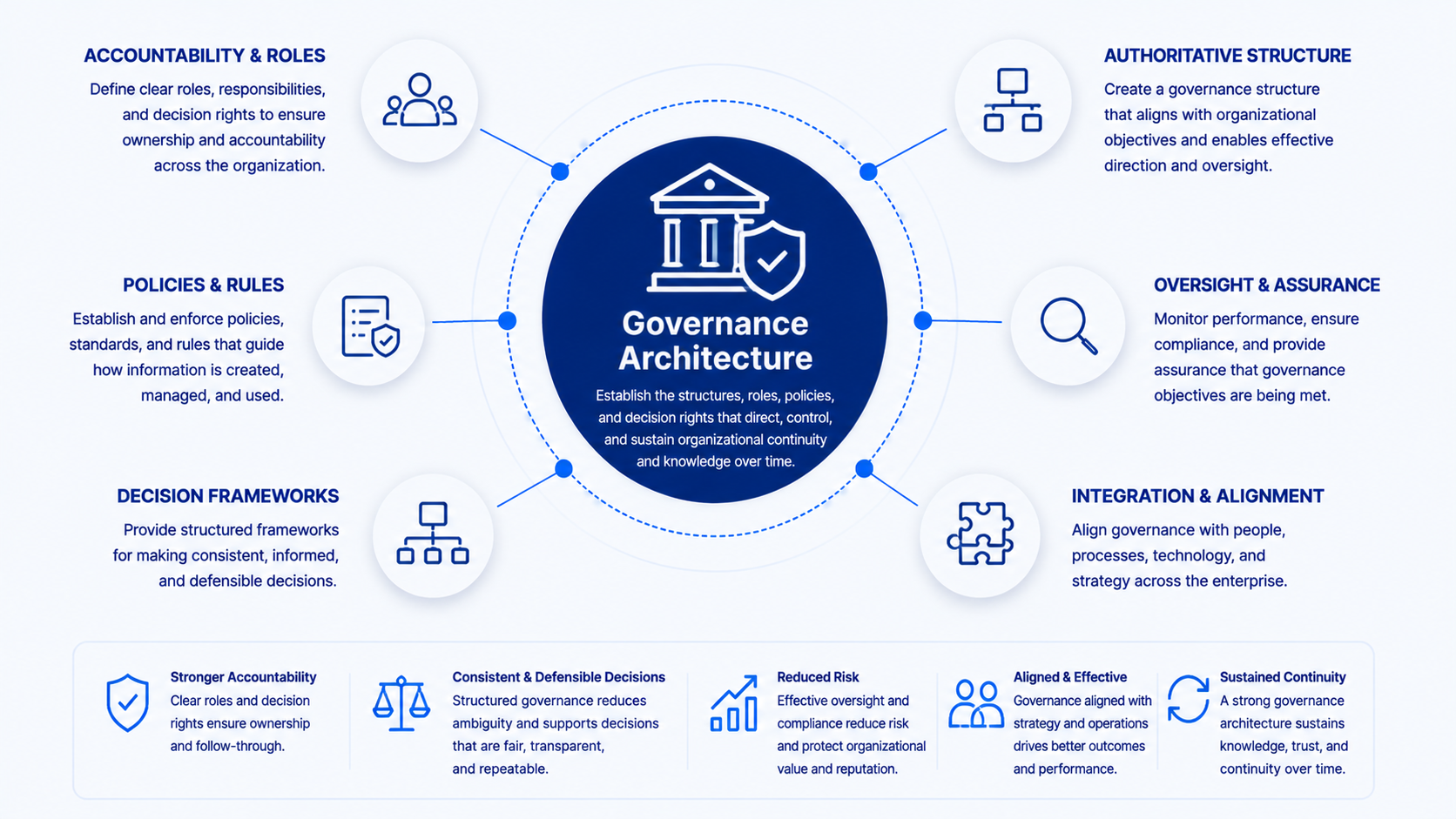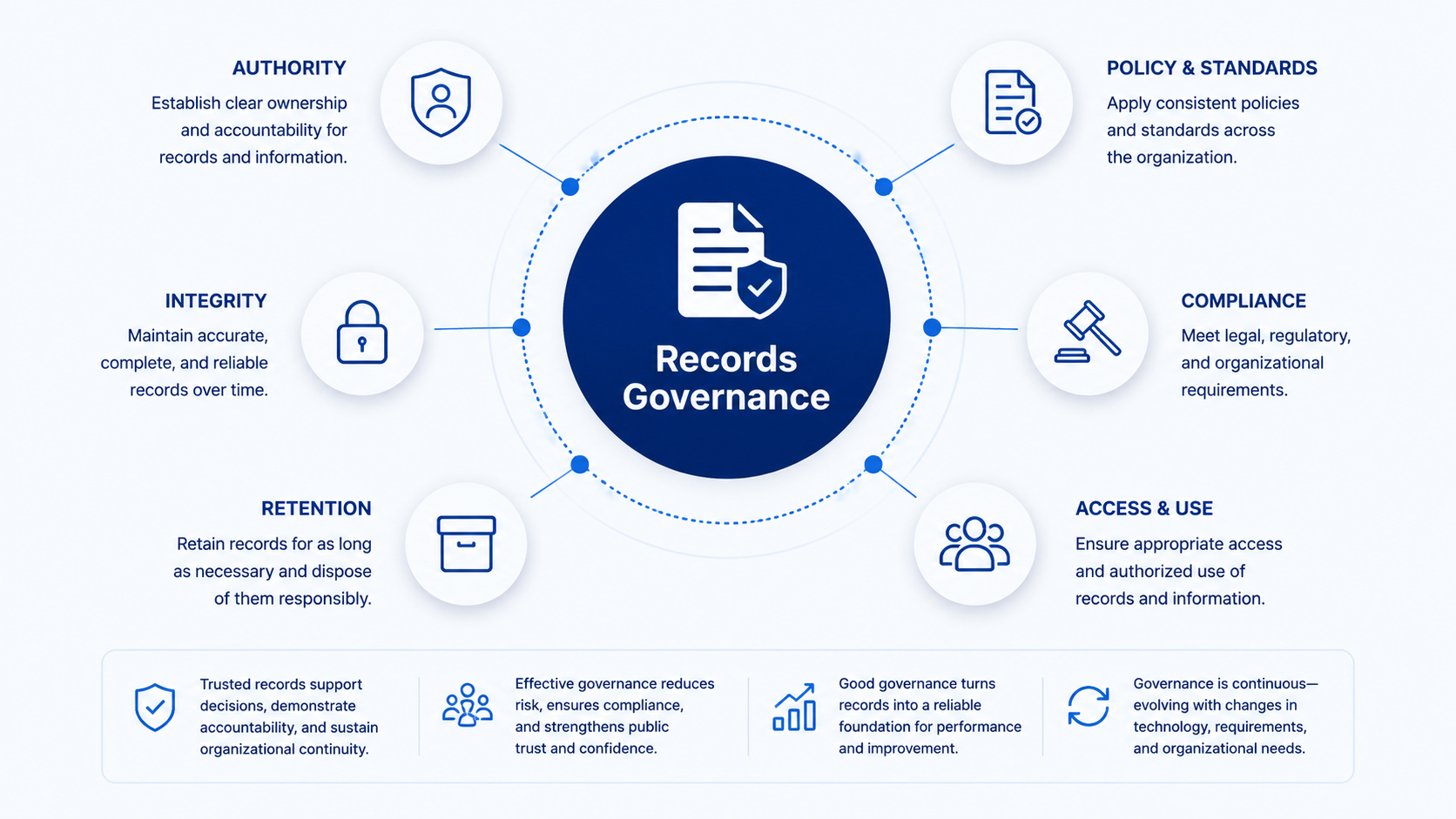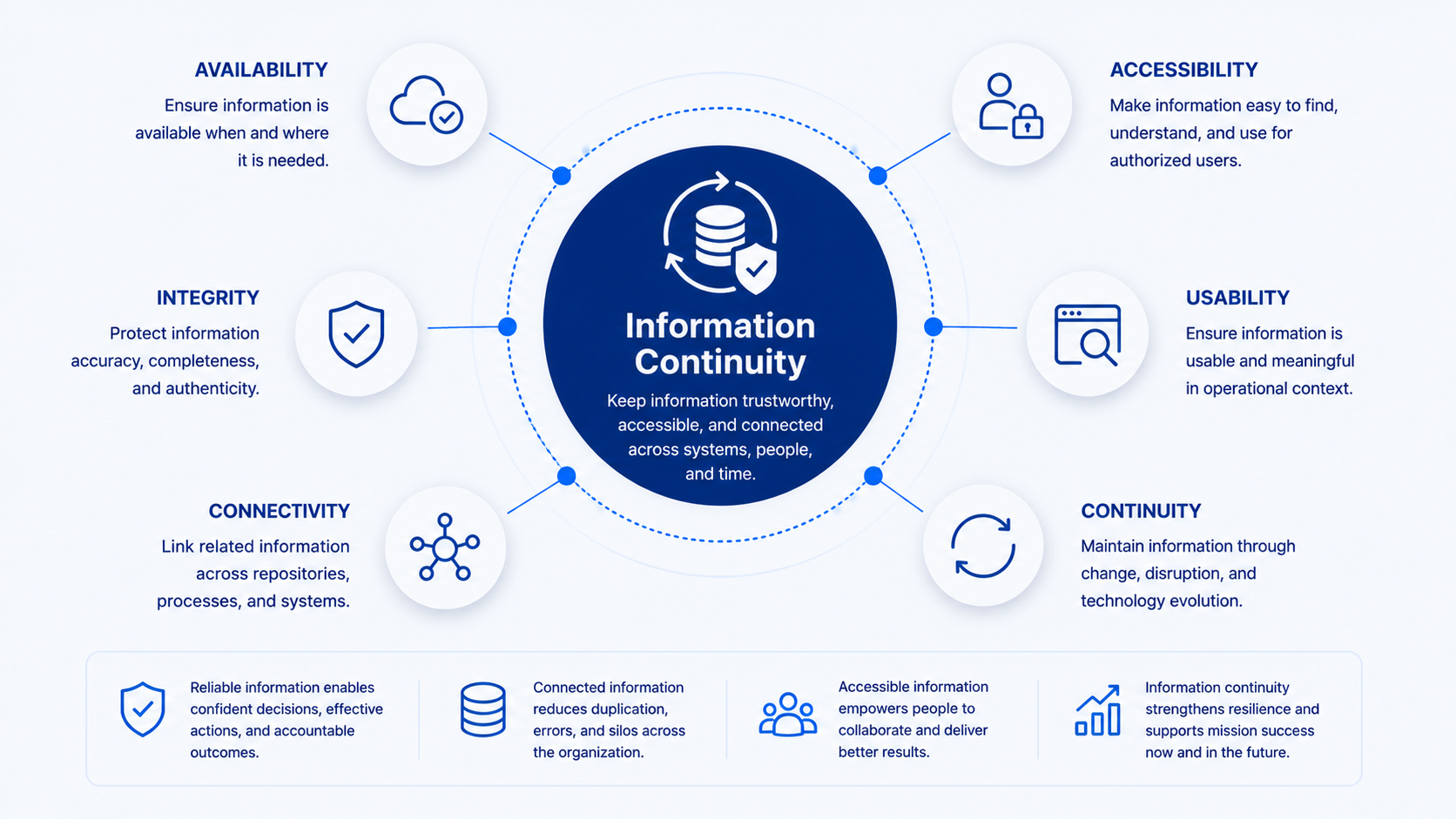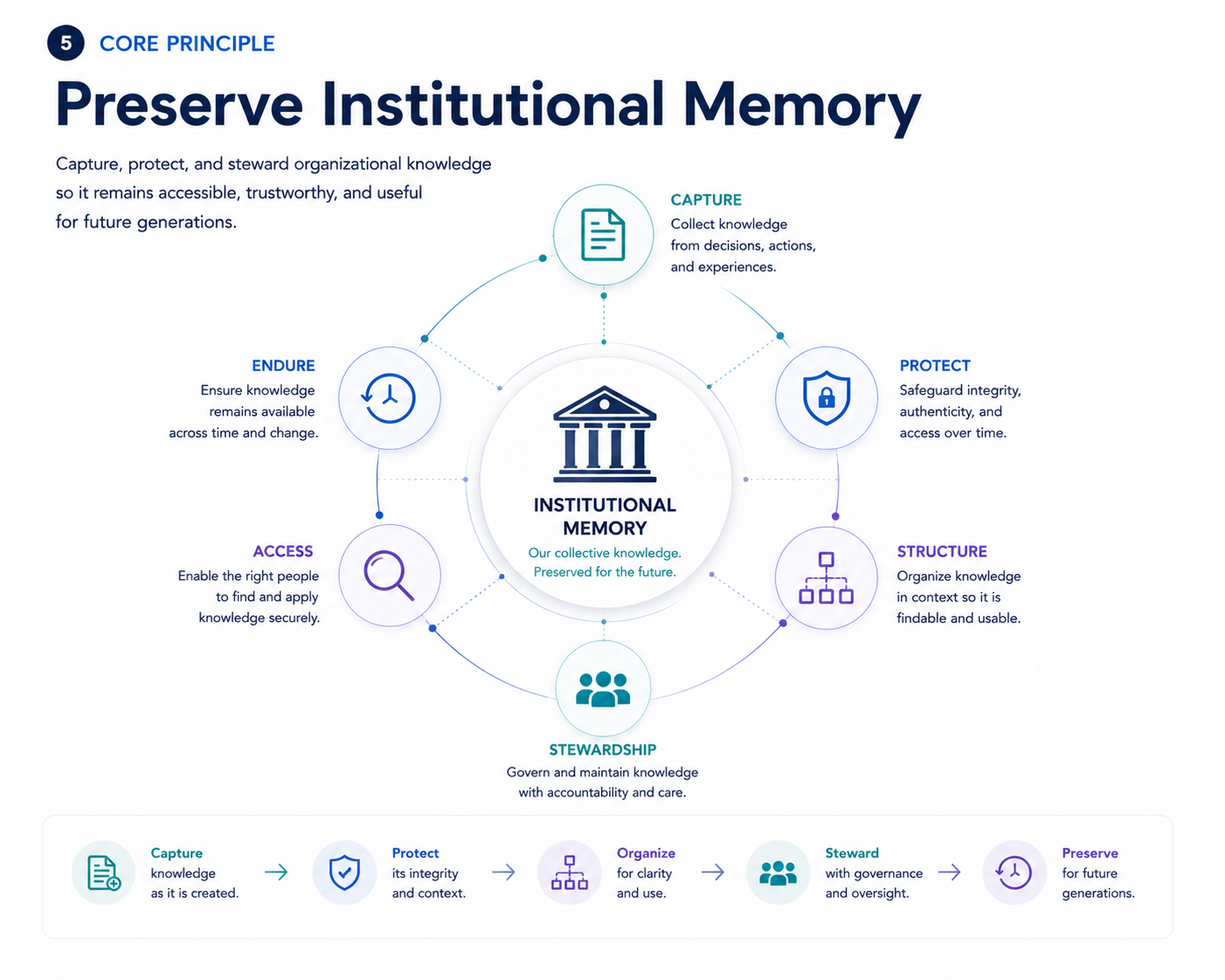

Institutional knowledge must survive beyond the people, systems, and structures that originally produced or maintained it. Institutional Memory requires an organization to preserve connected knowledge so that prior experience remains available, understandable, and reusable after personnel turnover, technological replacement, organizational restructuring, or extended periods of time.
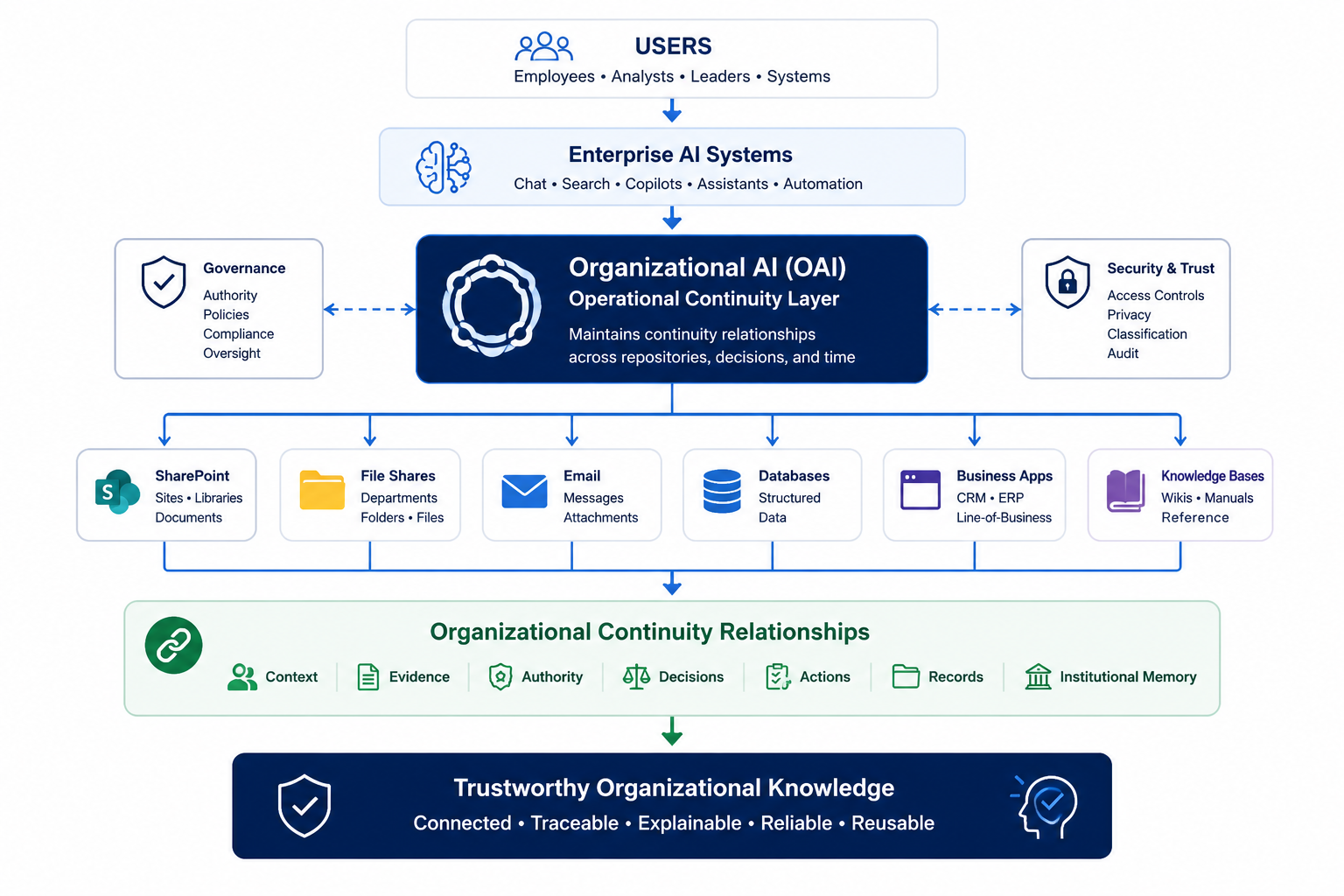
This principle involves more than retaining documents. Records become institutional memory only when their relationships to sources, evidence, authority, context, decisions, actions, and outcomes remain recoverable. Without those relationships, an organization may possess information while losing the understanding necessary to interpret or reuse it responsibly.
Institutional Memory also includes the lessons created through implementation, failure, correction, and adaptation. These lessons should not remain confined to individual recollection, isolated repositories, or undocumented practices. They must be incorporated into an enduring continuity architecture that allows future personnel and AI systems to recognize what the organization previously knew and how that knowledge should influence current work.
When institutional memory is preserved, organizations can build upon prior experience instead of repeatedly rediscovering it. Past decisions can inform new circumstances, established knowledge can be reassessed against current evidence and authority, and valuable learning remains available even after its original custodians have departed.
When institutional memory is weak, personnel turnover and system change repeatedly return the organization to a less-informed state. Information may still exist, but its meaning, relevance, and relationship to institutional action become increasingly difficult to recover.
Institutional Memory therefore establishes organizational learning as a continuity property: knowledge endures because the institution preserves the relationships required to understand and reuse it across time and change.