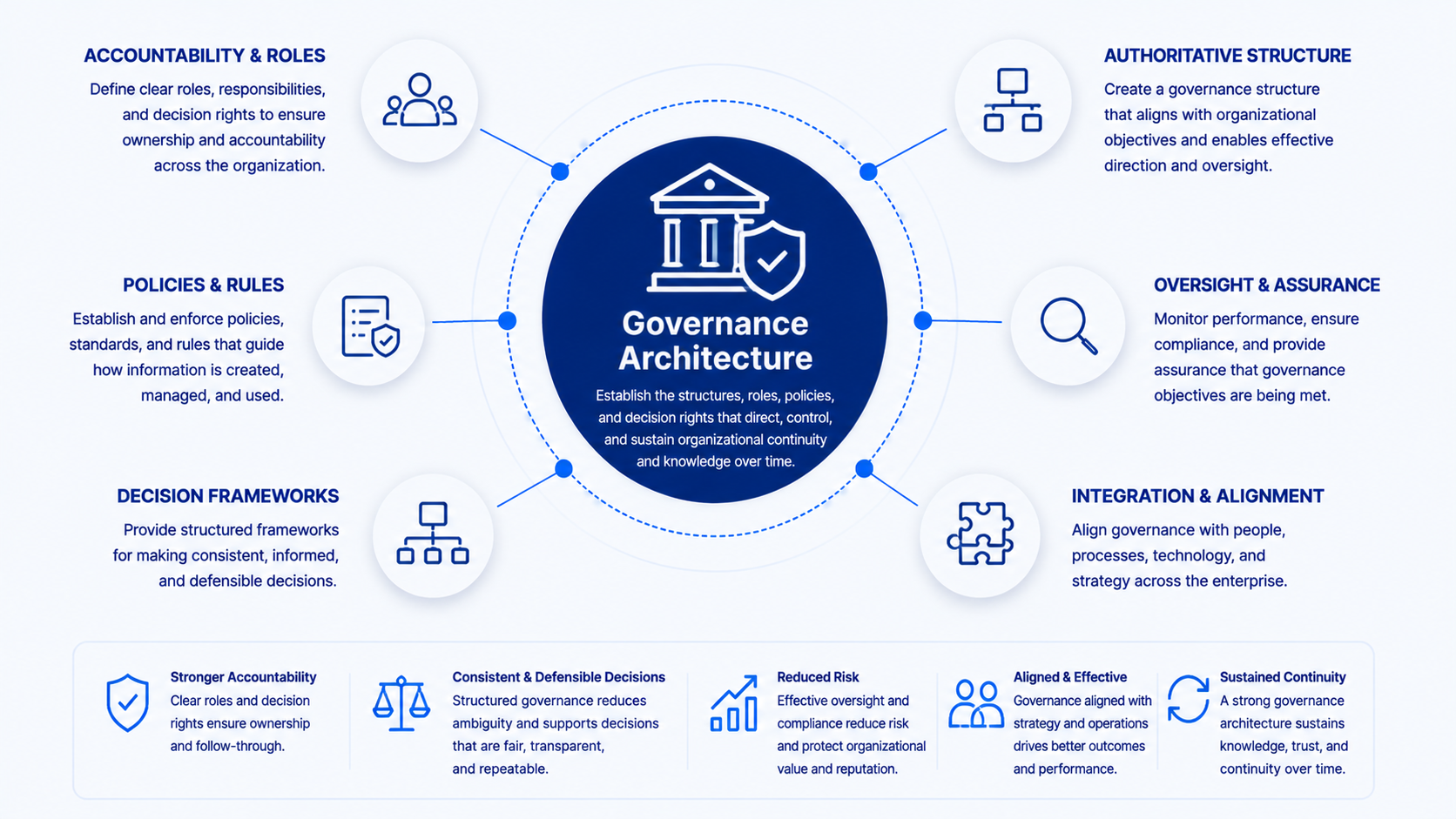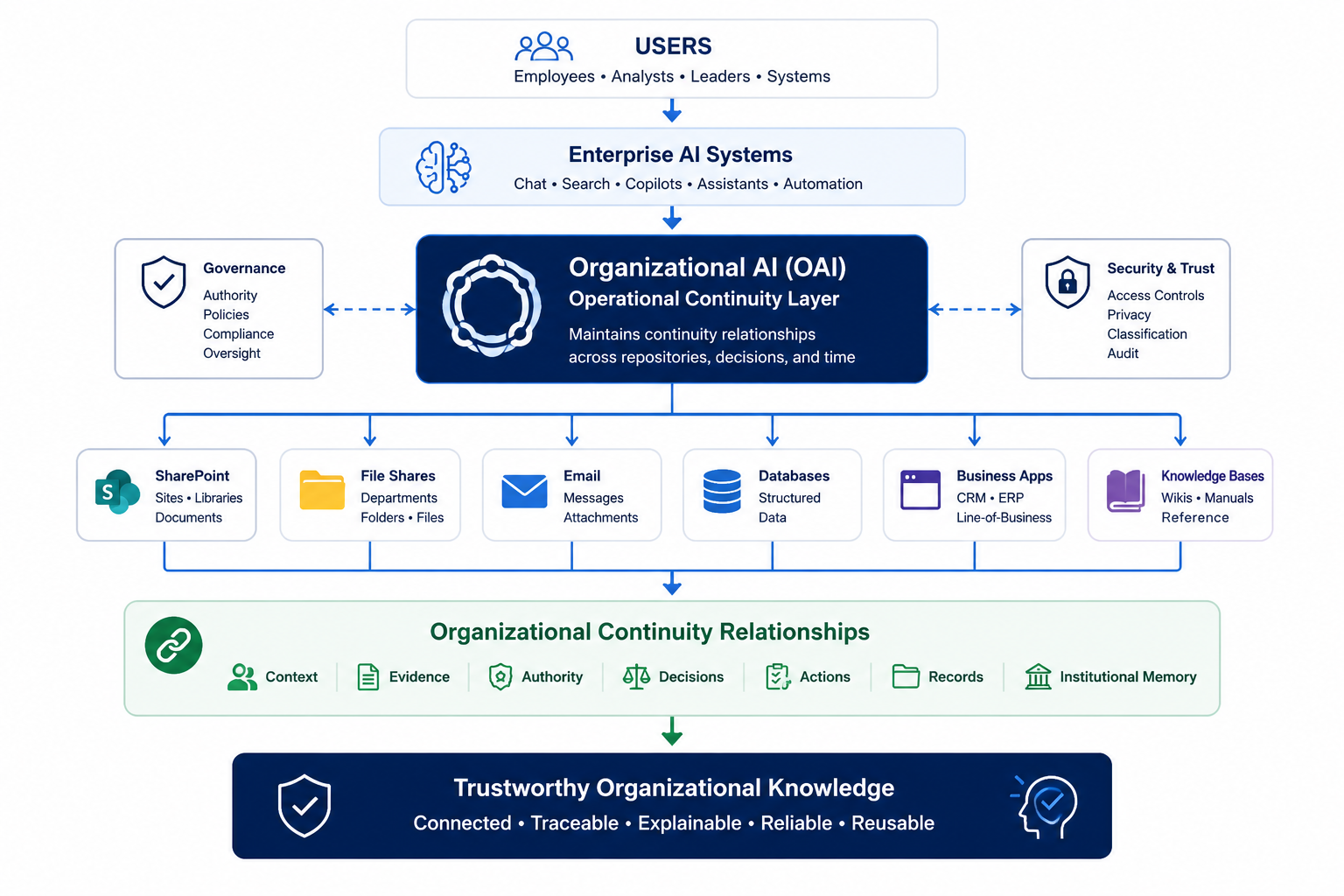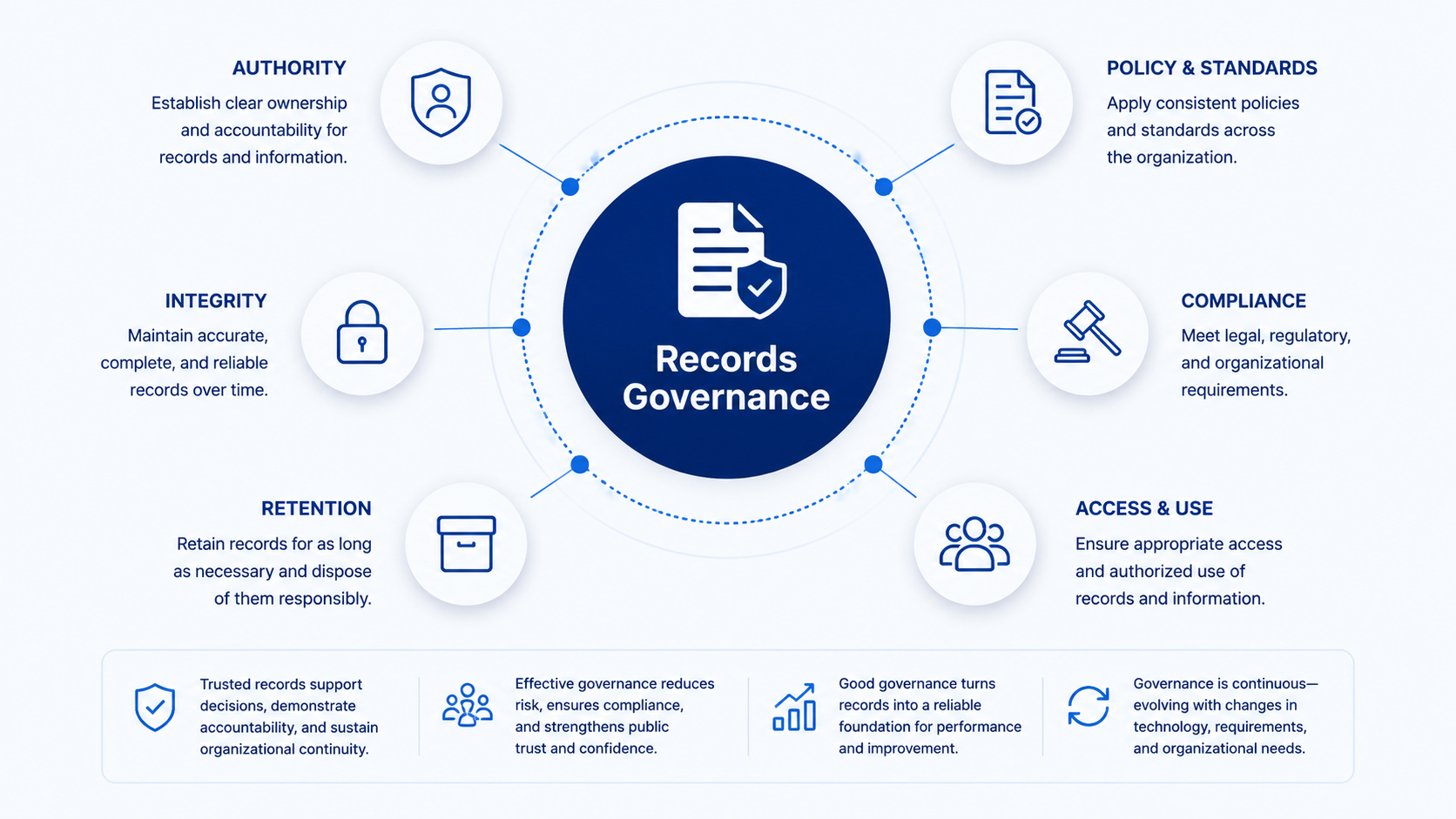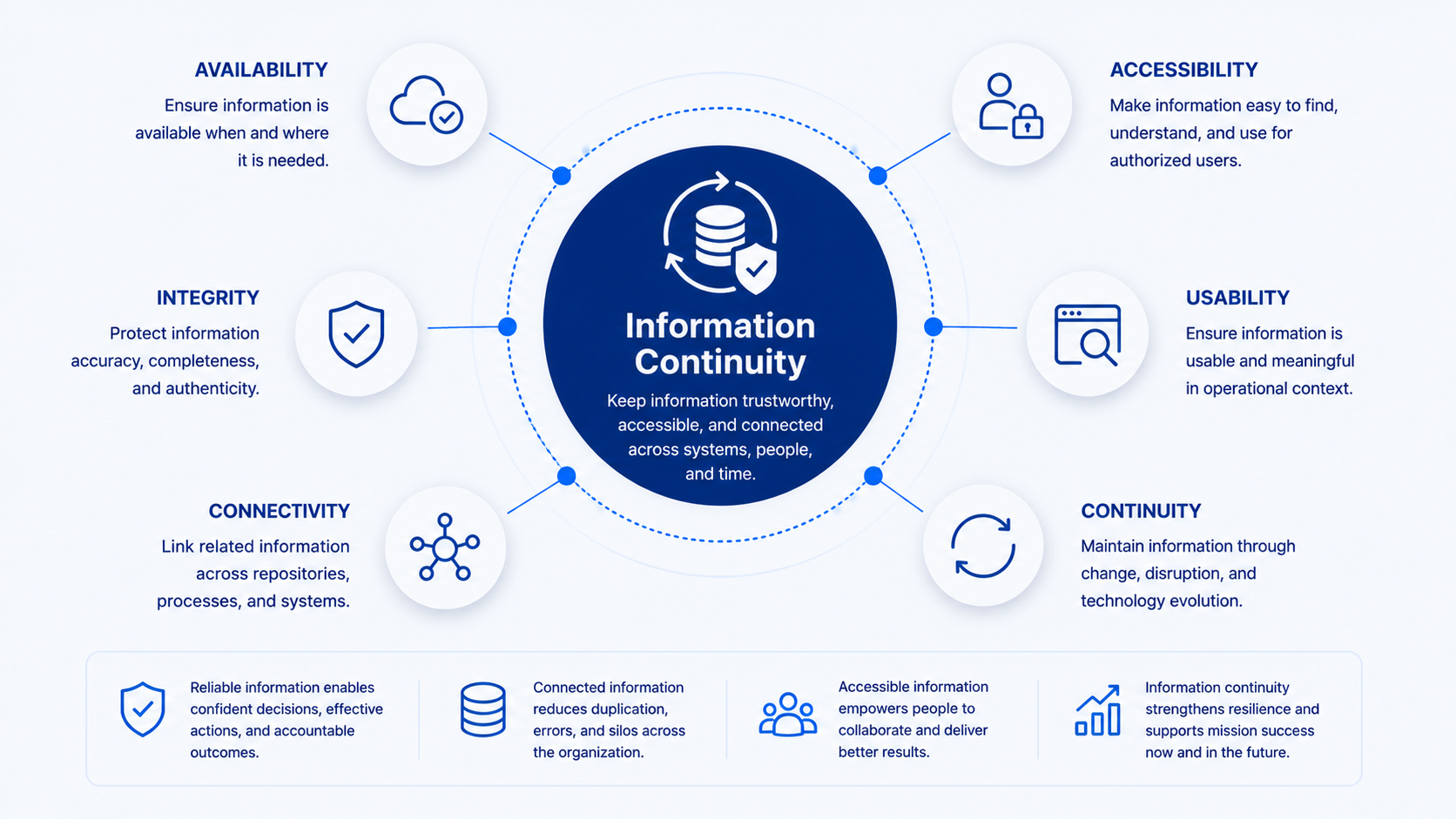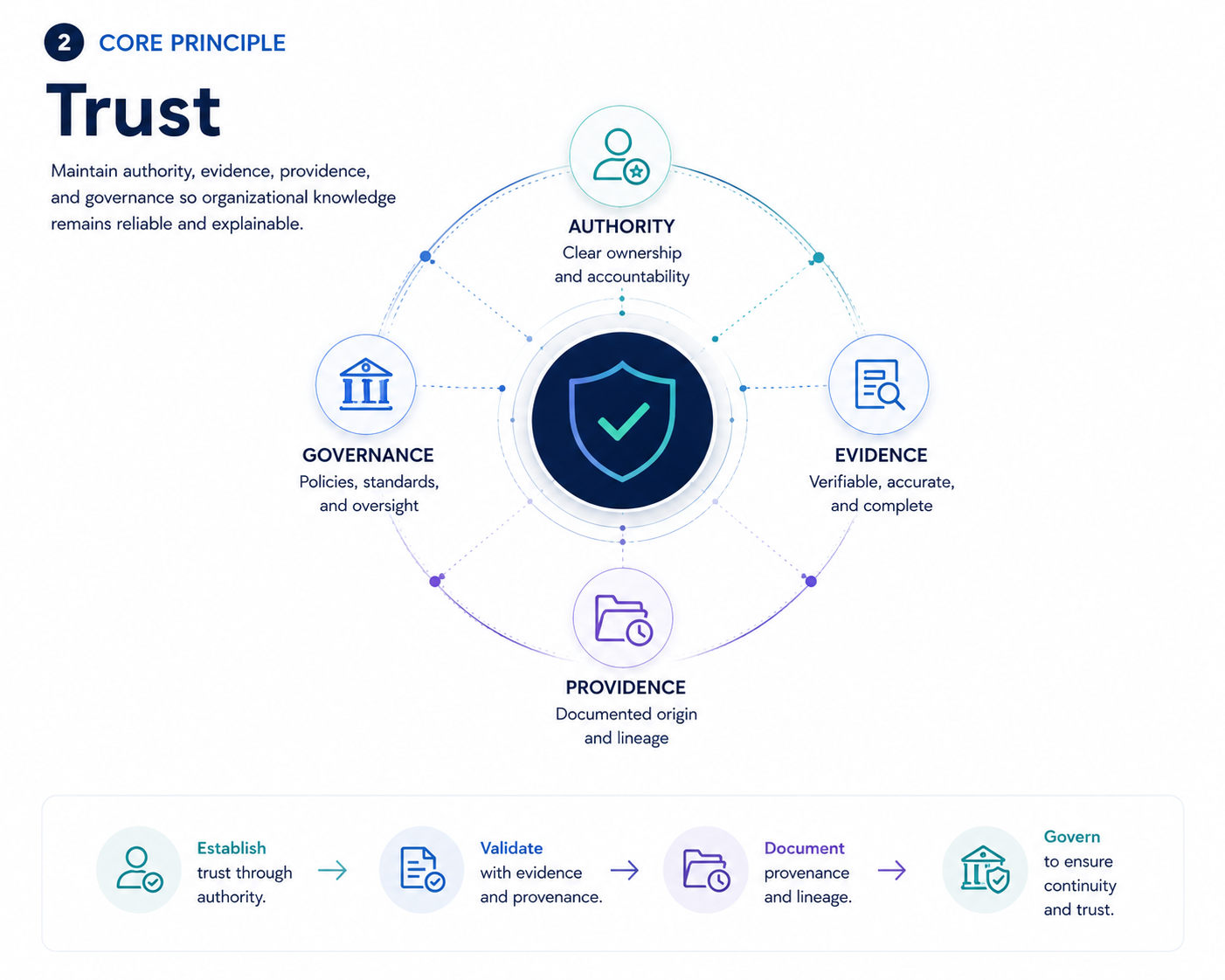

Organizational trust cannot rest solely on the apparent accuracy of information or the confidence with which it is presented. Grounded Trust requires knowledge to remain connected to the evidence, authority, provenance, and governance conditions that justify its use.
This means an organization must be able to identify where information originated, what evidence supports it, who or what possessed the authority to interpret or act upon it, and which controls governed its creation, modification, approval, and reuse.
These relationships are especially important when AI systems participate in organizational work. An AI-generated response may appear credible while relying on incomplete evidence, outdated authority, or context that no longer applies. Grounded Trust enables personnel and systems to distinguish between information that is merely available and knowledge that is sufficiently supported for institutional action.
When trust is grounded, decisions remain explainable, assertions can be verified, and authority can be challenged or reaffirmed as circumstances change. When these foundations are absent, organizations risk treating unsupported outputs, inherited assumptions, or obsolete guidance as reliable institutional knowledge.
Grounded Trust therefore establishes trust as a continuity property: knowledge remains dependable because the organization can recover and evaluate the basis upon which it was accepted and used.