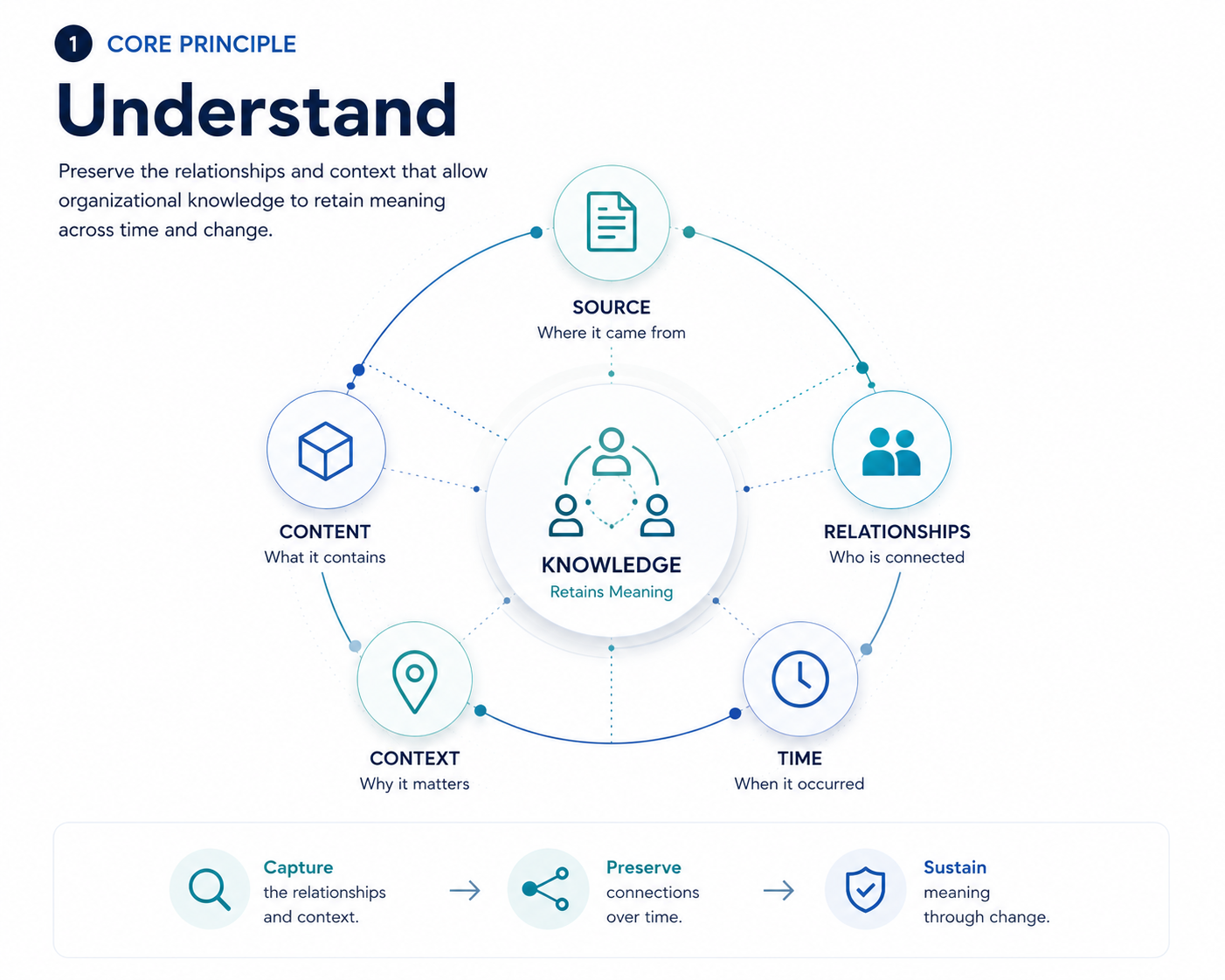

Organizational knowledge cannot be understood reliably when information is separated from the circumstances, relationships, assumptions, and purposes that gave it meaning. Contextual Understanding requires an organization to preserve not only what was known, decided, or produced, but also how that knowledge related to the operating environment in which it was used.
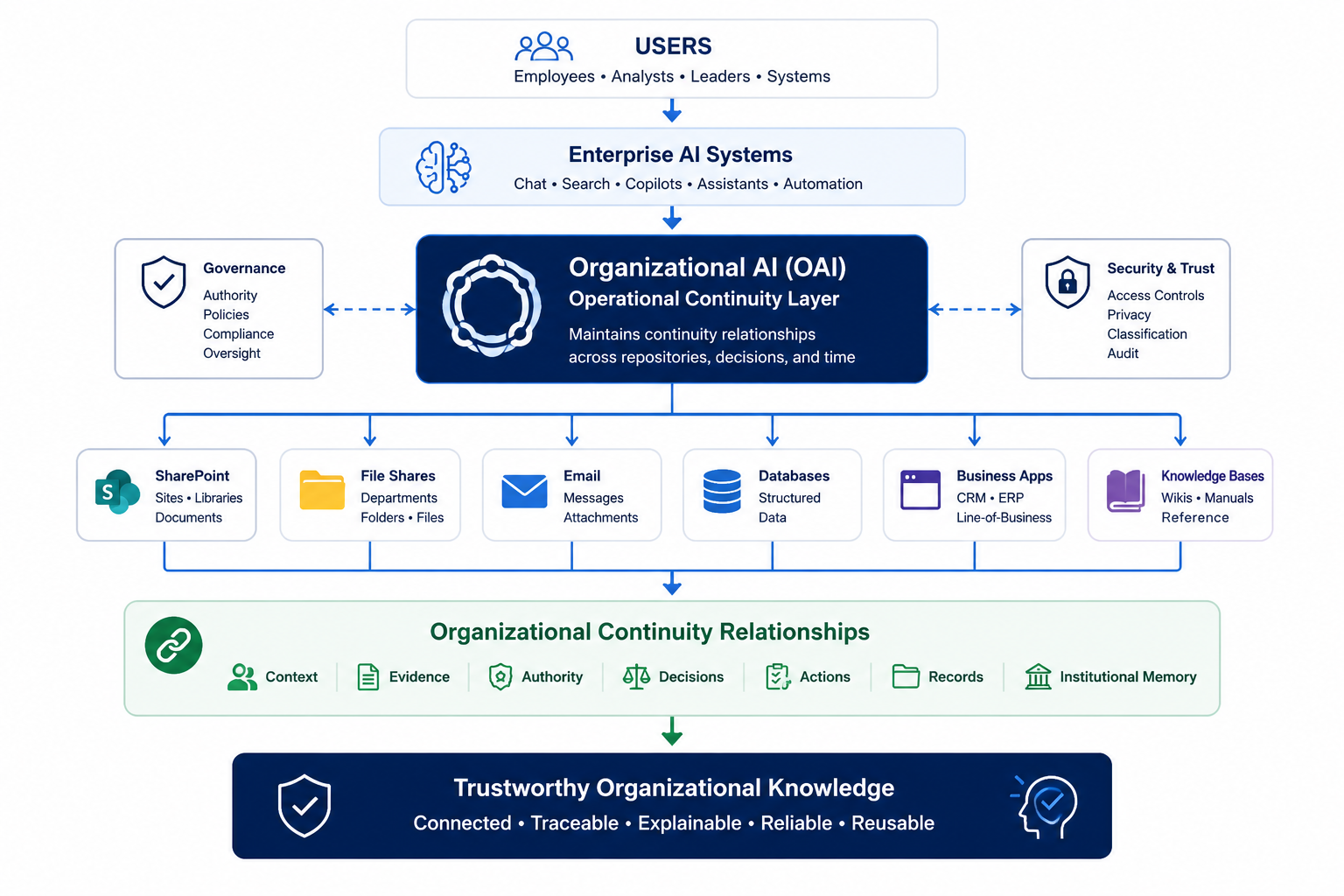
This includes the relevant sources, supporting evidence, governing authority, participants, constraints, dependencies, and prior decisions. Together, these relationships allow future personnel and AI systems to interpret information as part of an institutional process rather than as an isolated artifact.
When context is preserved, knowledge can remain intelligible despite personnel turnover, technological replacement, organizational restructuring, and the passage of time. When context is lost, even accurate information may be misunderstood, misapplied, or treated as authoritative beyond its original purpose.
Contextual Understanding therefore establishes meaning as a continuity property: knowledge remains useful because the organization can recover the relationships necessary to understand it.