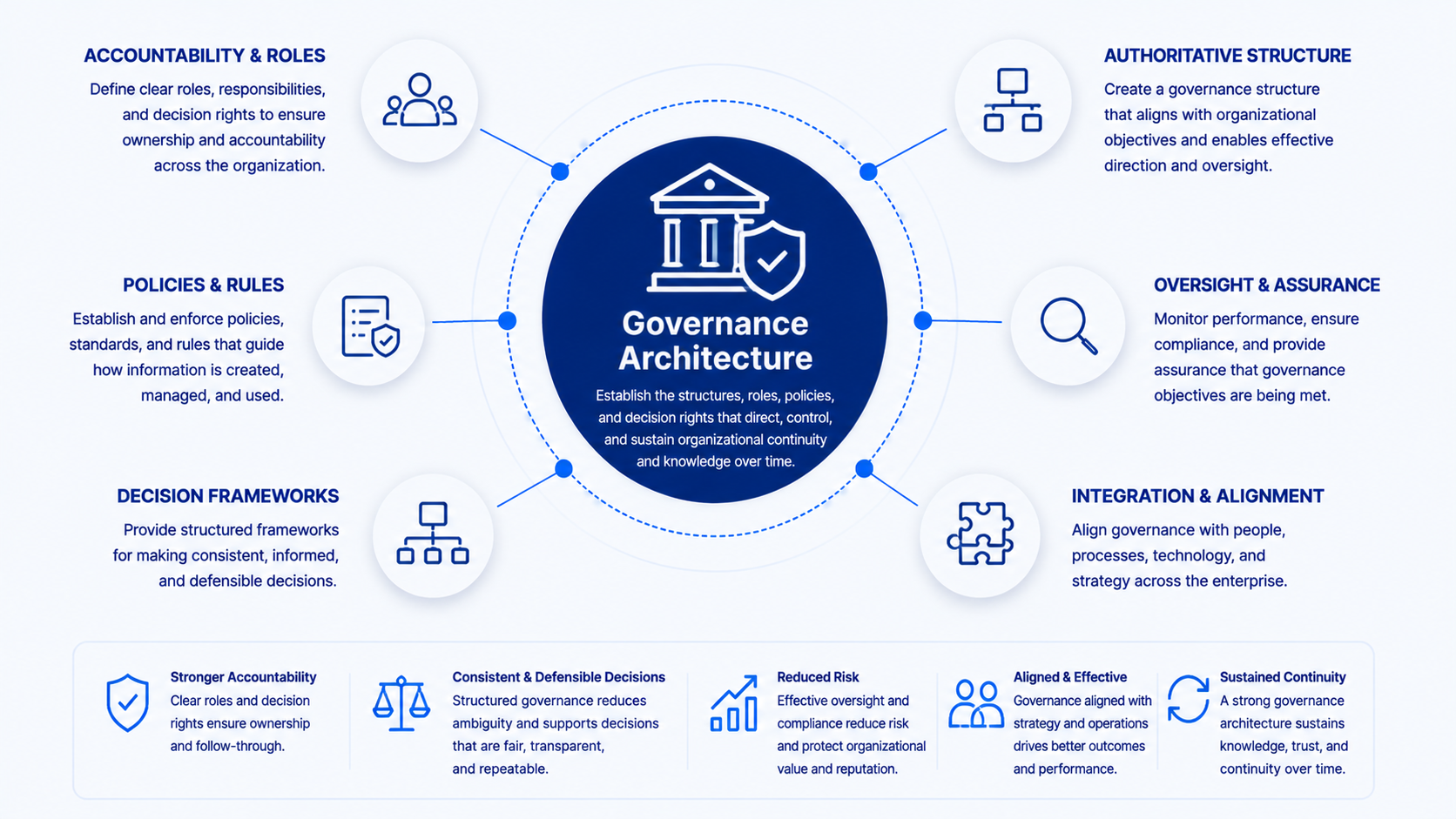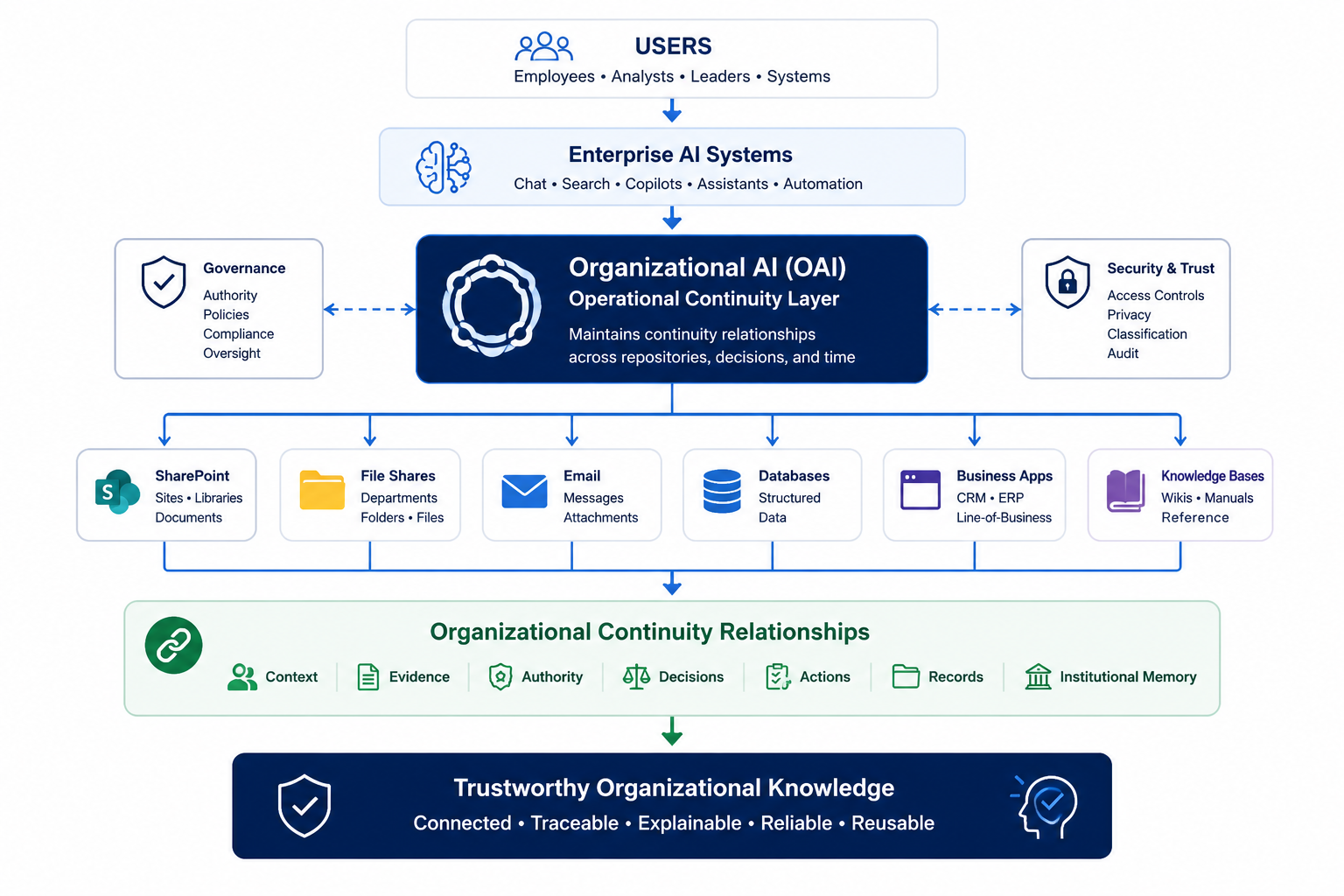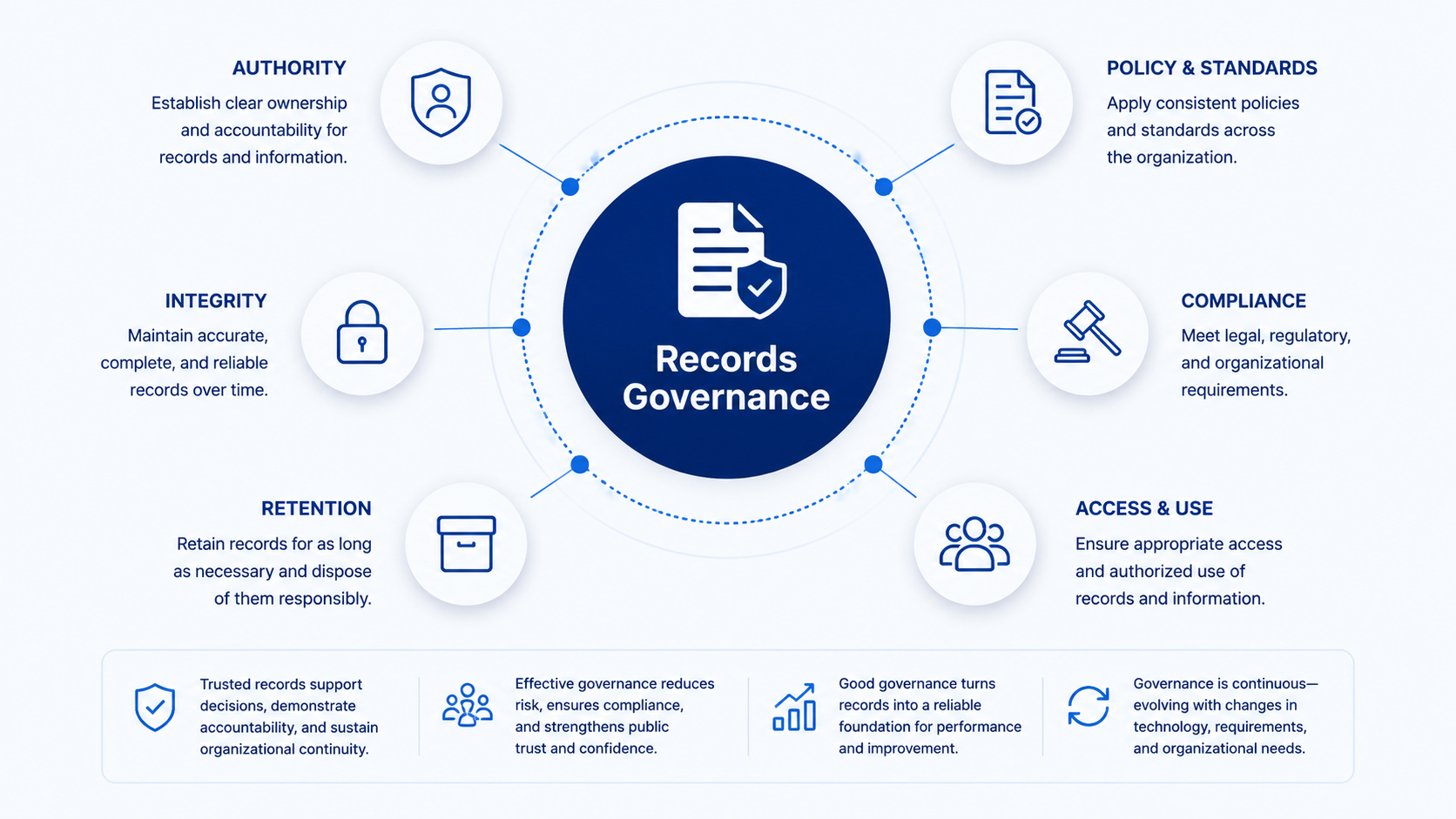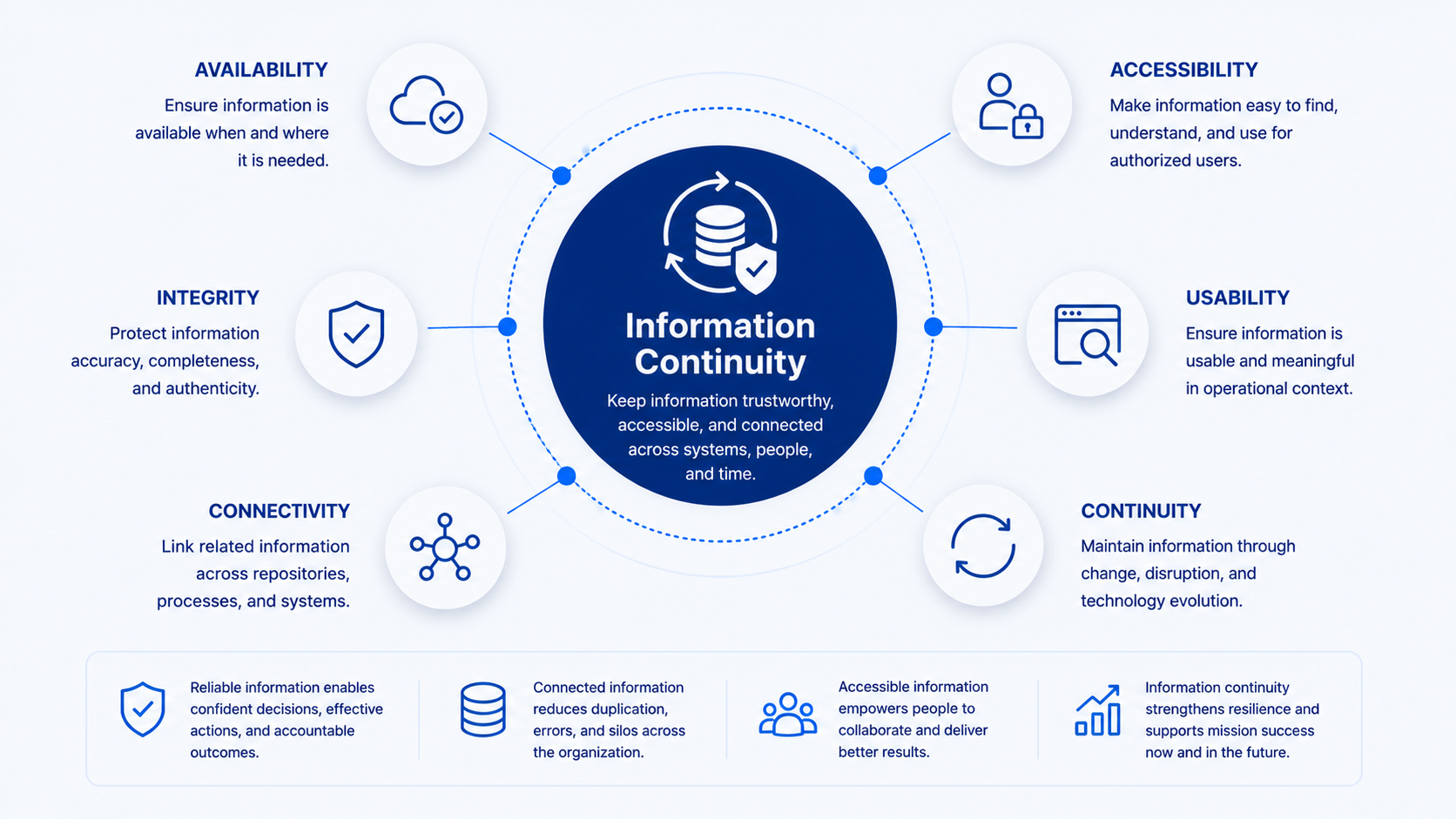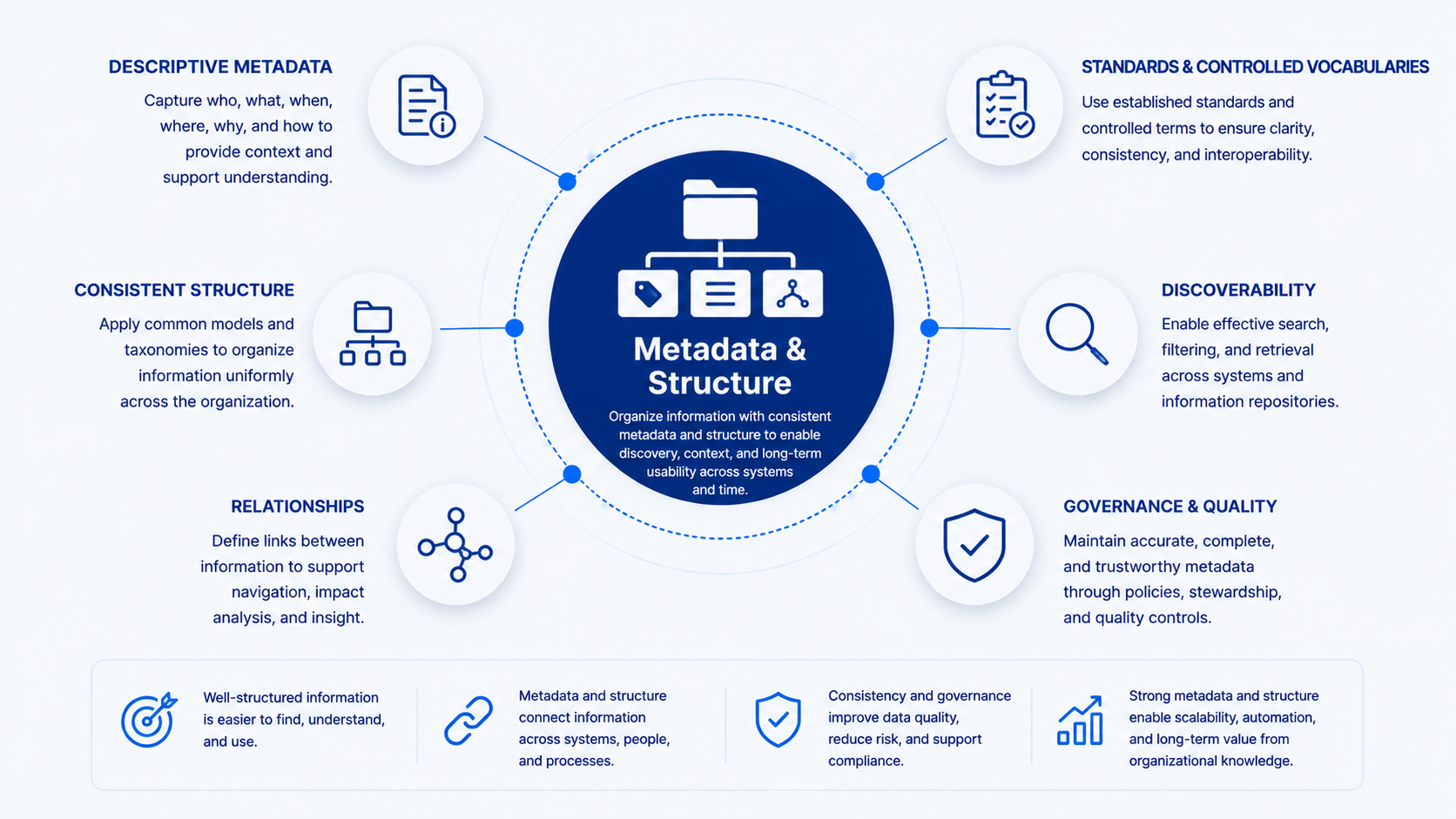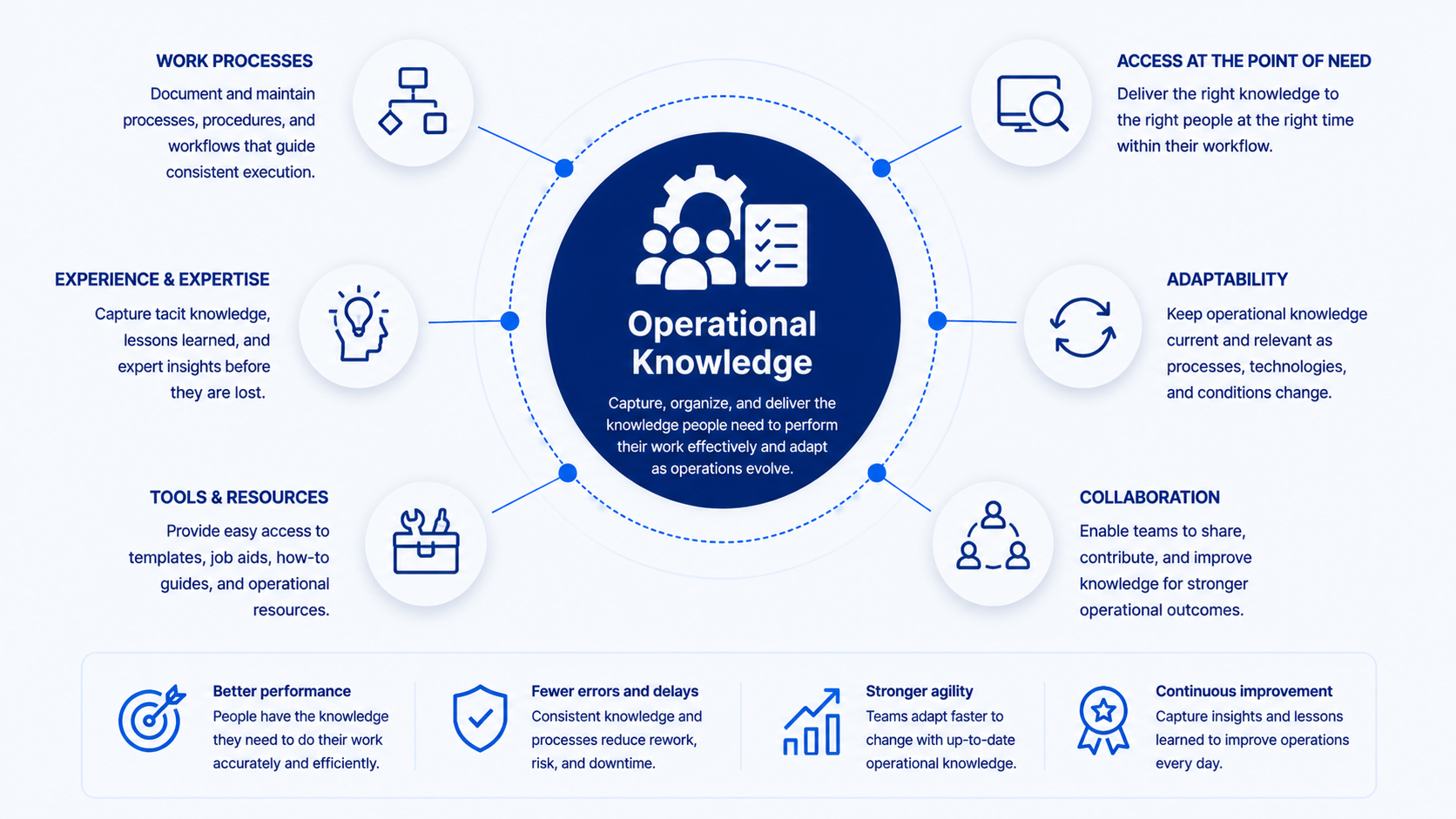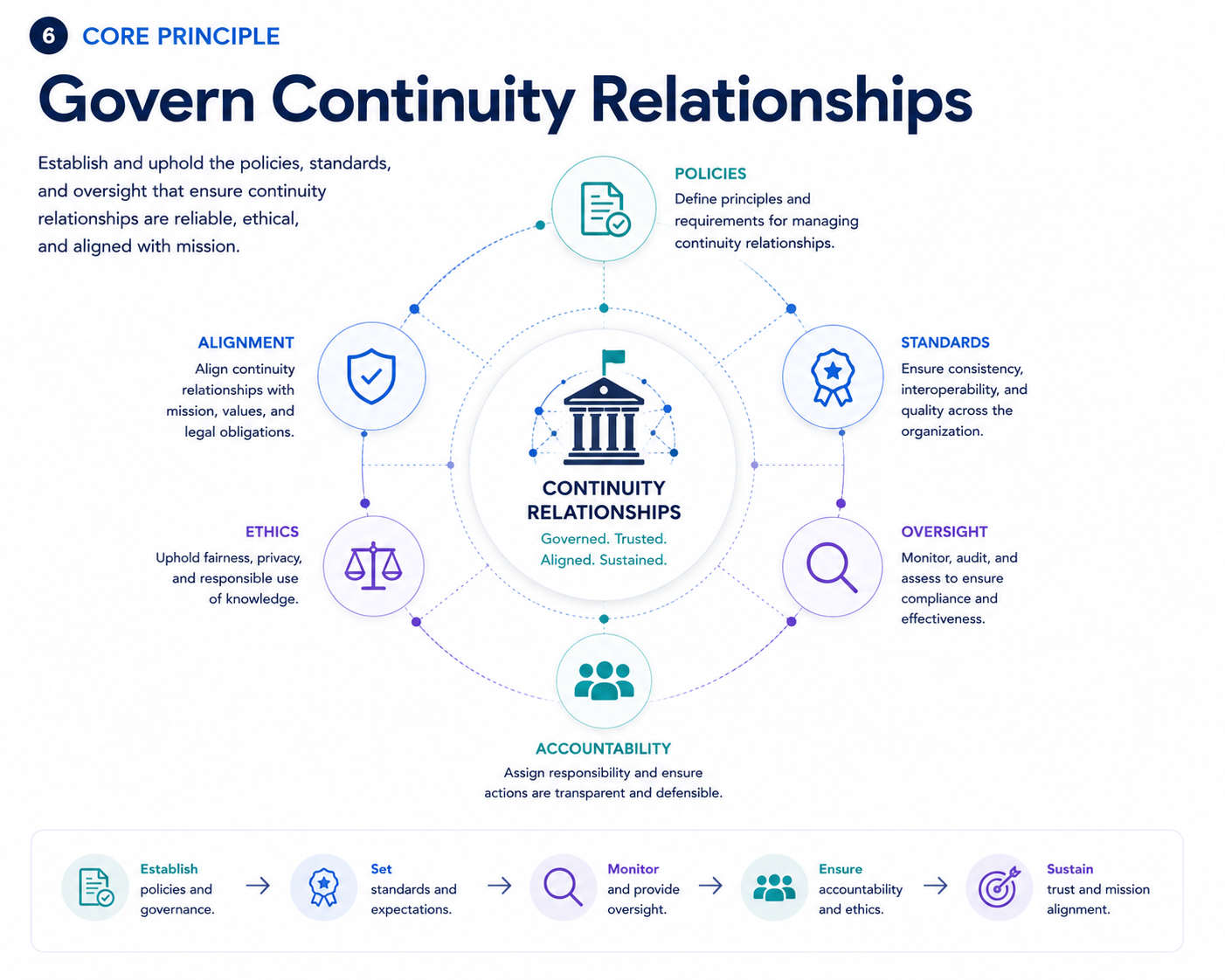

Organizational continuity depends upon relationships among knowledge objects, not merely the preservation of individual artifacts. Relationship Governance requires an organization to identify, maintain, and govern the connections that allow information to move reliably from source and evidence through authority, context, decision, action, record, institutional memory, and future reuse.
These relationships determine how institutional knowledge acquires meaning, trust, and operational consequence. A document may be authentic yet disconnected from the authority that governed it. A decision may be recorded yet separated from the evidence and context that justified it. An action may be completed without preserving its relationship to the decision that authorized it. Relationship Governance addresses these failures by treating continuity relationships as governed institutional assets.
Governance must define how relationships are created, validated, modified, superseded, and preserved. It must also distinguish different roles within the continuity path: evidence supports an assertion, authority permits a decision, context limits interpretation, and records preserve the resulting institutional activity. Maintaining these distinctions prevents proximity, repetition, or technological convenience from being mistaken for legitimacy.
This principle becomes especially important when AI systems retrieve, combine, interpret, or generate organizational knowledge. AI can rapidly connect information, but those connections should not automatically become authoritative or canonical. Relationship Governance ensures that machine-generated associations remain traceable, reviewable, and subject to appropriate human and institutional authority.
When continuity relationships are governed, organizations can identify missing connections, detect obsolete authority, evaluate provenance, explain decisions, and reuse knowledge without separating it from the conditions that make it valid. When relationships remain implicit or unmanaged, repositories accumulate information while the institution progressively loses the ability to determine what that information means, why it should be trusted, and how it may be used.
Relationship Governance therefore establishes connectedness as a continuity property: institutional knowledge remains trustworthy and actionable because the relationships governing its meaning, authority, movement, and reuse are explicit and preserved.