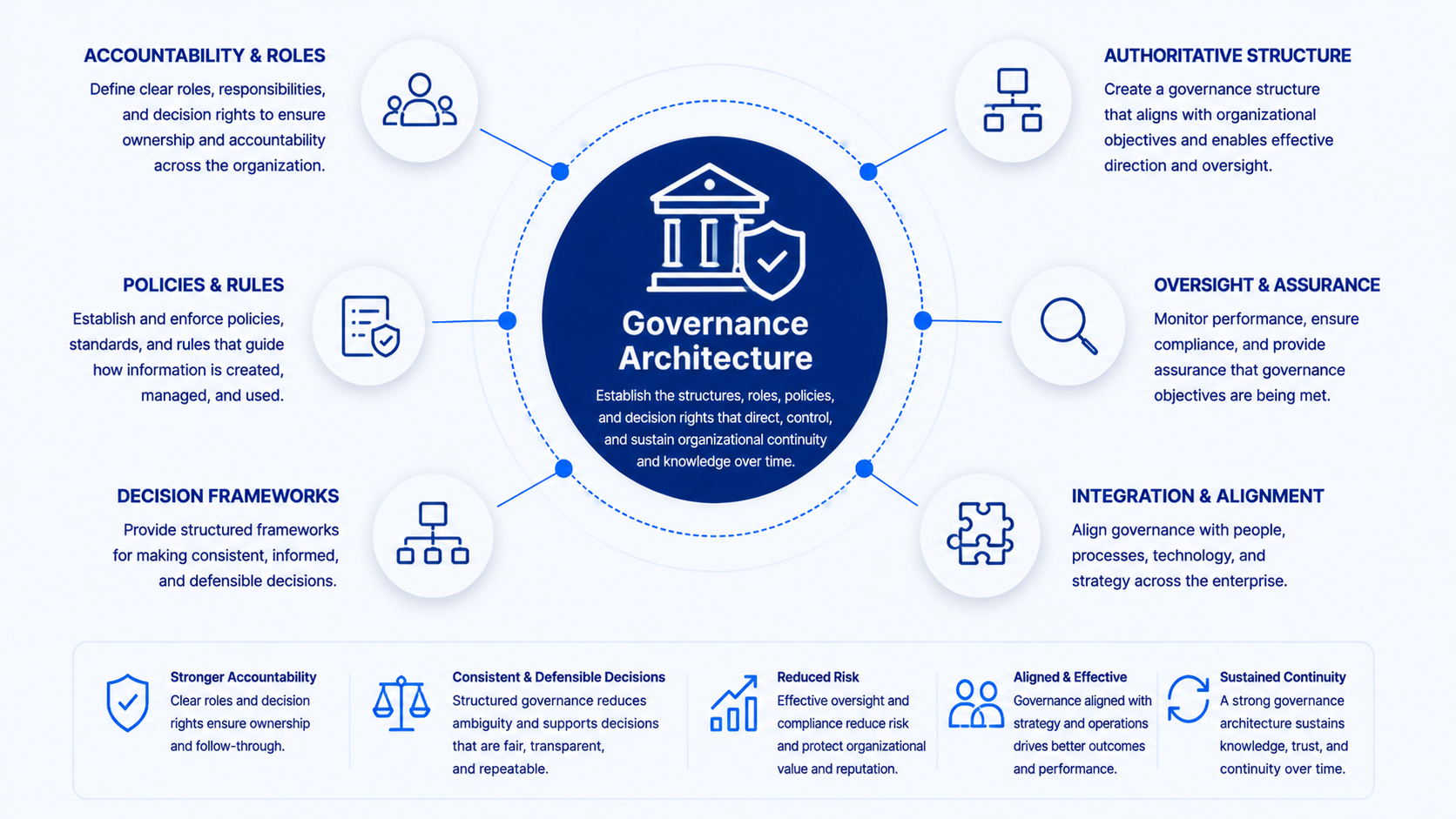
A Risk Score Is Not Decision Context.

Decision-support systems can produce technically valid outputs while still leaving users without enough context to act responsibly.
On September 10, 2026, the U.S. Government Accountability Office reported on FEMA’s National Risk Index. GAO recommended that FEMA provide more information to state and local users about how to apply NRI results to common use cases, consistently conduct and disclose sensitivity analyses—particularly when data sources or methodologies change—and systematically collect and incorporate user feedback into later versions.
Those recommendations point to a continuity problem that extends beyond disaster planning. A score can be accurate as a calculation yet incomplete as institutional evidence.
Evidence needs context
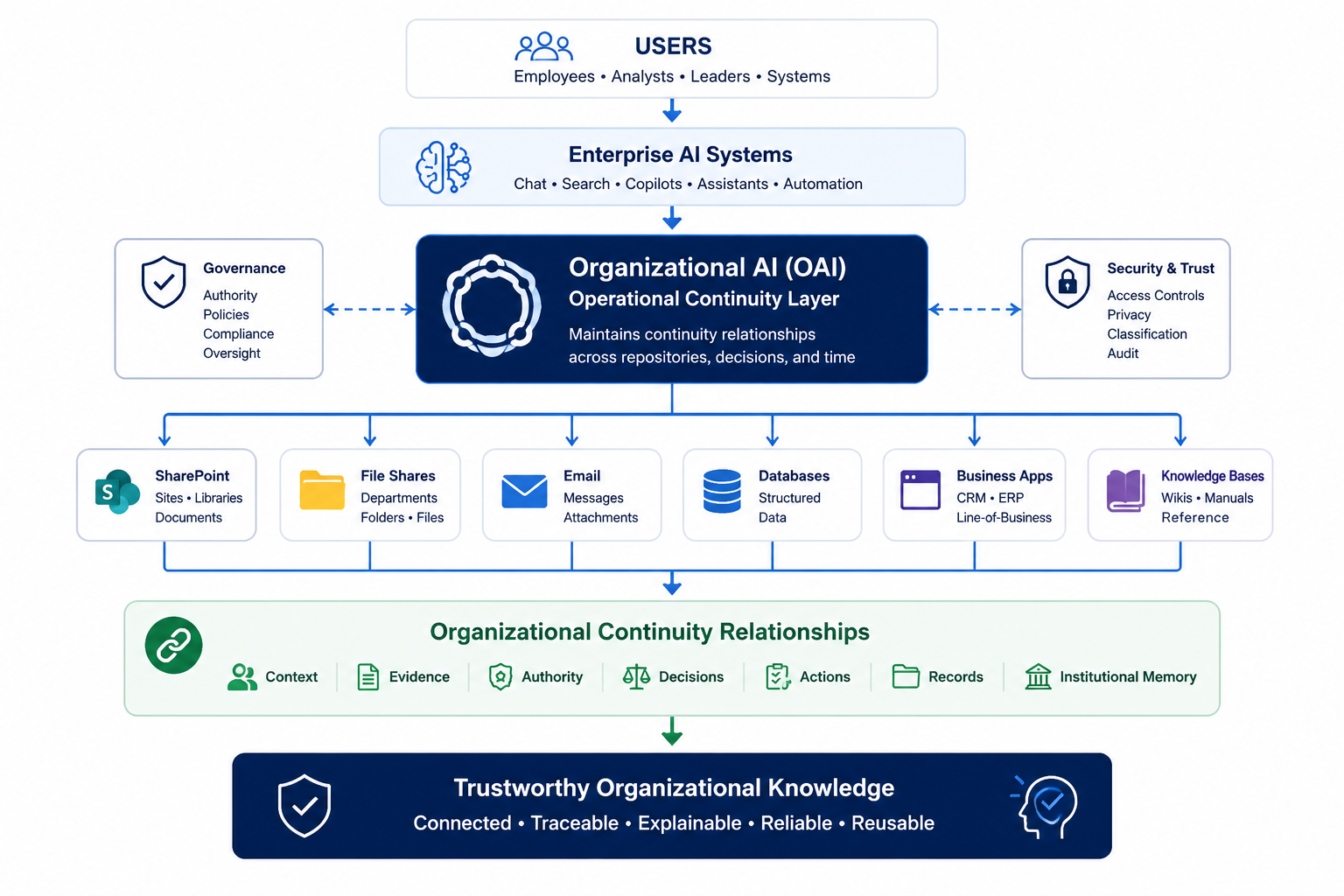
In the GovKM Continuity Topology, Evidence does not move directly to Decision. Authority and Context determine what the evidence means, how much weight it should carry, which constraints apply, and whether it is fit for the current purpose.
A composite risk score is especially vulnerable to context loss because its apparent simplicity compresses underlying assumptions, methods, data quality, sensitivity, and intended use. If those relationships do not travel with the score, users can reasonably interpret the same number in incompatible ways.
Feedback must become institutional memory
GAO’s recommendation for systematic user feedback exposes the other end of the topology. Operational experience should become a Record, enter Institutional Memory, and influence Future Reuse. Without that loop, users repeatedly encounter the same ambiguities while the system evolves without a durable relationship to how its outputs performed in practice.
GovKM interprets the case as evidence for a general rule applicable to analytics and AI: an output is not decision context. Organizations need to preserve the lineage that explains how an output was produced, its limits, how it should be applied, and what later experience taught about its use.
Source
U.S. Government Accountability Office, “Disaster Risk: Improvements Needed to Enhance FEMA’s National Risk Index,” GAO-26-107894, September 10, 2026.
Continue Exploring
A Decision Memorandum Is Not Decision Provenance.
Aggregation Is Not Continuity.