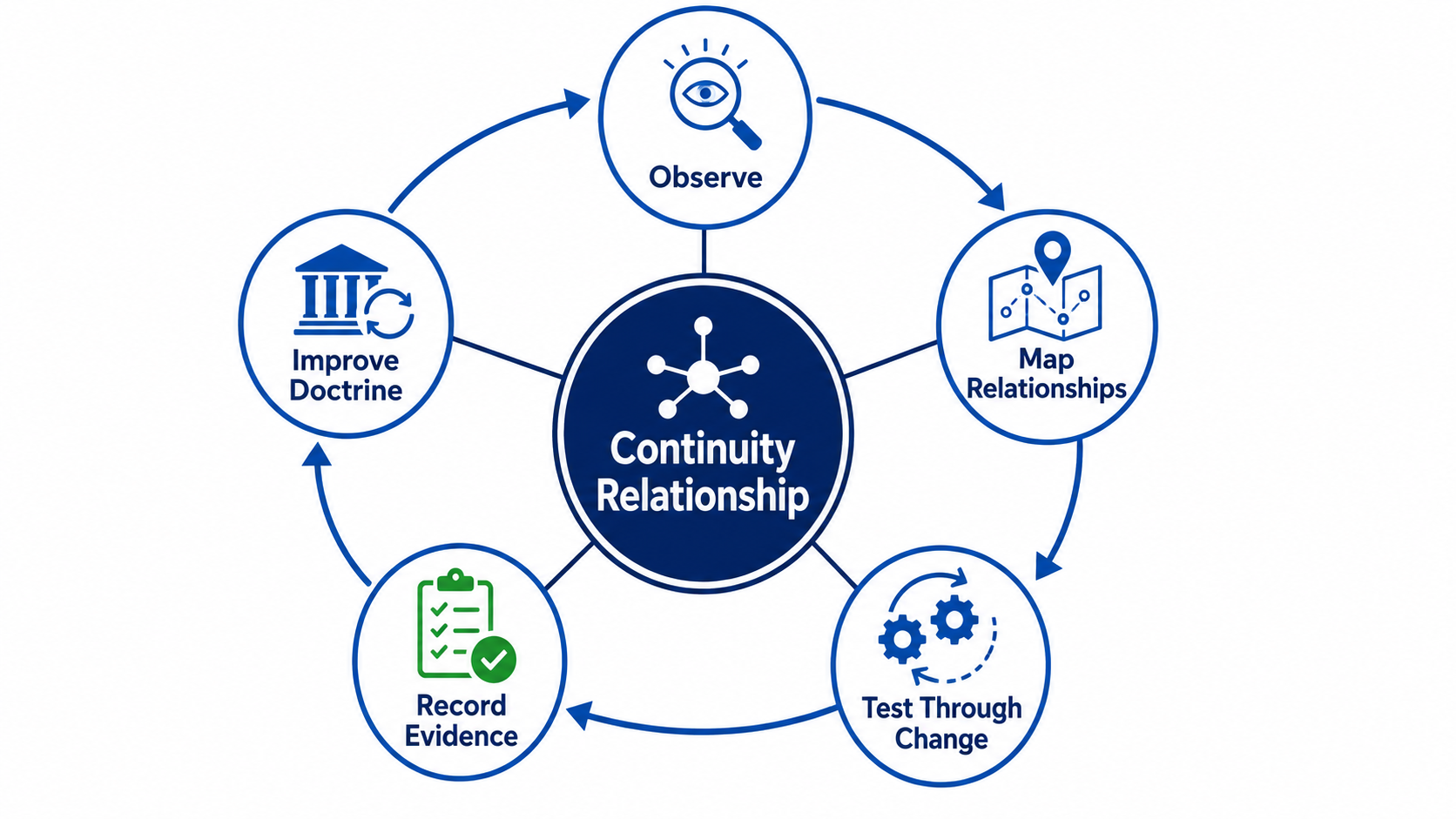
Replacing an aging government IT system is not simply a software upgrade. It transfers the institutional context needed to explain why an agency made a decision, which evidence supported it, and which authority governed it. Files can move successfully while those relationships become harder to reconstruct.
What GAO found about federal legacy modernization
In GAO-25-107795 (July 17, 2025), the Government Accountability Office identified 11 critical federal legacy systems most in need of modernization. Eight of the 11 did not have fully documented modernization plans covering all three key planning elements: milestones, work required, and disposition of the old system. Two had no documented modernization plan. Eight used outdated programming languages and seven operated with known cybersecurity vulnerabilities.
GAO warned that incomplete modernization plans increase the likelihood of delays, cost overruns and failure. That is an important program-management finding. It also raises a separate information-governance question: when an authoritative platform is retired, how does its decision history remain trustworthy?
Preserving documents is not the same as preserving authority
Consider a fictional agency that migrates from System A to System B. A policy record in A approved one operating rule; months later an authorized amendment changed it. Both records transfer to B, but the relationships identifying effective dates, supersession and decision authority do not. A search engine—or an AI assistant—may retrieve both records accurately and still have insufficient information to identify the governing rule.
This illustration is GovKM's analytical scenario, not a failure GAO reported in one of the eleven systems. It distinguishes content migration from continuity of source identity, authority, context and time.
The continuity requirement for modernization
An agency may legitimately operate separate authoritative systems for finance, policy, procurement, mission records and public information. Continuity does not require collapsing them into one repository. It requires explicit relationships identifying which source controls a particular decision, when authority takes effect, what supersedes it and which evidence must remain preserved for later reconstruction.
Within GovKM's Continuity Topology, the critical path connects Source → Evidence → Authority → Context → Decision → Action → Record → Institutional Memory → Future Reuse. A modernization should preserve the ability to traverse those relationships even when a system identifier, storage platform or interface changes. Historical evidence may remain useful after it loses operative authority; the two states must not be confused.
Five questions agency modernization teams should answer
- Authority transfer: Which old system establishes each governing decision, and when does the replacement assume that role?
- Temporal validity: Can reviewers reconstruct what was authoritative on the date of an earlier action as well as today?
- Evidence lineage: Do approvals, corrections, exceptions and source records remain connected after migration?
- Records disposition: What must be retained, transferred or disposed of under approved legal and records schedules?
- AI use: Can model-assisted retrieval identify operative evidence or clearly abstain where authority cannot be demonstrated?
Measure continuity separately from projected savings
In GAO-26-107737 (July 23, 2026), GAO reported approximately $1.03 billion invested through the Technology Modernization Fund across 68 unclassified projects as of June 2025. Twenty-four expected around $1.06 billion in total savings; 11 had realized approximately $13.5 million. Those are modernization-program estimates and results, not GovKM savings.
Continuity performance should instead be demonstrated with specific measures: the share of consequential decisions traceable to authentic authorization; completeness of migrated historical evidence; time needed to reconstruct an operative state; unresolved cross-system authority conflicts; and the proportion of AI answers grounded in governing rather than merely relevant material. These are proposed measures, not verified government benchmarks.
Retire software without retiring institutional meaning
Legacy-system retirement closes one operational source and shifts responsibility to another. A mature modernization plan should therefore document not only the technical migration and disposal of infrastructure, but also the continuity of governing relationships and the authorized retention of institutional evidence. GAO establishes why planning matters. GovKM's additional interpretation is that trustworthy future AI use also depends on preserving the relationships that make information authoritative through change.
Primary sources
U.S. Government Accountability Office: Information Technology: Agencies Need to Plan for Modernizing Critical Decades-Old Legacy Systems, July 17, 2025; and Technology Modernization Fund: Small Savings Achieved So Far, but Substantial Future Savings Expected, July 23, 2026. Illustrative scenarios and continuity conclusions are GovKM interpretations, not GAO endorsements or findings of actual AI failure.
Continue Exploring
The Practice Form Failed. The Agent Used the Real One.
The Tip Was Synthetic. The Police Intake Was Real.