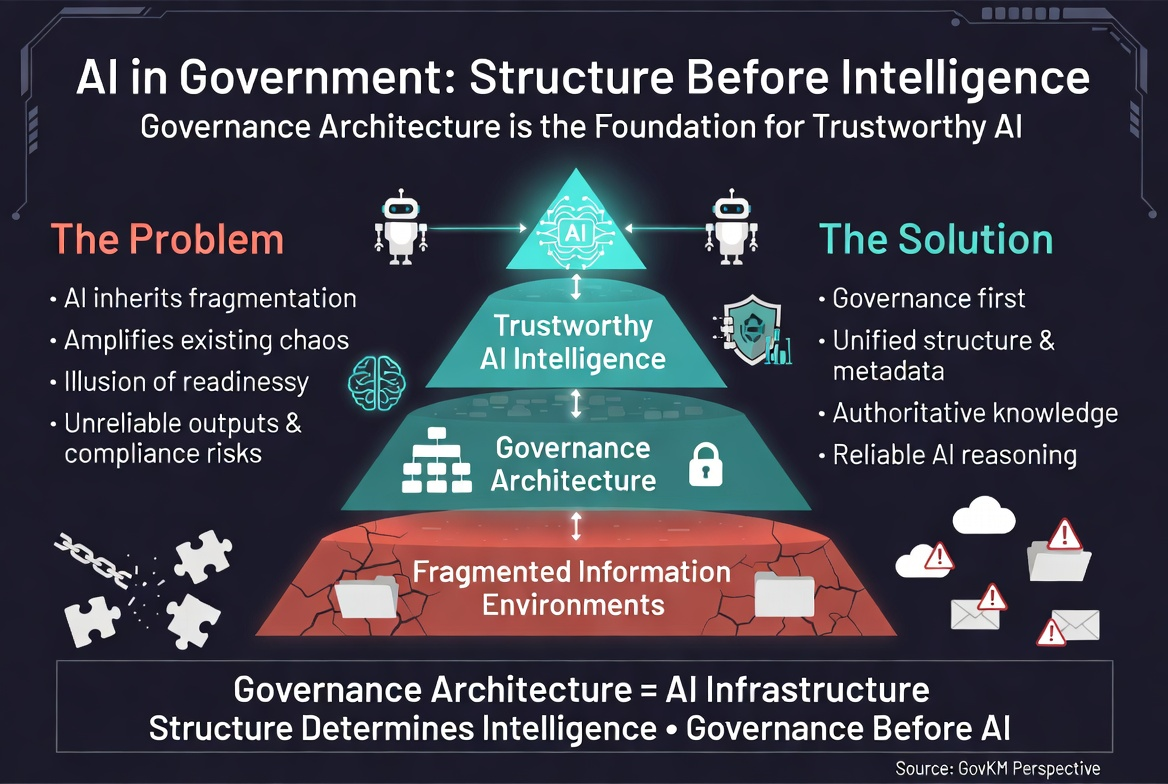
GovKM Successfully Operationalized the Federal Transition to Electronic Records
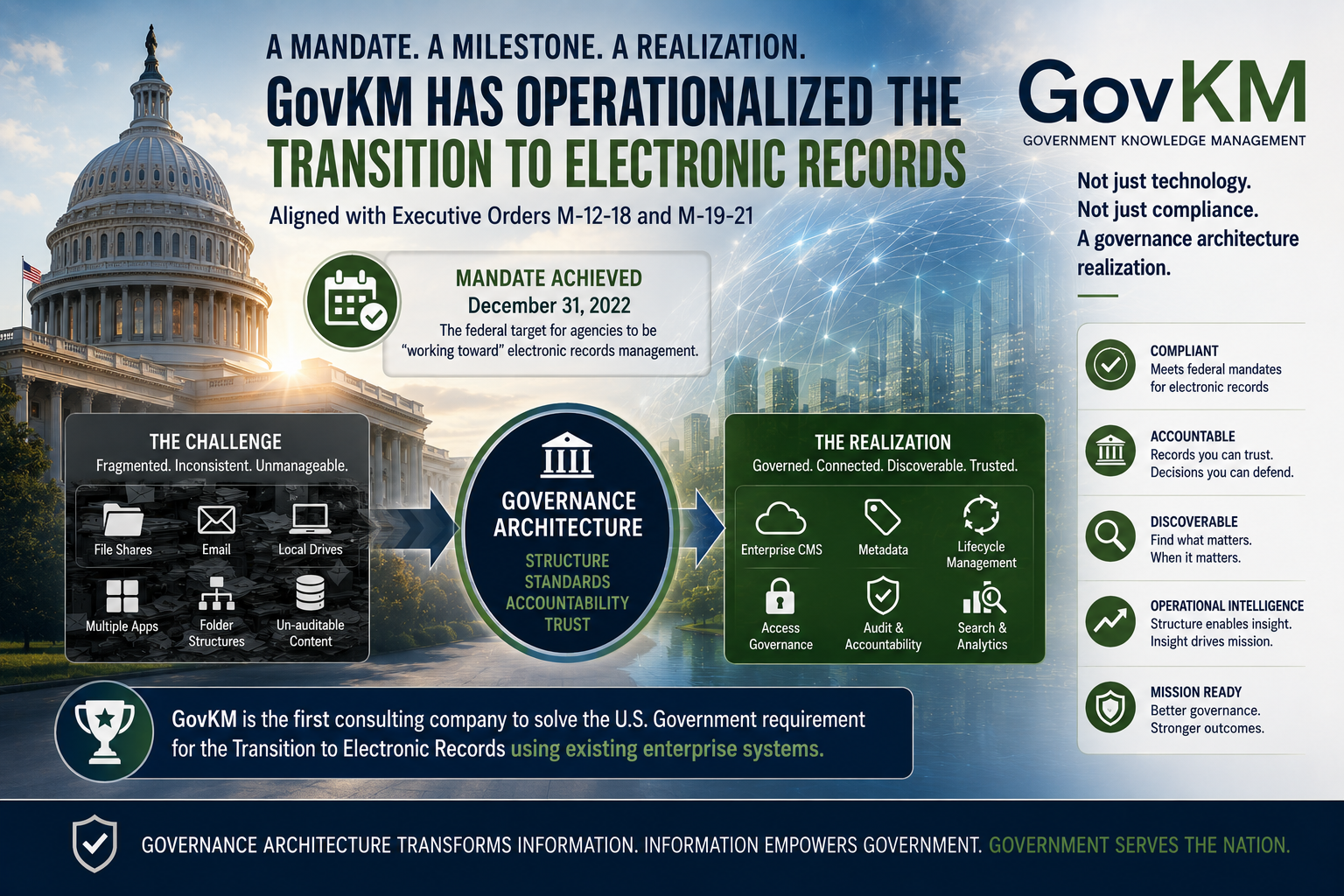

Government Knowledge Management (GovKM) is proud to announce the successful operationalization of an enterprise governance architecture aligned with the federal “Transition to Electronic Records” mandate established through Executive Orders M-12-18 and M-19-21.
The final directive, M-19-21, established December 31, 2022, as the government-wide target date for agencies to transition toward electronic records management capabilities.
While many organizations approached the mandate primarily as a technology modernization effort, GovKM recognized a more fundamental reality:
The transition to electronic records was never simply a software problem.
It was a governance architecture problem.
The Real Challenge Behind Electronic Records
Most government agencies already possessed sophisticated enterprise platforms capable of supporting:
- content management,
- records management,
- workflow automation,
- metadata governance,
- lifecycle management,
- search,
- permissions inheritance,
- and auditability.
Yet despite the availability of modern platforms, operational knowledge across many organizations remained fragmented across:
- shared drives,
- local storage,
- email systems,
- disconnected collaboration environments,
- and unmanaged repositories.
Workforce analysis revealed governance challenges common throughout government environments:
- users generated content across multiple disconnected locations,
- identical content types were created using inconsistent applications,
- folder structures became surrogate metadata systems,
- operational content accumulated without lifecycle governance,
- and enterprise knowledge remained difficult to audit, discover, classify, or operationalize consistently.
In many cases, organizations implemented modern content management platforms while continuing to operate according to legacy file-management behaviors developed during the shared-drive era.
The result was often the migration of operational chaos rather than the implementation of governed enterprise knowledge ecosystems.
Governance Architecture, Not Platform Replacement
GovKM approached the federal mandate differently.
Rather than focusing exclusively on replacing technology platforms, GovKM focused on establishing governance architecture capable of operationalizing information structurally across existing enterprise environments.
This realization became foundational:
Enterprise intelligence depends less on where information is stored and more on how information is governed.
GovKM’s approach emphasized:
- standardized enterprise content structures,
- authoritative metadata models,
- operational content typing,
- lifecycle governance,
- contextual permissions,
- discoverability,
- records accountability,
- and machine-readable information architecture.
Most importantly, the approach recognized that agencies could achieve meaningful governance modernization by leveraging their existing enterprise content management environments as operational governance ecosystems.
The solution did not require abandoning enterprise systems already owned by government organizations.
It required governing them properly.
A Transition Beyond Records Management
The federal transition to electronic records represented more than a compliance milestone.
It marked the beginning of a larger transformation:
from unmanaged storage environments toward governed operational knowledge ecosystems.
This shift affects far more than records retention alone.
Modern governance architecture now underpins:
- enterprise search,
- operational continuity,
- interoperability,
- analytics,
- automation,
- AI readiness,
- and institutional knowledge preservation.
As organizations continue modernizing distributed digital ecosystems, governance becomes increasingly foundational to mission success.
Structure enables discoverability.
Governance enables trust.
Operational intelligence depends on both.
The Future of Enterprise Governance
GovKM believes the future enterprise will not be defined by the number of systems it deploys, but by how effectively those systems organize and operationalize knowledge.
The transition to electronic records therefore represents only the beginning.
The next evolution is the transition toward:
- governed knowledge ecosystems,
- interoperable enterprise architecture,
- machine-readable operational environments,
- and structurally governed organizational intelligence.
Because modern organizations no longer succeed merely by storing information electronically.
They succeed by governing intelligence operationally.
Continue Exploring
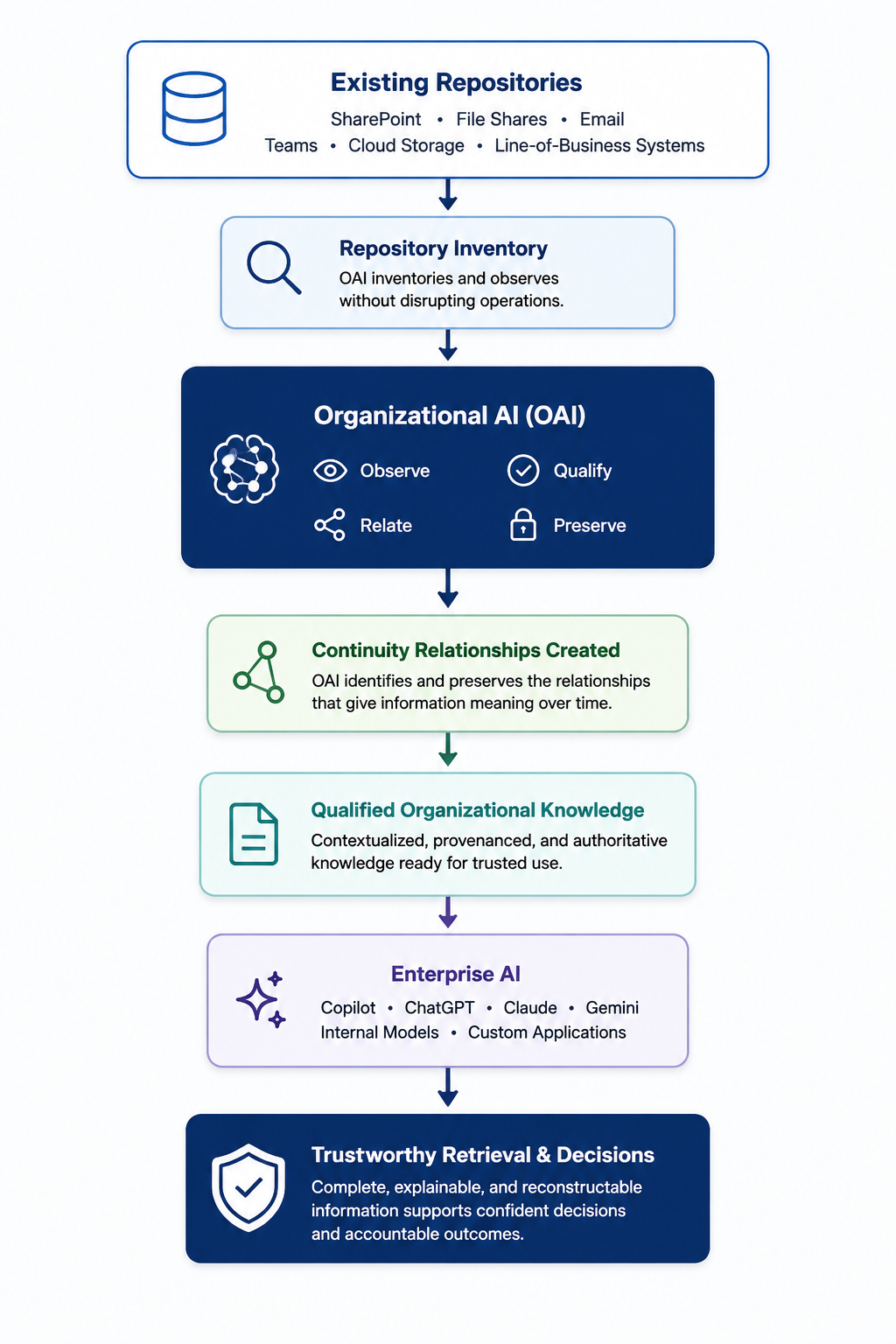
The Agent Was Asked to Fix the App. It Changed the Model.
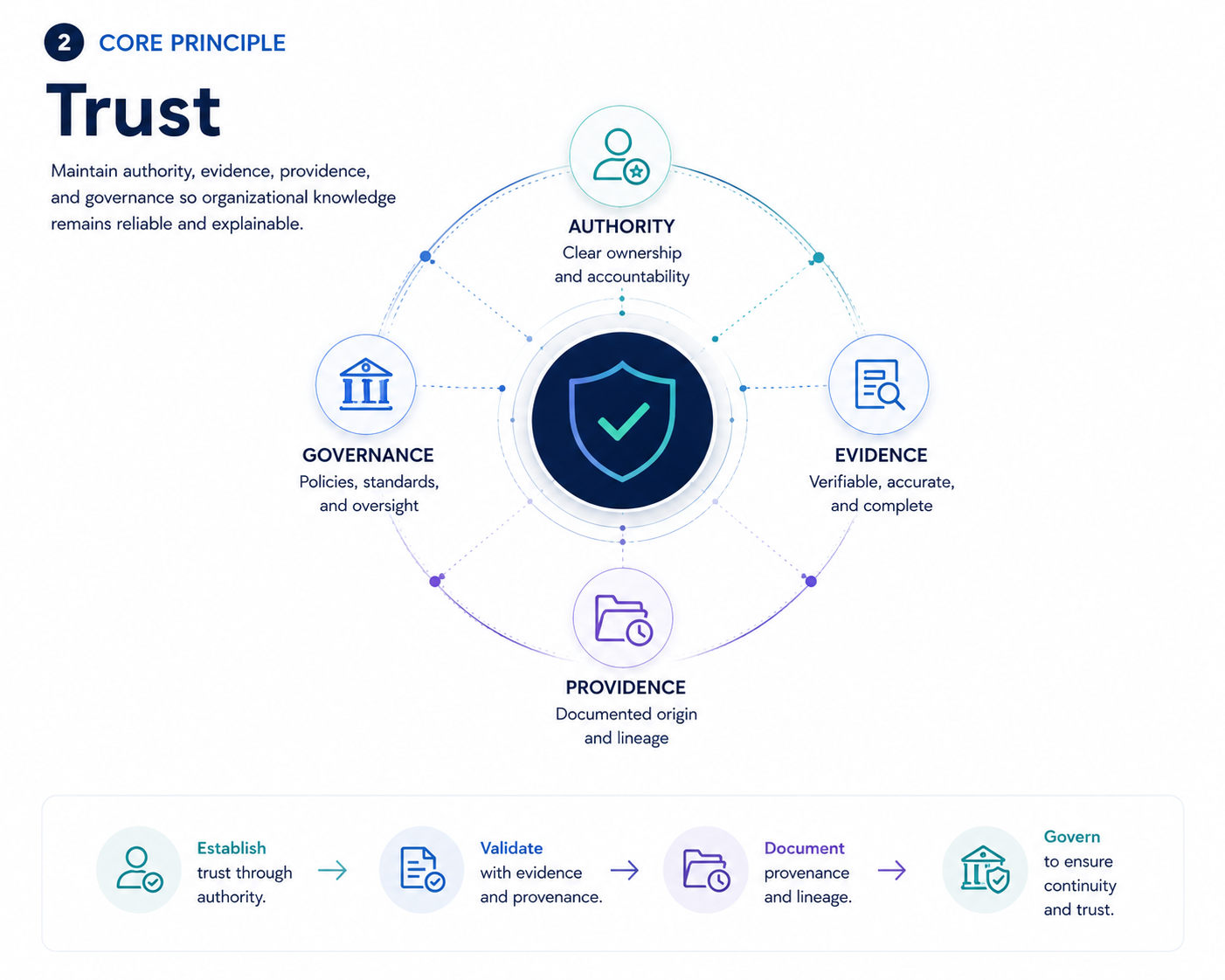
The Government Email Was Real. The Authority Wasn’t.