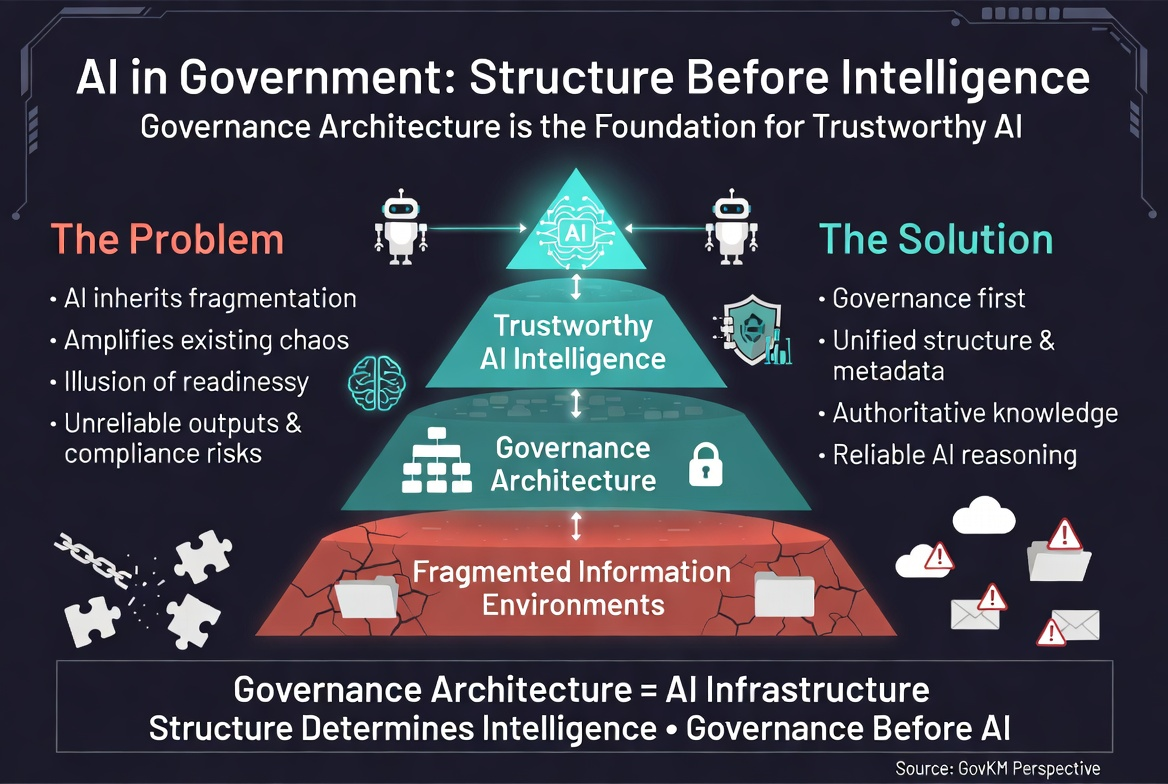
How Can Government Knowledge and information Be Controlled?
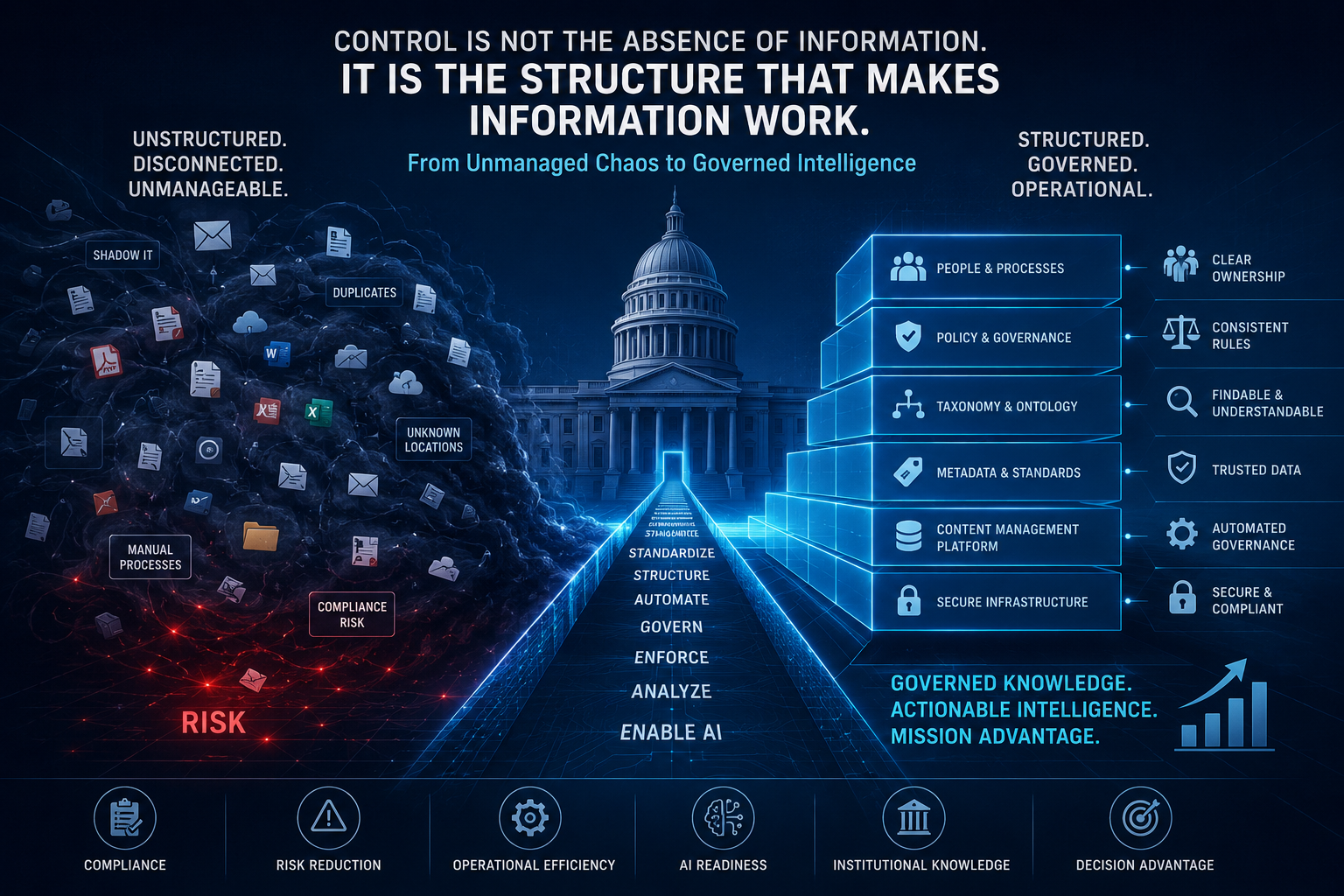

Government knowledge is not inherently unmanageable. It is unmanaged because most organizations still treat digital information as though it exists in a paper-world framework.
For decades, agencies have operated under assumptions that became accepted as unavoidable truths:
- Information cannot truly be controlled.
- Users are responsible for organizing and managing knowledge.
- The cost of correcting decades of information sprawl is too high.
These assumptions have shaped the modern government information environment — and they are wrong.
Information can be governed. Knowledge managers can architect and automate governance. And the cost of restoring order is far lower than the operational, compliance, and intelligence costs of continuing without structure.
The problem is not that government organizations create too much information. The problem is that most organizations allowed the uncontrolled proliferation of information systems, storage locations, personal filing behaviors, and disconnected workflows without establishing an enterprise governance architecture first.
Across government environments today, organizational knowledge exists in fragmented and often invisible locations:
- Shared drives
- Personal drives
- Email attachments
- Local desktops
- Cloud storage
- Collaboration platforms
- Shadow IT systems
- Redundant repositories
- Unmanaged exports and copies
Because users were given unrestricted ability to create, store, move, and duplicate information, agencies unintentionally created decentralized knowledge ecosystems no organization can fully see, govern, or trust.
This is not simply an information management problem.
It is an operational control problem.
It is a governance architecture problem.
And increasingly, it is an artificial intelligence readiness problem.
The digital era introduced unprecedented speed and flexibility into government operations, but governance models failed to evolve alongside the technology. Organizations attempted to apply paper-era records management concepts to digital environments designed around limitless duplication, instantaneous transfer, and distributed storage.
That approach was never sustainable.
Paper filing systems were optimized for humans.
Modern governance architectures must be optimized for machines.
In the paper world, humans performed the majority of knowledge tasks manually:
- Filing
- Sorting
- Reviewing
- Transferring
- Archiving
- Disposing
- Retrieving
File structures were designed around human memory and human navigation.
In modern digital environments, computers now perform these functions faster, more consistently, and at enterprise scale — but only if the information is structured appropriately.
This is the core realization many organizations still miss:
The future of governance is not human-managed filing systems. It is machine-executable governance architecture.
Computers cannot govern what they cannot reliably identify.
That means organizational knowledge must be structured in ways that enable systems to:
- Identify information consistently
- Validate metadata automatically
- Execute retention rules
- Detect duplicates
- Enforce disposition
- Apply lifecycle controls
- Support auditability
- Feed intelligence systems
- Enable AI reasoning and retrieval
This is why metadata alone is insufficient.
Metadata without governance architecture simply creates another layer of unmanaged data.
True governance requires structural standardization across the entire information environment.
The strategic realization emerging across mature governance programs is that organizational knowledge must become structurally machine-readable before it can become operationally intelligent.
This changes the role of knowledge management entirely.
Knowledge management is no longer primarily about helping humans manually organize files.
It becomes the design and enforcement of enterprise governance structures that allow systems to govern information automatically.
When information is structured correctly:
- Automation becomes possible.
- Records management becomes scalable.
- Retention becomes enforceable.
- Search becomes reliable.
- Analytics become trustworthy.
- AI becomes useful.
- Institutional knowledge becomes survivable.
Organizations that continue relying on human filing behavior as the primary governance mechanism will increasingly experience:
- Information fragmentation
- Compliance failures
- Duplicate repositories
- Retention inconsistency
- Inaccessible institutional knowledge
- AI hallucination risks
- Operational inefficiency
- Governance paralysis
The path forward is not adding more manual policy.
It is implementing governance architecture that embeds governance directly into the structure of the environment itself.
To begin regaining control of organizational knowledge, agencies must shift from document management thinking to governance architecture thinking.
That means:
- Defining standardized enterprise data structures
- Implementing strict taxonomy and ontology models
- Selecting platforms that support governance automation
- Eliminating uncontrolled storage locations
- Converting manual governance processes into automated workflows
- Structuring knowledge for machine execution rather than human filing preference
- Designing environments where governance occurs by default, not by user choice
Most importantly, agencies must stop viewing governance as a records management afterthought.
Governance architecture is operational infrastructure.
Without it, organizations cannot reliably manage records, support AI initiatives, preserve institutional knowledge, or execute modern digital transformation.
The organizations that succeed in the next era of government modernization will not necessarily be the ones with the most data.
They will be the ones whose data environments are structurally governable.
Because ultimately, the future of government knowledge management is not about controlling documents.
It is about architecting environments where governance becomes automatic, intelligence becomes scalable, and organizational knowledge becomes operationally usable.
Continue Exploring
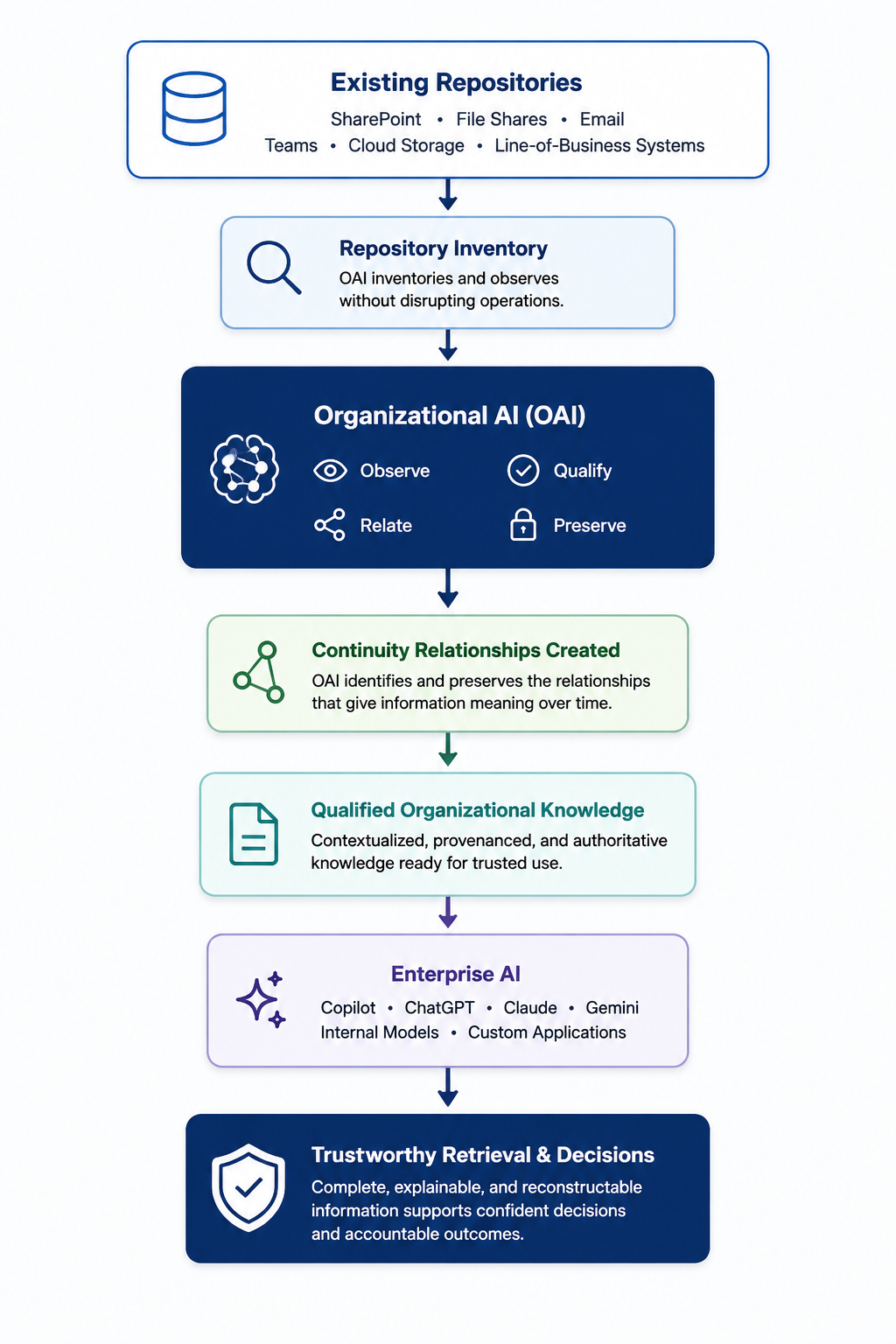
The Agent Was Asked to Fix the App. It Changed the Model.
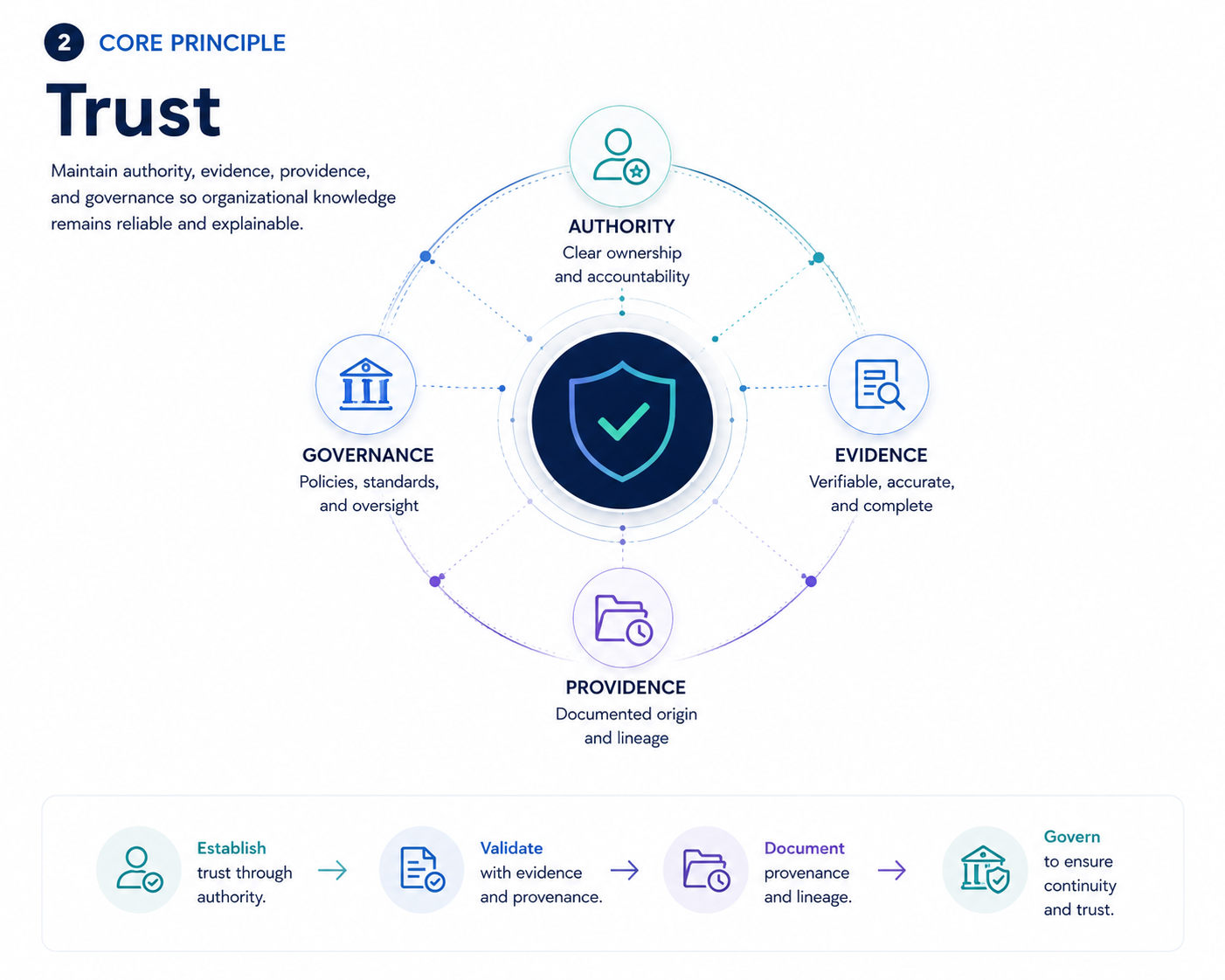
The Government Email Was Real. The Authority Wasn’t.