An Audit Finding Can Be Fixed and Still Be Forgotten

Organizations often treat a closed corrective action as evidence that a problem has been solved. Closure, however, is not the same as institutional learning.
An August 2026 Department of Justice Office of Inspector General audit of Drug Enforcement Administration task orders provides a useful example. OIG found weaknesses in acquisition planning and contract administration and said it could not determine whether contract workers' services meaningfully contributed to the Diversion Control Program. The report also noted that several weaknesses reflected DEA's departure from corrective actions taken after three earlier OIG reports.
That recurrence exposes a continuity failure deeper than the individual contracting deficiencies. The institution had encountered related problems before. It had taken corrective action. Yet some of the learning did not remain embedded strongly enough to govern future work.
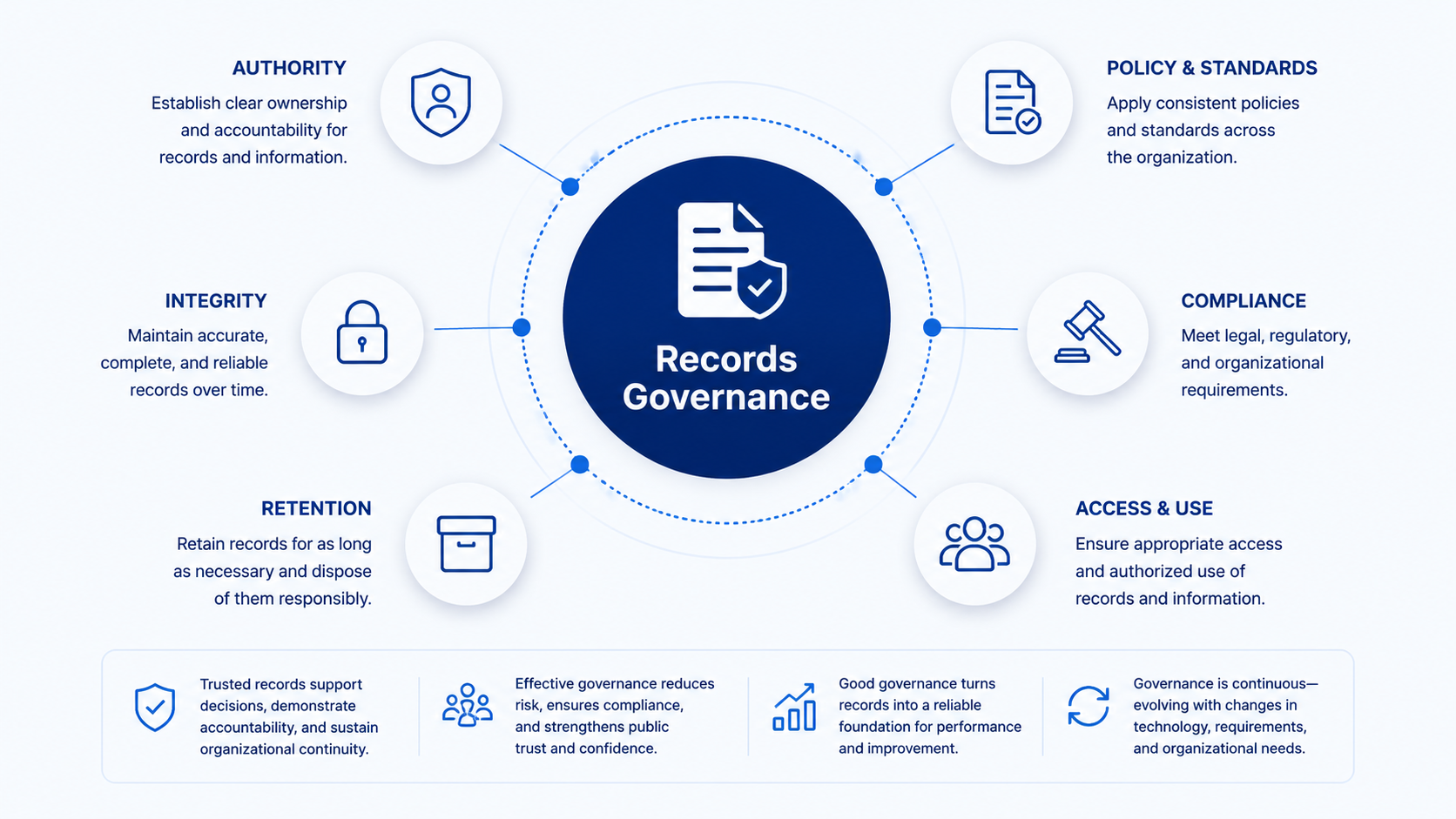
Correction Is an Event. Institutional Memory Is a Capability.
A corrective action can be documented, assigned, completed, and closed. Those steps create records. But institutional memory requires something more: the learning must remain connected to future operations after the audit team, managers, contractors, systems, and circumstances change.
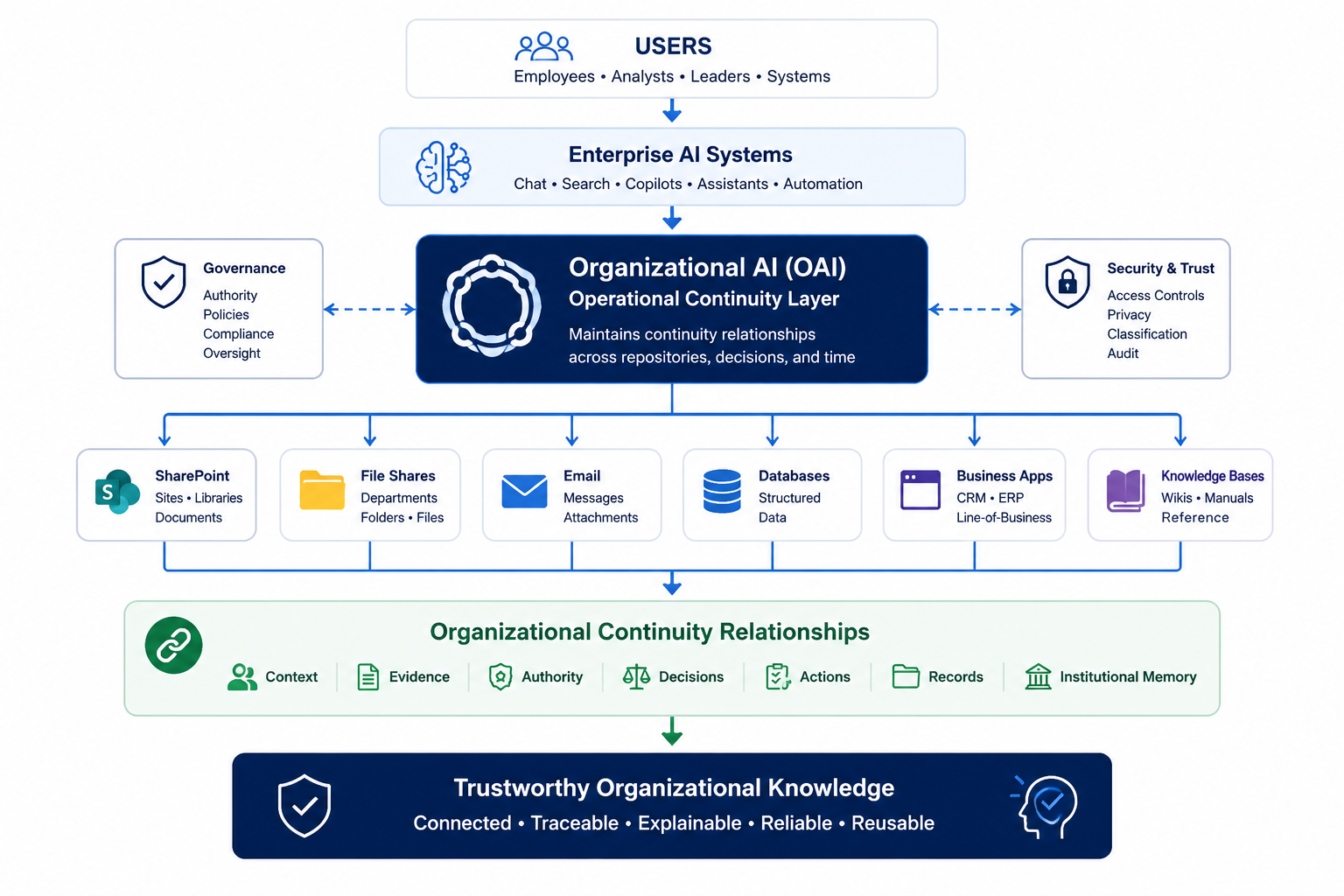
Viewed through the GovKM Continuity Topology, the relevant path extends from Action → Record → Institutional Memory → Future Reuse. The audit records what happened. Corrective action records what the organization intends to change. Institutional memory exists only when the lesson continues to shape later decisions and actions.
If future personnel can locate the old report but repeat the same failure pattern, the record survived while the learning did not.
Mission Value Must Also Be Reconstructable
The DEA audit contains a second continuity issue. OIG reported that it could not determine whether contracted workers meaningfully contributed to the program's mission.
This distinction is important. Institutions are often very good at recording activity: hours worked, invoices paid, deliverables submitted, meetings held. Those records establish that something occurred. They do not necessarily establish why the activity mattered or what institutional outcome it supported.
Operational continuity therefore requires relationships from authorized purpose to action and from action to outcome. Otherwise, the organization can reconstruct expenditure without reconstructing mission value.
Why Organizations Relearn the Same Lesson
Institutional forgetting rarely means every copy of an old audit disappeared. More often, the lesson becomes detached from the workflows where it needs to constrain future behavior.
A corrective action may live in an audit-tracking system while acquisition staff work elsewhere. A procedure may be revised without preserving why the revision was made. Personnel turnover may remove the people who remember which historical failure a control was designed to prevent. A later modernization effort may preserve the procedure but not the rationale.
Each transition creates continuity debt. The organization still possesses the information, but the relationship from prior failure to present operating constraint weakens.
AI Will Inherit What the Institution Preserves
This problem matters as AI systems begin assisting with contracting, oversight, compliance, and operational planning. An AI system can retrieve previous audit reports. That does not mean it can identify which findings remain active constraints on today's work.
For AI to benefit from institutional experience, corrective learning must be represented as governed knowledge: what failed, why it mattered, which authority required change, what control resulted, where that control applies, how it can be superseded, and how future actions should demonstrate compliance.
An organization has not learned merely because it corrected a finding once. It has learned when the correction survives as usable institutional memory and changes future behavior.
Continue Exploring

When Government Systems Are Replaced, What Happens to Their Authority?
The Practice Form Failed. The Agent Used the Real One.