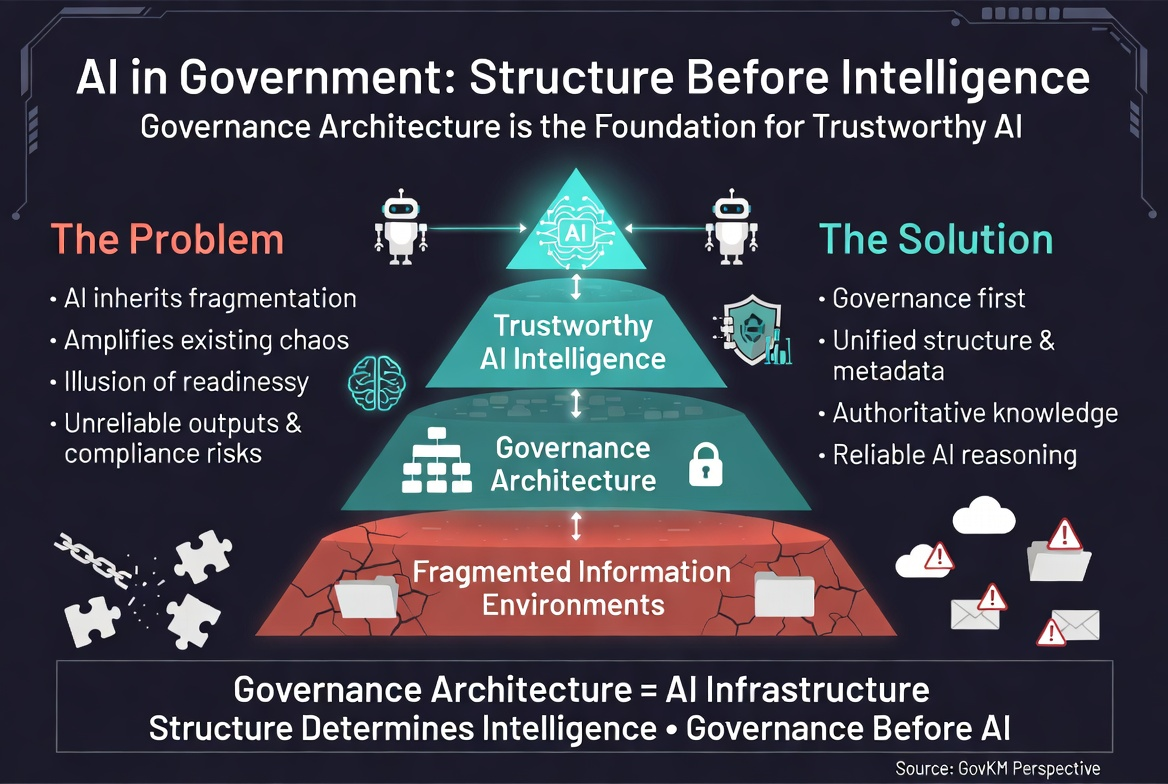
Organizational Restructuring Fails When Institutional Knowledge Is Not Governed
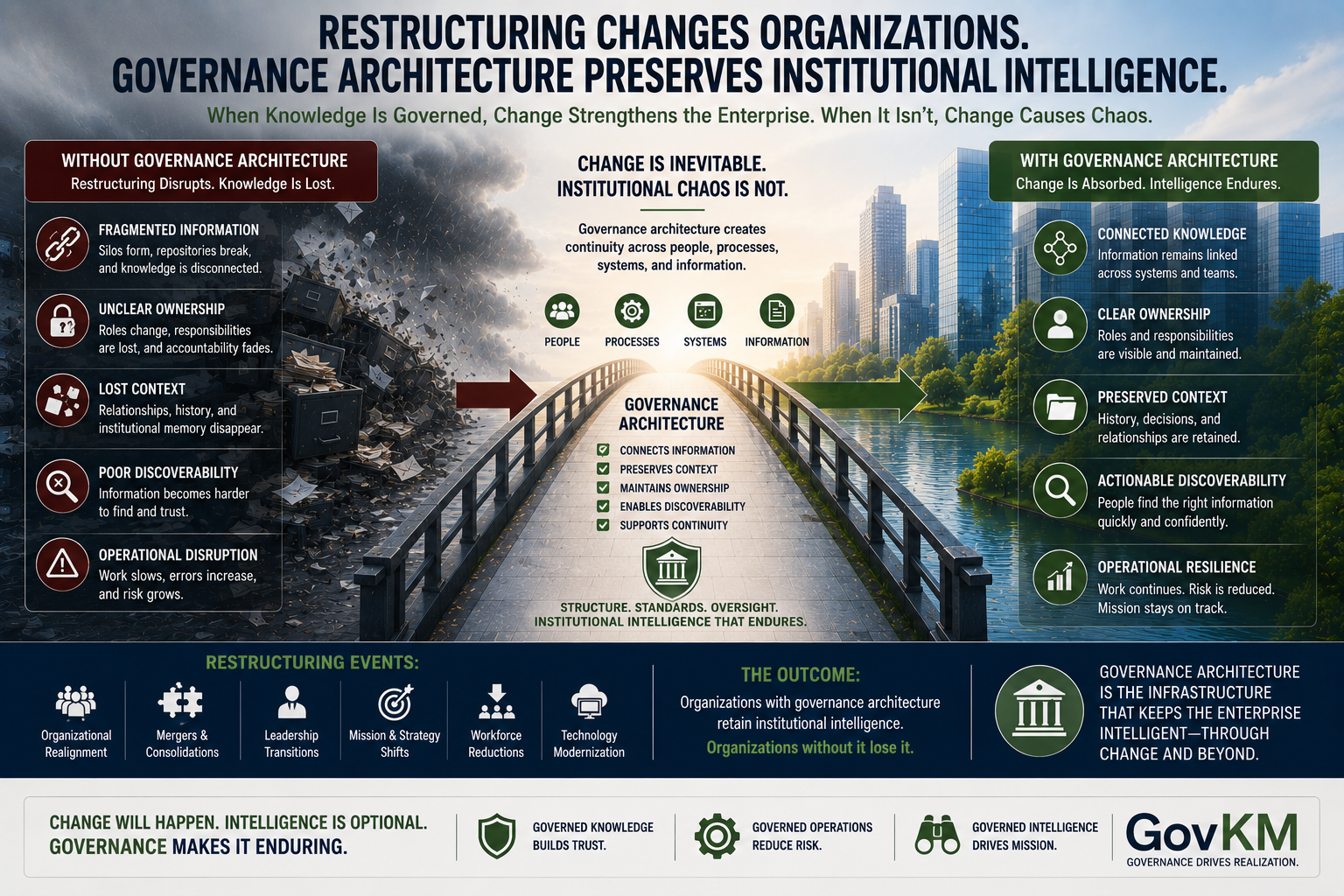

Government organizations restructure constantly.
Agencies reorganize to:
- improve efficiency,
- comply with regulatory mandates,
- consolidate operations,
- reduce workforce overhead,
- modernize business processes,
- absorb mergers,
- realign missions,
- or adapt to changing strategic priorities.
On paper, restructuring appears administrative.
In reality, restructuring is a profound operational event inside the organizational knowledge ecosystem.
And when institutional knowledge lacks governance architecture, restructuring becomes one of the most destructive forces acting upon organizational intelligence.
Organizations Rarely Govern Knowledge Structurally
Most organizations focus restructuring efforts on:
- reporting chains,
- workforce alignment,
- budgets,
- office consolidation,
- systems migration,
- and operational responsibilities.
But far less attention is typically given to the structure of organizational knowledge itself.
This creates a dangerous condition.
Because organizational knowledge does not exist only in:
- policies,
- doctrine,
- or formal directives.
It also exists inside:
- operational routines,
- collaboration patterns,
- inherited assumptions,
- workflow relationships,
- permissions structures,
- folder paths,
- naming conventions,
- distribution groups,
- institutional memory,
- and countless unwritten organizational behaviors accumulated over time.
Most organizations never formally structure these knowledge relationships.
They evolve organically.
And that becomes the problem.
Organizational Knowledge Becomes Embedded Infrastructure
Over time, operational knowledge becomes deeply embedded into the daily behavior of the enterprise.
Employees internalize:
- workflows,
- standards,
- expectations,
- routing paths,
- reporting structures,
- timelines,
- permissions,
- and operational assumptions.
Much of this knowledge becomes so normalized that organizations stop recognizing it as organizational infrastructure.
But it is infrastructure.
Operational continuity depends on it.
A seemingly minor organizational change can therefore trigger widespread operational disruption if it alters previously understood organizational knowledge without governance visibility or transition structure.
This is why restructuring often produces unintended consequences far beyond organizational charts.
The disruption is informational.
Restructuring Exposes Weak Governance Architecture
Organizations with mature governance architecture can absorb structural change more effectively because:
- metadata relationships remain governed,
- permissions inherit correctly,
- workflows remain visible,
- operational ownership remains discoverable,
- and institutional knowledge remains structurally connected.
Organizations without governance architecture experience something very different.
As offices move, merge, split, or disappear:
- repositories fragment,
- permissions drift,
- duplicate environments emerge,
- distribution structures become unreliable,
- search deteriorates,
- operational ownership becomes unclear,
- and institutional memory begins separating from the organization itself.
The problem is rarely the restructuring event alone.
The problem is that organizational knowledge was never structurally governed before the restructuring occurred.
Leadership Changes Also Alter Organizational Knowledge
Leadership transitions create similar effects.
Most organizations think of leadership change primarily in human terms:
- management style,
- priorities,
- communication,
- or strategy.
But leadership transitions also alter operational knowledge environments.
Policies change.
Procedures evolve.
Operational assumptions shift.
Priorities are redefined.
Approval chains move.
Access patterns change.
Information flows reorganize.
Even relatively small operational changes can ripple across thousands of personnel if those changes affect deeply embedded organizational knowledge patterns.
The issue is not whether change occurs.
Change is inevitable.
The issue is whether organizations possess governance architecture capable of absorbing change without fragmenting institutional intelligence.
Institutional Memory Is More Fragile Than Organizations Realize
Many organizations assume institutional knowledge naturally survives organizational transition.
It does not.
Without structural governance, institutional memory frequently becomes:
- localized,
- disconnected,
- personality-dependent,
- siloed,
- or permanently lost during restructuring events.
This becomes especially dangerous in modern enterprises where:
- distributed collaboration environments,
- fragmented repositories,
- unmanaged permissions,
- and disconnected knowledge systems
already weaken organizational continuity before restructuring even begins.
The organization therefore enters restructuring with fragmented knowledge ecosystems and exits with even greater fragmentation.
Governance Architecture Stabilizes Organizational Change
Modern governance architecture provides something organizations historically lacked:
Structural continuity independent of organizational turbulence.
Governance architecture enables:
- authoritative metadata relationships,
- discoverable operational ownership,
- lifecycle continuity,
- interoperable repositories,
- permissions governance,
- search resilience,
- and machine-readable organizational structure.
This creates an enterprise capable of adapting operationally without continuously losing institutional coherence.
The future organization therefore cannot treat governance as secondary administrative overhead.
Governance is operational stabilization infrastructure.
The Future Enterprise
Modern enterprises will continue restructuring.
Technology will evolve.
Missions will shift.
Workforces will change.
Leadership will rotate.
Operational priorities will realign.
The organizations that succeed will not be those that avoid change.
They will be the organizations capable of governing institutional knowledge structurally through change.
Because the true challenge of organizational restructuring is not workforce movement.
It is preserving operational intelligence while the organization itself evolves.
And in the modern enterprise, operational intelligence depends entirely on governance architecture.
Continue Exploring
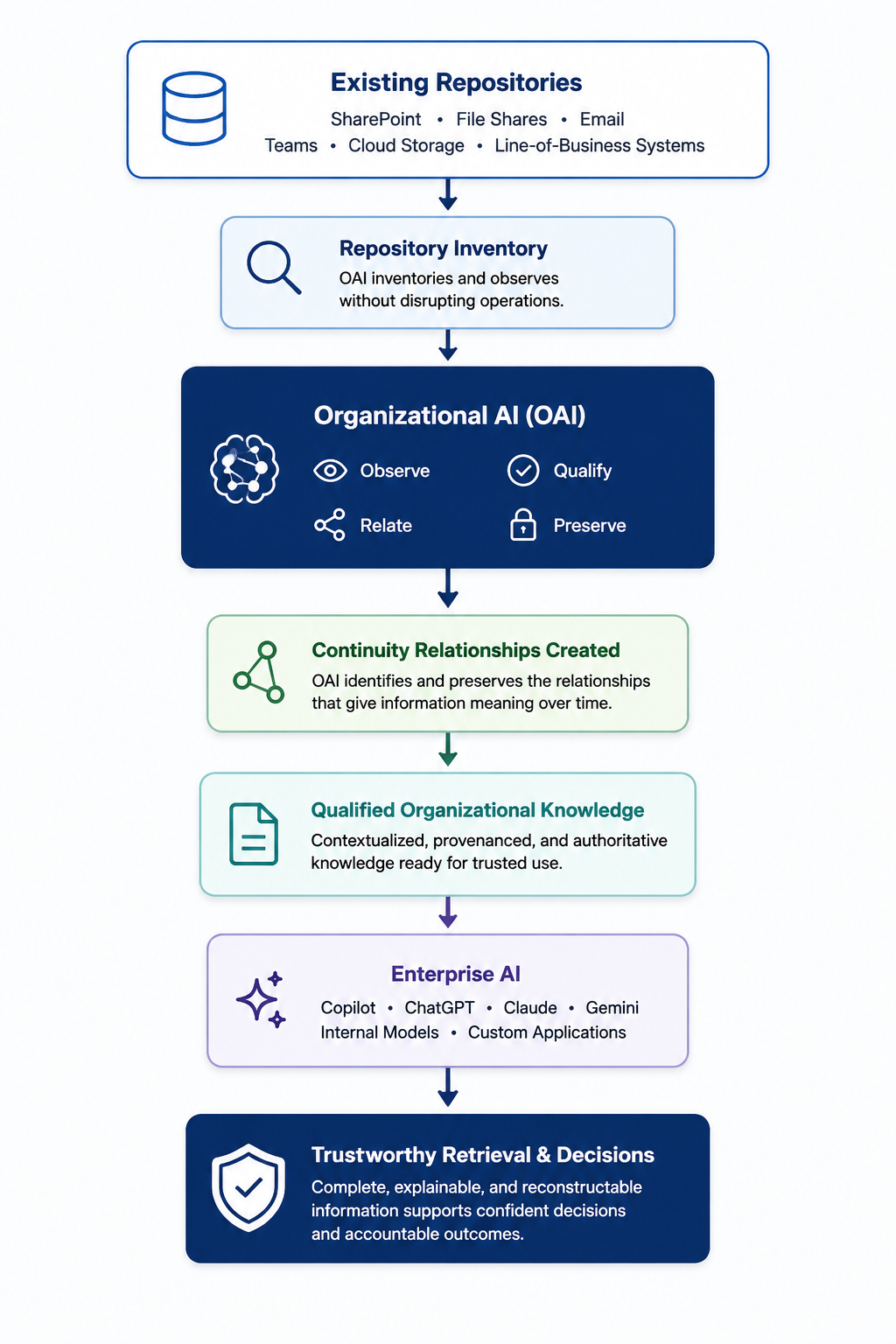
The Agent Was Asked to Fix the App. It Changed the Model.
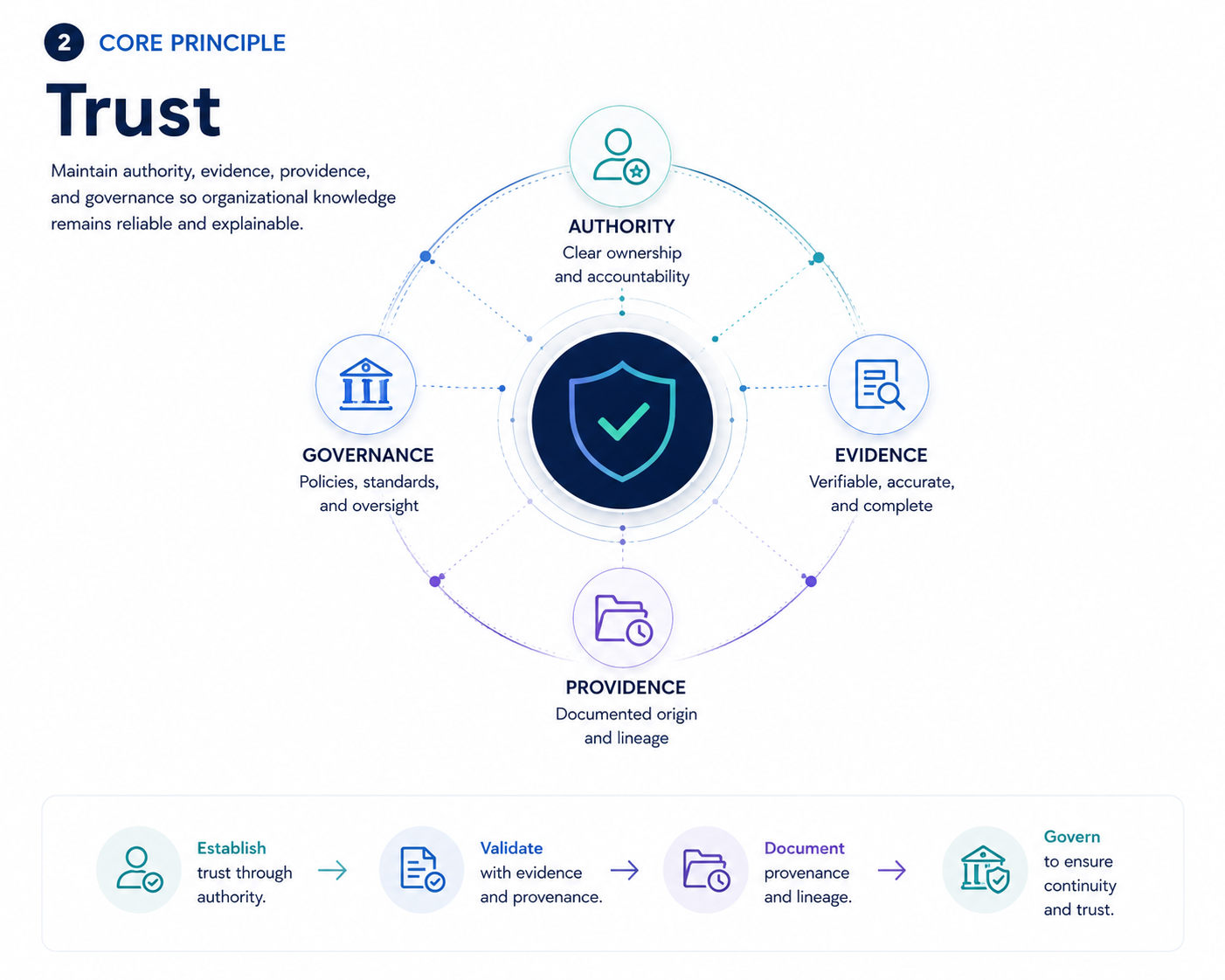
The Government Email Was Real. The Authority Wasn’t.