Eleven Thousand Schedules Are Not a Master Schedule.
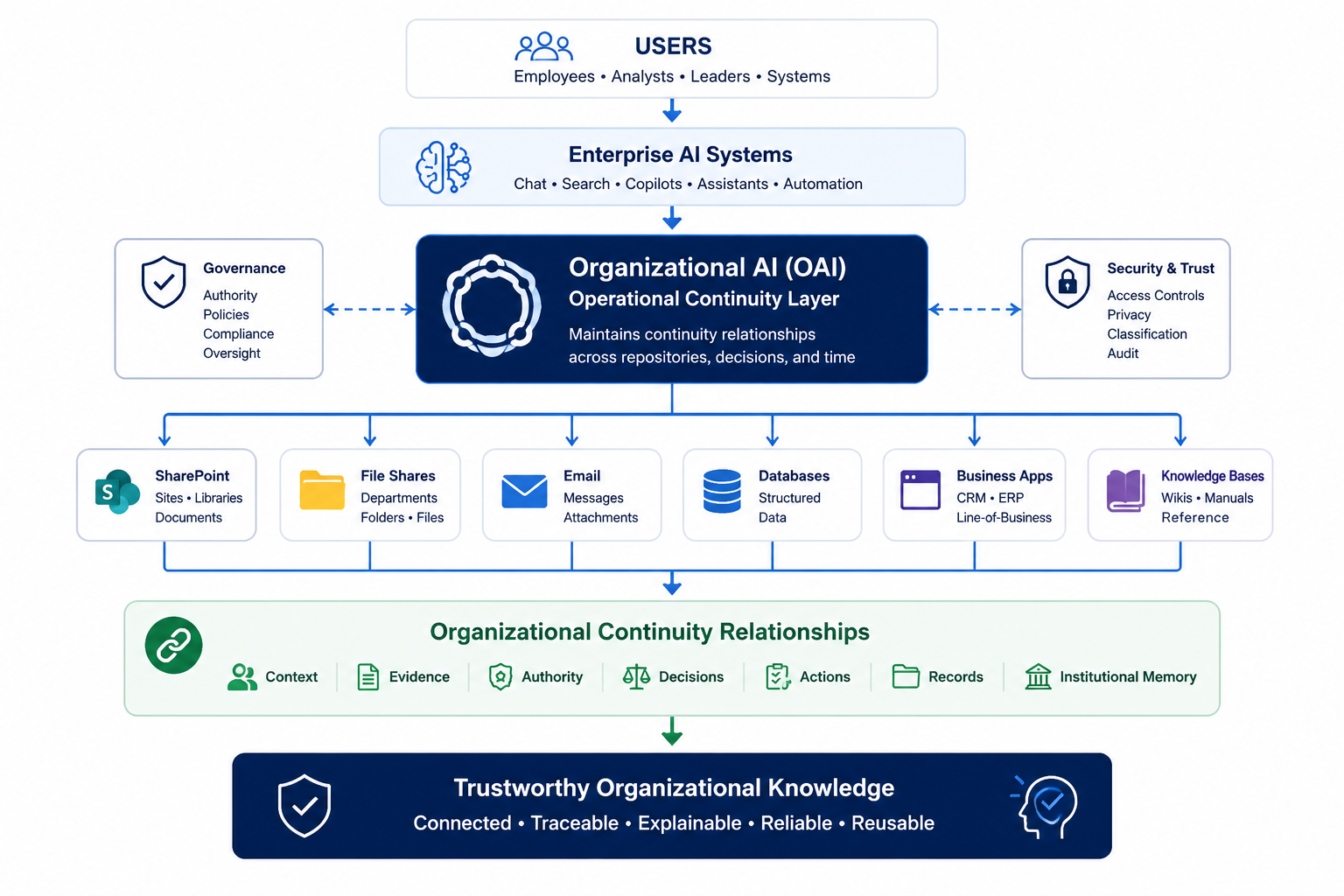

Thousands of accurate project schedules do not automatically create one authoritative program schedule.
GAO reported on September 14, 2026 that the Federal Aviation Administration had not integrated the schedules for 11,389 projects supporting the 13 programs in phase 1 of its Brand New Air Traffic Control System modernization effort. As a result, different projects could schedule work at the same installation sites without systematically identifying conflicts, coordinating resources, or minimizing disruptions to air traffic operations.
FAA said its systems integrator was developing an advanced scheduling tool using AI to coordinate the portfolio. GAO noted that as of May 2026 the tool was still undergoing testing, the business rules for using it had not been established, and it was unclear when effective improvements would result.
Fragmented plans are not an integrated state
Each project can have a valid schedule while the institution still lacks a reliable portfolio state. A master schedule exists only when dependencies, locations, shared resources, sequencing, third-party obligations, and operational constraints are connected strongly enough to support coordinated decisions.
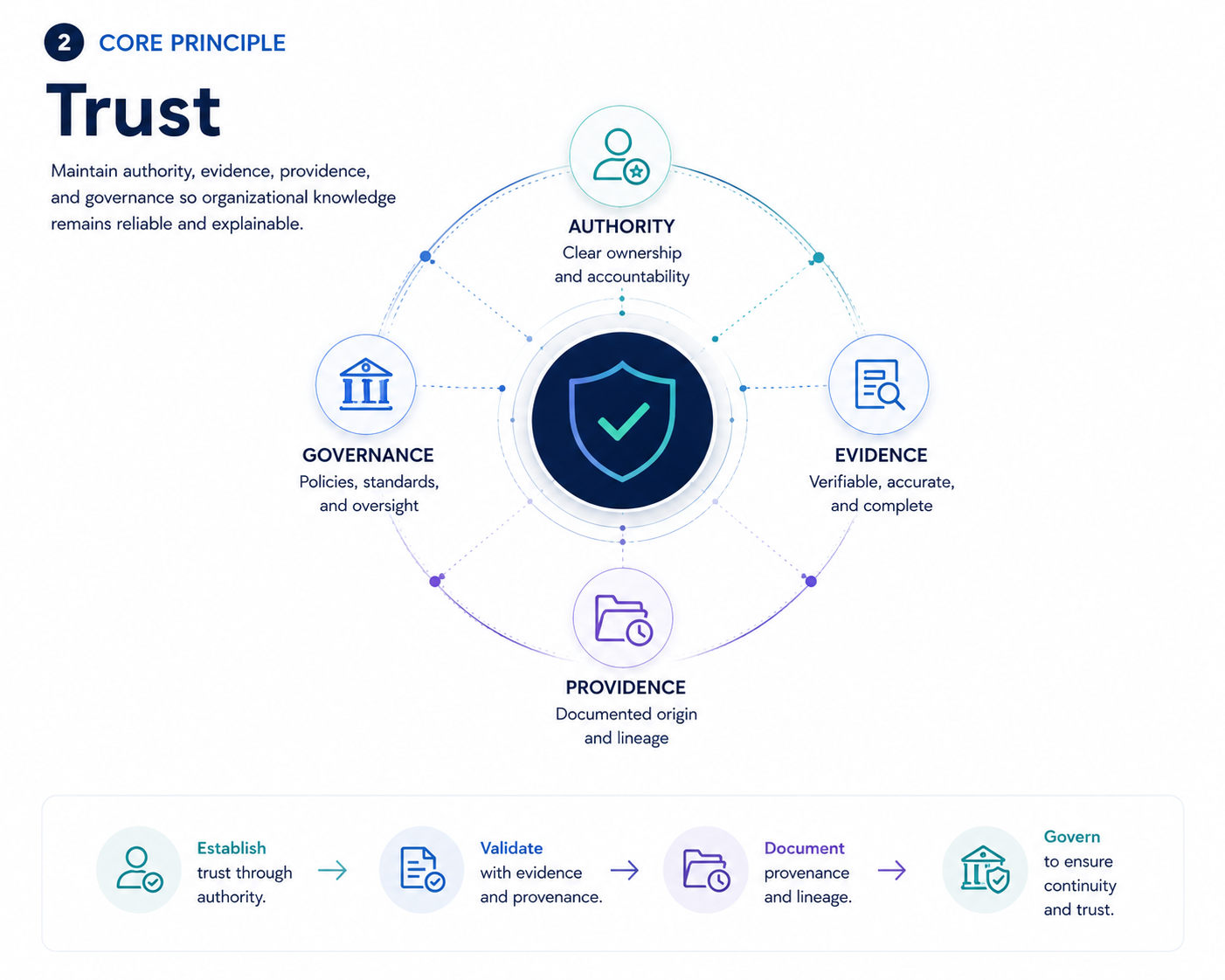
GovKM maps the gap as Source / individual project schedules → Evidence / planned activities → Authority / program and project owners → Context / integrated portfolio state → Decision / sequencing → Action / deployment.
AI cannot substitute for missing continuity
The AI scheduling capability is the most important architectural detail. AI may be able to identify collisions and optimize sequences, but optimization is downstream of continuity.
Before an AI tool can optimize the program, the institution must establish which schedules are authoritative, how they relate to locations and resources, which dependencies are binding, and which business rules control tradeoffs.
Otherwise the AI is being asked to infer institutional state from fragments rather than operate on an authoritative representation of that state.
Integration is more than aggregation
Putting 11,389 schedules into one tool would not, by itself, solve the problem. The continuity requirement is relational: project A depends on site B, resource C, authority D, and timing constraint E. Those relationships must be explicit and governable.
GovKM interprets the case as evidence that AI optimization cannot repair organizational fragmentation unless the institution first establishes the continuity object being optimized.
Source
U.S. Government Accountability Office, “Air Traffic Control Systems: Ambitious New Modernization Effort Needs to Improve Cost and Schedule Planning,” GAO-26-107992, September 14, 2026. https://www.gao.gov/products/gao-26-107992
Continue Exploring
Authority Laundering: How a Bad Citation Becomes “Real” Through Retrieval
When the Memory Becomes the Attack Surface