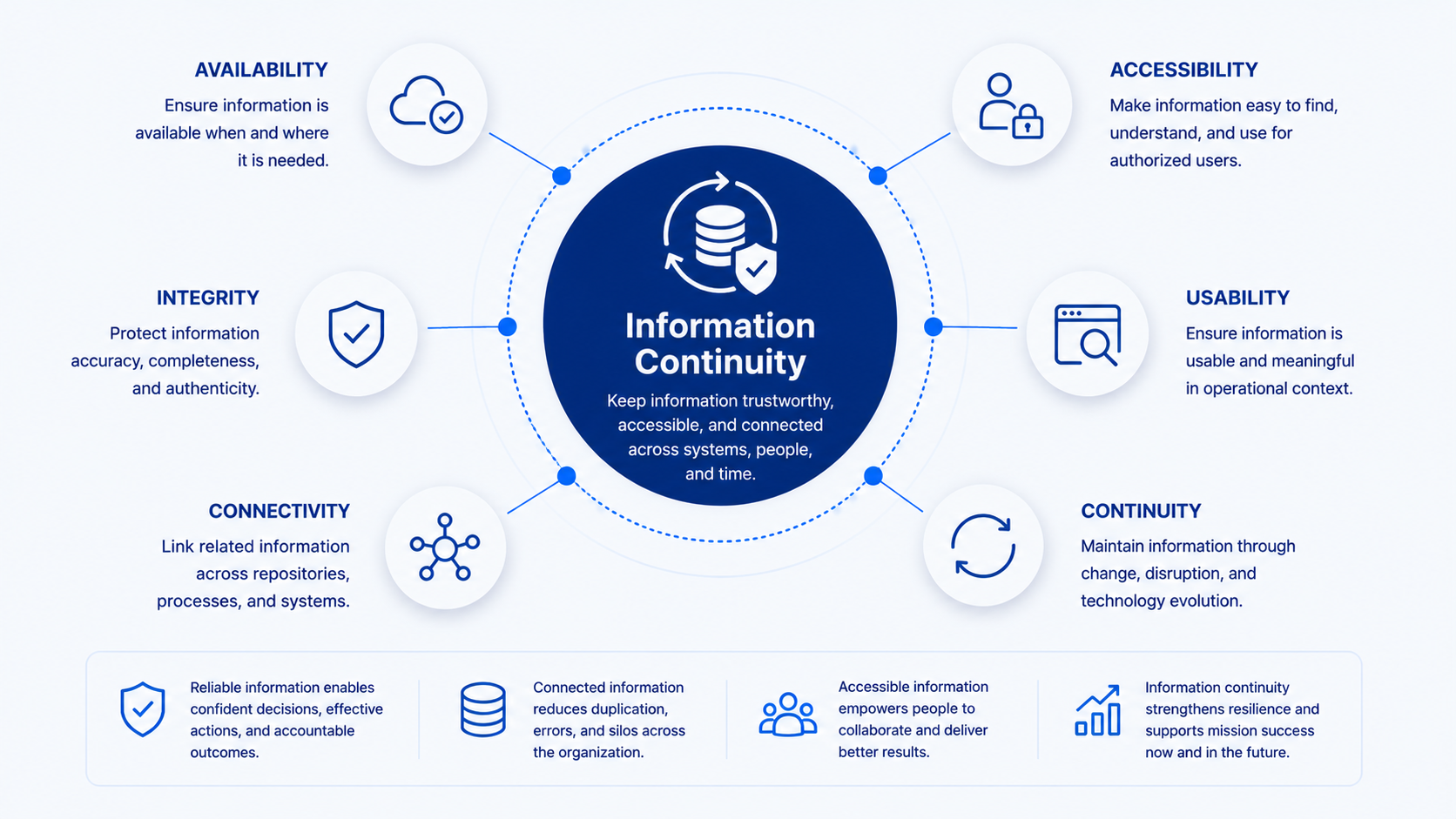
When AI Modernization Succeeds, What Happens to the Knowledge It Replaces?
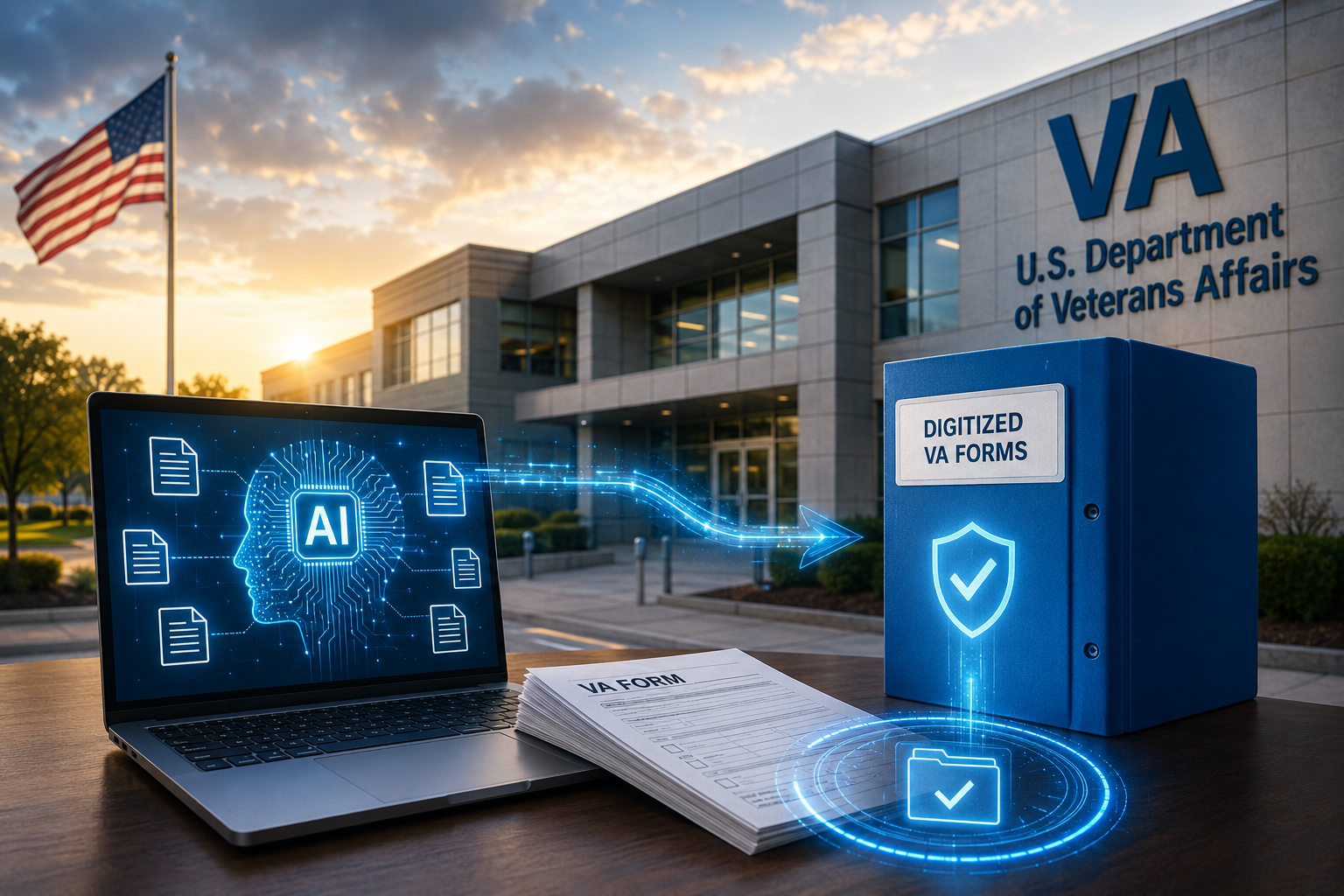

VA’s AI Modernization Success Raises a Deeper Continuity Question
Government AI discussions often focus on failure: hallucinations, weak governance, poor data quality, unclear authority, or systems that never move beyond pilot programs.
The U.S. Department of Veterans Affairs offers a useful counterexample.
Through a $7.4 million Technology Modernization Fund investment, the VA has used AI to help digitize and centralize forms so veterans can more easily identify and access the benefits and services available to them. Technology Modernization Fund leadership has estimated that the resulting improvements could collectively save veterans more than 2,000 years of time.
That is the kind of government technology outcome worth recognizing.
It also raises a deeper institutional question:
What must the VA preserve so that today’s successful modernization remains understandable, governable, and reusable after the systems, people, policies, models, and organizational structures surrounding it change?
Successful Modernization Is More Than Successful Delivery
The immediate value proposition is straightforward. A veteran who spends less time searching for the correct form or navigating fragmented administrative processes receives a better service. At national scale, even modest reductions in friction can create enormous cumulative benefits.
But the VA will exist much longer than the modernization project that produced those benefits.
Personnel will change. Contractors will change. Systems will be replaced. AI capabilities will evolve. Policies and regulations will be revised. Organizational responsibilities may move. Data sources will be corrected or consolidated. Eventually, many of the people who understood why particular implementation decisions were made will no longer be involved.
A modernization effort can therefore succeed operationally while still creating a future institutional problem.
The question is not merely whether the new system works. It is whether the institution will later be able to reconstruct why it worked, what evidence supported it, under what authority it operated, what conditions shaped its decisions, what actions followed, and which portions of that history remain valid for future reuse.
That is a continuity question.
The VA Project Already Reveals the Continuity Chain
GovKM represents Institutional Continuity through the Continuity Topology:
Source → Evidence → Authority → Context → Decision → Action → Record → Institutional Memory → Future Reuse
The VA modernization effort can be viewed through this complete institutional path.
Information about forms, benefits, eligibility, processes, veteran needs, and existing systems originates from identifiable Sources. Those sources become Evidence when they are accepted as sufficiently reliable and relevant to support modernization choices.
Authority determines which laws, regulations, policies, delegations, appropriations, program responsibilities, and governance decisions permit the VA to act upon that evidence.
Context establishes the circumstances in which that authority is exercised: legacy-system limitations, service requirements, technical capabilities, risk decisions, organizational structures, and the needs of veterans at that particular time.
That combination informs Decisions about what should be digitized, centralized, automated, redesigned, or supported by AI.
Those decisions lead to Actions: systems are changed, forms are digitized, processes are redesigned, information is presented differently, and veterans interact with the agency through new pathways.
Those actions create Records.
The critical question is whether those records preserve enough of the preceding relationships to become meaningful Institutional Memory—and whether future employees, leaders, auditors, technologists, and AI systems can determine when that memory remains appropriate for Future Reuse.
The individual artifacts matter. The relationships among them are what preserve continuity.
Government AI Makes the Time Dimension More Important
AI makes this problem more consequential because AI-supported capabilities themselves change.
A traditional software system may automate a relatively stable rule or workflow. AI-supported systems can interpret information, retrieve organizational knowledge, recommend actions, and increasingly participate in decisions.
The VA may therefore improve or replace models while retaining portions of the surrounding process. Vendors may change. Data may change. Policies may change. The organizational authority governing a capability may change even though the visible service remains largely the same.
Years later, a reviewer may need to determine which AI capability was operating when a particular process was designed, which policy version governed it, what information was considered authoritative, which decisions were human decisions, which were AI-supported, and what changed after the system was updated.
Having the documents somewhere is not enough if those relationships cannot be recovered.
Government AI therefore creates a requirement not merely for documentation, but for continuity through change.
Information Can Survive While Continuity Fails
Modernization programs naturally generate large quantities of information: contracts, technical specifications, dashboards, meeting notes, implementation plans, policies, source material, training documentation, metrics, reports, system logs, and records.
An agency can preserve all of those artifacts and still lose the institutional knowledge surrounding them.
A future employee may find the modernization plan without knowing which constraints forced a particular design decision. An auditor may locate an approval without being able to establish which version of policy supplied its authority. A later AI system may retrieve a successful prior workflow without recognizing that the conditions that made it successful no longer exist.
In each case, the information survived.
The relationship that gave the information institutional meaning did not.
This distinction is central to Institutional Continuity. The objective is not simply to preserve more information. It is to preserve enough of the relationships among evidence, authority, context, decisions, actions, and records that institutional knowledge remains understandable after its original environment disappears.
Success Should Become Institutional Memory
The VA example is particularly useful because continuity should not be treated only as a response to AI failure.
Continuity matters when government AI succeeds.
If this modernization effort produces substantial benefits for veterans, the VA should be able to preserve and eventually reuse what it learns.
But responsible reuse requires more than recording that the project was successful.
Future leaders need to know what actually produced the improvement. They need to distinguish durable lessons from implementation choices that depended upon temporary circumstances. They need to know which authorities governed the approach, which assumptions proved correct, which exceptions emerged, and which conditions subsequently changed.
A future modernization team—or a future AI system—should not encounter a successful historical outcome and automatically treat it as precedent.
It should be able to determine why the precedent was valid and whether those conditions still exist.
That is the difference between storing organizational history and creating usable Institutional Memory.
Modernization Should Produce Continuity, Not Just Capability
Technology Modernization Fund leadership has emphasized another important point: modernization is not simply a matter of buying software. Successful initiatives require the personnel and infrastructure necessary to make new capabilities work.
Institutional Continuity extends that argument.
Modernization also needs an architecture capable of preserving the institutional relationships through which those capabilities acquire meaning.
Important decisions should remain connected to their supporting evidence and authority. Policy and system versions should remain identifiable when they affect consequential actions. Significant human interventions and exceptions should be preserved. Superseded information should retain lineage rather than simply disappearing. Records should remain connected to the decisions and actions that produced them.
Most importantly, future users must be able to determine whether institutional knowledge remains valid after the environment changes.
This does not mean preserving everything forever.
It means preserving sufficient continuity to reconstruct what mattered.
From Project Success to Institutional Capability
Government modernization is typically evaluated through cost, schedule, deployment, adoption, service improvement, and operational results. Those measures remain necessary.
Institutional Continuity introduces another measure:
Did the institution preserve enough of the relationships behind the result that the success can still be understood, governed, and responsibly reused later?
A project that saves veterans time creates immediate public value.
A project that also leaves the VA able to reconstruct why the improvement worked, what evidence and authority supported it, what changed afterward, and which lessons remain valid creates something more durable.
It creates institutional capability.
That distinction will become increasingly important as government adopts AI across benefits administration, healthcare, procurement, public safety, regulation, grants, records, customer service, and internal operations.
The long-term measure of government AI cannot be only whether a system worked when it was deployed.
It must also include whether the institution can still understand it, explain it, govern it, learn from it, and responsibly reuse what it learned after the original technology and personnel are gone.
Successful modernization improves today's service.
Institutional Continuity preserves the relationships that allow tomorrow's institution to understand why that success occurred—and whether it should be trusted again.
Continue Exploring
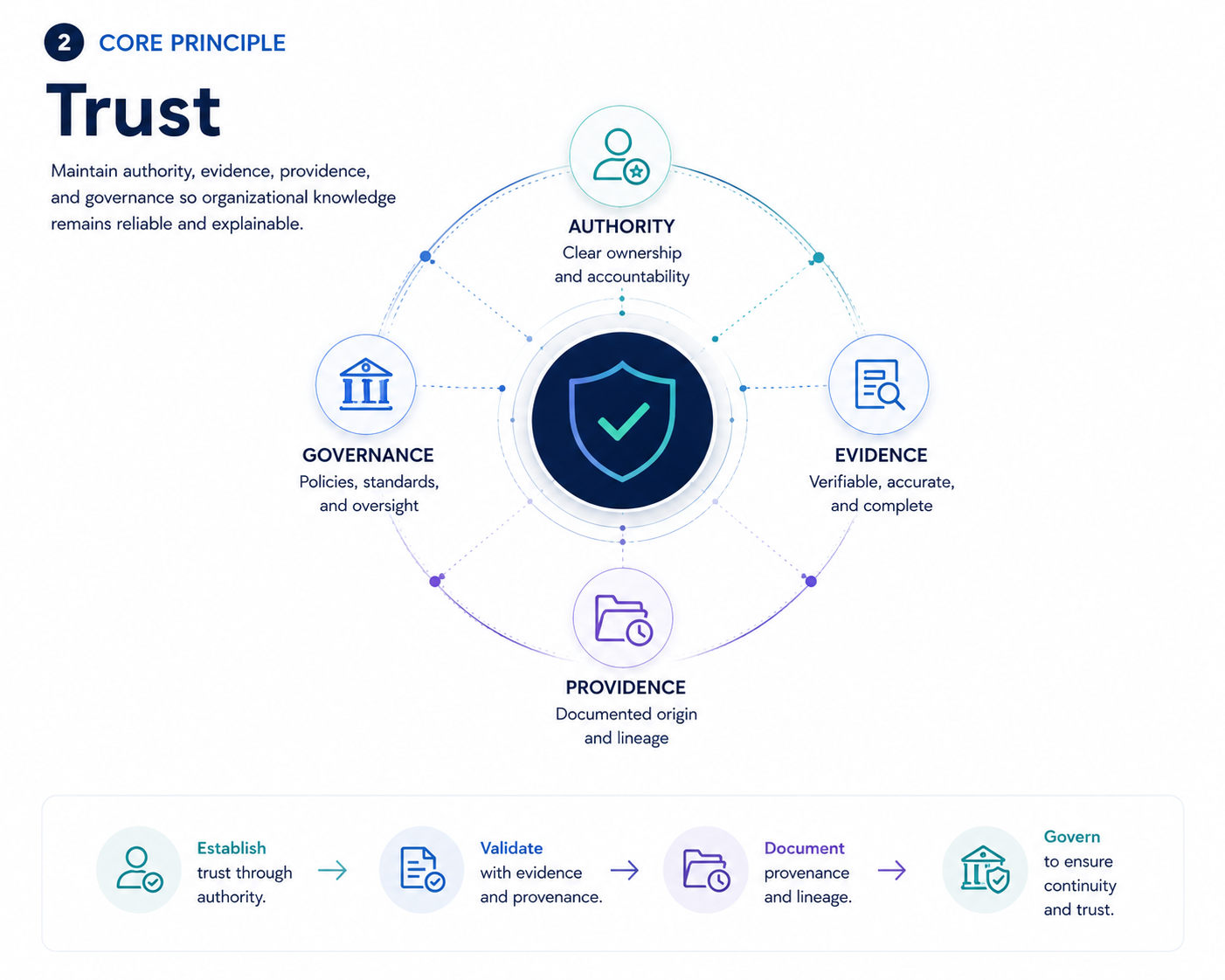
A New Version Label Does Not Create a New Institutional History
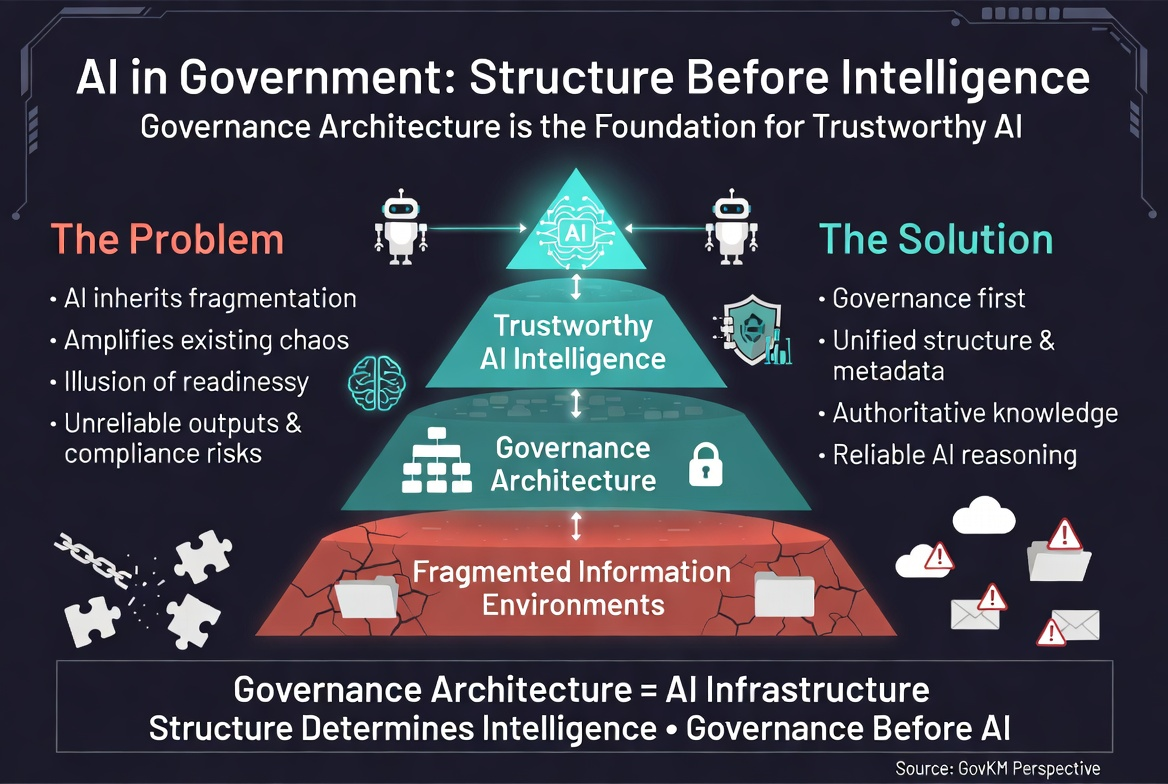
The Stocktake Is Institutional Memory