A New Version Label Does Not Create a New Institutional History
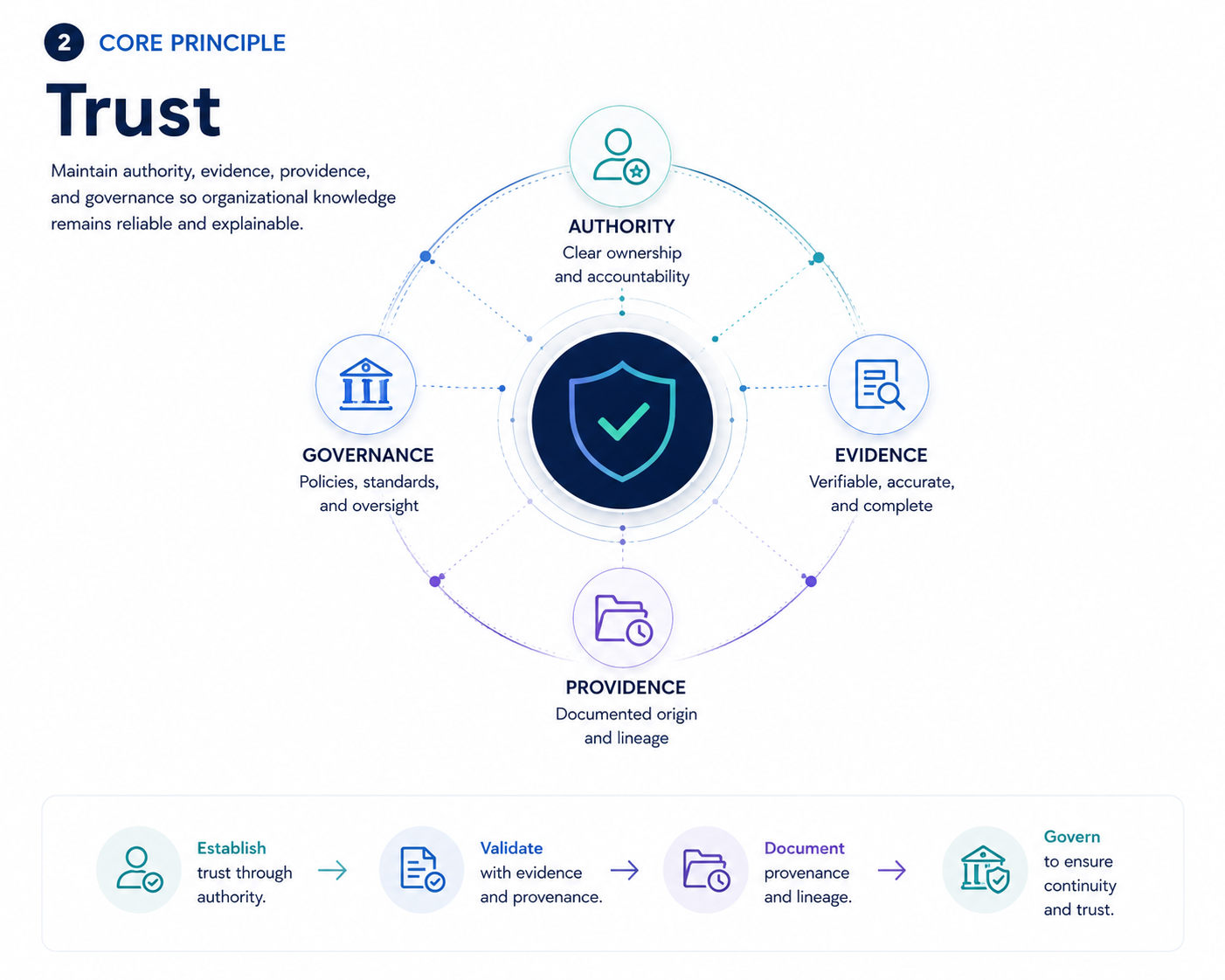

A new version label does not create a new institutional history.
In Oguntade v. Merit Systems Protection Board, the U.S. Court of Appeals for the Federal Circuit reviewed a whistleblower dispute arising from the Department of Veterans Affairs’ Claims Attribute Application Programming Interface, or CAAPI, an AI tool intended to help reduce disability-claim processing time.
The court’s opinion recounts Dr. Babatunde Oguntade’s allegations that statistical analysis of approximately 120,000 claims, followed by a larger analysis of 716,000 claims, indicated that CAAPI was increasing rather than reducing processing time. According to the opinion, he repeatedly raised those concerns inside VA. The opinion further recounts his allegation that CAAPI was repackaged as “CAAPIv2.0” and returned to production in April 2021 without modifying the classifier underlying the API. VA deactivated the system on July 1, 2021, pending further research and improvements, stating that the underlying model likely did not reduce veteran benefit decision wait times.
What the court actually decided
The Federal Circuit did not decide that the alleged performance problems, gross mismanagement, or retaliation were ultimately proven. It held that Oguntade had made sufficiently detailed, nonfrivolous allegations that he reasonably believed his disclosures evidenced gross mismanagement, reversed the Merit Systems Protection Board’s jurisdictional dismissal, and remanded the matter for further proceedings.
The continuity failure
The GovKM issue is not whether a new AI version may be deployed after adverse testing. It is whether the new operational identity remains visibly bound to the model lineage, evaluation record, warnings, approvals, and unresolved risks of the system from which it descended.
If a classifier survives while the product label changes, the institution needs a durable relationship that says: this new deployment is derived from that prior model; these findings still apply unless superseded by evidence; these people reviewed the risk; and this decision authorized continued use.
The GovKM interpretation
Model lineage is institutional memory. A version number, product name, deployment record, or interface change should never sever the adverse evidence attached to the underlying model state.
Continuity path: Source / claims data → Evidence / performance analysis → Authority / review and deployment decision → Context / live claims processing → Decision / continue or modify → Action / redeployment → Record / CAAPIv2.0 → Institutional Memory / prior warnings and lineage → Future Reuse.
The break occurs when the new operational identity can be treated as a fresh object while unresolved evidence and lineage of the prior state become harder to see. The Federal Circuit’s decision matters because it keeps the disclosure record institutionally alive long enough for the dispute to be adjudicated rather than disappearing behind a new product state.
Why this matters beyond VA
Organizations routinely rename, fork, fine-tune, retrain, wrap, or redeploy AI systems. Each transformation creates an opportunity for continuity loss. A trustworthy governance layer should preserve model ancestry, evaluation findings, dissent, remediation status, approval basis, and supersession across every production transition.
Source
United States Court of Appeals for the Federal Circuit, Babatunde Oguntade v. Merit Systems Protection Board, No. 2025-1114, decided September 22, 2026. https://www.cafc.uscourts.gov/opinions-orders/25-1114.OPINION.9-22-2026_2759324.pdf
Continue Exploring
The Stocktake Is Institutional Memory
COOP Keeps Government Operating. But What Keeps Its Information Continuous?