A Ten-Year Strategy Cannot Be Governed One Year at a Time.

Long-running transformation programs create continuity problems when individual initiatives are managed as annual events instead of as parts of one persistent institutional state.
On September 8, 2026, the U.S. Postal Service Office of Inspector General released an assessment of network changes associated with the Postal Service’s ten-year Delivering for America strategy. The OIG found that the Postal Service had achieved some processing, transportation, and delivery cost reductions, but did not maintain a long-term cost-savings target, did not track the financial impact of network-change initiatives as an integrated program, and managed initiatives annually without an overall program schedule and timeline.
The report described a fragmented operating environment that limits nationwide decision-making and makes program performance more difficult to measure.
The continuity problem is persistent program state
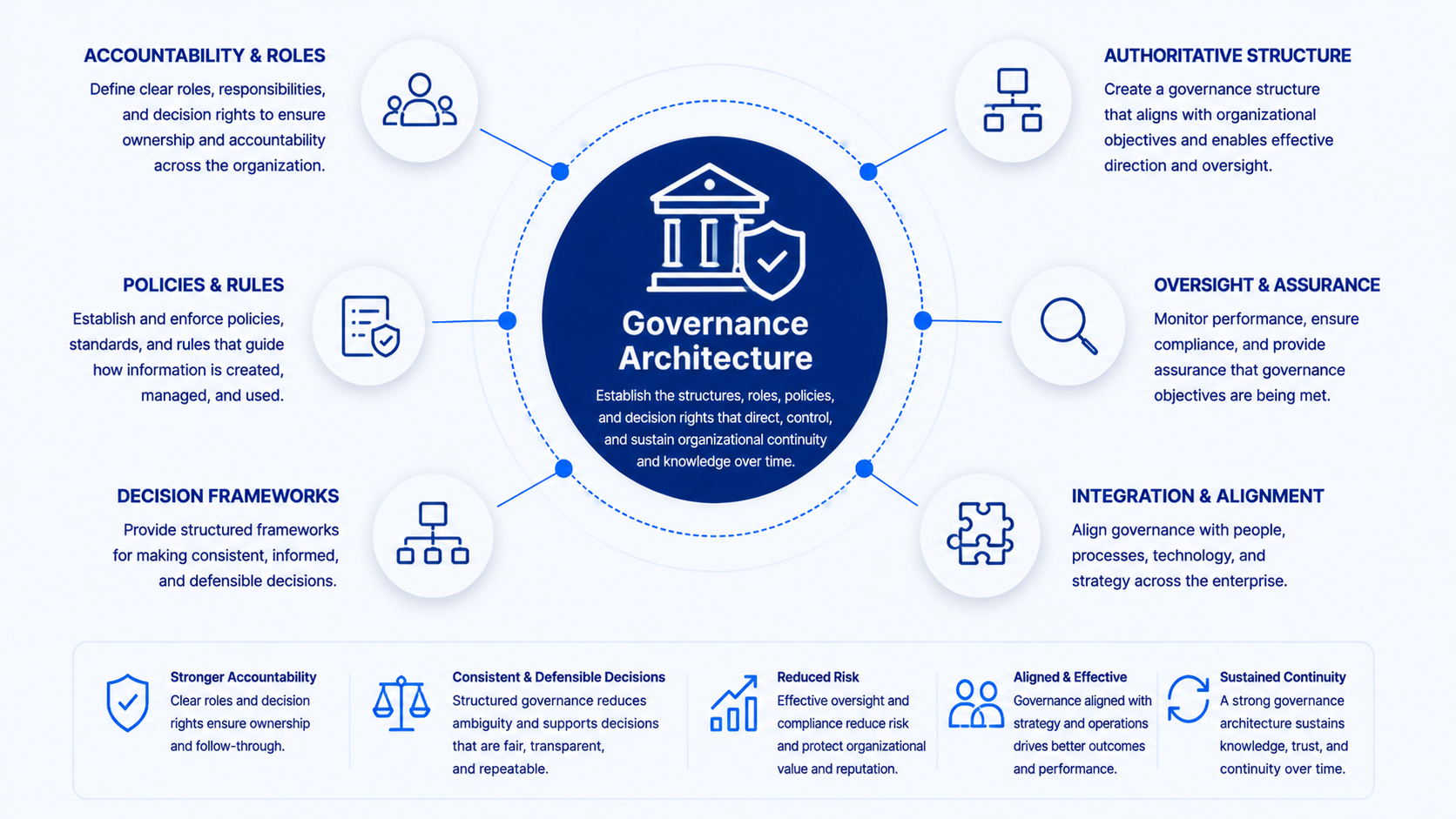
A multi-year transformation produces hundreds of decisions and actions. Each may be documented. Yet the institution can still lose continuity if those records do not resolve into a current, reconstructable account of the program: what changed, why it changed, what outcome it produced, what assumptions were invalidated, and how that state should constrain the next decision.
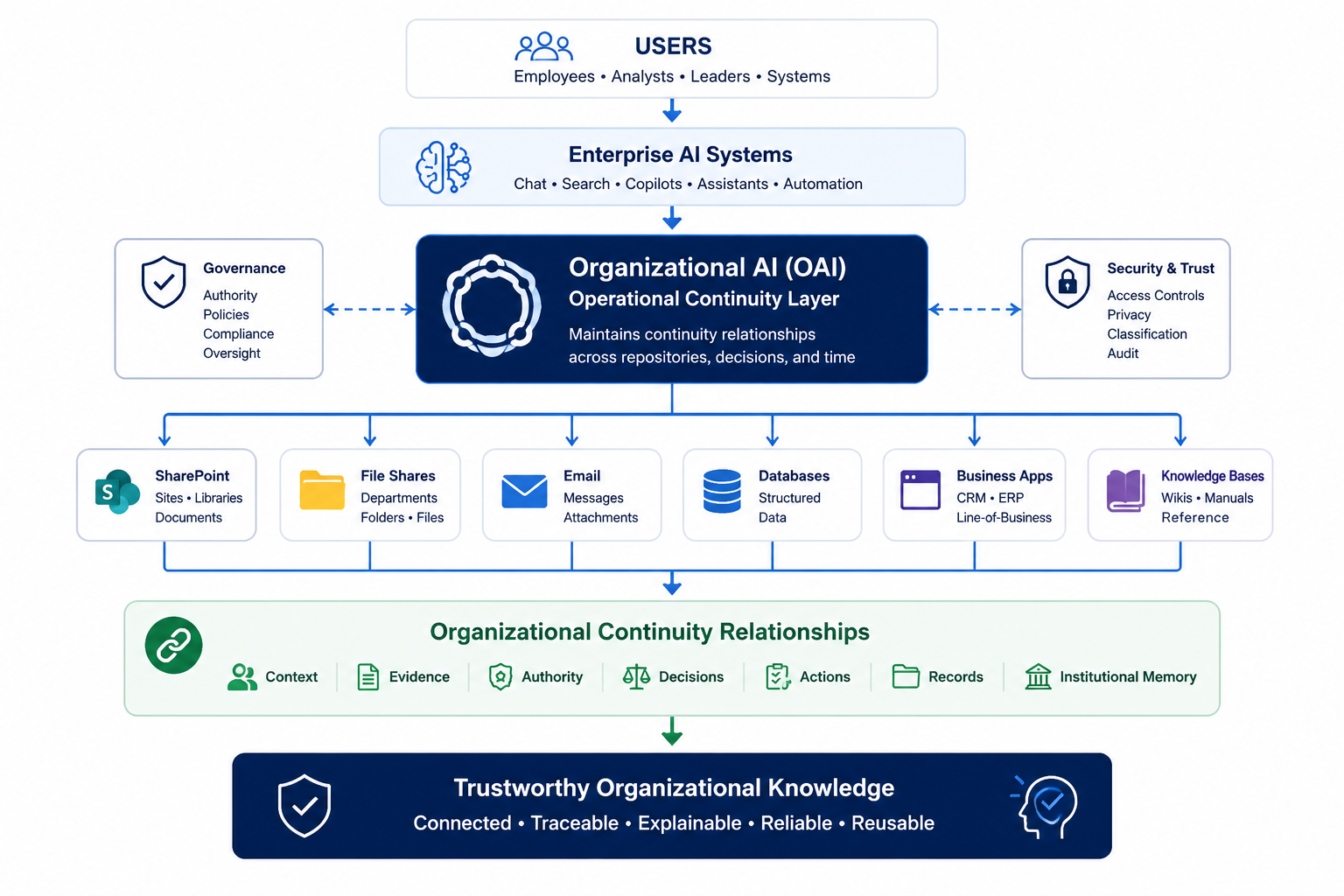
GovKM maps this to a break after execution: Decision → Action → Record → Institutional Memory → Future Reuse. Individual actions occur, but the integrated record that would convert them into reusable institutional memory is incomplete.
Annual management is not long-term continuity
Annual planning is necessary. It is not sufficient for a ten-year strategy. If each year becomes a new management frame without a governed relationship to cumulative outcomes, the organization repeatedly reconstructs its strategy from fragments. That creates continuity debt: the cost and risk of re-establishing meaning that should have persisted.
The GovKM interpretation is not that every program needs one monolithic system. It is that the relationships among objectives, decisions, actions, outcomes, schedules, costs, and later reuse must survive across systems and years.
Source
U.S. Postal Service Office of Inspector General, “Assessment of Postal Service’s Network Changes,” Report 26-042-R26, September 8, 2026.
Continue Exploring
A Decision Memorandum Is Not Decision Provenance.
Aggregation Is Not Continuity.