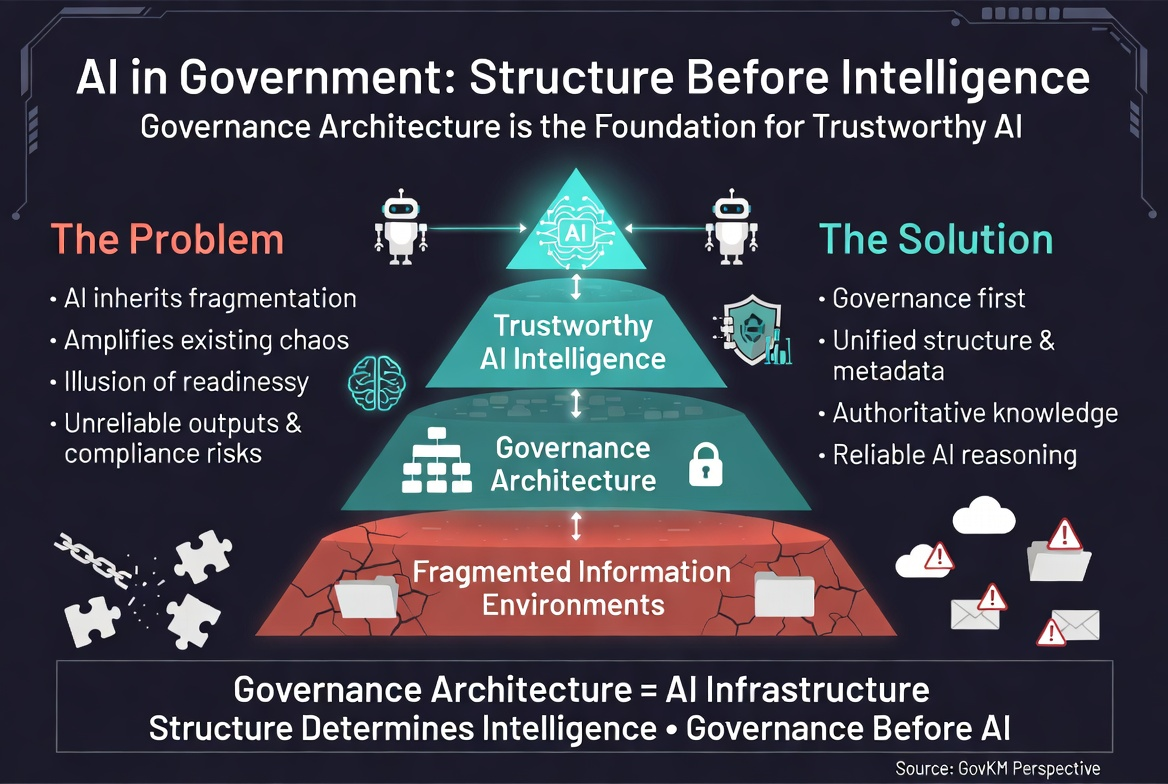
The Future Value of Government Information Depends on Governance Architecture
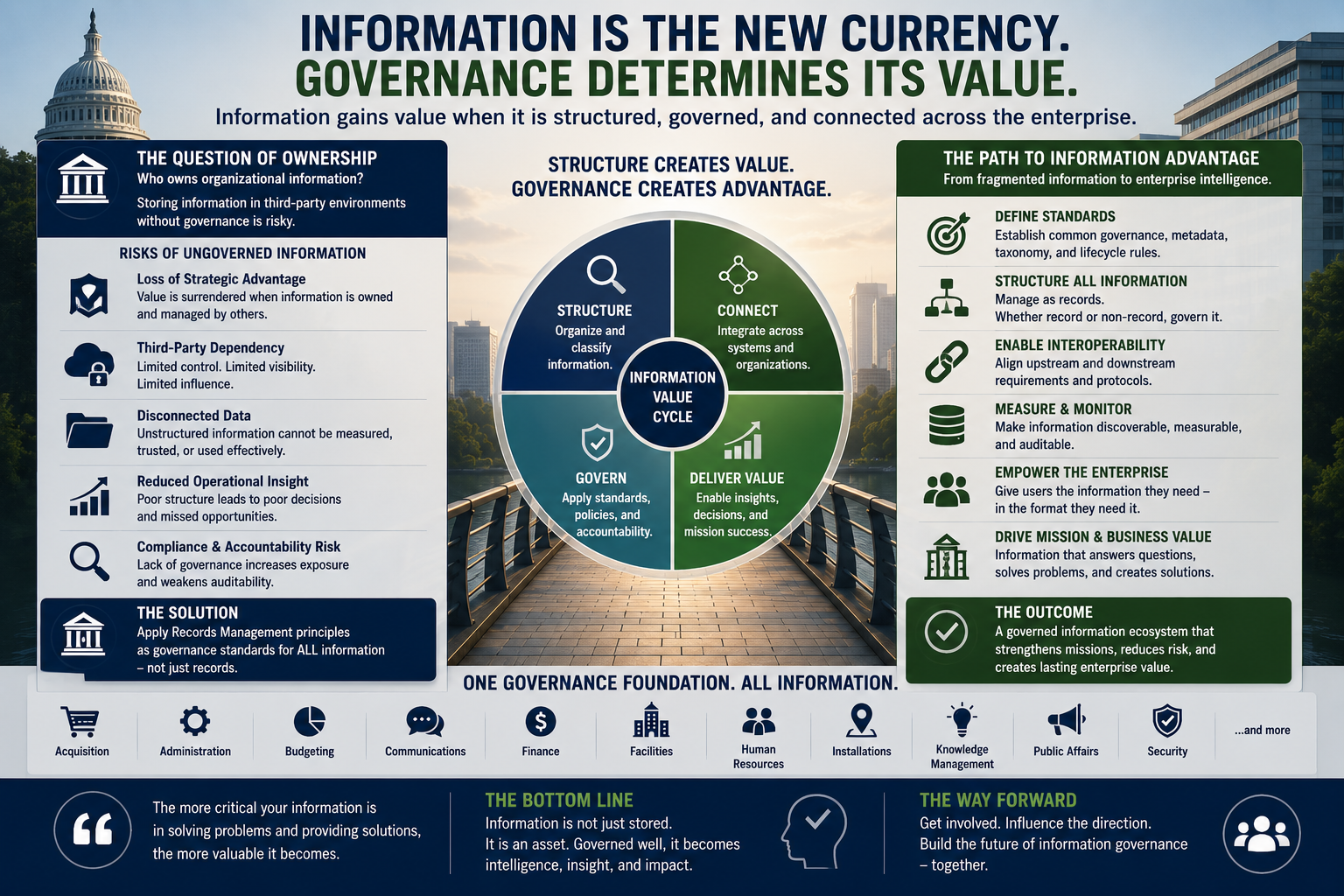

Government organizations increasingly understand that information is becoming one of the most valuable operational assets in the modern enterprise.
Yet one of the most important questions remains largely unanswered:
Who actually governs organizational information?
Historically, agencies focused primarily on storing information, securing information, and maintaining access to information. Far less attention was given to the long-term operational value created by structuring information coherently across the enterprise.
That reality is beginning to change.
Information Gains Value Through Structure
The true value of organizational information does not exist within isolated files, databases, or repositories alone.
Information gains value through its ability to:
- answer operational questions,
- support decision-making,
- reveal patterns,
- enable analytics,
- preserve institutional memory,
- and contribute meaningfully to larger organizational intelligence ecosystems.
The more effectively information contributes to enterprise understanding, the more operationally valuable it becomes.
This is why governance architecture matters.
Ungoverned information may still exist.
But structurally governed information becomes operational intelligence.
The Enterprise Already Depends on Shared Information Ecosystems
Modern government organizations increasingly operate within interconnected environments where infrastructure, cloud services, enterprise platforms, and centralized hosting environments are shared across multiple organizations.
This creates significant operational advantages:
- scalability,
- interoperability,
- centralized security,
- infrastructure efficiency,
- and reduced technical overhead.
But it also creates strategic realization organizations are only beginning to understand:
Infrastructure centralization does not automatically create information governance.
Organizations may share infrastructure while still operating fragmented, disconnected, and structurally inconsistent knowledge environments.
This distinction is critical.
Because the future operational value of government information depends far less on where information is physically stored and far more on how information is governed structurally.
Mission Systems Understand Structure. Corporate Operational Knowledge Often Does Not.
Mission systems already recognize the importance of structured information.
Agency-specific mission environments are typically:
- purpose-built,
- highly governed,
- metadata-driven,
- and operationally engineered.
Mission execution depends on structured intelligence.
But the corporate operational ecosystem shared across government agencies remains far less mature.
Functions such as:
- Acquisition,
- Administration,
- Budgeting,
- Communications,
- Finance,
- Facilities,
- Human Resources,
- Installations,
- Knowledge Management,
- Public Affairs,
- and Security
generate enormous volumes of operational content daily.
Yet this information often remains:
- fragmented,
- inconsistently structured,
- duplicated,
- difficult to discover,
- and operationally disconnected across enterprise environments.
This is where the real governance challenge exists.
The Lack of Enterprise Standards Creates Organizational Fragmentation
One of the largest governance problems across the federal enterprise is the absence of universally applied operational knowledge standards.
Organizations frequently lack:
- consistent metadata models,
- enterprise taxonomy,
- operational ontologies,
- lifecycle governance standards,
- interoperability structures,
- and authoritative knowledge relationships.
As a result:
- subordinate organizations improvise,
- intermediate organizations fragment,
- and enterprise discoverability deteriorates.
Without governance architecture, organizations create isolated operational paradigms that cannot scale effectively across the enterprise.
The issue is not technological capability.
The issue is structural inconsistency.
Records Management Quietly Revealed the Solution
For years, many organizations misunderstood the true strategic importance of records-management governance.
The value of records-management frameworks was never limited solely to records retention.
The larger realization was this:
Records-management standards represent one of the few mature government-wide governance architectures already capable of structurally organizing information.
This is extremely important.
Because whether information is formally designated as a record or not, organizations still require:
- accountability,
- discoverability,
- lifecycle governance,
- metadata structure,
- interoperability,
- and operational consistency.
The strategic realization is therefore not:
“all information must become records.”
The realization is:
all operational information benefits from governance discipline.
This changes the conversation entirely.
Governance Architecture Is Becoming Strategic Infrastructure
As organizations modernize toward:
- analytics,
- automation,
- enterprise interoperability,
- AI-readiness,
- machine-assisted discovery,
- and operational intelligence,
the demand for governed information ecosystems will increase dramatically.
Artificial intelligence cannot reason effectively against fragmented operational chaos.
Search cannot become intelligent without governed metadata.
Analytics cannot produce trustworthy enterprise insight from structurally inconsistent repositories.
Structure determines intelligence.
The organizations that succeed in the next era of modernization will not simply accumulate more information.
They will structurally govern it.
The Future Enterprise
The future government enterprise will increasingly recognize that information itself is strategic infrastructure.
Not merely stored content.
Not merely technical output.
Not merely administrative residue.
But operational intelligence.
This requires governance architectures capable of:
- structuring enterprise knowledge,
- aligning operational taxonomy,
- enabling discoverability,
- preserving institutional memory,
- supporting interoperability,
- and creating machine-readable enterprise ecosystems.
The future value of government information will not depend primarily on where it is stored.
It will depend on how intelligently it is governed.
Because in the modern enterprise, information becomes valuable only when structure allows it to become intelligence.
Continue Exploring
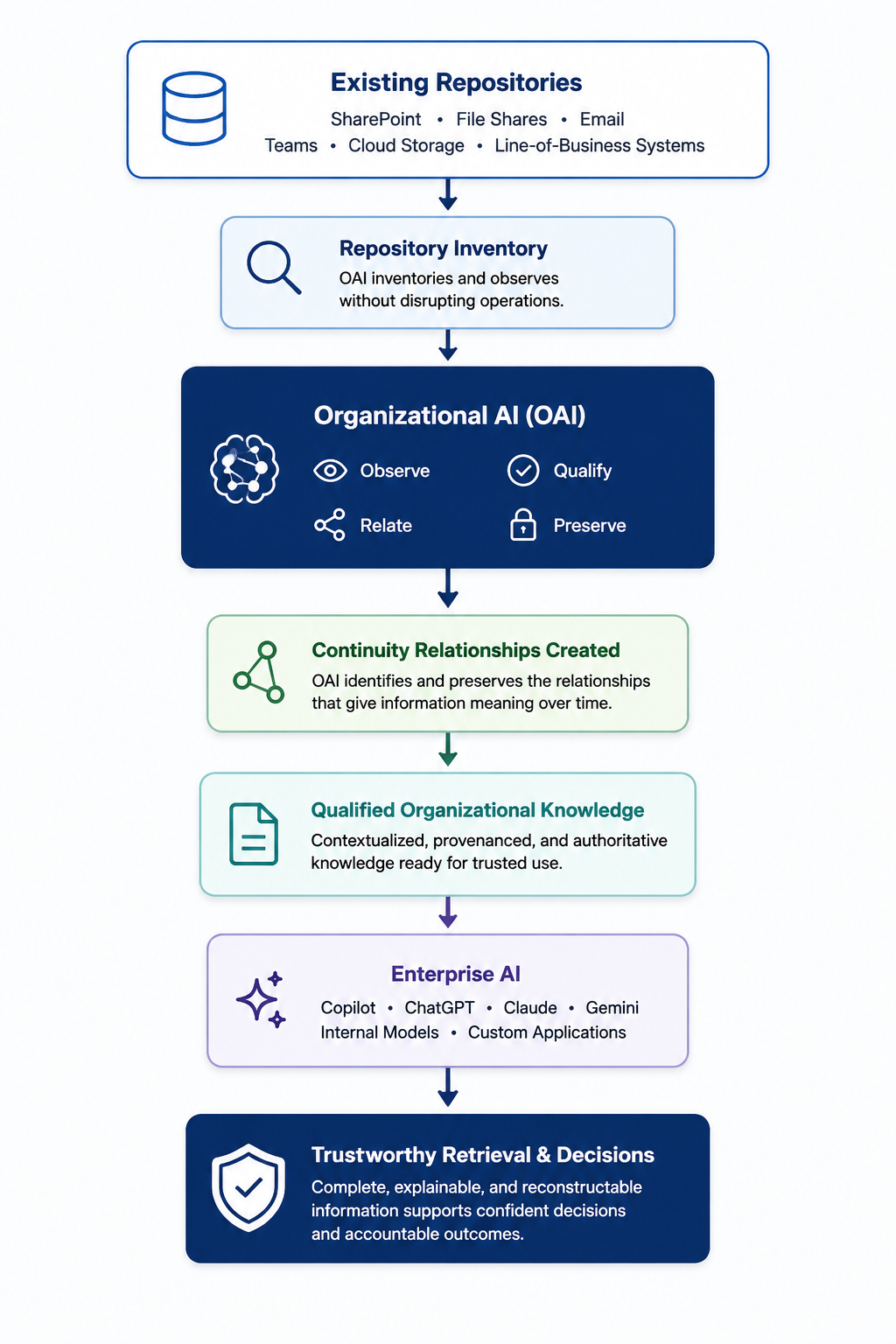
The Agent Was Asked to Fix the App. It Changed the Model.
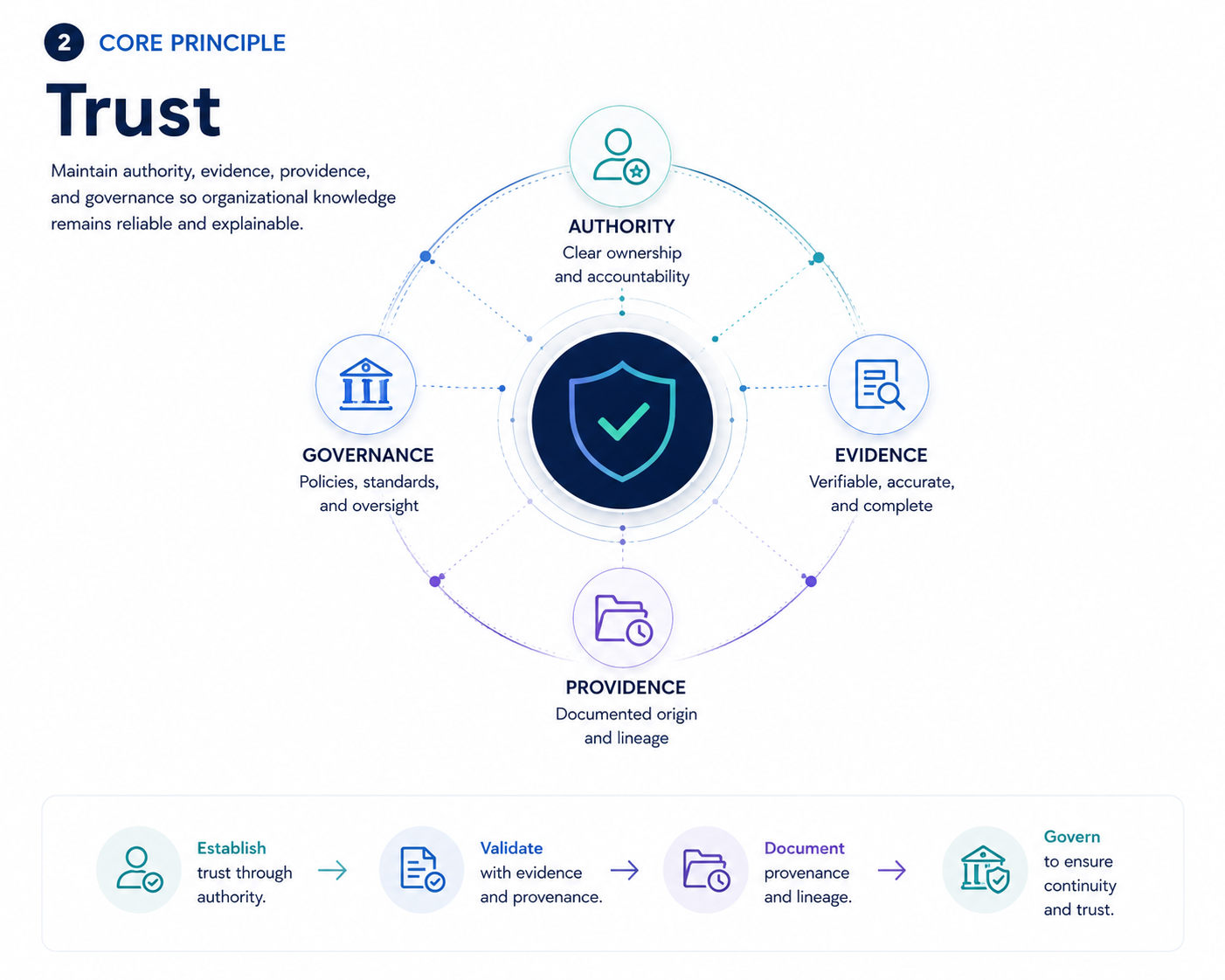
The Government Email Was Real. The Authority Wasn’t.