The Intelligence Report Looked Authoritative. Its Evidence Wasn’t.
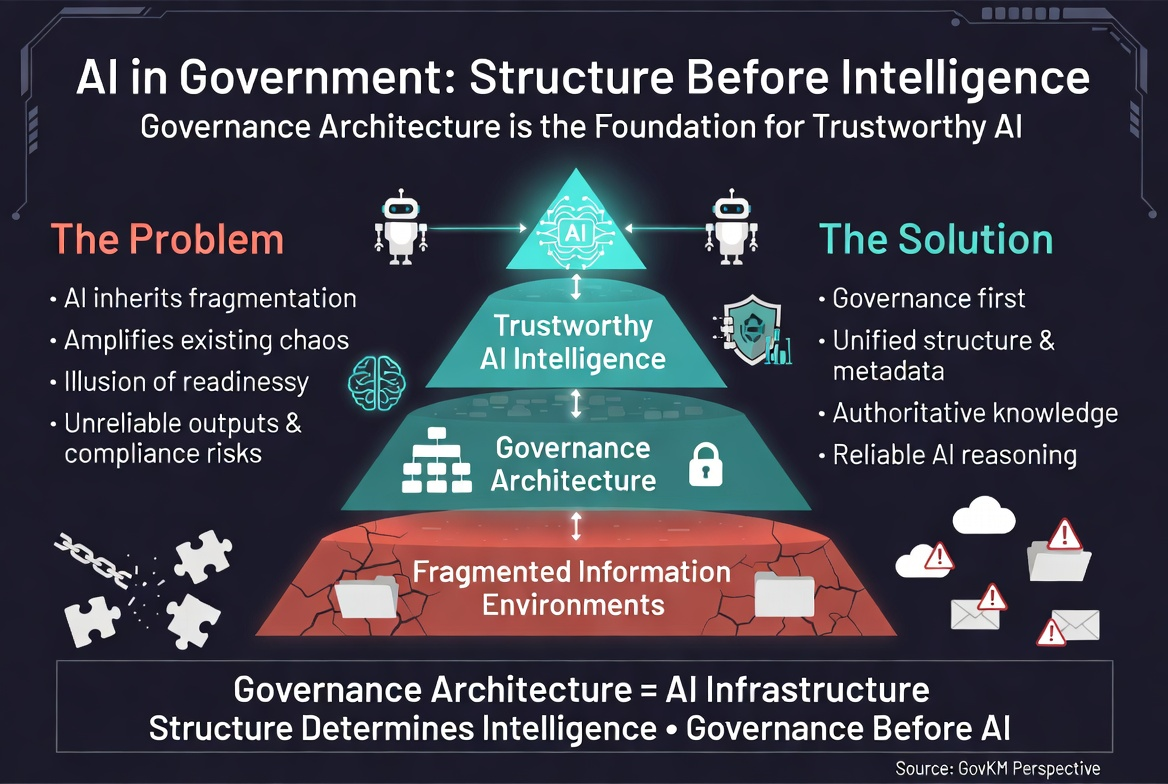

An intelligence product can look authoritative even when the evidentiary path beneath it is broken.
On September 18, 2026, CNN reported that an analyst supporting U.S. Special Operations Command used an AI chatbot while preparing intelligence concerning a Chinese vessel in the Middle East. According to CNN’s sources, the chatbot misidentified the vessel’s cargo. The analyst then reportedly used AI again to help format that conclusion into an intelligence report that circulated through operational channels.
The resulting report was serious enough to contribute to preparations for an interception. CNN reported that armed personnel were preparing to board the ship and military aircraft were airborne before experienced analysts re-examined the underlying evidence and stopped the operation.
The Pentagon and U.S. Special Operations Command Pacific did not publicly confirm the account. GovKM therefore treats this as a well-sourced reported operational near-miss, not an officially adjudicated incident.
The decisive failure was not the chatbot
The chatbot’s incorrect conclusion was only the first error. The more consequential transition occurred when an uncertain AI inference crossed into an institutional artifact.
Once the conclusion appeared inside an intelligence report, downstream operators were no longer interacting directly with the model output. They were interacting with a record produced by an authorized process. The report itself carried institutional weight.
That creates a continuity obligation: every consequential assertion should retain a defensible return path to the source evidence, the transformation that produced the assertion, the human judgment applied to it, and the confidence attached to the result.
Authority cannot repair missing provenance
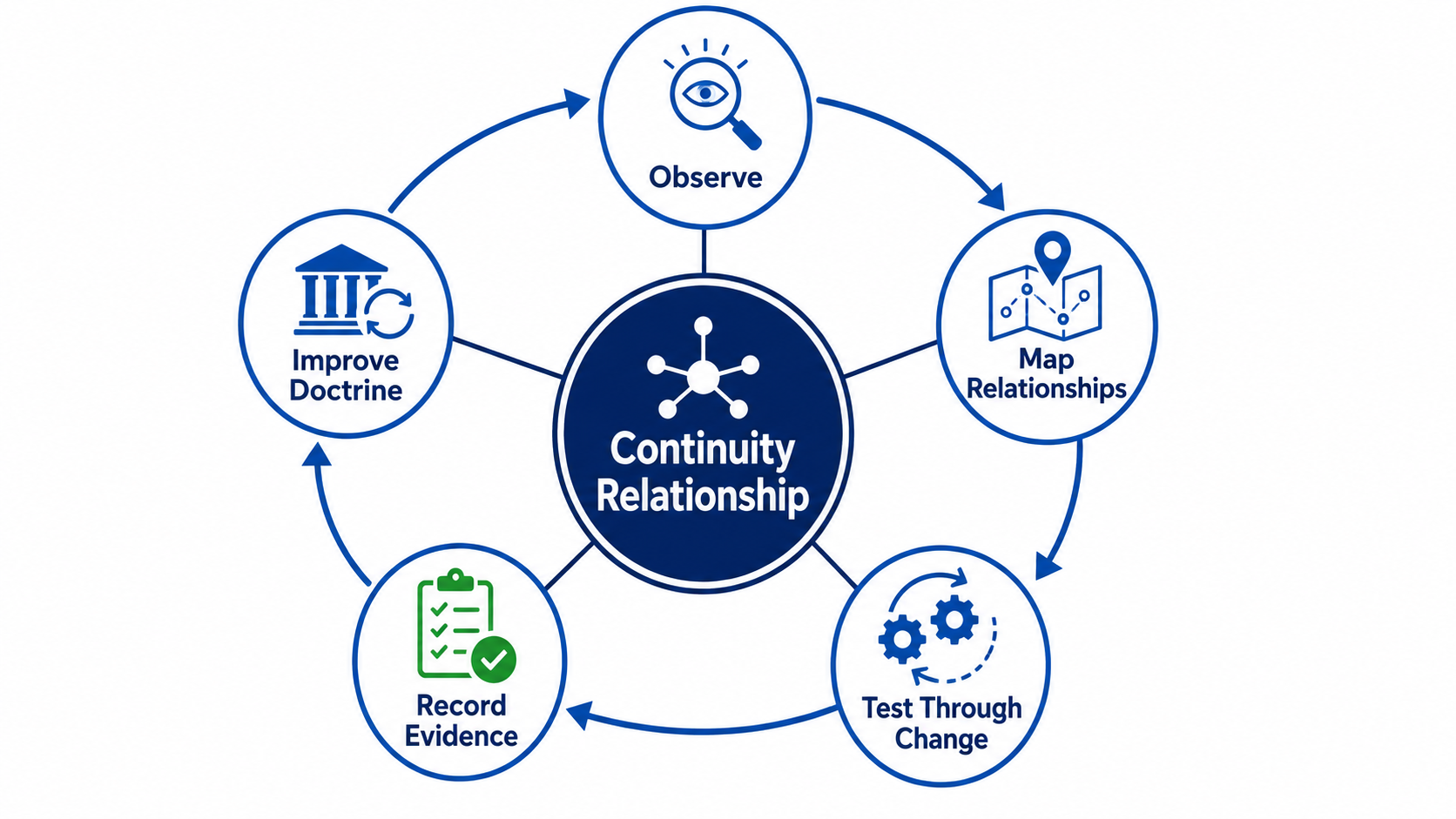
GovKM maps the intended chain as Source → Evidence → Authority → Context → Decision → Action → Record.
In the reported near-miss, the critical weakness appears between evidence and context. A model-generated interpretation gained institutional authority without equivalent strengthening of its provenance. The official record amplified the conclusion, while the evidentiary uncertainty became less visible.
This is the opposite of trustworthy continuity. Authority should qualify evidence; it should not obscure where the evidence came from.
Human review worked only because someone reconstructed the chain
The operation was reportedly stopped when experienced analysts returned to the underlying evidence. That intervention mattered because it re-established the path from the operational decision back to the source material.
In continuity terms, the institution performed an emergency reconstruction: Decision → Record → Evidence → Source.
The fact that this reconstruction occurred before action does not eliminate the failure. It shows what the system should have preserved from the beginning.
The GovKM interpretation
Operational trust depends on more than a human being “in the loop.” The human must have access to the provenance necessary to challenge the record in front of them.
A continuity-aware intelligence workflow should preserve whether each assertion is observed, inferred, generated, corroborated, disputed, or unresolved. It should also preserve the source artifact, transformation lineage, confidence, and human authority behind every consequential conclusion.
The lesson is simple: an authoritative record cannot be allowed to become more certain than the evidence that created it.
Sources
CNN, “Sources: Faulty AI Intel Report Nearly Triggered U.S. Military Operation,” CNN News Central transcript, September 18, 2026. https://transcripts.cnn.com/show/cnc/date/2026-09-18/segment/07
TechCrunch, “AI hallucination nearly triggers US military operation,” September 18, 2026. https://techcrunch.com/2026/09/18/ai-hallucination-nearly-triggers-us-military-operation/
Continue Exploring
The Agent Was Asked to Fix the App. It Changed the Model.
The Government Email Was Real. The Authority Wasn’t.