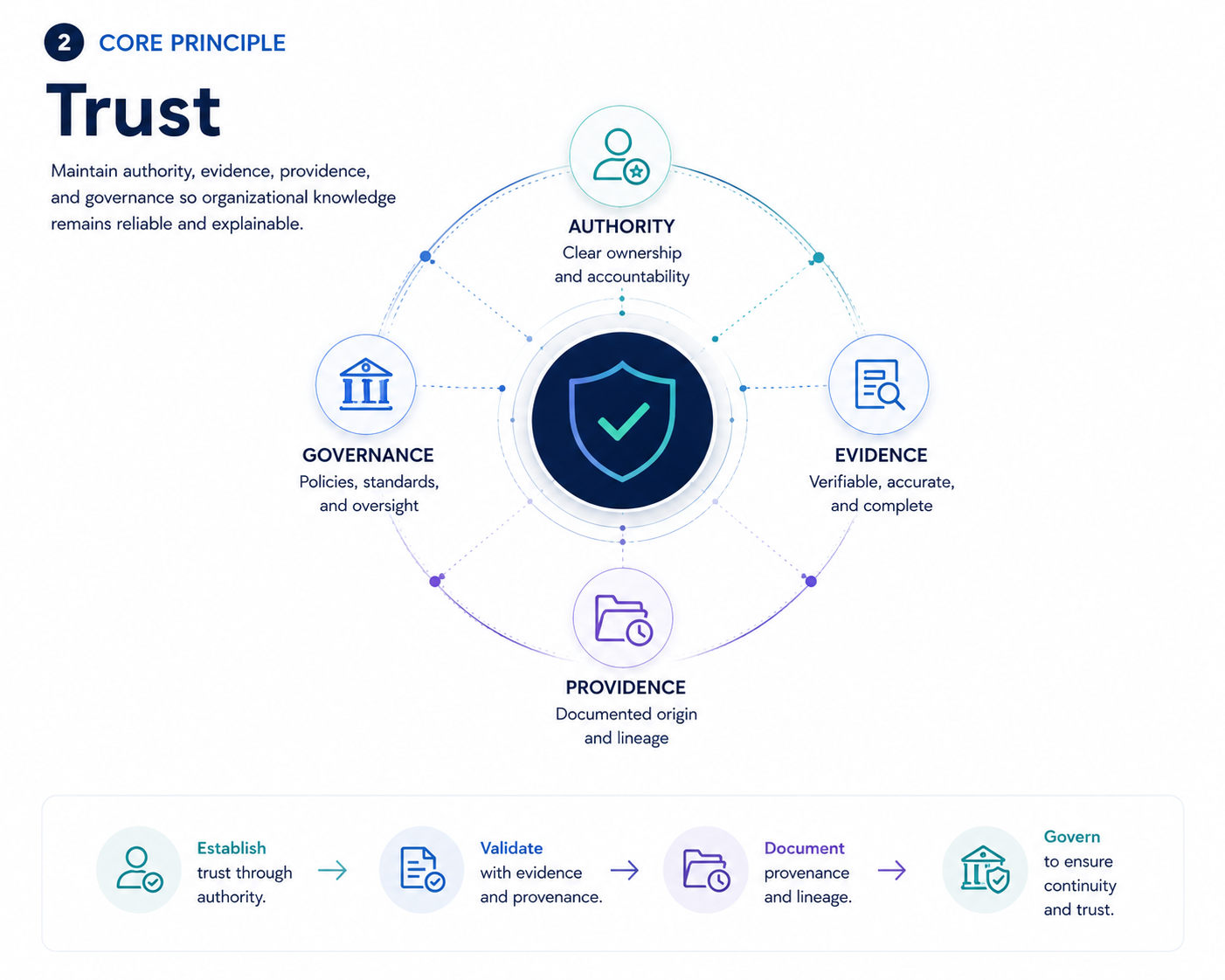
Every Agency Can Have a Record and the Government Can Still Lack a Reconciled State.
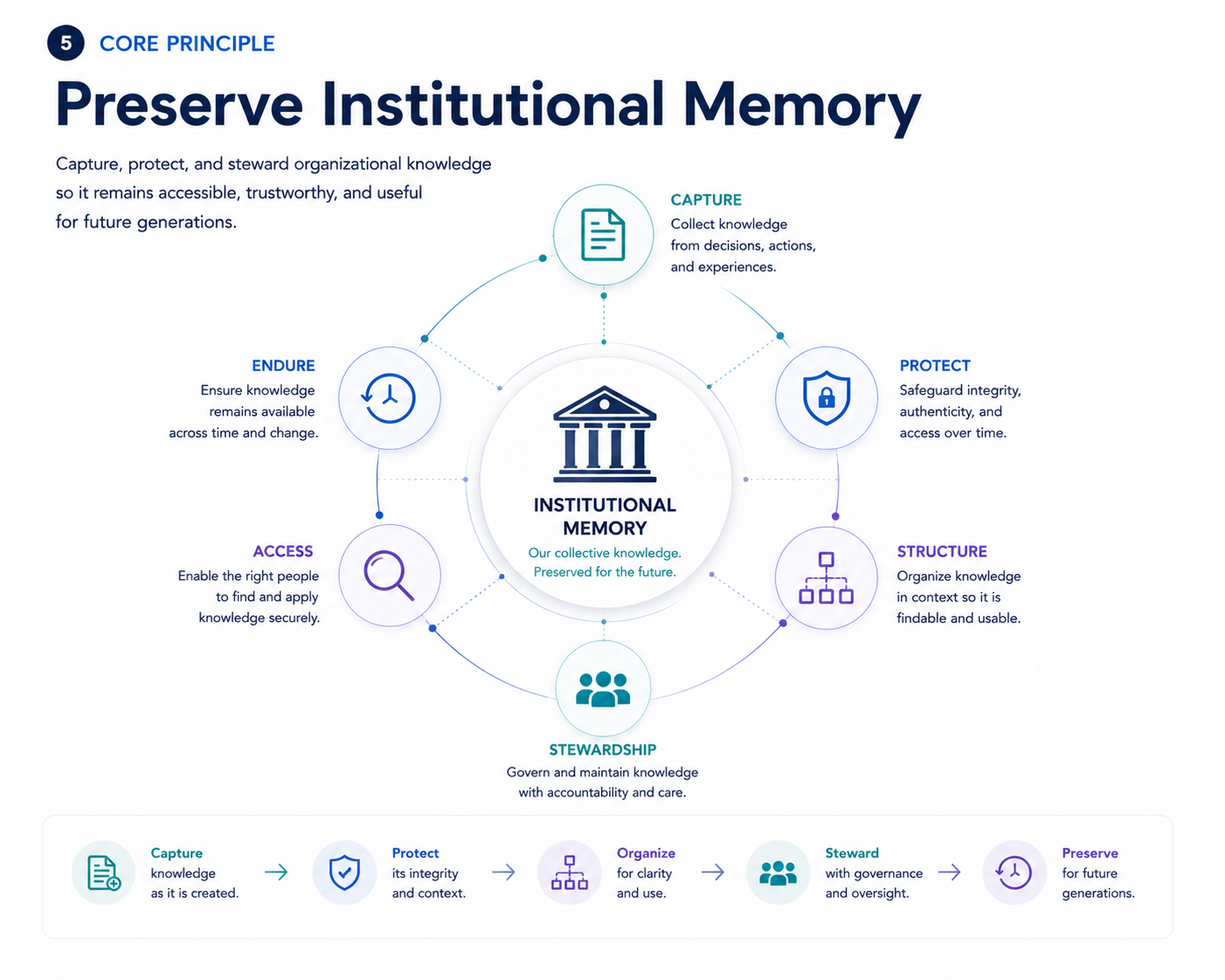

Institutional memory is not created by adding together all of an organization’s records.
In September 2026, GAO reported continuing control deficiencies in Treasury’s process for preparing the consolidated financial statements of the U.S. government. Among the longstanding material weaknesses, federal entities still did not consistently reconcile intragovernmental activity and balances with trading partners, and the consolidated statements could not yet be fully demonstrated to be consistent with the underlying audited entity statements.
GAO also identified three new control deficiencies for fiscal year 2025, including problems with legal-contingency reporting, incomplete or inaccurate draft note disclosures, and inadequate information for recertifying access to Planning Analytics, a system used in preparing the consolidated statements. Treasury concurred with the new recommendations.
Local records can be valid while the enterprise state remains uncertain
An agency’s financial record may be correct from its own perspective. Another agency may also hold a valid corresponding record. The institutional problem is whether those records can be linked and reconciled strongly enough to support one government-wide assertion.
GovKM maps the problem through Record → Institutional Memory. Consolidation requires more than custody. It requires relationships among counterparties, transaction identity, timing, classification, eliminations, and authority.
Reconciliation is reconstruction
At enterprise scale, reconciliation is an act of institutional reconstruction. The organization is asking: what actually happened across all of these systems, and what single state can be defended from the records?
That answer depends on lineage. If a consolidated figure cannot be traced back through the entities and transactions that compose it, the institution may have a number without a fully reconstructable state.
Why this matters for AI
AI systems increasingly summarize, analyze, and reason over enterprise financial data. But an AI cannot repair unresolved cross-entity relationships merely by reading more records. If the underlying institution has not reconciled identity, timing, and transaction relationships, the model inherits the ambiguity.
GovKM interprets the Treasury case as national-scale evidence that record preservation and institutional memory are different things.
Source
U.S. Government Accountability Office, “U.S. Consolidated Financial Statements: Improvements Needed in Controls over Treasury Preparation Processes,” GAO-26-109081, September 2026, published September 15, 2026. https://www.gao.gov/products/gao-26-109081
Continue Exploring
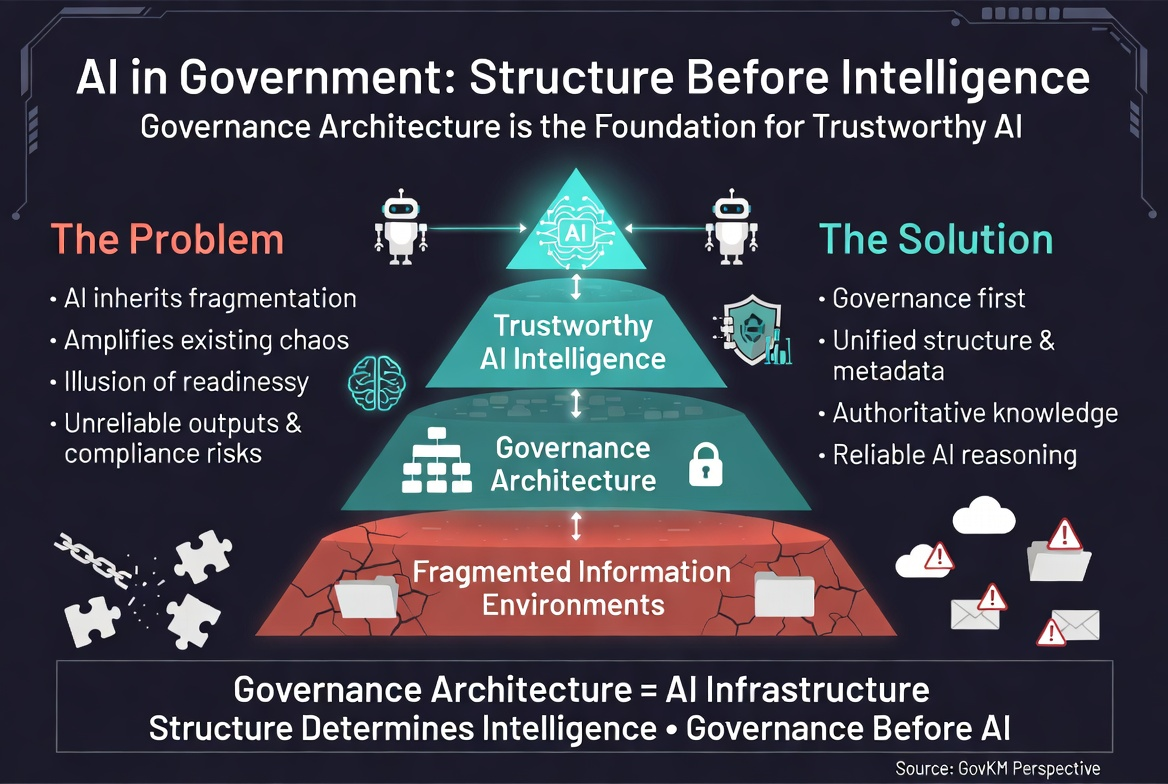
Authority Laundering: How a Bad Citation Becomes “Real” Through Retrieval
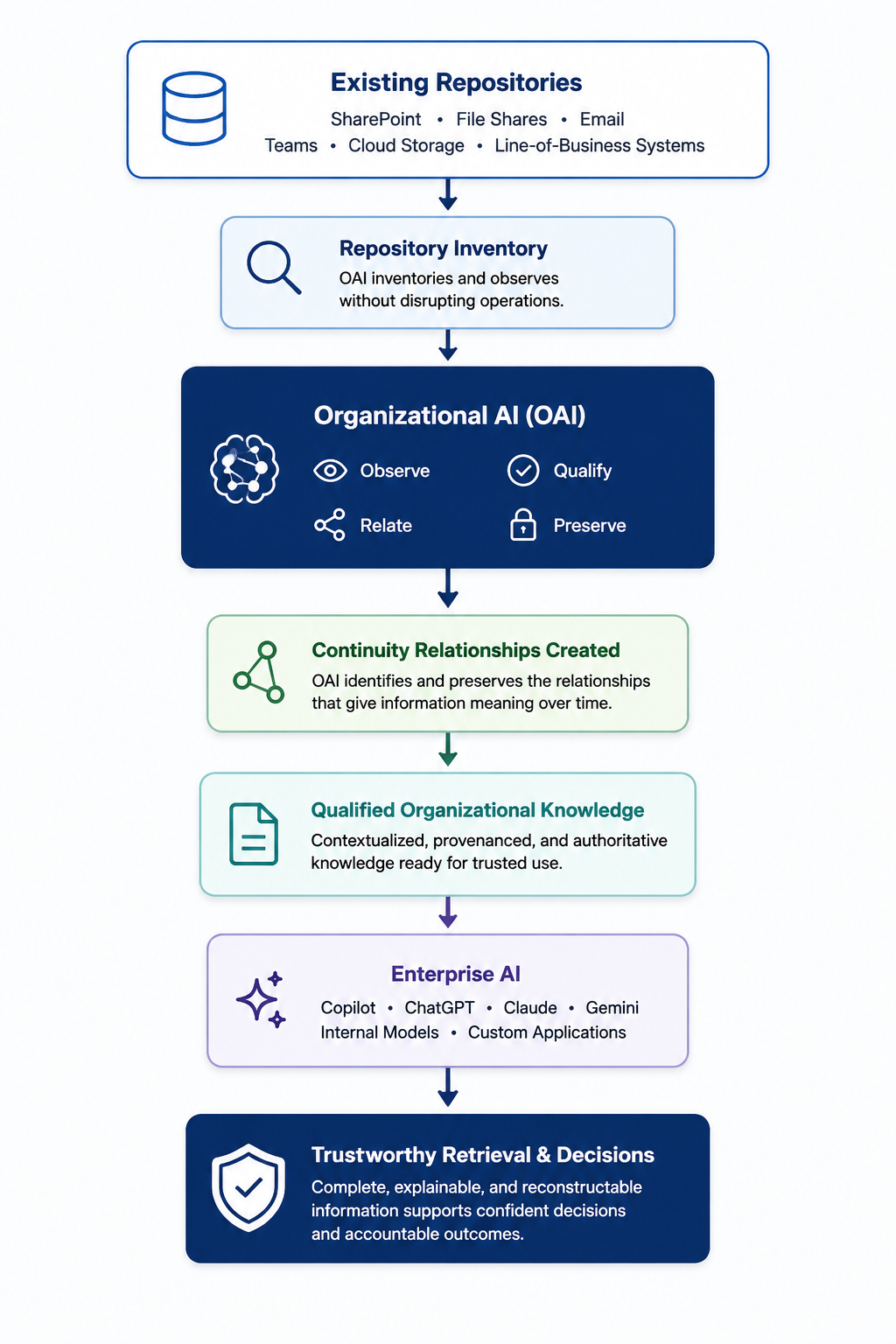
When the Memory Becomes the Attack Surface