Storage Is Not Continuity: Institutional Identity Must Survive the Provider
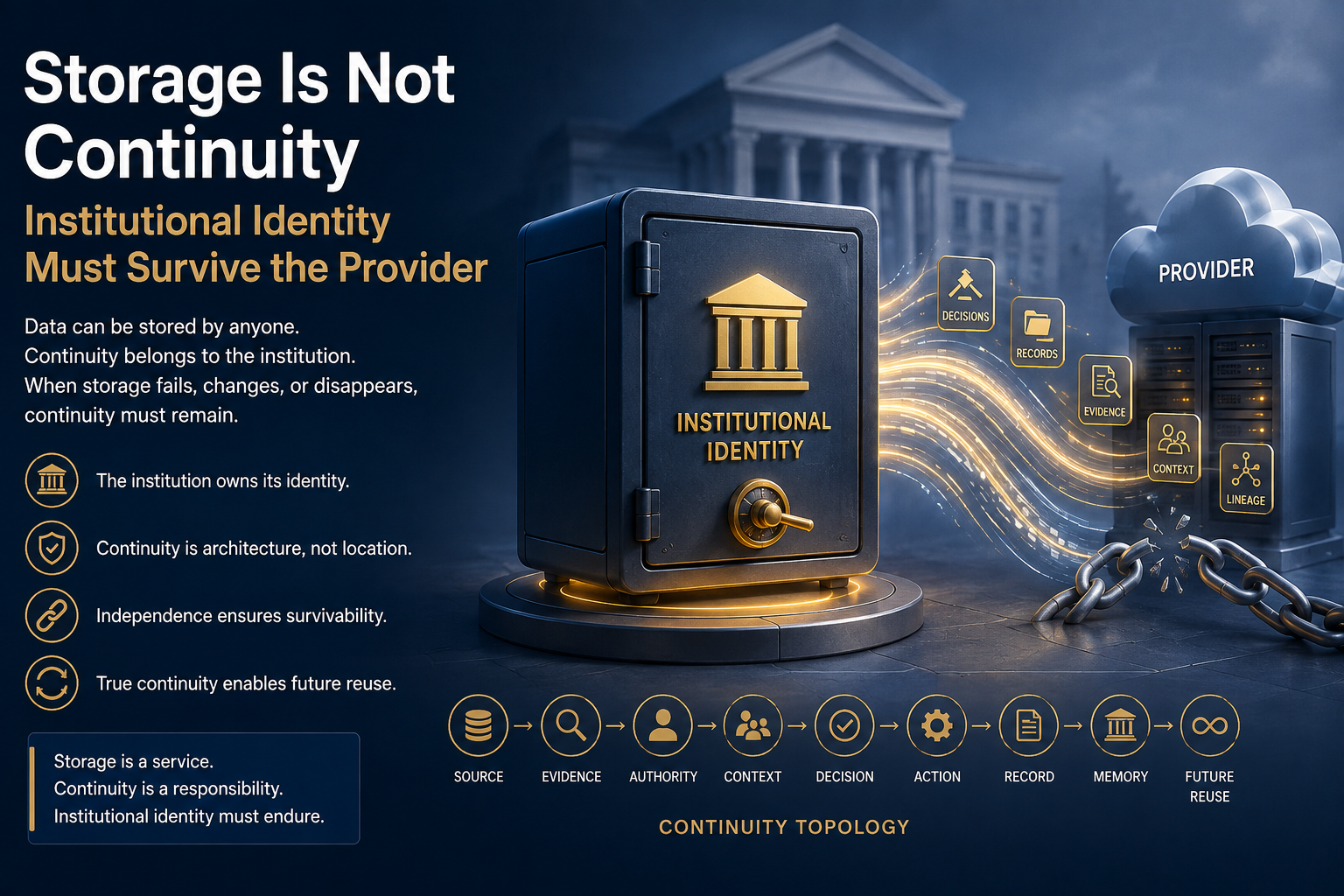

Organizations often speak about cloud storage as though the repository itself were the durable thing.
A bucket exists. A folder exists. A database exists. A vendor contract exists. The institution therefore assumes that the information has continuity.
But storage and continuity are different properties.
A continuity-bearing institutional object should remain the same institutional object even when the system that physically stores it changes.
Portability Is an Infrastructure Requirement
Cloud standards have treated portability and interoperability as important for years. NIST's Cloud Computing Standards Roadmap identifies standards as important to cost-effective migration and to reducing the risk that technology investments become prematurely obsolete. NIST has also described portability as the ability for data owners to move data from one cloud to another or change cloud vendor.
That remains highly relevant as organizations increasingly place operational knowledge, AI evidence, records, research, and machine-readable institutional memory into cloud object stores.
Current object-storage products also demonstrate how infrastructure can reduce migration friction. Cloudflare R2 exposes an S3-compatible API, and Backblaze B2 likewise presents S3-compatible object storage. Compatibility can make movement easier.
But compatibility does not by itself preserve institutional continuity.
Moving the Bytes Is Not the Same as Preserving the Object
Suppose an organization moves a body of institutional evidence from one storage provider to another. Every byte transfers correctly. Hashes match. File names survive. The migration is technically successful.
A continuity question remains: did the institution preserve the identity and relationships that made those objects meaningful?
If an identifier is really just a provider URL, changing providers may change the apparent identity of the object. If authority is encoded only in bucket permissions, migration may change the governance interpretation. If provenance depends on provider-specific metadata, lineage may be lost. If downstream systems reference physical locations rather than durable institutional identifiers, the organization may preserve content while breaking the relationships around it.
The storage move succeeded. Institutional continuity did not.
The Continuity Topology Shows What Must Survive Migration
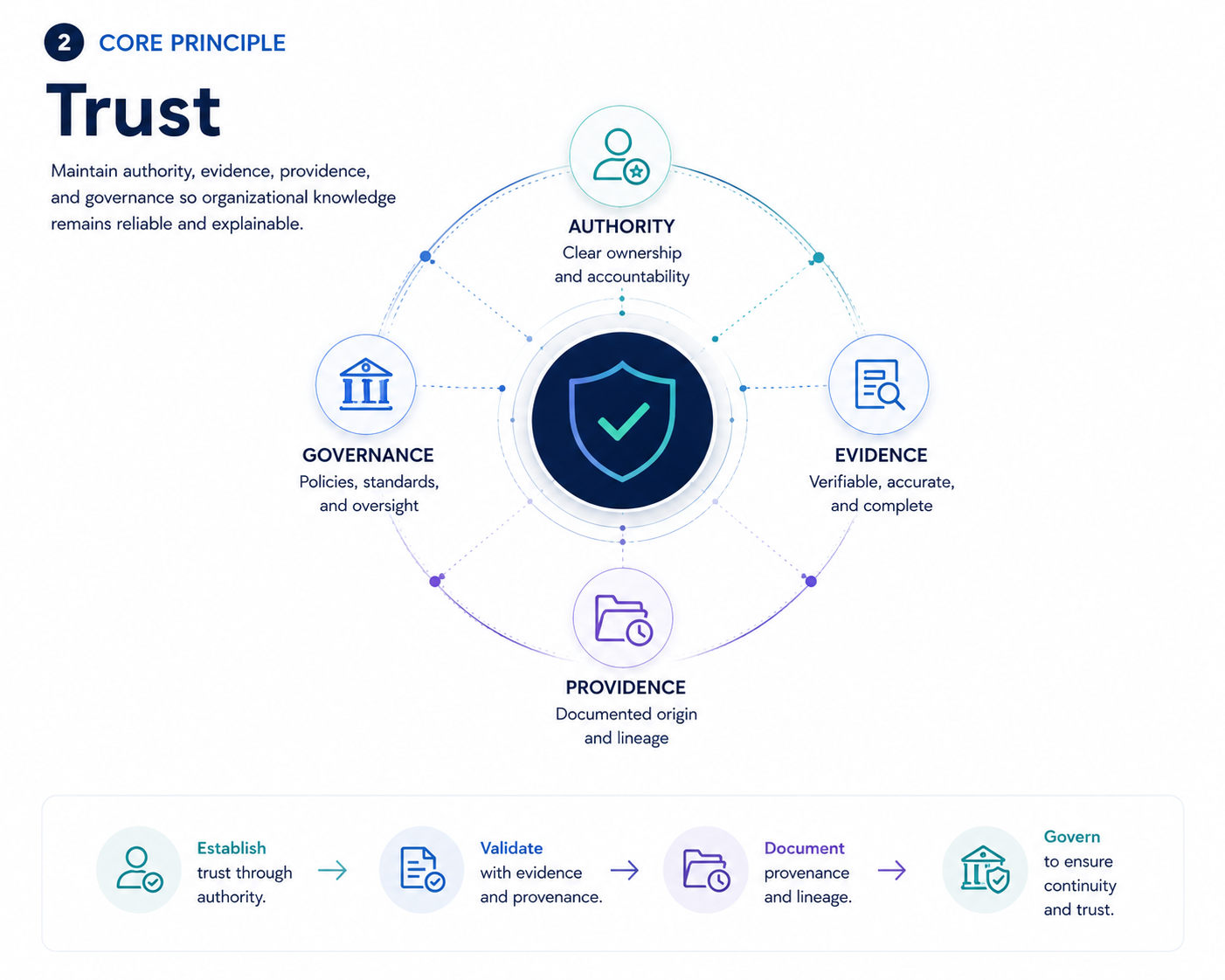
Source → Evidence: Migration must not erase where information originated or which source state supported later evidence.
Evidence → Authority: The institution must preserve why an object was accepted, controlled, or relied upon, rather than allowing storage location to become a surrogate for authority.
Authority → Context: Access rules, legal constraints, records requirements, ownership, classification, and temporal conditions must remain intelligible after the platform changes.
Context → Decision: Decisions should continue to refer to stable institutional objects rather than to locations that become obsolete when infrastructure changes.
Decision → Action: Actions triggered from stored evidence should retain traceability to the decision state that authorized them.
Action → Record: Records must survive relocation without becoming detached from the actions and obligations they document.
Record → Institutional Memory: The institution should be able to reconstruct the same record relationships after a repository, vendor, account structure, or storage architecture changes.
Institutional Memory → Future Reuse: Future humans and AI systems should not need to know which storage vendor once held an object in order to establish what it is, why it was trusted, and whether it remains fit for reuse.
Storage Location Should Be an Attribute, Not Identity
This suggests a useful governance principle: physical location should describe where an institutional object is currently stored, not define what the object is.
A durable identity should remain stable across migrations where the underlying governed object has not changed. Storage mappings can then evolve beneath that identity as systems are replaced, contracts change, organizations consolidate platforms, or different environments are required for security and compliance.
This is analogous to the distinction between a person and an address. An address is important for locating the person, but changing the address does not create a new person.
Institutional knowledge needs the same separation between identity and location.
Provider Independence Does Not Mean Provider Indifference
This principle should not be misunderstood as saying that storage providers are interchangeable in every respect.
They differ in durability guarantees, security controls, jurisdiction, encryption, lifecycle capabilities, access models, performance, pricing, operational tooling, and compliance support. Those differences matter and should influence selection.
The continuity requirement is different: the institution should avoid making provider-specific implementation details the only place where institutional identity, authority, provenance, retention meaning, or relationship lineage exists.
A provider can be strategically important without becoming the definition of the institutional object.
Portability Becomes More Important as AI Creates Durable Working Memory
AI systems make this distinction increasingly important because machine-mediated work generates new bodies of evidence, context, decisions, outputs, and reusable organizational memory.
If those objects are tied tightly to one application or one storage environment, an organization can become dependent not merely on a vendor's software, but on that vendor's representation of institutional history.
A later migration may then require reconstructing identity and relationships after the fact.
That is expensive continuity debt.
A stronger architecture preserves stable identity and governed relationships first, then treats storage as one replaceable implementation layer beneath them.
The Continuity Test for Storage
A useful test is straightforward:
If the storage provider disappeared tomorrow, could the institution move its information and still prove what each object is, where it came from, what authority governs it, what decisions and actions depend on it, what record state it represents, and how it may be reused?
If the answer is no, the organization may have durable storage without durable continuity.
Cloud portability moves data between systems.
Institutional Continuity preserves the meaning and relationships that must survive the move.
Continue Exploring
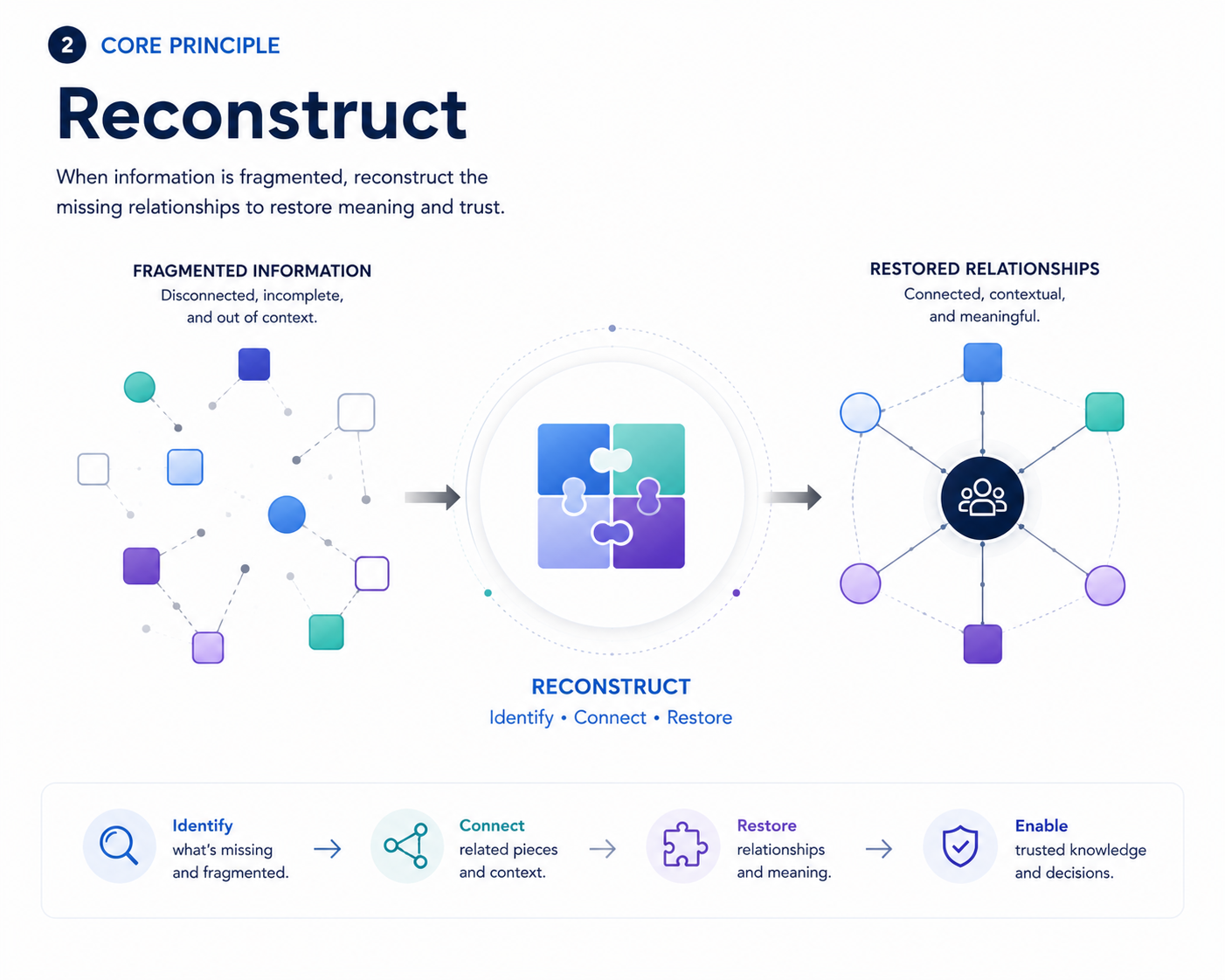
The Answer Was Correct. The Evidence Could Not Prove It.
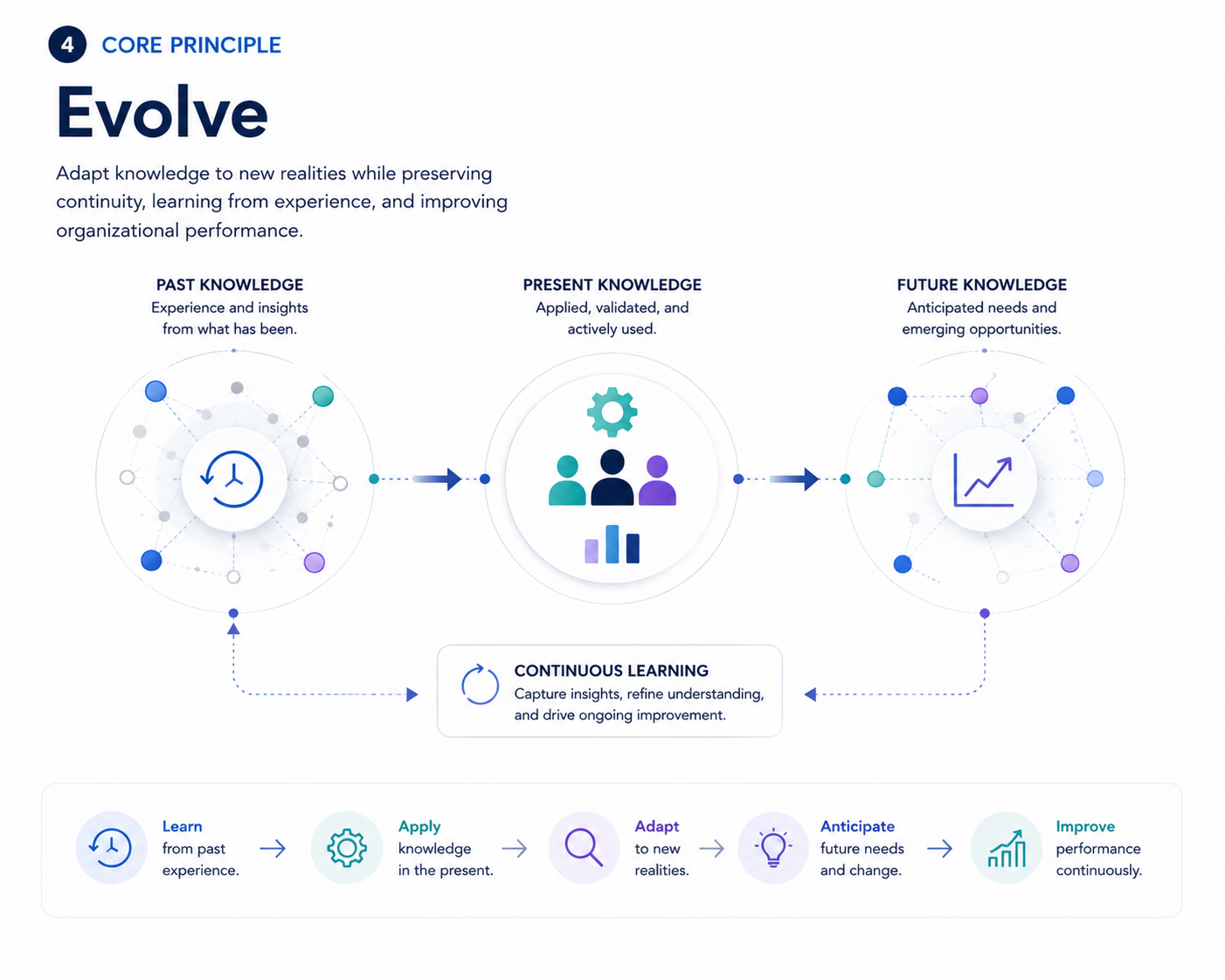
The Model Hadn't Answered Yet. Its Memory Was Already Wrong.