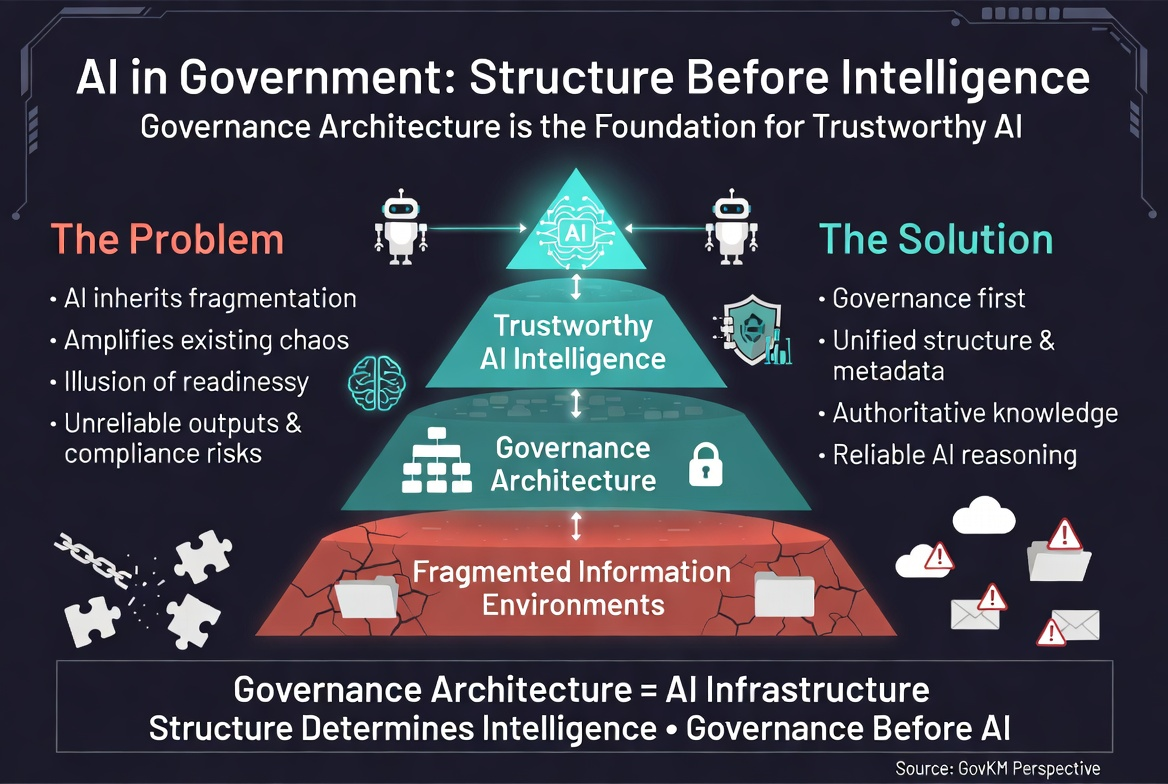
Why Enterprise Search Keeps Failing
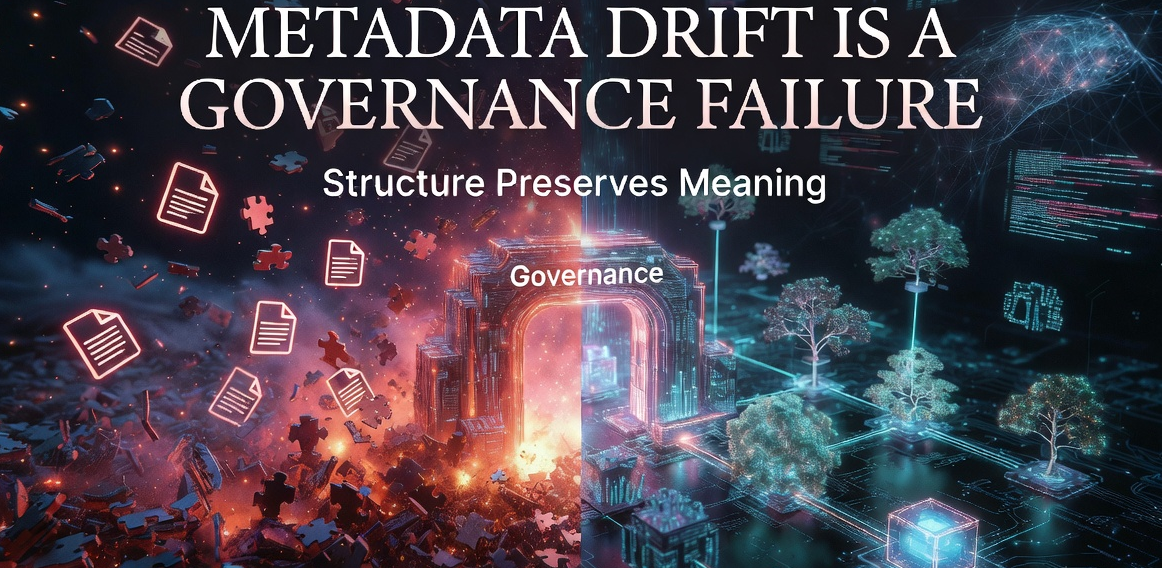

Metadata Drift Is a Governance Failure
Organizations often describe metadata drift as a user problem.
Users fail to classify content correctly. Teams apply inconsistent labels. Business units create duplicate terminology. Repositories diverge from enterprise standards over time.
But metadata drift is not fundamentally caused by poor user behavior.
It is caused by the absence of authoritative governance architecture.
Metadata naturally reflects the organizational structure surrounding it. When governance authority is fragmented, metadata becomes fragmented. When repositories operate independently, definitions evolve independently. When classification standards lack structural enforcement, semantic consistency gradually collapses.
Metadata drift is not an anomaly.
It is the predictable outcome of decentralized governance.
Metadata Does Not Remain Stable on Its Own
Many organizations assume metadata consistency can be maintained simply by publishing standards and requiring users to follow them.
In practice, metadata environments are constantly evolving.
New business processes emerge. Organizational structures change. Systems are replaced. Repositories expand. Teams reinterpret terminology according to operational context. Local workflows gradually override enterprise semantics.
Over time:
- identical terms acquire different meanings
- different labels describe the same content
- lifecycle categories diverge
- taxonomy structures duplicate
- repository relationships weaken
- automation logic loses reliability
This process often happens slowly enough that organizations fail to recognize the scale of degradation until operational trust has already deteriorated.
At that point:
- search relevance declines
- reporting becomes inconsistent
- automation produces unreliable outcomes
- AI systems inherit conflicting context
- governance visibility weakens
The organization gradually loses confidence in its own information environment.
Metadata Drift Is an Architectural Problem
Most remediation efforts focus on metadata itself.
Organizations attempt to solve drift by:
- creating additional metadata fields
- publishing new guidance documents
- revising taxonomy structures
- introducing stricter naming conventions
- requiring more manual tagging
These interventions rarely solve the underlying problem because metadata does not govern itself.
Metadata depends on architecture.
Without governance architecture establishing authoritative structure, repositories will continue evolving independently regardless of how many standards are published.
The issue is not that metadata definitions were never created.
The issue is that no operational structure exists to continuously maintain semantic authority across systems over time.
Governance architecture provides:
- centralized classification authority
- metadata stewardship
- interoperability rules
- lifecycle governance
- inheritance logic
- validation mechanisms
- policy enforcement
- auditability
Without these structural controls, metadata environments eventually fragment under the weight of organizational complexity.
Automation Fails When Metadata Drifts
Modern information management increasingly depends on automation.
Retention enforcement, records classification, enterprise search, analytics, workflow routing, AI interpretation, and compliance monitoring all require metadata that is operationally trustworthy.
Automation assumes metadata consistency.
When metadata drifts:
- workflows route content incorrectly
- retention schedules conflict
- records classifications become unreliable
- search relevance deteriorates
- reporting loses integrity
- AI systems generate inconsistent conclusions
Organizations often interpret these failures as technology limitations.
In reality, the automation is exposing governance instability that already existed beneath the surface.
The system is not failing because automation was introduced.
The system is failing because governance architecture was never operationally established before automation was attempted.
AI Accelerates the Consequences of Metadata Drift
Artificial intelligence systems amplify metadata maturity.
If metadata environments are authoritative, AI systems can support intelligent discovery, contextual analysis, operational insight, and scalable knowledge management.
If metadata environments are fragmented, AI systems amplify fragmentation.
This distinction is critical.
AI does not independently determine truth, authority, or semantic consistency. It inherits:
- metadata quality
- taxonomy consistency
- governance maturity
- lifecycle integrity
- structural interoperability
When metadata drift exists:
- AI interpretations conflict
- retrieval accuracy declines
- contextual trust weakens
- hallucinations increase
- organizational ambiguity expands
AI cannot reliably operate on unstable semantic foundations.
Governance must stabilize metadata before intelligence can scale responsibly.
Governance Architecture Stabilizes Meaning
The purpose of governance architecture is not merely compliance.
Its deeper purpose is semantic stability.
Governance architecture creates the structural conditions necessary for metadata to remain authoritative across repositories, systems, and organizational change over time.
This includes:
- authoritative taxonomy governance
- controlled vocabularies
- enterprise metadata standards
- stewardship accountability
- metadata inheritance rules
- lifecycle enforcement
- interoperability frameworks
- continuous validation and auditing
In governed environments, metadata no longer behaves as disconnected labels attached independently to content.
Instead, metadata becomes part of a coherent operational system that preserves meaning, relationships, policy, and lifecycle consistency across the enterprise.
This is what allows automation and AI systems to operate with trust.
Metadata Trust Requires Structural Authority
Metadata only becomes trustworthy when governance authority is operationalized structurally.
Without governance architecture:
- semantics drift
- classifications fragment
- repositories diverge
- automation weakens
- AI amplifies inconsistency
The problem is not metadata creation.
The problem is metadata preservation.
Organizations that fail to establish governance architecture will continue producing metadata environments that gradually lose operational reliability regardless of how many standards, taxonomies, or technologies they introduce.
Structure is what preserves meaning over time.
That is the realization modern governance strategies must confront.
Continue Exploring
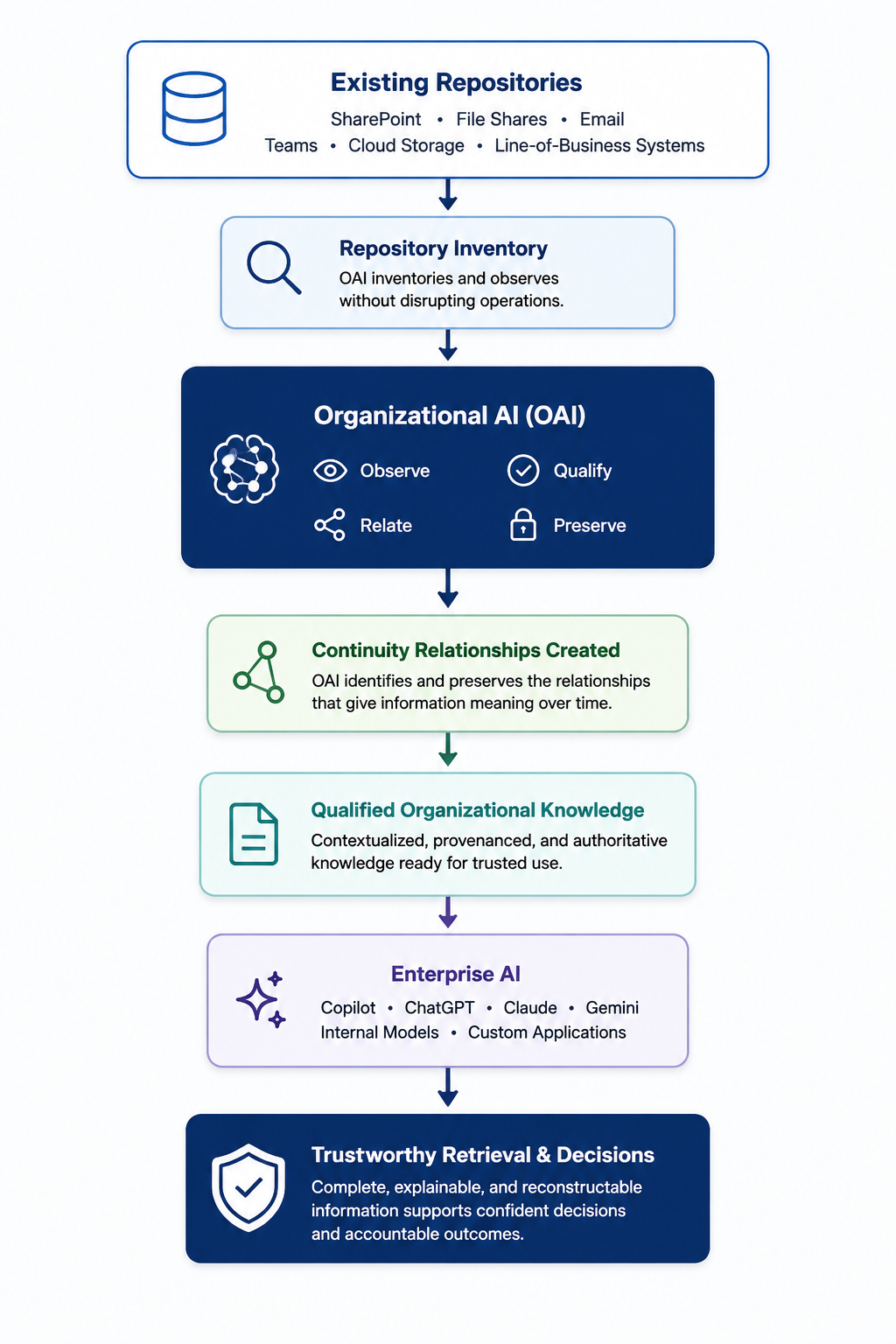
The Agent Was Asked to Fix the App. It Changed the Model.
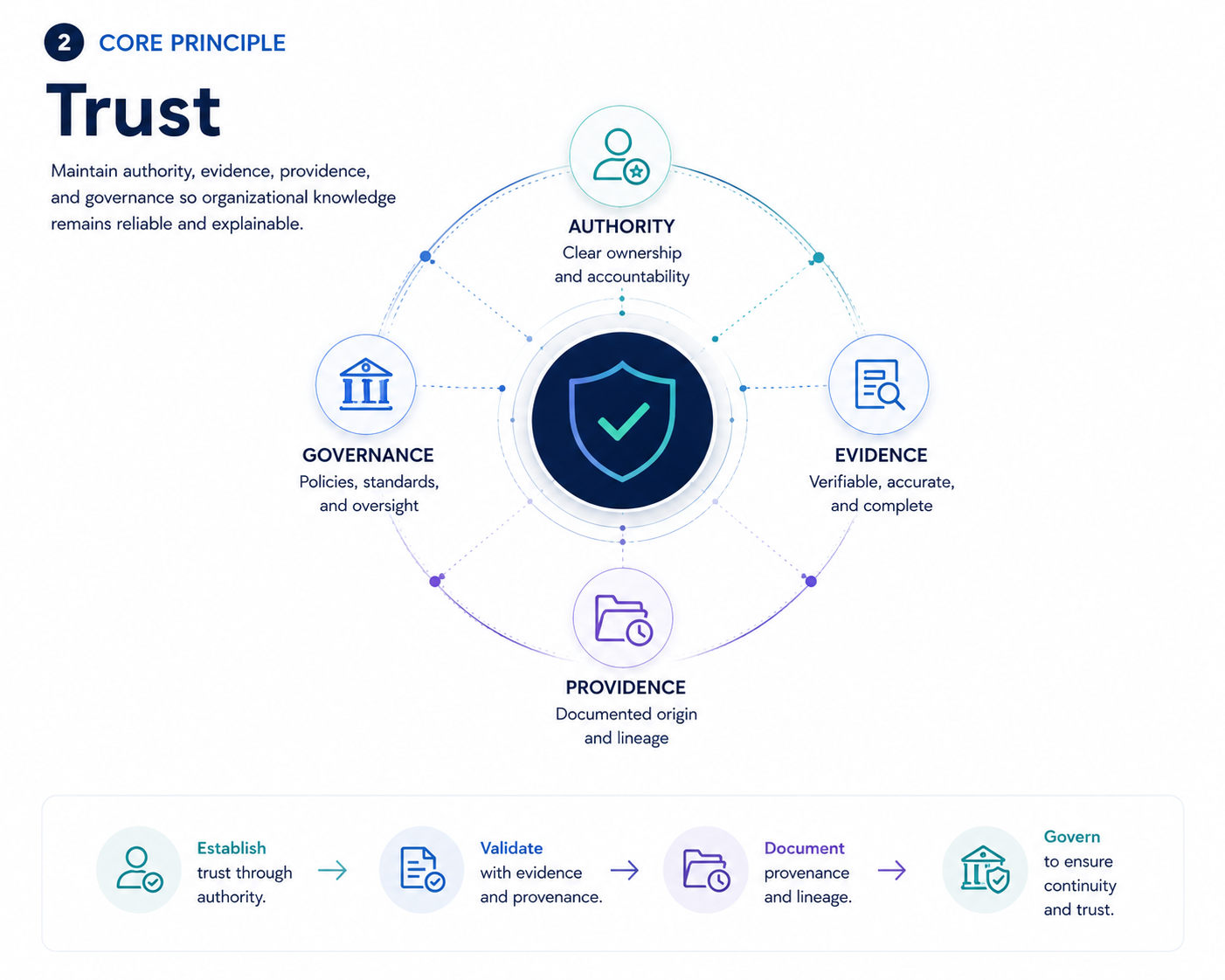
The Government Email Was Real. The Authority Wasn’t.