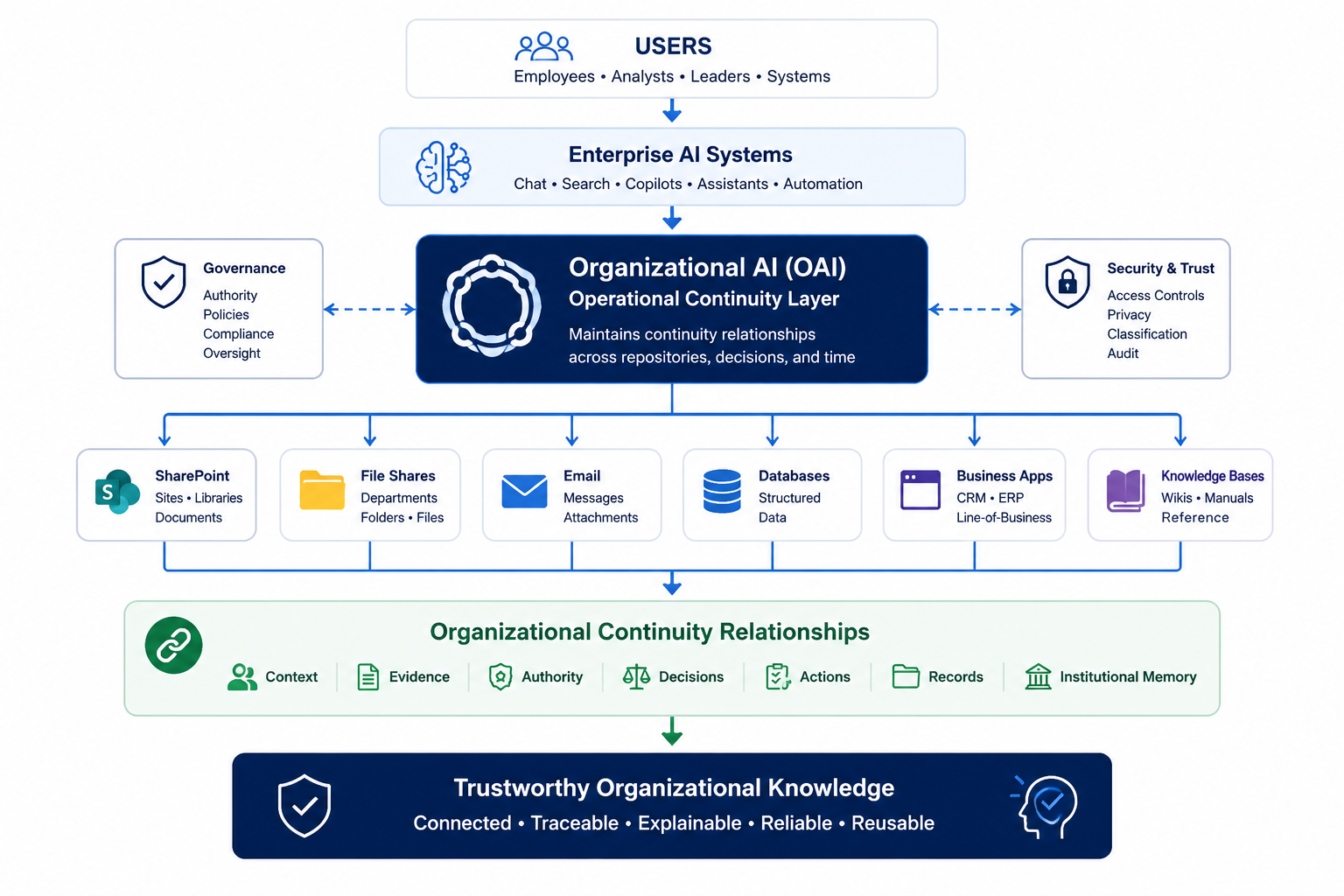
Aggregation Is Not Continuity.
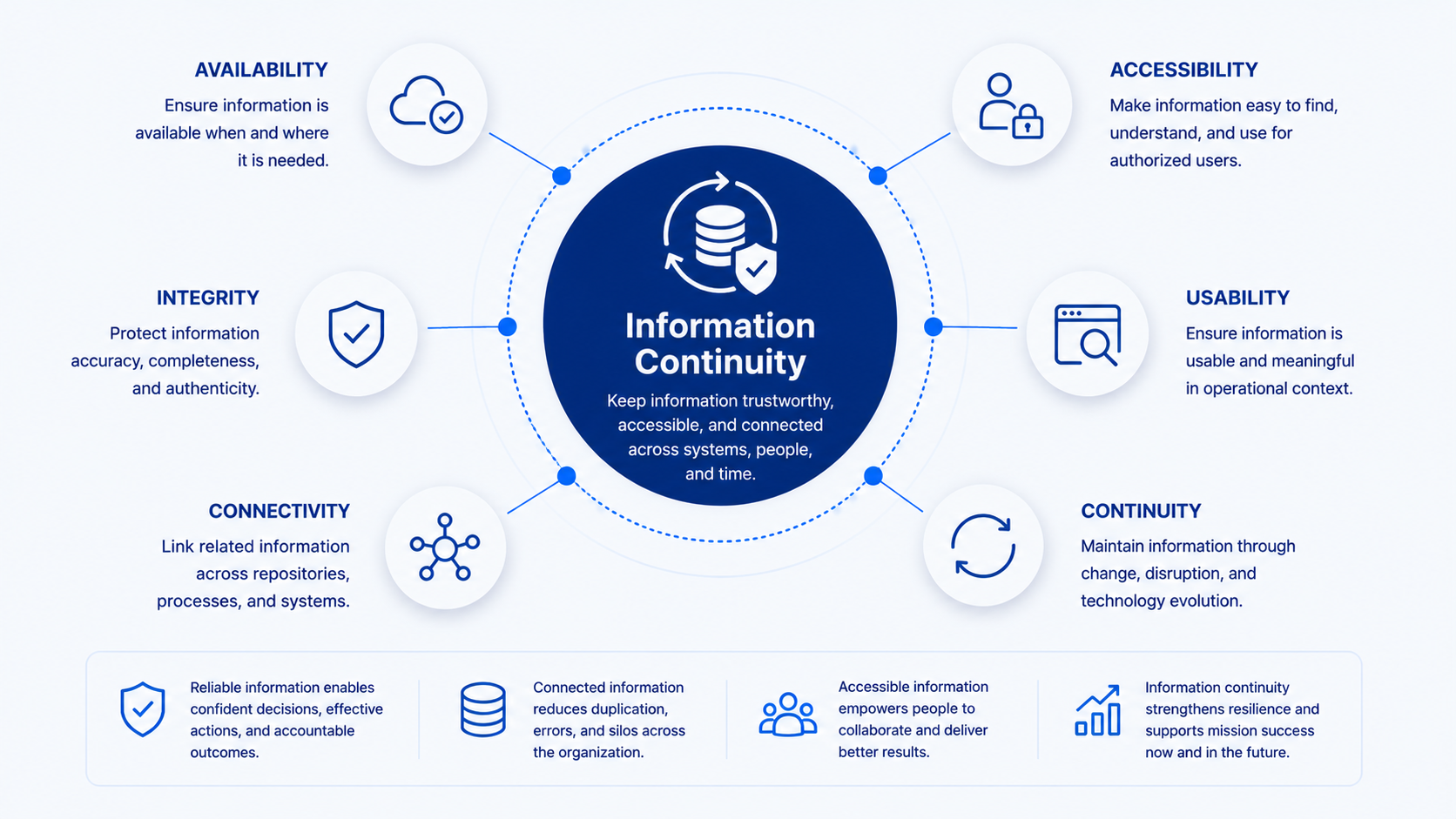

Centralizing data does not automatically make it trustworthy.
In May 2026, the Department of War Office of Inspector General reported weaknesses in interface controls over the Advancing Analytics Repository, an enterprise analytics environment under the Chief Digital and Artificial Intelligence Officer. The audit issued 12 recommendations, including establishing Data Sharing Agreements for 78 source systems that lacked them, validating the accuracy and completeness of transferred data, automatically notifying system owners when interface errors occur, implementing required interface controls, and warning users when data from particular systems may be inaccurate or incomplete.
The continuity problem begins before retrieval
An enterprise analytics repository can make information easier to find while simultaneously making its uncertainty harder to see. Once data from many operational systems appears together in a common environment, users can reasonably assume that the data has passed through a common standard of custody, validation, and authority. That assumption is unsafe when the source relationships themselves are incomplete.
GovKM maps this problem to the beginning of the Continuity Topology: Source → Evidence → Authority → Context. Before source-system data can function as institutional evidence, the organization needs to know who owns it, what agreement authorizes its use, whether the transfer succeeded, whether the data is complete, what errors occurred, and what limitations should constrain interpretation.
Every interface is a continuity relationship
A data interface is not merely a technical pipe. It is the mechanism by which one system's institutional state becomes evidence in another. If error state, source ownership, validation status, or known limitations do not travel with the data, aggregation can create false confidence.
That matters directly for AI. A model operating over a centralized repository may retrieve exactly what the repository contains while still producing a misleading answer if the source lineage or quality state was already broken upstream. Retrieval quality cannot repair missing provenance.
GovKM interprets this audit as evidence for a core continuity proposition: aggregation is not continuity. A trustworthy enterprise repository needs governed relationships that preserve source identity, transfer authority, validation, exception handling, and user-visible quality state.
Source
Department of War Office of Inspector General, “Audit of Interface Controls Over the DoW’s Advancing Analytics Repository,” Report DOWIG-2026-079, May 7, 2026.
Continue Exploring
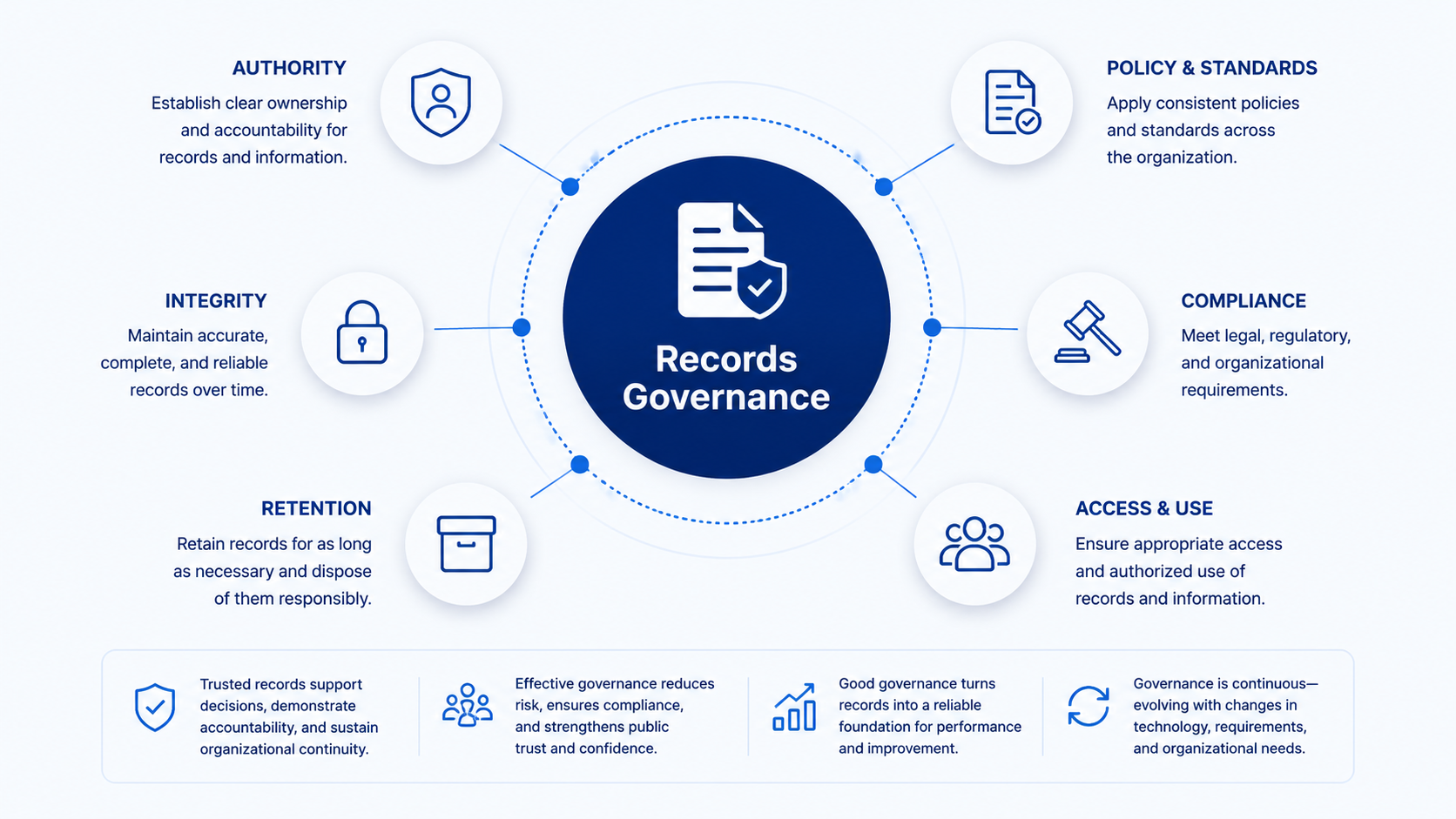
A Decision Memorandum Is Not Decision Provenance.
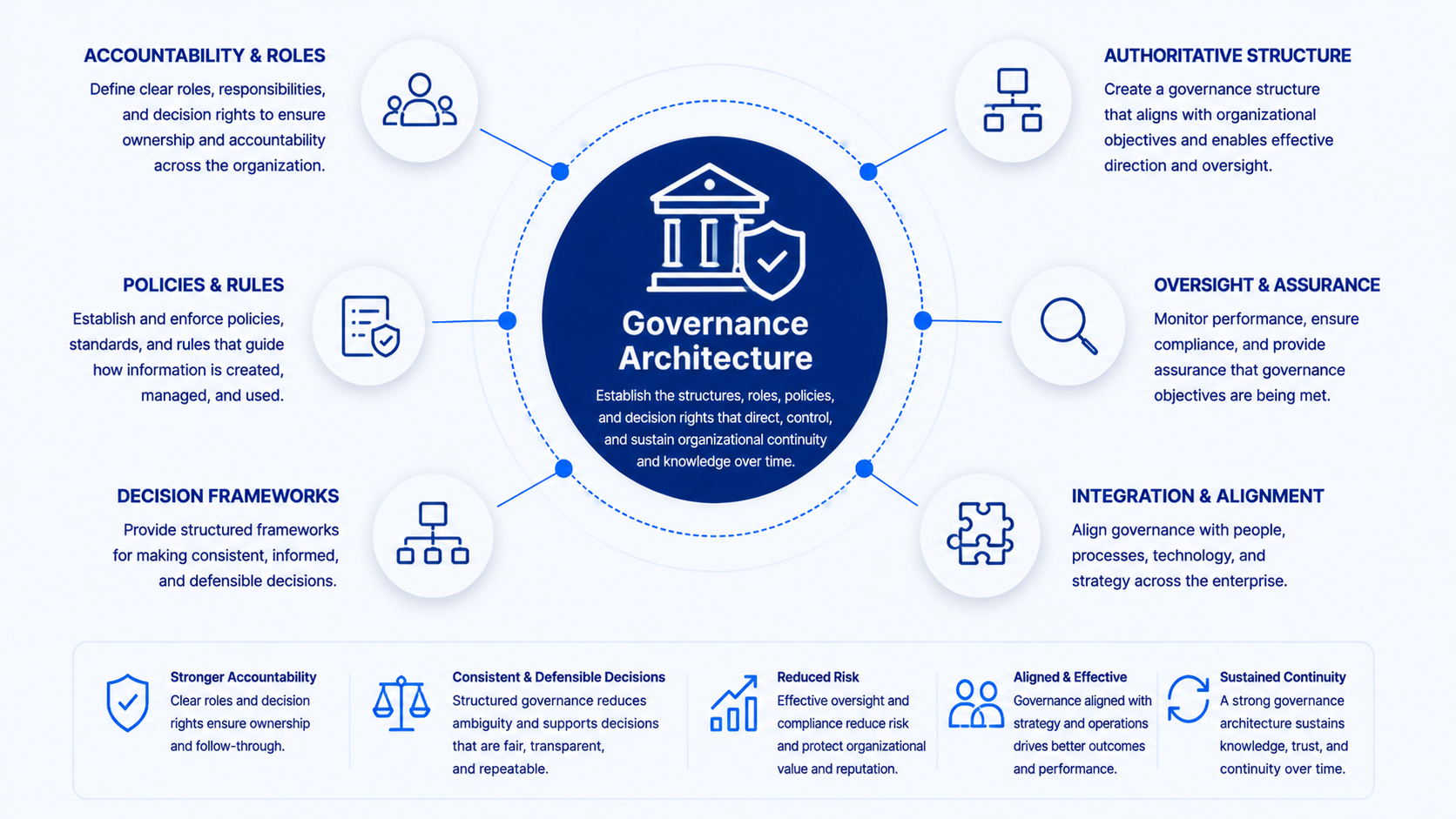
The Event Happened. Detection Never Turned It Into Evidence.