The Drug Changed Status. The Government’s Information Did Not.
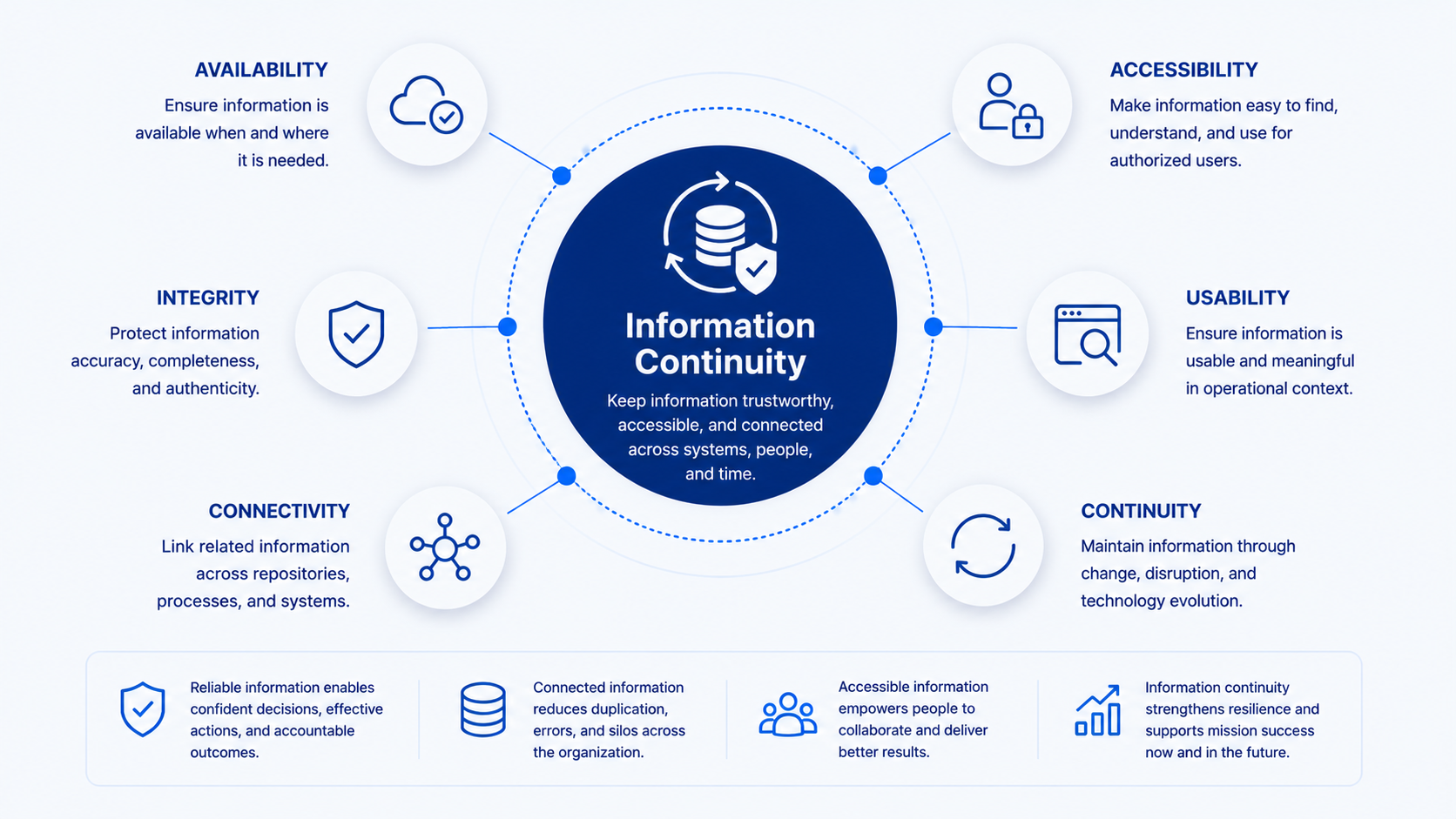

An authoritative state can change in one system while the old state continues governing decisions everywhere else.
A September 2026 HHS Office of Inspector General audit found that Medicare Part D sponsors made $587.7 million in ineligible payments from 2021 through 2023 for five drugs sold under obsolete prescription-only labeling after the corresponding brand-name drugs had switched to over-the-counter status.
OIG identified a chain of dependent representations: obsolete FDA information was used by CMS to update its Part D Formulary Reference File, prescription-only labels remained in circulation, and payment systems continued treating the drugs according to the earlier state.
The governing fact changed.
The information ecosystem did not change with it.
A State Change Is a Propagation Event
Organizations often treat updates as local maintenance. One authoritative database is corrected, one policy is revised, or one status flag changes.
But institutional meaning rarely lives in one place.
Other systems may cache the old value. Procedures may repeat it. contracts may depend on it. Decision logic may use it. Reports and AI indexes may have already incorporated it.
A material state change therefore creates a dependency event.
The institution needs to know which downstream representations derive their validity from the changed state and whether they require update, invalidation, or requalification.
The Topology Makes the Temporal Break Visible
GovKM’s Continuity Topology is:
Source → Evidence → Authority → Context → Decision → Action → Record → Institutional Memory → Future Reuse.
In the Medicare case, the authoritative regulatory state should have flowed into dependent evidence and context before coverage and payment decisions occurred.
Instead, an earlier representation remained operational:
new Authority state → dependent Record not updated → old Context → Decision → Action.
Every downstream system could behave exactly as designed and still produce the wrong institutional outcome.
This Is Not a Hallucination Problem
The case has direct implications for AI.
An AI system could retrieve the obsolete drug classification accurately. It could cite the correct record, reason correctly from the retrieved data, and produce a wrong answer without inventing anything.
The failure would be continuity, not hallucination.
That distinction matters because provenance alone is not enough. A source can be authentic and still be temporally invalid for the present decision.
Continuity-aware retrieval therefore needs lifecycle state: effective date, supersession, dependency, authority, and whether a newer governing event changes the admissibility of older information.
Corrections Must Reach Past the Source
Fixing the authoritative database is necessary but incomplete if prior representations remain active elsewhere.
A robust architecture should identify downstream systems, records, models, reports, decisions, and workflows that depend on the changed state. Some may require immediate invalidation. Others may remain valid historically but need a changed status for future use.
This is why deletion, correction, and supersession are relationship operations rather than file operations.
The GovKM Proposition
Continuity requires authoritative state changes to propagate through every dependent representation whose future validity depends on that state.
An institution has not completed an update when the source changes. It has completed the update when dependent evidence, context, decisions, actions, records, and reusable memory either reflect the new state or explicitly preserve why an older state still applies.
The drug changed status.
The rest of the institution needed to change with it.
Continue Exploring

When Government Systems Are Replaced, What Happens to Their Authority?
The Practice Form Failed. The Agent Used the Real One.