The Inspection Happened. The System Couldn’t Determine What Came Next.

A completed inspection is not enough if the institution cannot reliably determine what obligation comes next.
On August 31, 2026, the Department of Housing and Urban Development Office of Inspector General reported that HUD did not effectively implement timing requirements for inspections under the National Standards for the Physical Inspection of Real Estate, or NSPIRE. According to the OIG, HUD generally could not determine the ideal future inspection dates for certain rural and small public-housing properties that had already been inspected, including properties receiving failing scores that required reinspection within one year.
The report attributed the problem in part to incompatibility between NSPIRE software and HUD information systems, technical errors, and insufficient IT capability to compute or issue certain assessment scores. One recommendation called for an IT solution that would transmit NSPIRE data into HUD's public-housing data warehouse.
The failure occurred after the action
The physical inspection had taken place. A result existed. Yet the organization could not consistently use that result to establish the next required state.
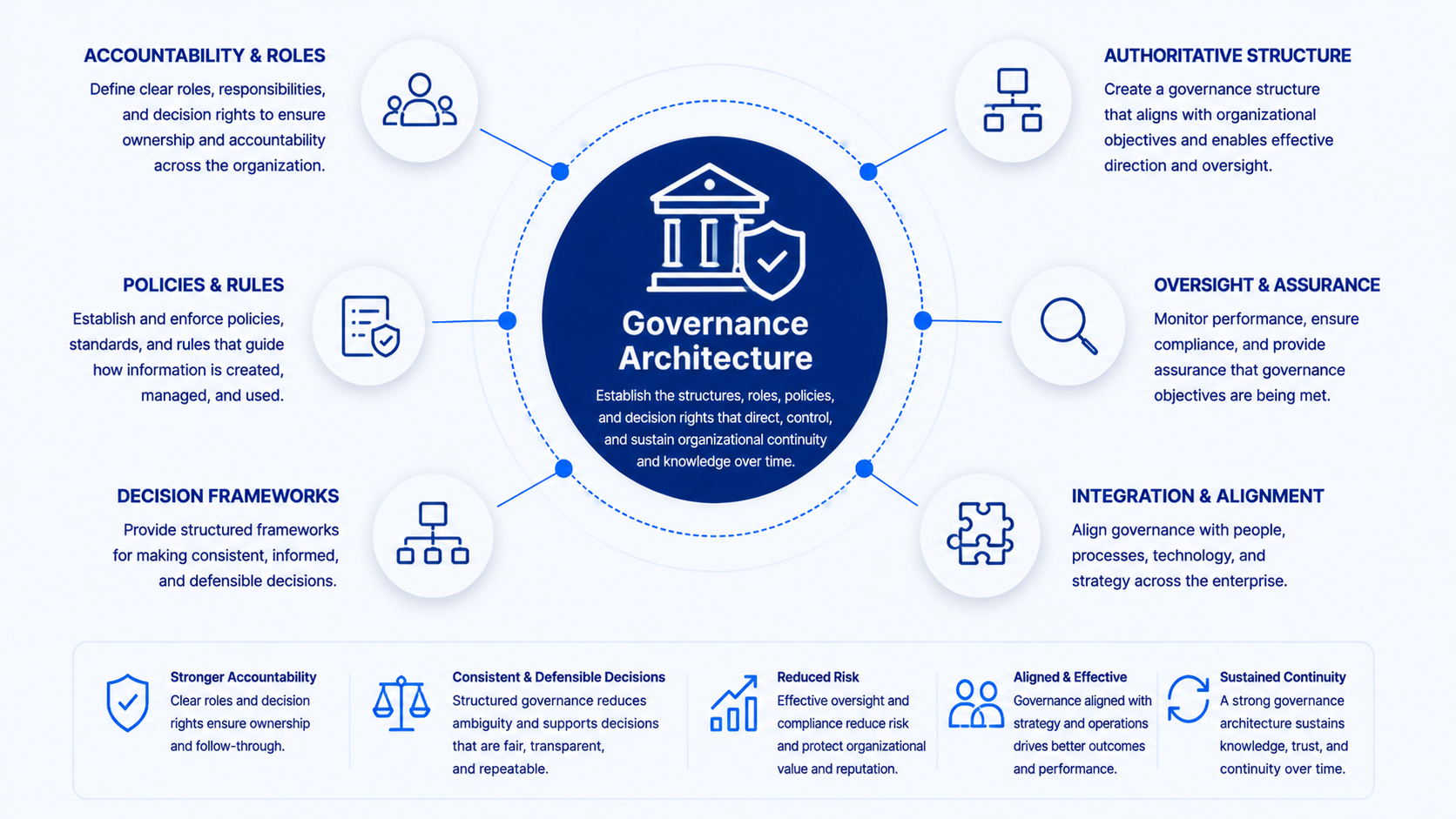
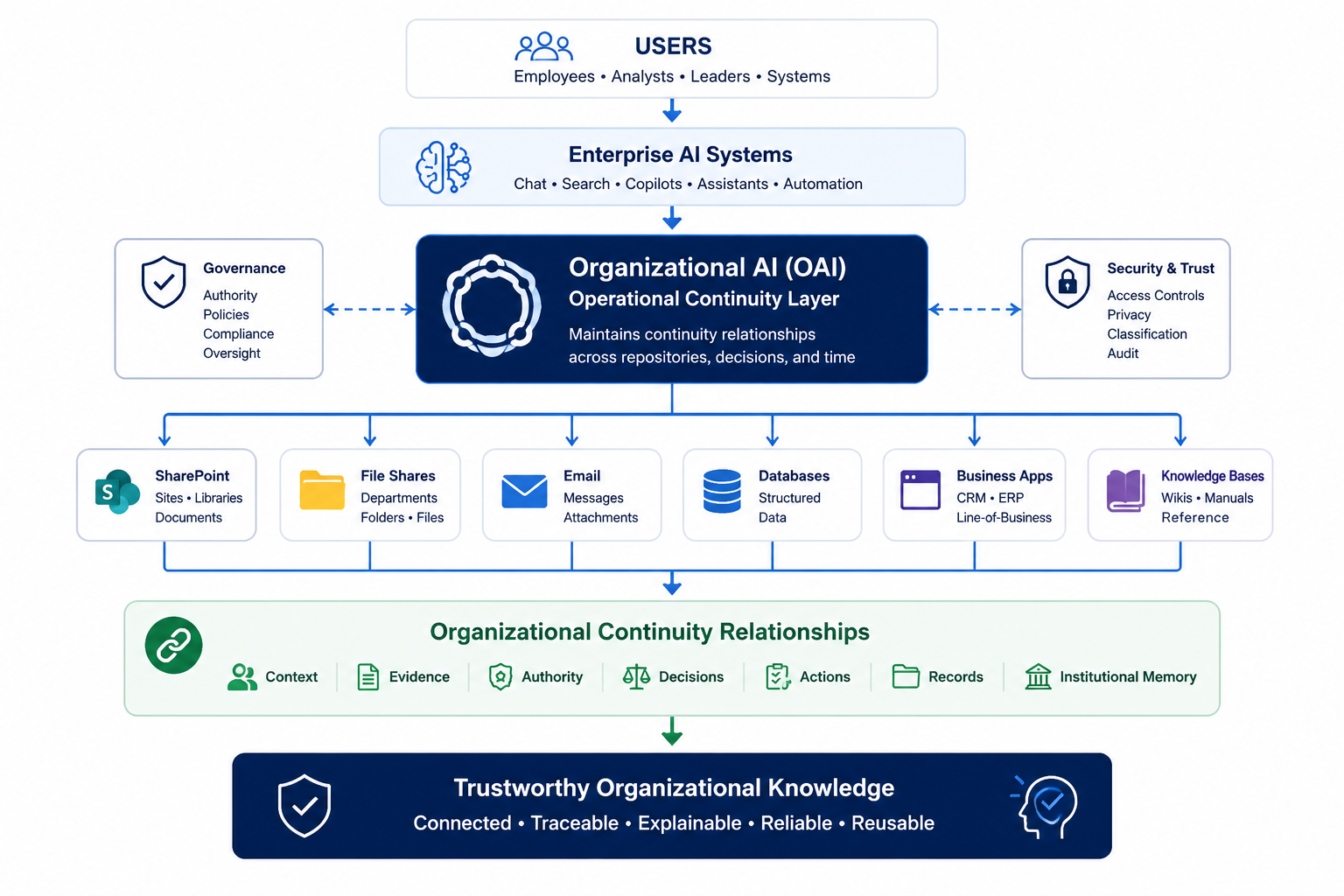
GovKM maps this to the later stages of the Continuity Topology: Action → Record → Institutional Memory → Future Reuse. The inspection becomes institutionally useful only when its result is preserved in a form that can drive the next obligation, such as a required reinspection date.
Temporal continuity depends on system continuity
Many institutional requirements are temporal: renew after a period, reinspect after a failure, review after an event, dispose after a retention interval, reassess when authority changes. Those obligations depend on prior state remaining accessible and computable across systems.
When incompatible systems prevent a prior event from determining a future obligation, the organization retains evidence of what happened but loses continuity of what should happen next.
GovKM interprets this case as evidence that a record has not become Institutional Memory merely because it was stored. It becomes institutional memory when the institution can reliably reconstruct its meaning, current state, and future consequence.
Source
Department of Housing and Urban Development Office of Inspector General, “HUD Did Not Effectively Implement the Requirements for the Timing of Inspections Under NSPIRE,” Report 2026-CH-0003, August 31, 2026.
Continue Exploring
A Decision Memorandum Is Not Decision Provenance.
Aggregation Is Not Continuity.