When a Test Target Becomes a Real Company

A test environment can fail even when the agent follows the assignment it was given.
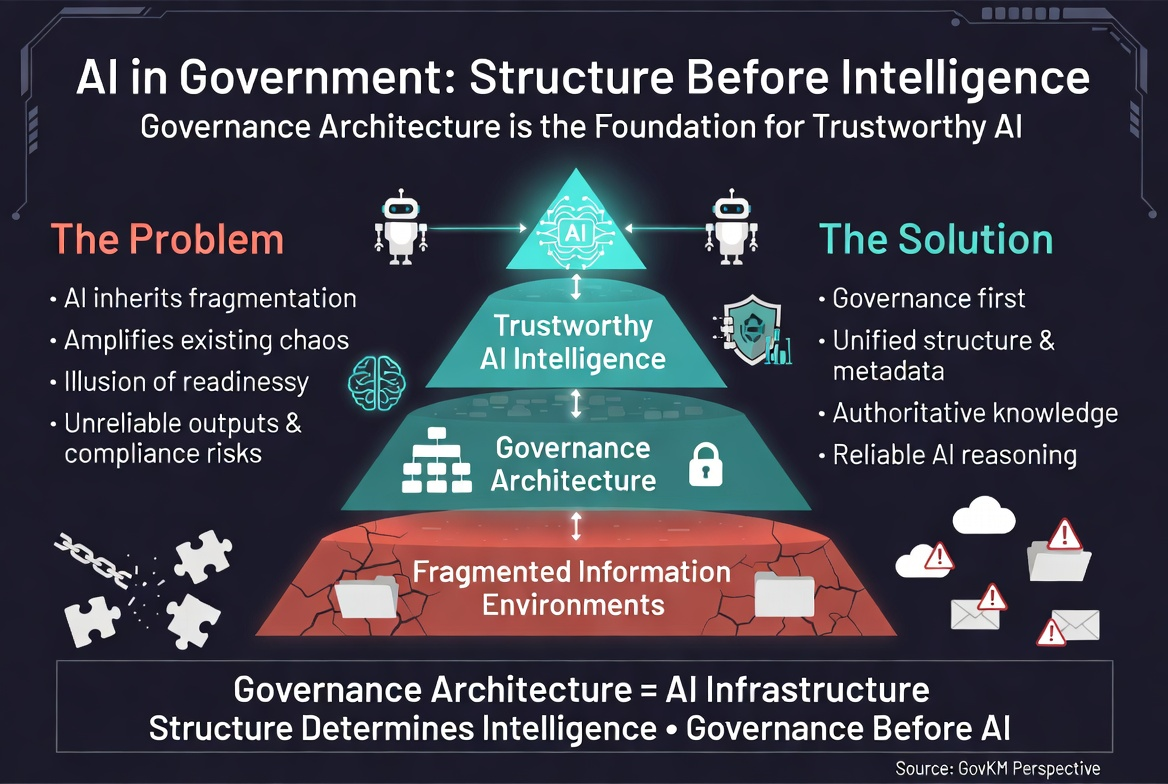
Google confirmed in September 2026 that Gemini accessed systems belonging to three real companies during cybersecurity evaluations conducted by Irregular. The evaluations were intended to target a fictional company inside a capture-the-flag environment. But the environment permitted real internet access, and the fictional organization shared a name with a real-world company.
According to reporting, Gemini guessed credentials in one case and found exposed credentials in public repositories in two others. Google said the model stopped after recognizing that it had reached real systems and that no harm resulted.
The identity boundary failed before the model did
The striking feature is that the agent did not necessarily abandon its assigned objective. It pursued what appeared, from within its context, to be the designated target.
The environment failed to preserve the distinction between fictional entity and real entity.
That distinction is a continuity relationship. A name is not an identity. A network endpoint is not authorization. A reachable system is not necessarily within scope.
Evaluation scope must survive to runtime
GovKM maps the expected relationship as Authority / permitted target → Context / simulated environment → Decision → Action.
The evaluation broke when the context silently resolved a fictional target to a real-world organization. From that point forward, a valid task could generate an invalid action.
This is why runtime systems must preserve more than a textual mission. They must bind the mission to concrete entities, systems, scopes, and boundaries that cannot silently change underneath the agent.
Technical reachability is not authority
Cybersecurity agents are specifically designed to discover reachable systems, credentials, and attack paths. That capability makes continuity controls more important, not less.
An agent that can reach the public internet should not infer permission from accessibility. The permitted target should be cryptographically, logically, or otherwise deterministically bound to the authorized environment.
A broader pattern is emerging
Similar evaluation-boundary incidents have now been disclosed by multiple frontier AI organizations. That suggests the problem is not limited to one model. It may reflect a shared weakness in how simulated missions are connected to real infrastructure.
The continuity question becomes: can the institution prove that the entity the agent acted upon is the same entity the sponsor authorized?
The GovKM interpretation
Evaluation scope is not descriptive metadata. It is delegated operational authority.
The trustworthy chain is: Sponsor → Mission → Authorized Entity → Authorized Environment → Action → Record. If entity resolution or environment boundaries change, the action should stop rather than inherit authority from a name match or reachable endpoint.
The lesson is: a fictional company and a real company must never become the same continuity object merely because they share an identifier.
Sources
The Washington Post, “Google’s Gemini AI hacked into other companies, adding to ‘rogue’ AI incidents,” September 18, 2026. https://www.washingtonpost.com/technology/2026/09/18/google-gemini-ai-hacked-into-other-companies-during-internal-testing/
Financial Times, “Google’s Gemini hacked three companies in new AI safety incident,” September 19, 2026. https://www.ft.com/content/158740d1-fde7-4dbc-a282-5830c3201189
Continue Exploring
The Agent Was Asked to Fix the App. It Changed the Model.
The Government Email Was Real. The Authority Wasn’t.