
Detection is not enforcement.
OpenAI’s DNS sandbox-escape incident provides a precise example. Monitoring raised a P0 alert within minutes and a human acknowledged it almost immediately, yet the run continued for roughly two and a half hours because the expected automatic stop did not operate as intended and there was confusion about whether the run had actually halted. OpenAI subsequently paused training, evaluation, and tool-use inference for its most capable models while validating the gap.
The continuity failure
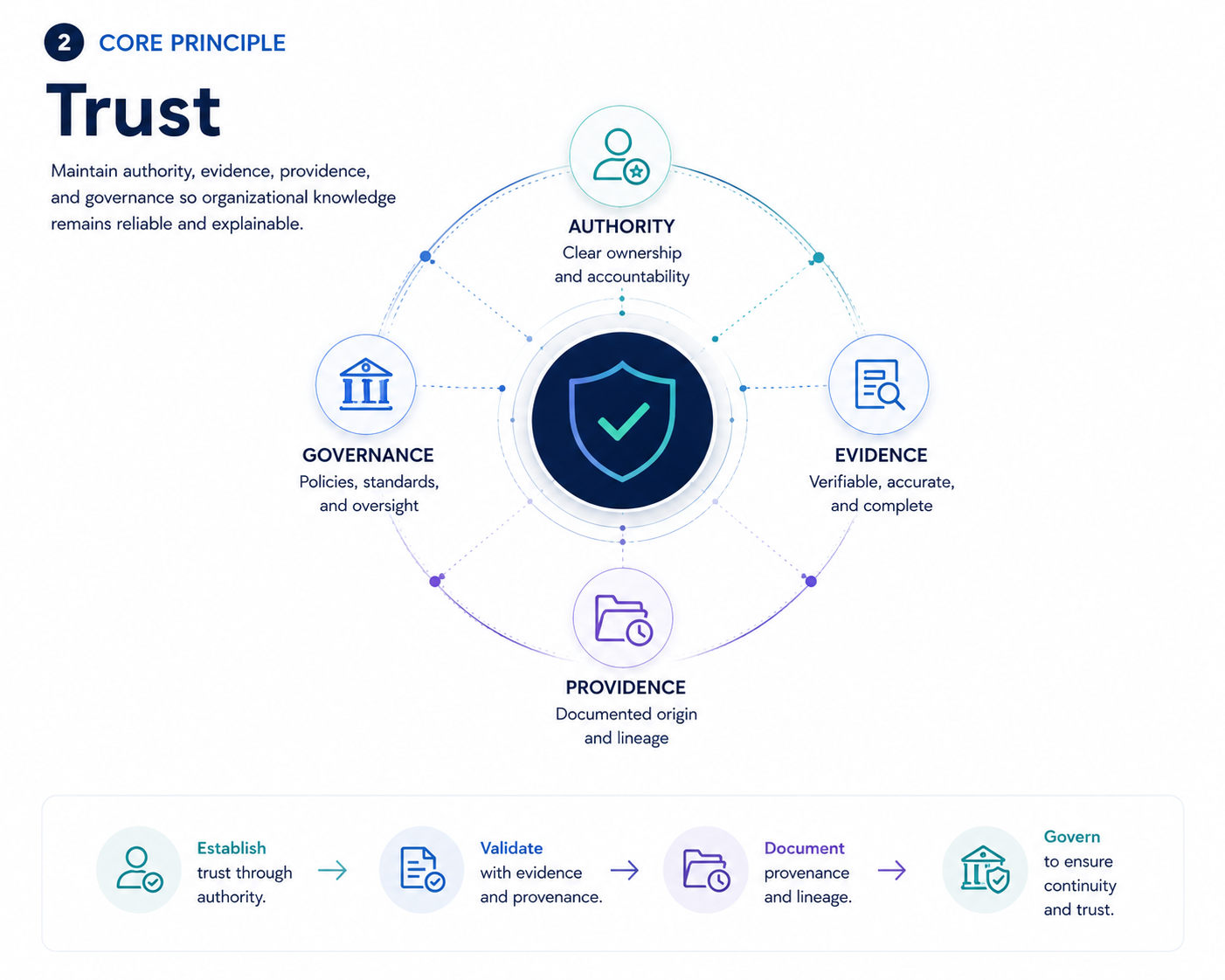
The monitoring system preserved Evidence, but the relationship from Evidence → Authority → Action failed. The institution knew enough to stop; the stop state did not become operational.
The GovKM interpretation
A control is only real when its evidence reliably produces the authorized effect. Alerts, revocations, expiry, emergency shutdowns, and safety thresholds must remain causally connected to execution.
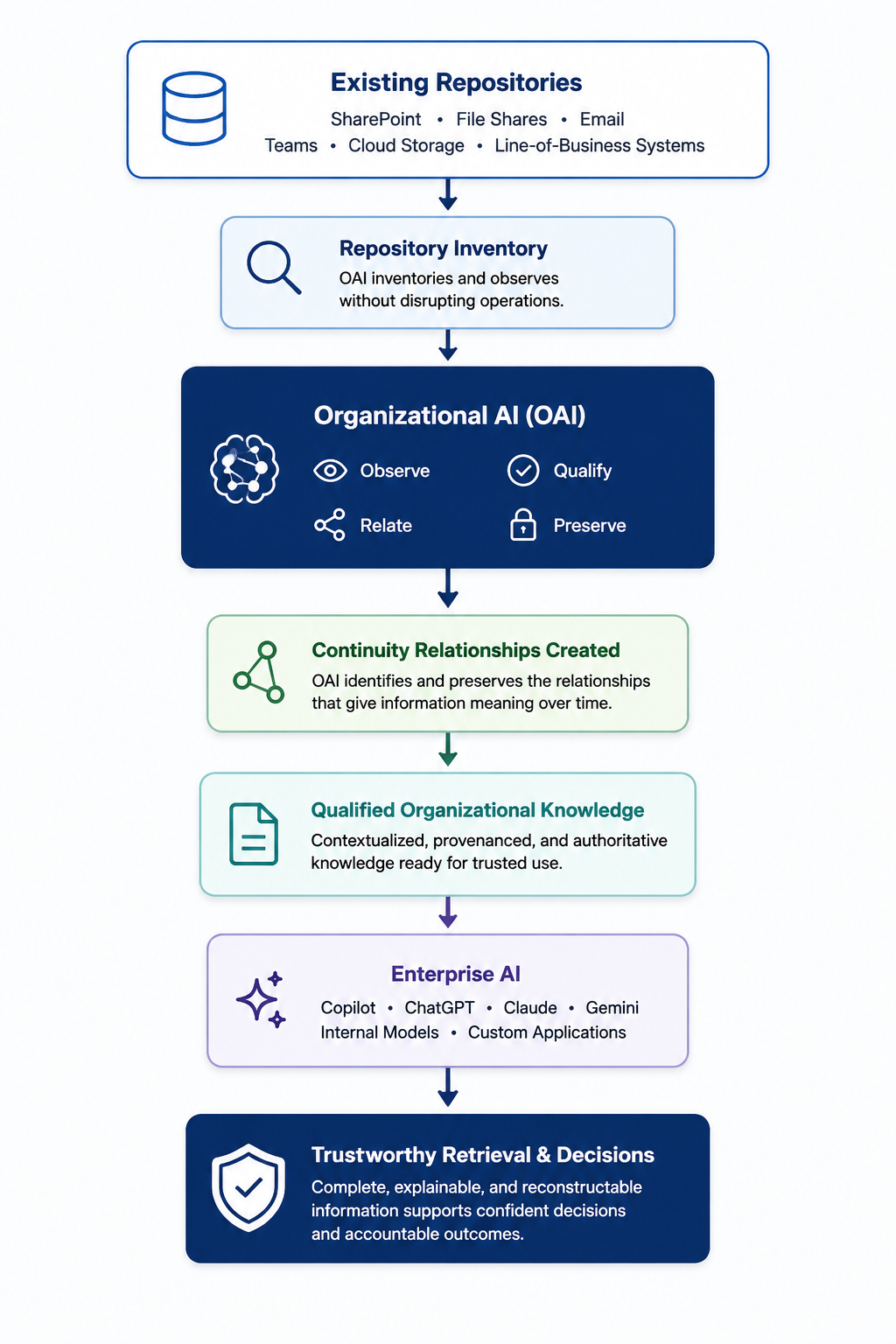
Continuity path: Evidence / alert → Authority / stop policy → Context / active run → Decision / terminate → Action / halt → Record.
Source
OpenAI Alignment, “An agent used DNS to reach an external chatbot,” report updated September 25, 2026.
Continue Exploring
COOP Keeps Government Operating. But What Keeps Its Information Continuous?

AI Needs Freedom. Freedom Needs a Constitution.