The Institution Knew the Threshold Was Breached. The Investor Record Didn’t Say So.

An institution can know that a risk threshold was breached while the public record available to outside decision-makers remains materially less informative.
On September 3, 2026, the U.S. Government Accountability Office reported on financial disclosures by publicly traded banks. GAO found differences in oversight between SEC-reviewed issuers and publicly traded banks without holding companies. In its examination of the three large banks that failed in spring 2023, GAO also found that banks described internal interest-rate or liquidity-risk thresholds but did not disclose when those thresholds had been breached or how management responded.
The finding matters because disclosure is one of the mechanisms by which internal evidence becomes external decision context.
Knowing is not the same as propagating knowledge
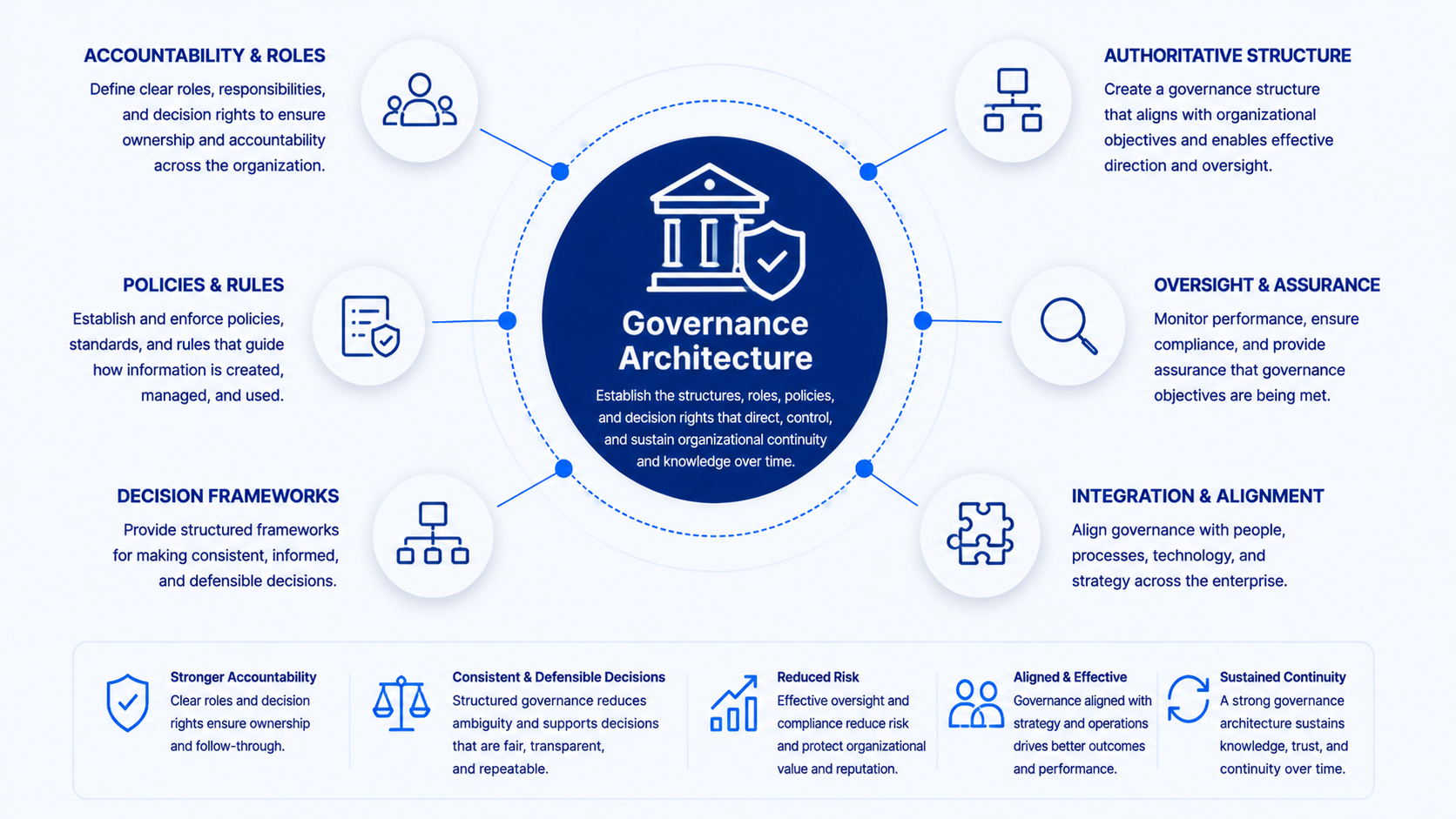
In the GovKM Continuity Topology, Evidence has to retain a governed relationship to Authority, Context, Decision, and Record. An internal risk signal can be authoritative for management while still failing to reach another audience whose decisions depend on the resulting public record.
The continuity problem is therefore not merely whether the bank possessed risk information. It is whether consequential internal evidence propagated through the appropriate authority and materiality judgments into the record used by investors.
Materiality is a continuity decision
Disclosure necessarily requires judgment. Not every internal signal belongs in every external record. But the institution should be able to reconstruct why a piece of evidence was or was not promoted into disclosure, under what authority, and with what effect on downstream users.
GovKM interprets this case as evidence that consequence propagation is part of governance. Information can be valid, important, and known internally while continuity still fails if its required relationship to an authoritative downstream record is not preserved.
Source
U.S. Government Accountability Office, “Bank Financial Disclosures: Actions Needed to Improve Oversight of Information Provided to Investors,” GAO-26-107719, September 3, 2026.
Continue Exploring
A Decision Memorandum Is Not Decision Provenance.
Aggregation Is Not Continuity.