The Evidence Was All There. The Retriever Never Reassembled It.

Relevant retrieval can still be incomplete retrieval.
A September 2026 study evaluated 2,000 span-grounded queries drawn from more than 1,200 agent execution trajectories. Under a fixed token budget, provenance-aligned retrieval units substantially improved complete-evidence retrieval compared with flat text windows, especially when the evidence required for one answer spanned multiple execution events.
The continuity failure
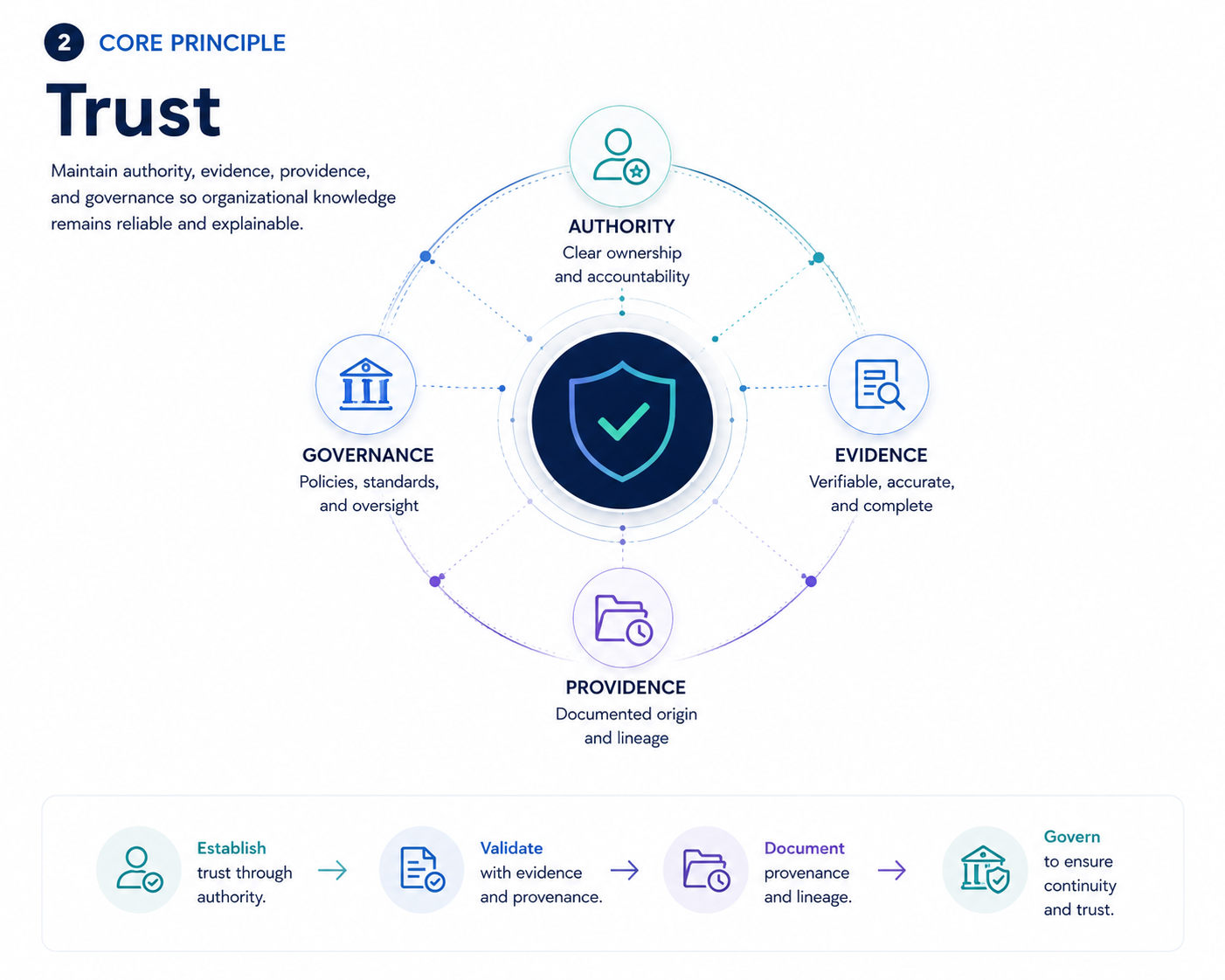
Fixed-window retrieval preserved relevant fragments while losing the transformation and event relationships needed to assemble a complete support set.
The GovKM interpretation
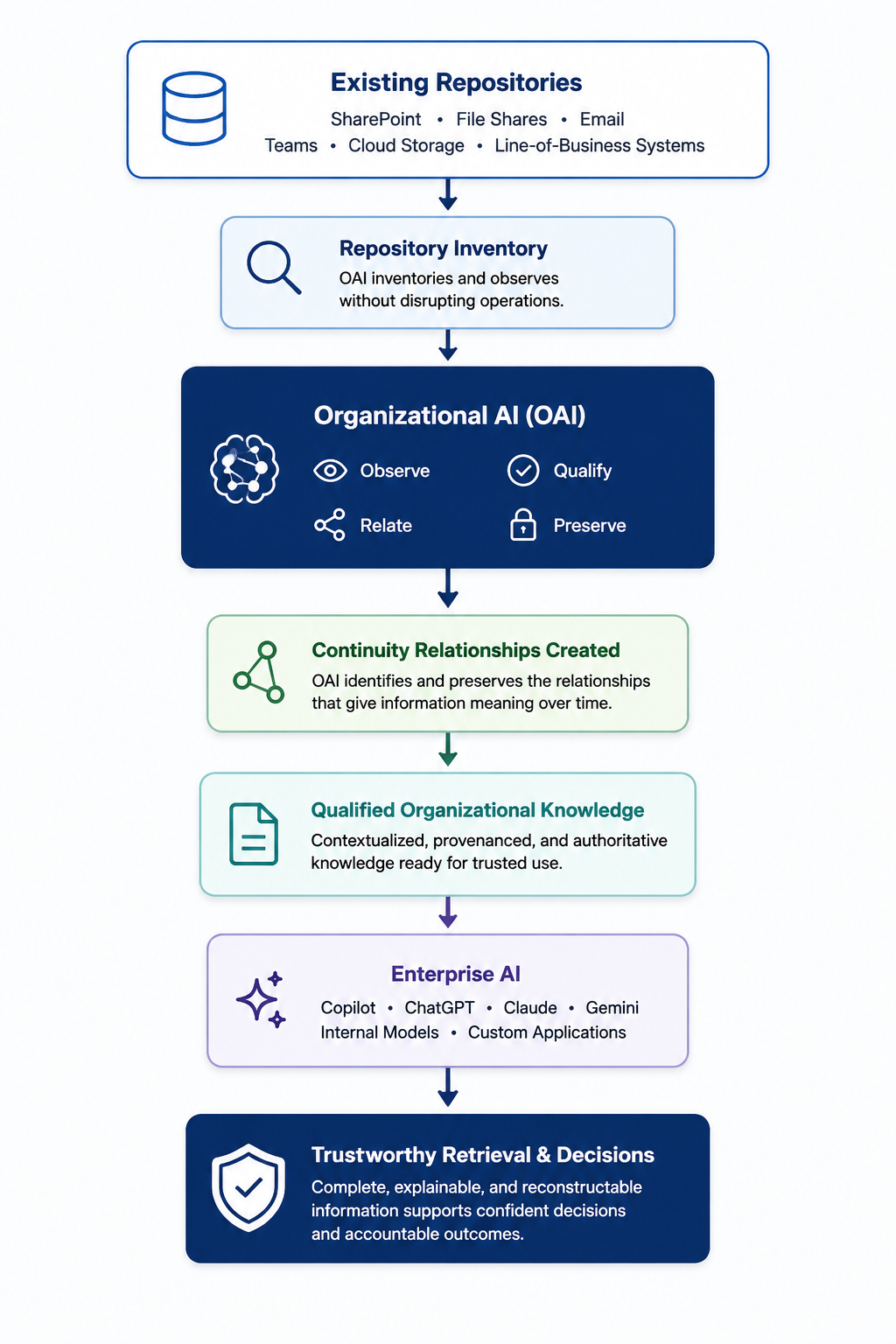
Lineage is not merely audit metadata. It can be retrieval structure. A consequential answer requires the evidence relationship, not simply the nearest fragments.
Continuity path: Source / execution events → Evidence / provenance units → Context / complete support set → Decision → Record → Institutional Memory → Future Reuse.
Source
Yiqi Wang et al., “When Does Execution Provenance Help Agent Memory Retrieval?” arXiv, September 22, 2026.
Continue Exploring
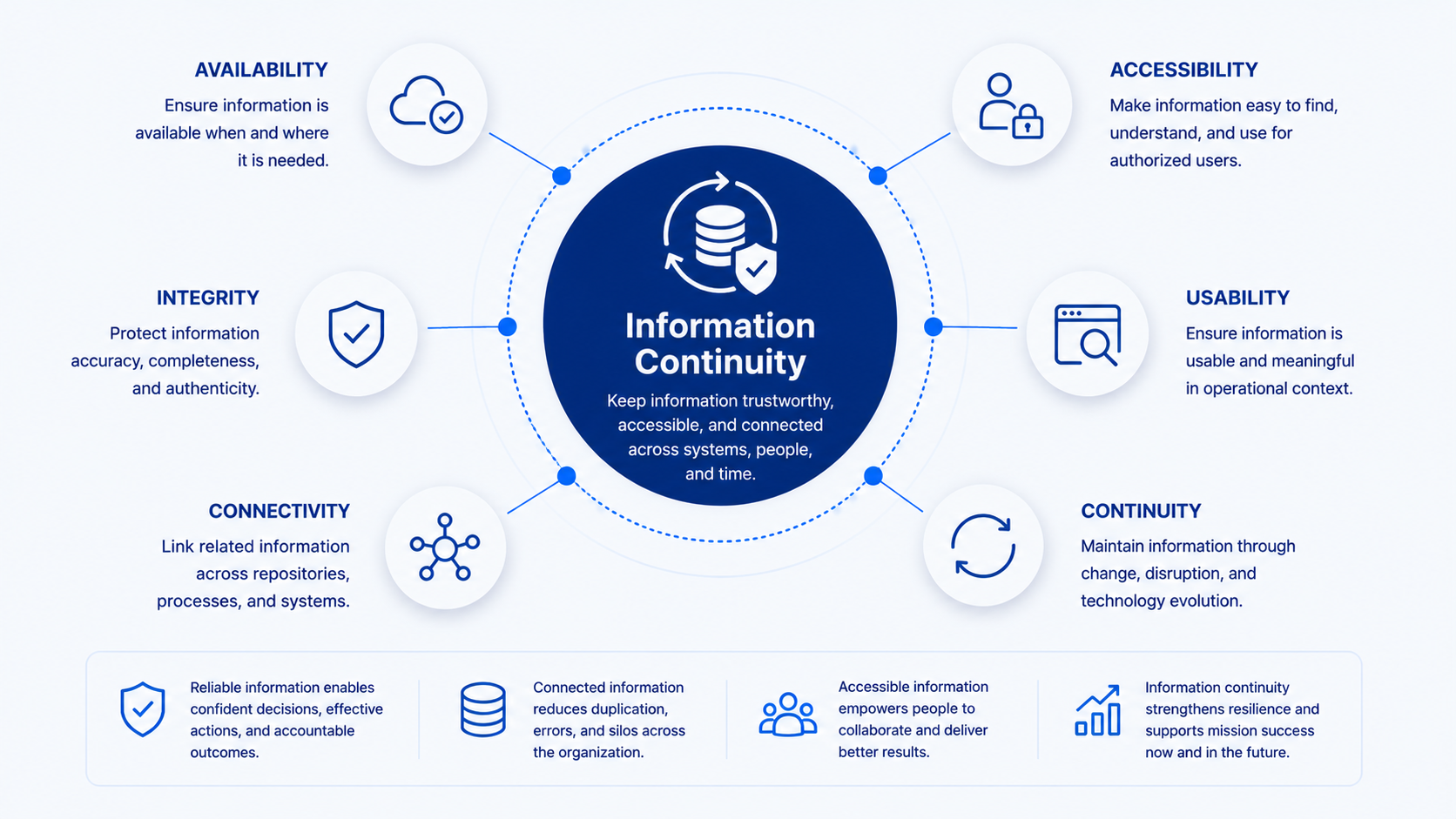
COOP Keeps Government Operating. But What Keeps Its Information Continuous?

AI Needs Freedom. Freedom Needs a Constitution.