
GovKM Practical Continuity Implementation Series | Retail and Commerce
The organizational need
TJX Companies' original Senior Program Lead, Finance Data Governance requisition REQ122942 describes a North American rollout of Finance Data Governance. It emphasizes practical adoption, working sessions, training, ownership, definitions, lineage, data criticality, change management and coordination with Enterprise Data & Analytics. The posting identifies program requirements, not an established continuity failure.
GovKM's independent continuity interpretation: an enterprise financial figure must retain its documented meaning, source, effective period, approval authority and permitted use when it moves among functions, reporting environments and authorized AI tools. A successful rollout should prepare the information corpus for compliance and, primarily, enterprise AI uptake—not merely improve dashboards.
1. Inventory authoritative finance information
Map the reports, source systems, metrics, datasets and supporting records across Finance functions. Identify accountable owners, stewardship responsibilities, classification, retention obligations and unresolved gaps. Deliverable: approved source inventory, ownership register and exceptions list.
2. Establish definitions and operative authority
Document approved financial terms, calculation rules, applicable business scopes, effective dates, amendments and supersession. Distinct legitimate definitions must not be merged simply because they share a label. Deliverable: governed glossary with version history and approval records.
3. Preserve provenance through reporting
Trace important reported values to source records, transformation rules, reconciliations and approvals. Specify how changed source data or approved business definitions affect downstream reporting. Deliverable: independently reviewed source-to-report lineage and exception evidence.
4. Apply compliance and access controls
Map the applicable private-sector financial, privacy, contractual, legal-hold and retention requirements to actual records. Validate user access, privileged access, separation of duties, role changes and lawful disposition. Do not assume federal agency records schedules apply to TJX. Deliverable: owner-approved access/retention matrix and sampled positive/negative authorization checks.
5. Prepare an AI-ready knowledge corpus
Preserve durable identifiers, approved metadata, current and historical definitions, source access policies and an explicit status for incomplete processing. Distinguish inventory, indexing, retrieval candidates, returned passages and evidence actually delivered to an AI model. Deliverable: governed retrieval source package with model-input receipt and attributable citations.
6. Implement workforce adoption and continuing governance
The responsible specialist must lead workshops, training, change communications, decision logs, escalation and handoff. Governance becomes effective only when Finance owners can apply it during ordinary work and maintain it after rollout. Deliverable: accepted stewardship procedures, training evidence, decisions, exceptions and periodic review.
Falsifiable synthetic Text–Graph–Text–Graph diagnostic
Use wholly fictional finance units with similarly named measures, different approved definitions and a later dated revision. Have an authorized AI answer one historical and one current question. PASS only if the answer selects the correct scoped definition, identifies authoritative source and effective date, cites material actually delivered to the model, respects a revoked permission and declares unresolved gaps. This is an illustrative proposal—not a TJX system test.
Authorities and source limitations
TJX's 2026 Form 10-K describes its established Information Management Program and cross-functional Information Management Steering Committee. Its regulatory and internal-control duties must be assessed by subject matter and jurisdiction. The NIST AI Risk Management Framework Playbook is voluntary guidance for governing and measuring AI risk, not proof of adoption. GovKM's steps are independent recommendations grounded in these stated needs and authorities.
The GovKM advantage
Finance governance should not stop when a data catalog is populated. GovKM recommends building an authoritative, secured and historically interpretable knowledge corpus, so compliance, audit and authorized enterprise AI all draw on identifiable evidence and operative business rules. This model-independent preparation reduces ambiguity before AI systems are asked to interpret enterprise financial information.
Independent GovKM educational analysis. No TJX endorsement, alleged incident, actual model execution or partnership is implied.
Continue Exploring

Joint Training Knowledge Governance: Preparing Defense Information for AI
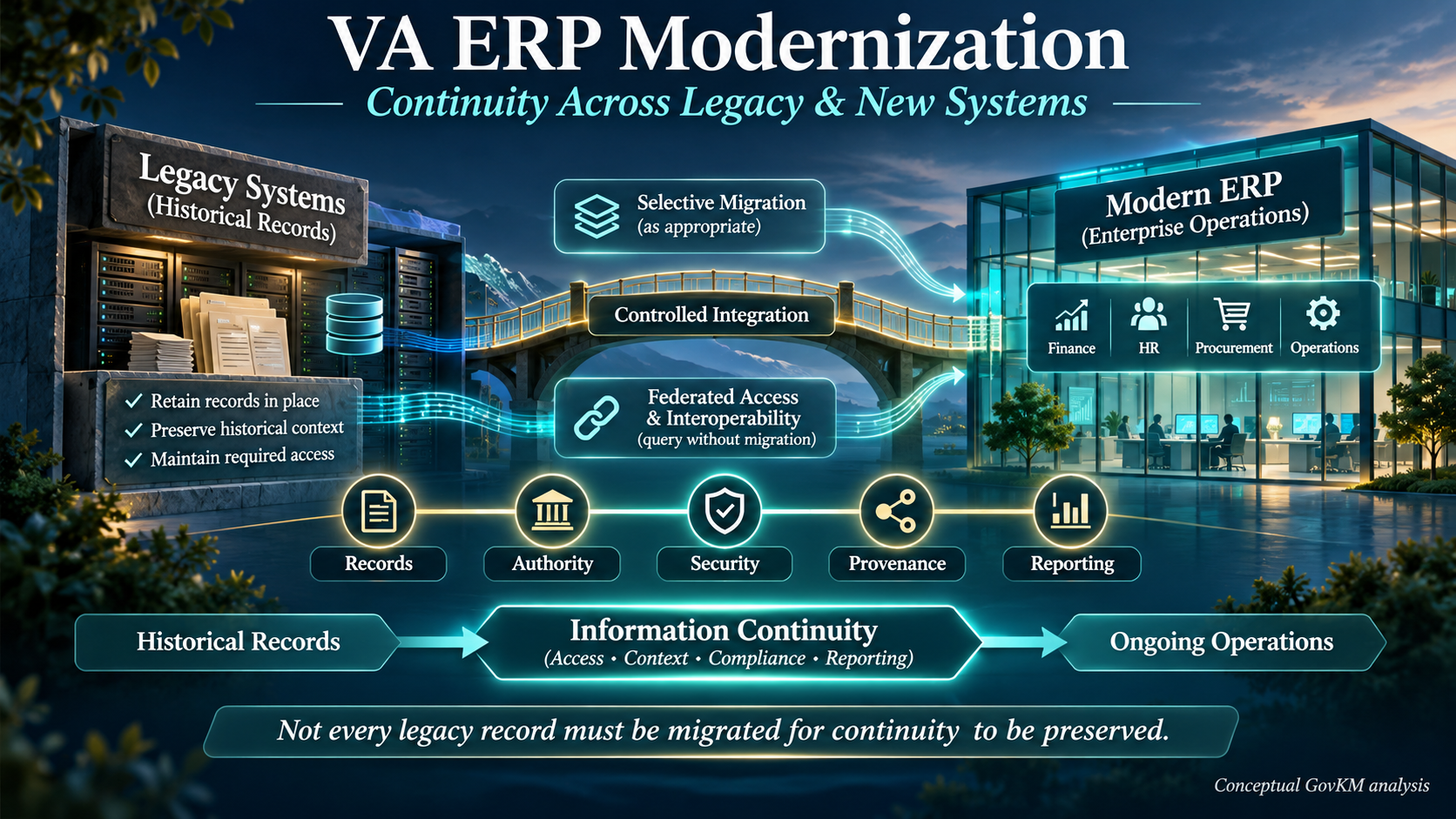
VA ERP Modernization: Preserve Continuity Without Migrating Every Legacy Record