GOVKM KNOWLEDGE
Articles and Research on Organizational Continuity
Explore GovKM analysis, research, and practical guidance on Organizational Continuity, information governance, AI readiness, institutional knowledge, and continuity architecture.
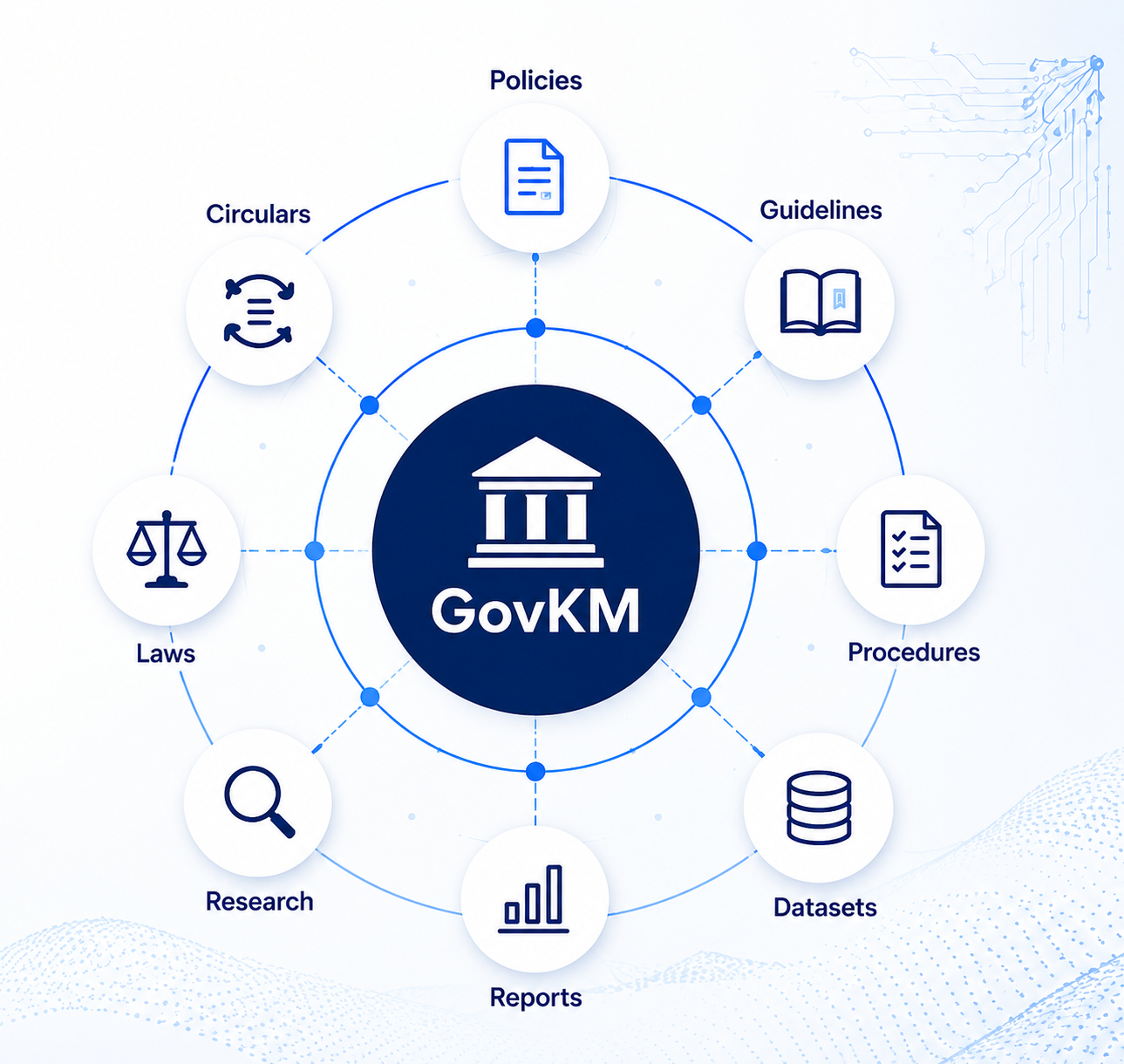
FEATURED KNOWLEDGE
Featured Insights
Explore GovKM research, doctrine, and implementation guidance addressing the continuity challenges facing modern organizations.
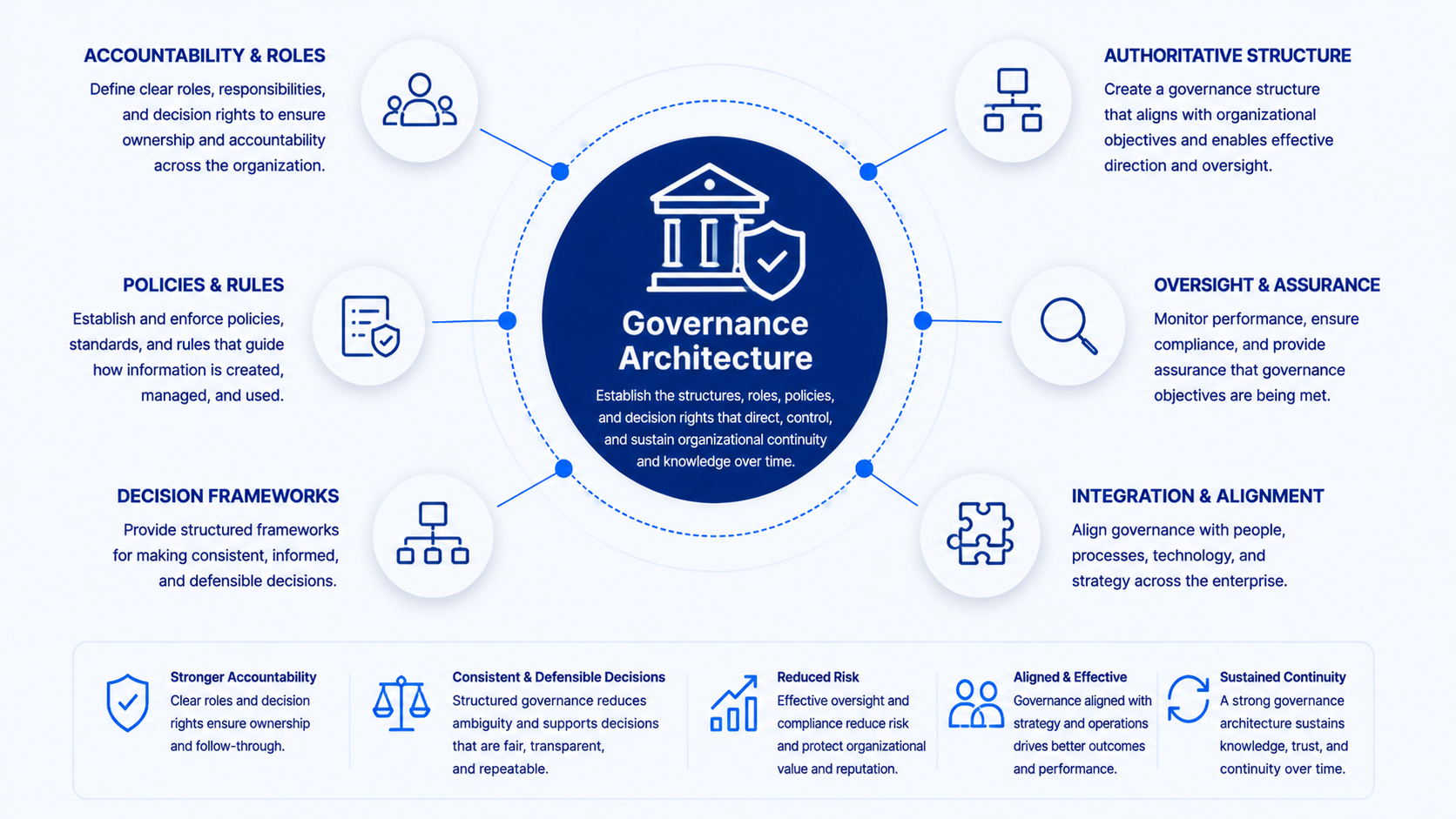
Governance Architecture
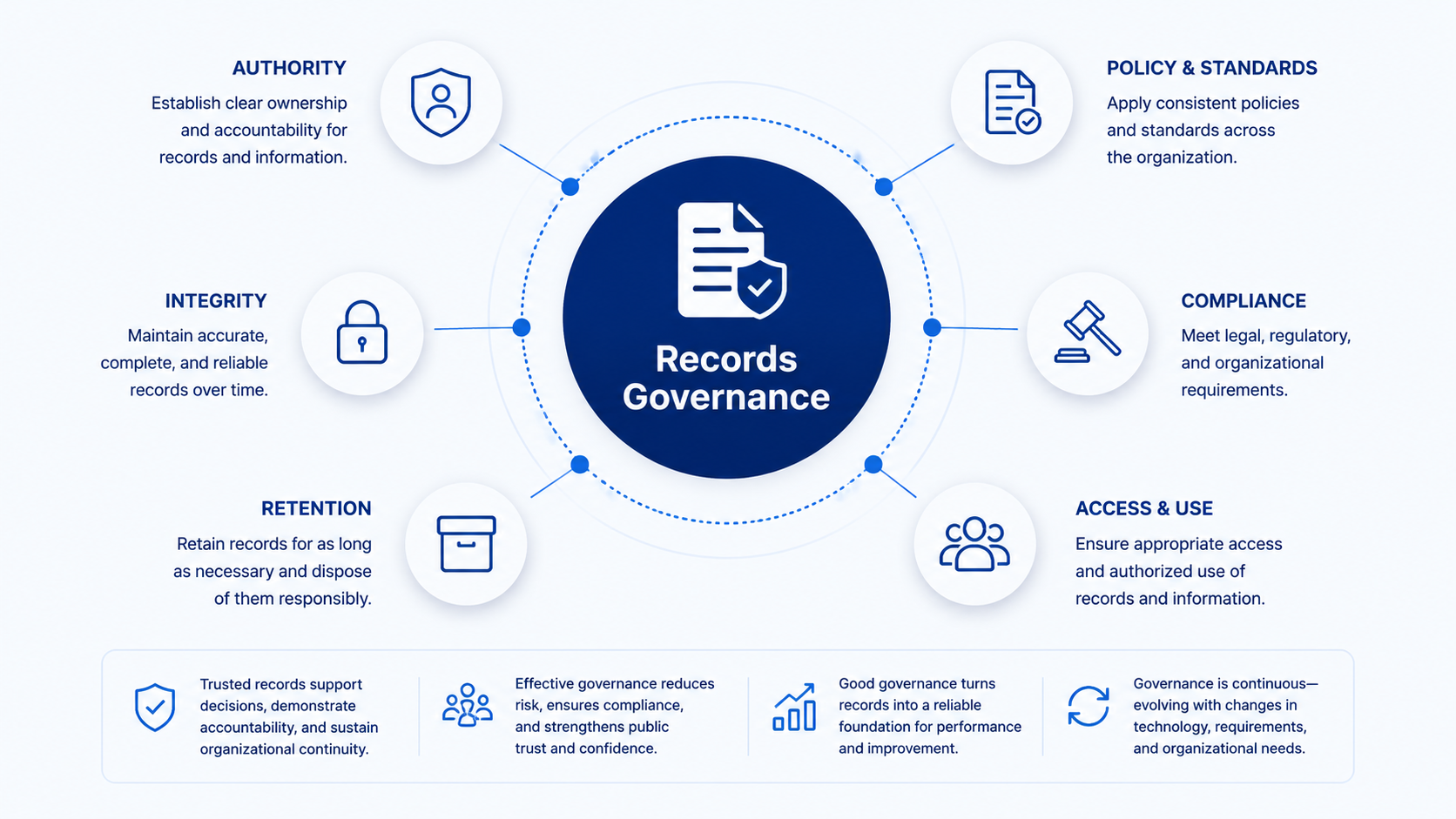
The Rule Existed. The Institution Could Not Prove the Decision Followed It.
An HHS OIG audit of Arizona Medicaid shows that policy authority is not operational governance by itself. Institutions must preserve evidence showing how governing requirements actually constrained decisions and actions.
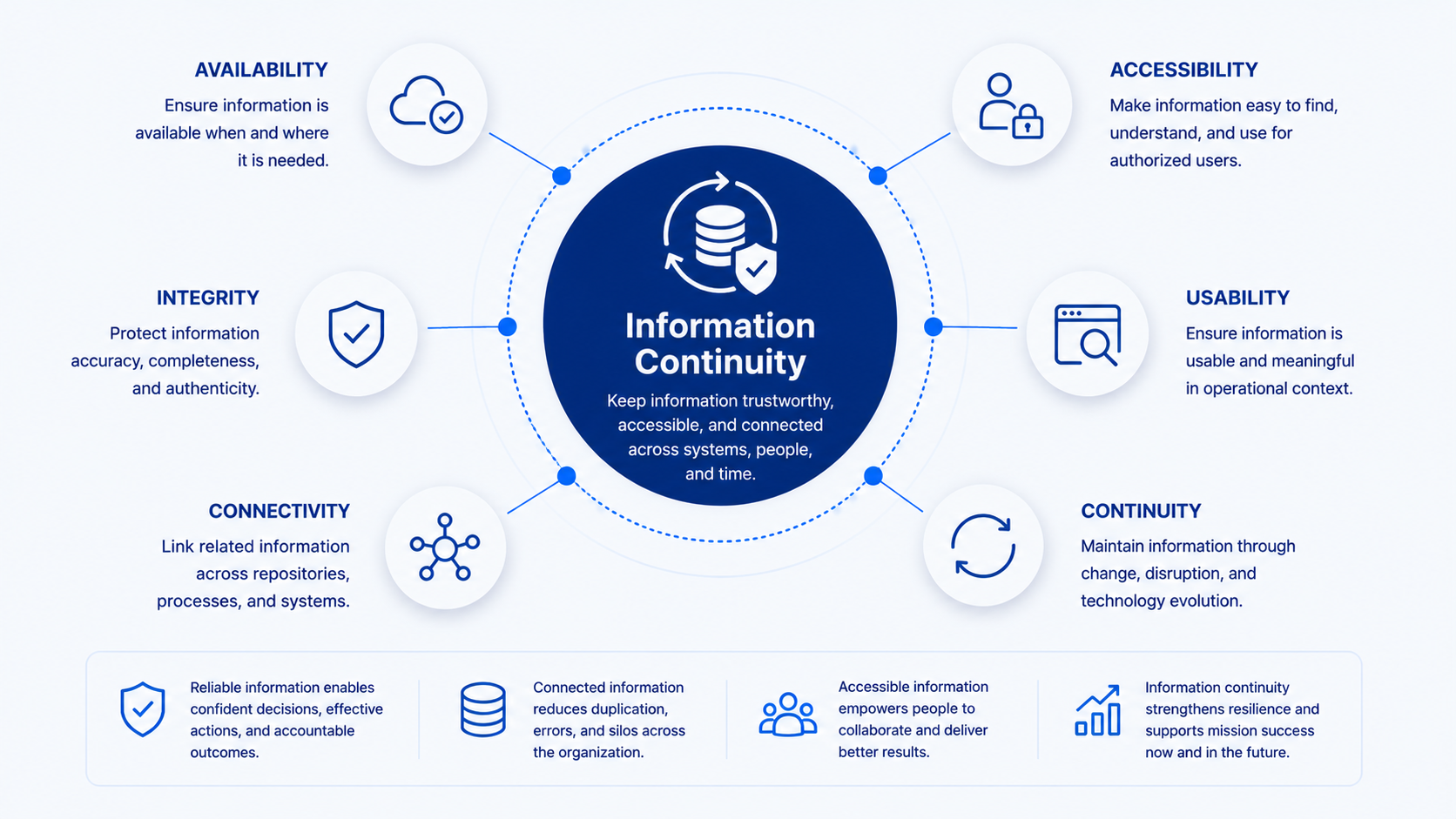
Information Continuity
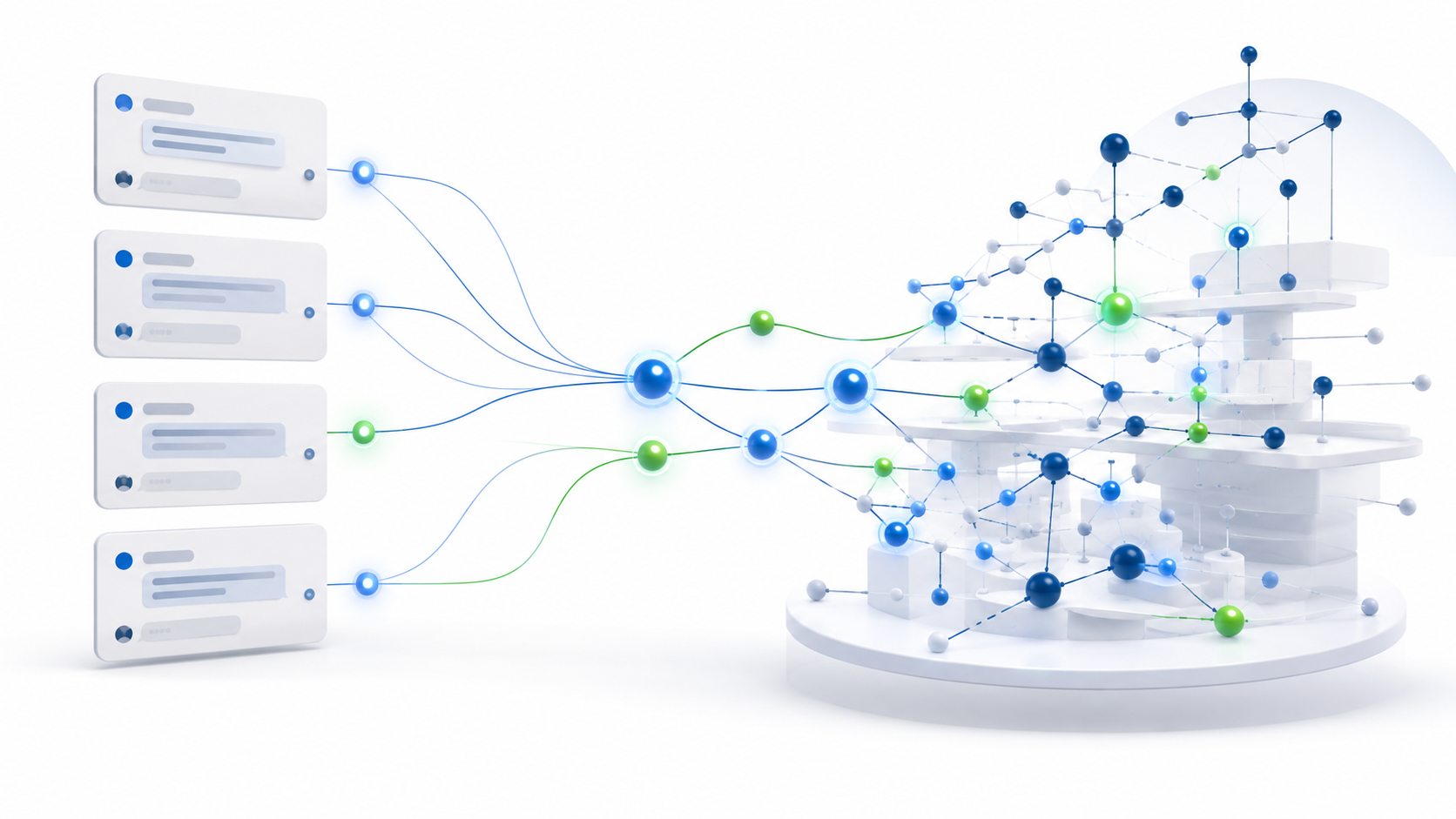
Your AI History Is Not Yet a Knowledge System
AI platforms can preserve, search, and export conversations. But a collection of retrievable chats does not preserve how a person’s ideas, evidence, corrections, decisions, and outputs develop across conversations and platforms. That requires continuity.
Corporate Operational Knowledge
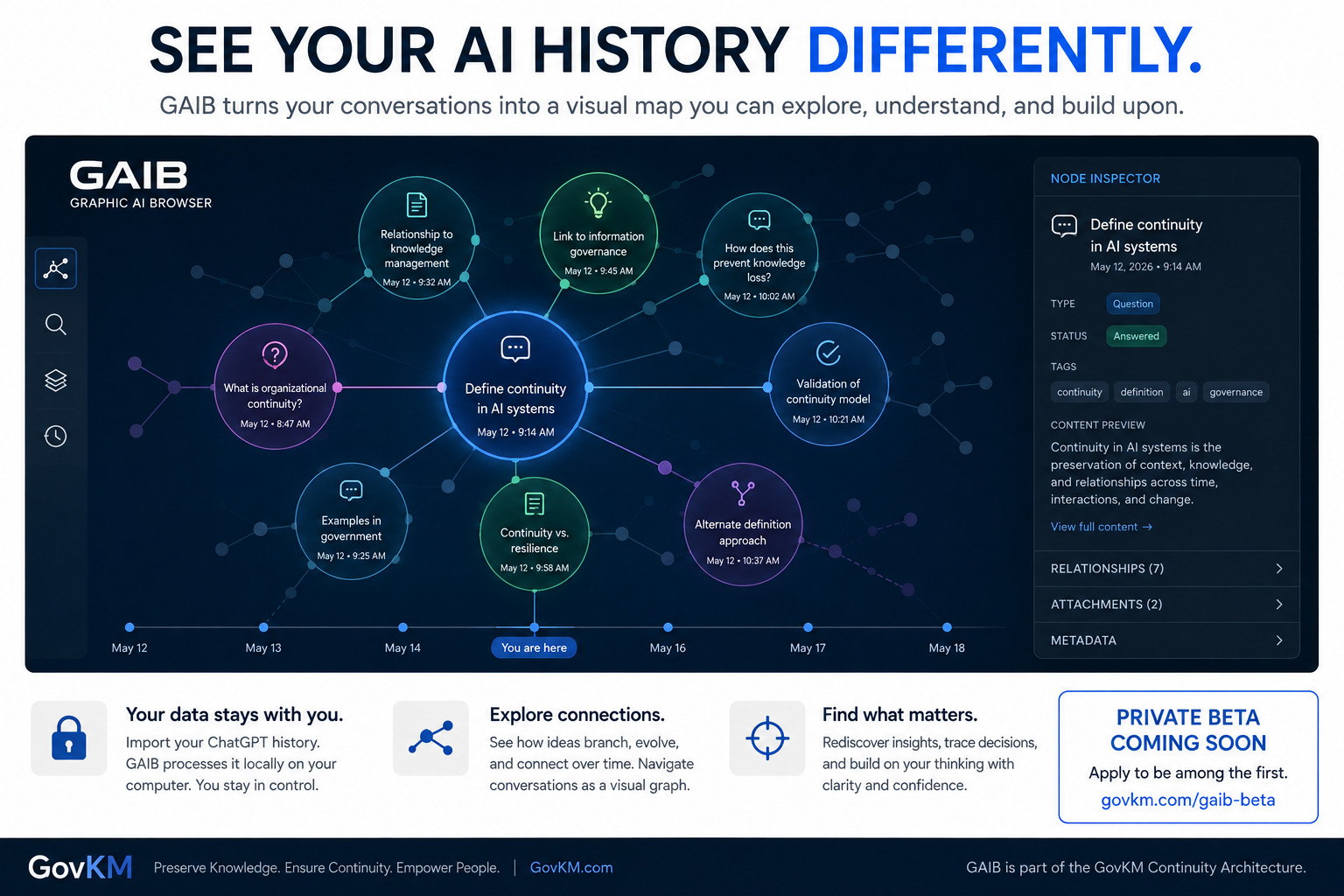
Your AI History Is Becoming Memory. Why Can't You See It?
Heavy AI users are accumulating valuable reasoning, decisions, corrections, and unfinished work inside linear chat histories. GovKM is preparing GAIB—the Graphic AI Browser—for a small private beta that turns supported AI history into a locally processed visual environment users can navigate and inspect.
Organizational Continuity
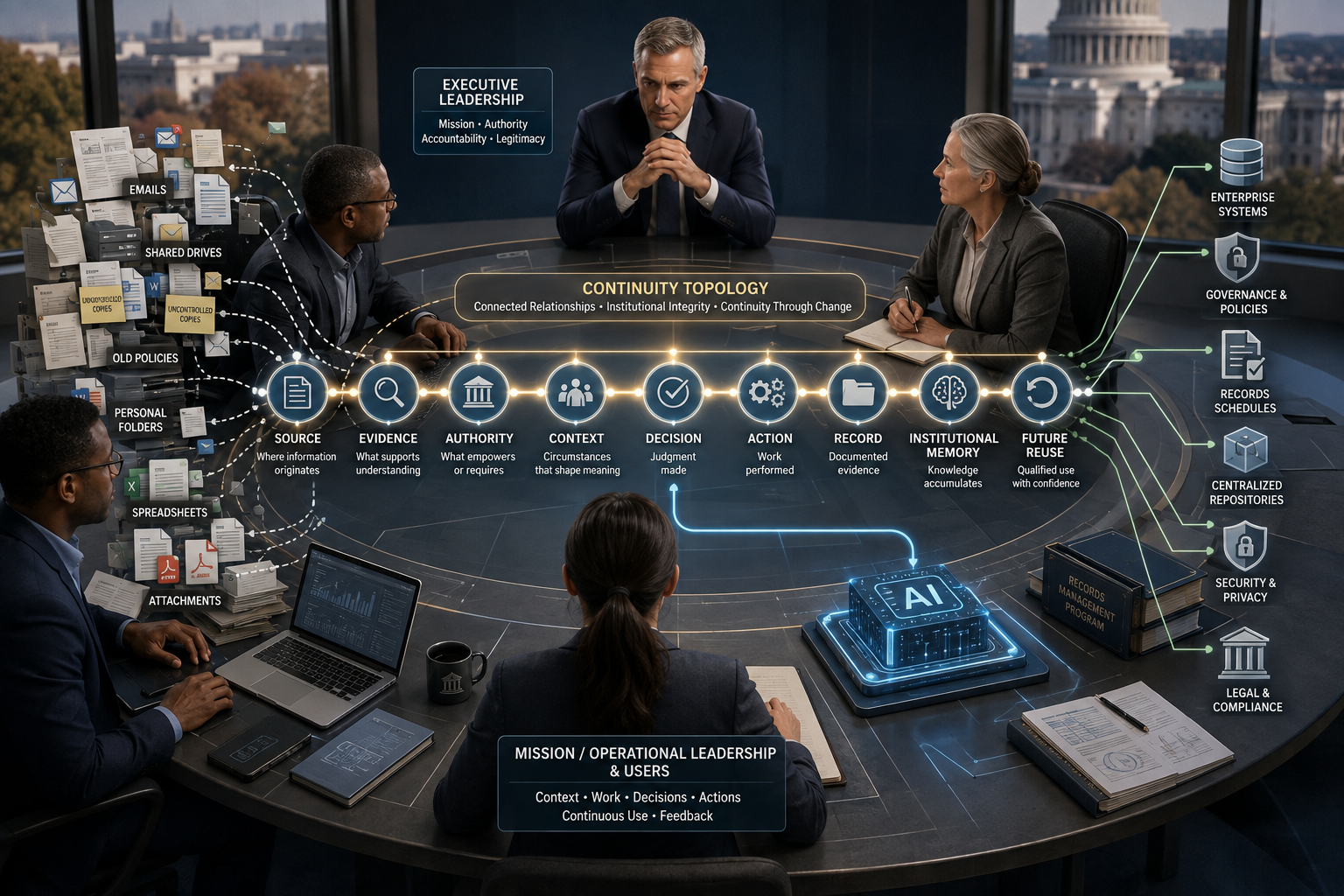
The Institution Must Agree Before the AI Can Know
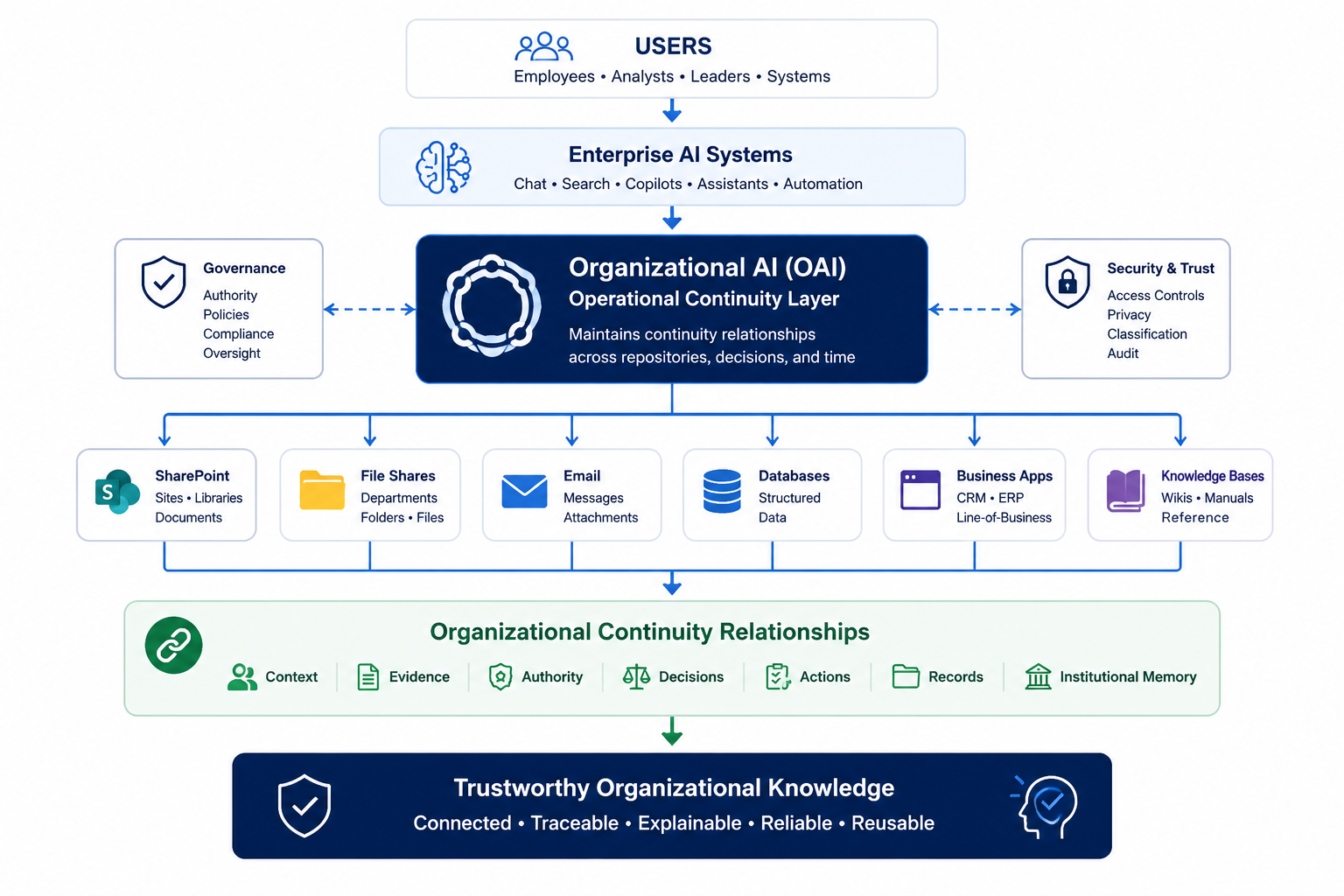
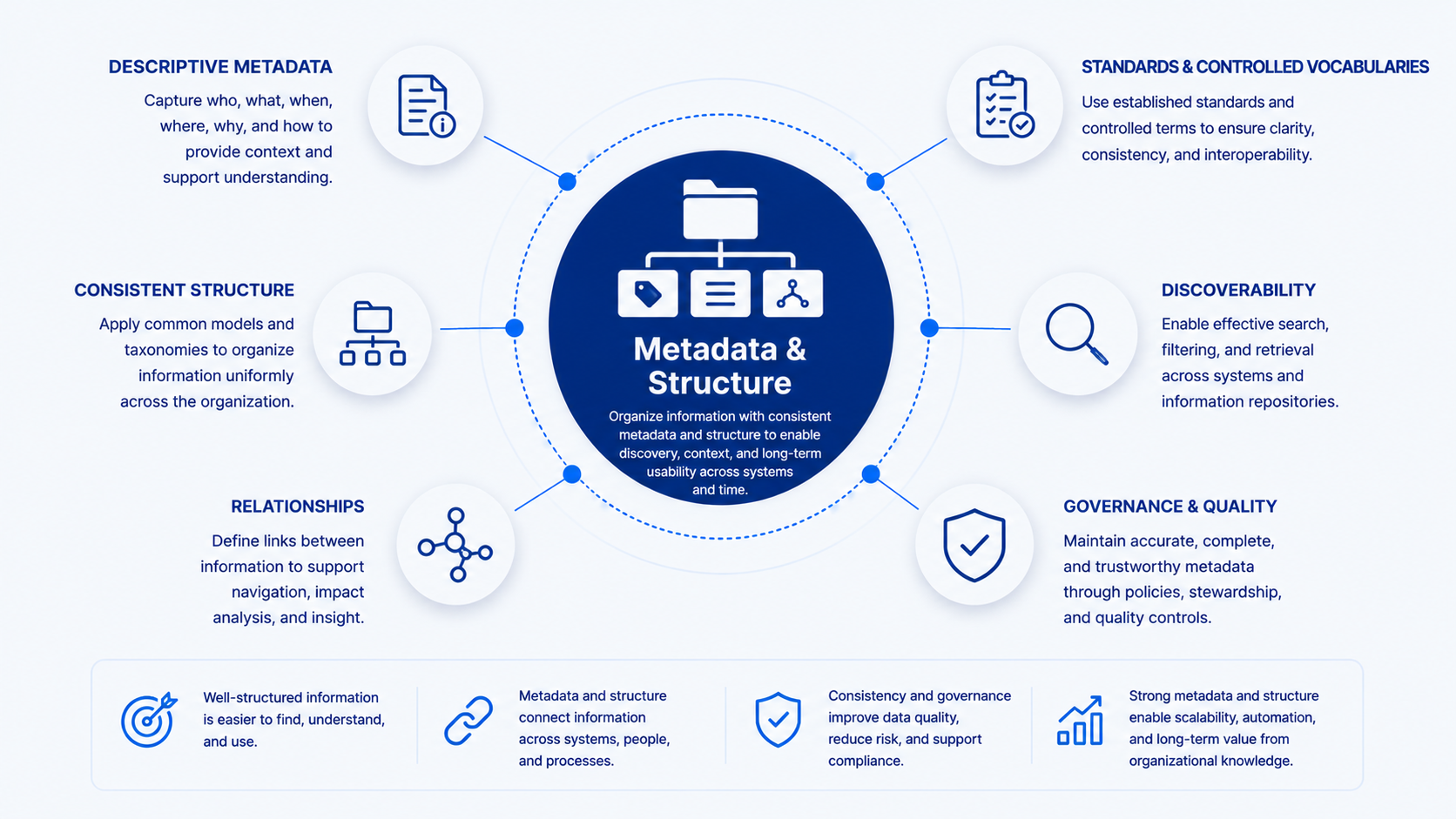
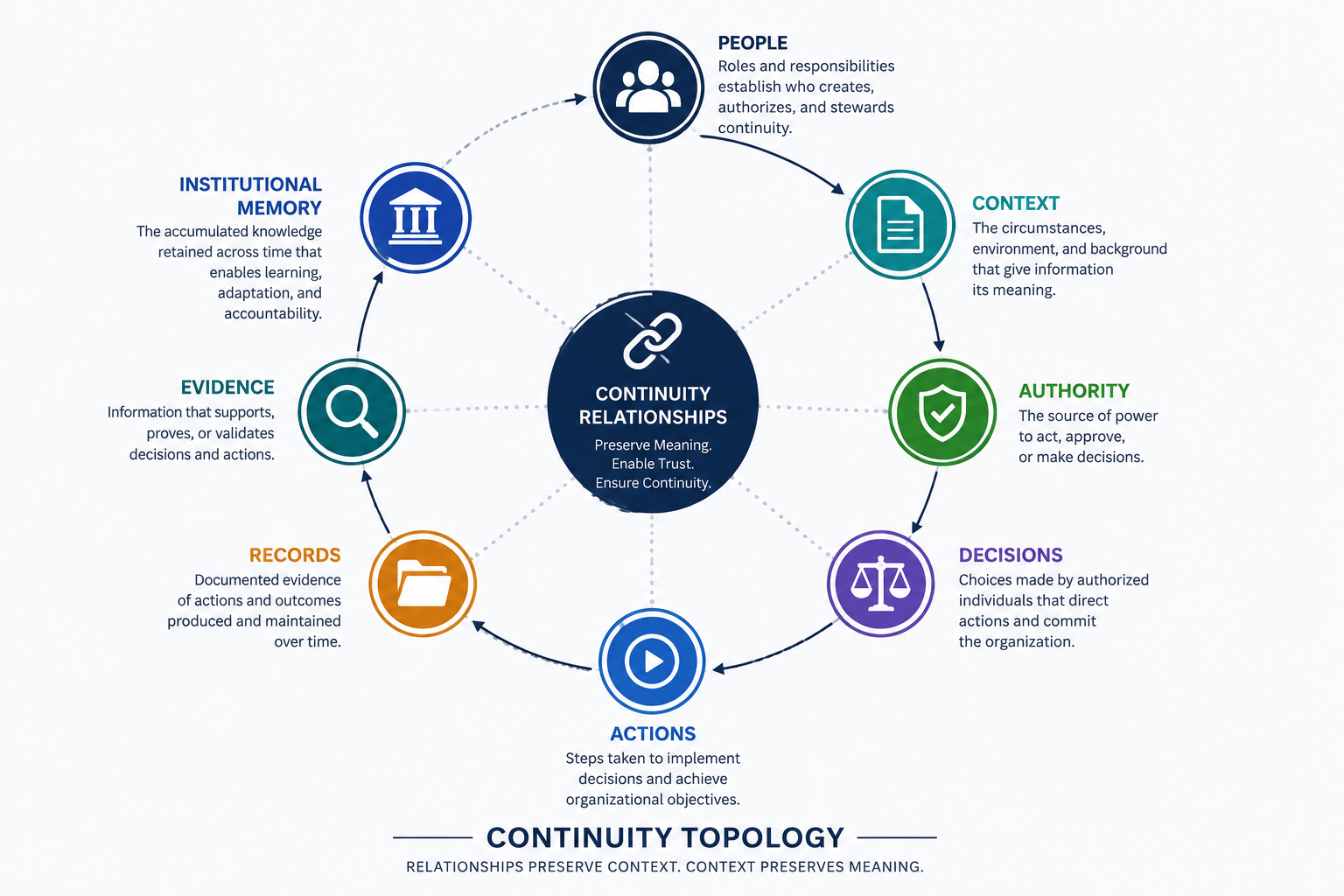
Organizations already possess most of the information AI needs. What they often lack are durable relationships connecting sources, evidence, authority, context, decisions, actions, records, institutional memory, and future reuse. As AI replaces work once performed by people who informally carried those relationships, Continuity becomes an institutional mandate. GovKM proposes a Continuity Compact among executive leadership, technology, records management, mission leadership, and users to establish the authoritative information environment that humans and AI require to act legitimately through organizational change.
Organizational Continuity
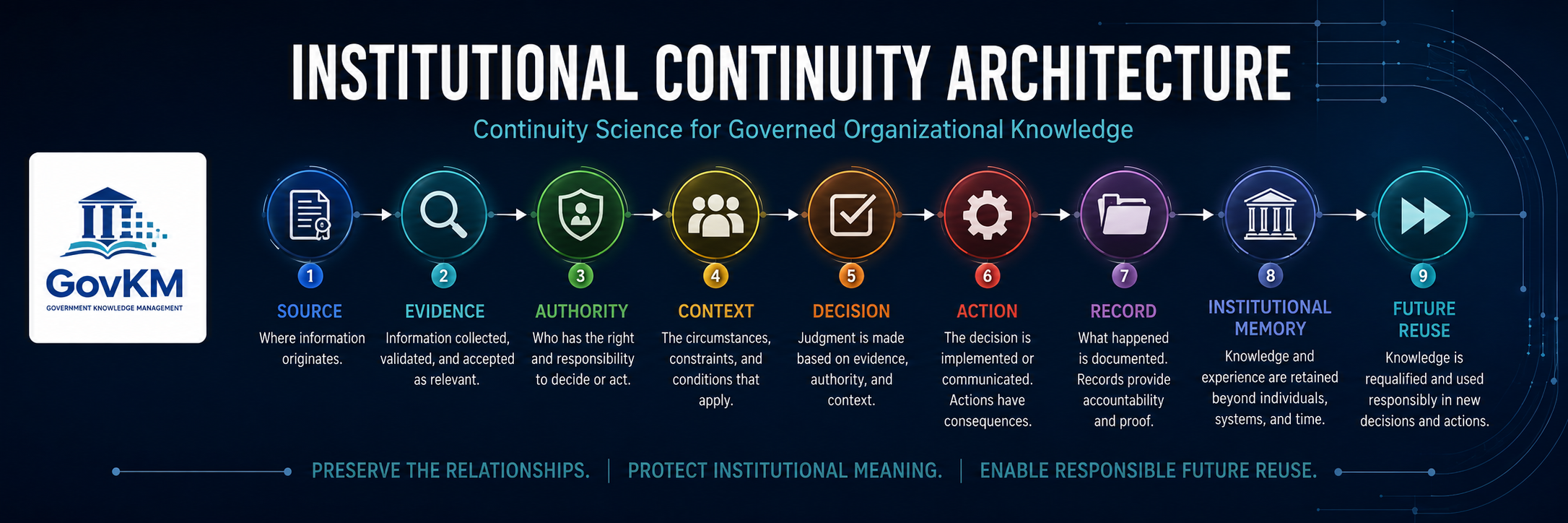
The Continuity Topology: How Institutional Knowledge Remains Trustworthy Across Time
A framework for preserving the relationships between sources, evidence, authority, context, decisions, actions, records, institutional memory, and future reuse
Governance Architecture
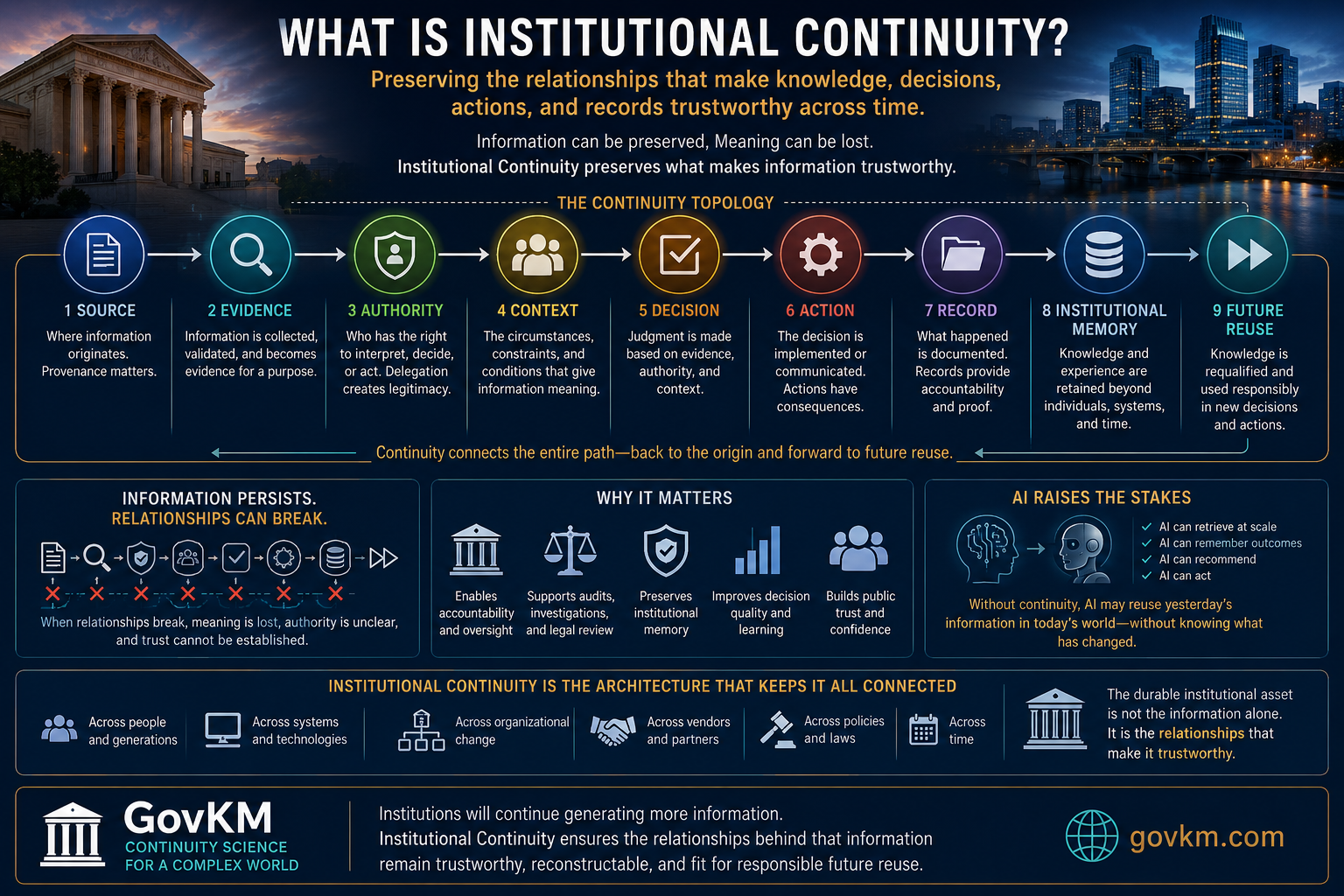
What Is Institutional Continuity?
Why preserving information is not enough—and why institutions must preserve the relationships that make knowledge trustworthy across time.
ARTICLES
Latest Research and Articles
Browse GovKM research, implementation guidance, continuity science, governance architecture, AI readiness, and organizational continuity.
Risk Disclosure Continuity
The Institution Knew the Threshold Was Breached. The Investor Record Didn’t Say So.
GAO found that banks could disclose internal risk thresholds without disclosing that those thresholds had been breached or how management responded. The case shows how authoritative internal evidence can fail to propagate into the downstream record used by investors and other external decision-makers.
Record Propagation
The Transaction Happened. The Public Record Didn’t Fully Inherit It.
PBGC OIG found completeness and accuracy problems in obligation and outlay information reported to USAspending.gov, including contract actions not properly reflected. The case shows how a completed institutional transaction can fail to propagate into the downstream record later used for oversight, transparency, retrieval, and reuse.
Consequence Continuity
A Finding Is Not Complete Until Its Consequences Propagate
HHS OIG found cases where California Medicaid fraud determinations did not reliably become the required downstream reporting and financial actions. The case establishes consequence continuity: a finding is not institutionally complete until its required effects propagate across organizational boundaries into dependent decisions, actions, and records.
Lifecycle Continuity
The Drug Changed Status. The Government’s Information Did Not.
HHS OIG found $587.7 million in ineligible Medicare Part D payments after drug status changes failed to propagate consistently through FDA data, labeling, CMS formulary records, and downstream payment logic. The case demonstrates that authoritative state changes are dependency events, not local database updates.
AI Instrument Provenance
The Model Name Was the Same. The Judge Wasn’t.
A preregistered study found substantial instability when identical inputs were replayed against black-box LLM judges, even under the same model name. When AI is used as an institutional measuring instrument, governance needs operational instrument provenance and reliability evidence—not merely the model identifier.
Identity Continuity
The Person Was the Same. The Matching Rules Weren’t.
SSA OIG found that independently developed identity-verification systems could apply different matching criteria to the same evidence and produce different outcomes. Entity resolution is therefore a governed continuity relationship, not merely a lookup: matching rules, thresholds, exceptions, and conflicting identity states require provenance and reconciliation.
Source Custody & Provenance
The Registry URL Was Right. The Source Wasn’t.
Coder’s registry compromise showed that users could contact the legitimate registry hostname while attacker-controlled infrastructure served malicious modules. The case distinguishes source identity from source custody: a trusted identifier remains trustworthy only while control of the delivery path and artifact lineage can be established.
Decision Reconstruction
The System Calculated the Debt. The Notice Couldn’t Explain It.
SSA OIG found widespread deficiencies in overpayment notices even when underlying systems had established the overpayment state. The case shows that a consequential decision is not fully recorded unless its evidence, calculation, context, authority, and challenge rights remain reconstructable in the institutional record.

AI Retrieval and Institutional Continuity
The Incident Was in the Logs. The Search Didn't Find It.
Anthropic disclosed a fourth real-system cybersecurity incident that was already preserved in its transcript corpus but missed by an initial AI-assisted search. The case demonstrates a central continuity principle: retaining a record does not make it Institutional Memory unless retrieval can reliably reconstruct it as evidence—and the system being audited should not become the sole interpreter of its own actions.
next step
Continue Your Continuity Journey
Explore the GovKM Continuity Framework or connect with GovKM to discuss your organization’s continuity, governance, and AI-readiness priorities.
FRAMEWORK
Explore the GovKM Continuity Framework
Understand the domains, relationships, principles, and implementation architecture that support organizational continuity.
CONNECT
Talk With GovKM
Discuss organizational continuity, AI readiness, governance architecture, research collaboration, or implementation priorities.