GOVKM KNOWLEDGE
Articles and Research on Organizational Continuity
Explore GovKM analysis, research, and practical guidance on Organizational Continuity, information governance, AI readiness, institutional knowledge, and continuity architecture.
FEATURED KNOWLEDGE
Featured Insights
Explore GovKM research, doctrine, and implementation guidance addressing the continuity challenges facing modern organizations.
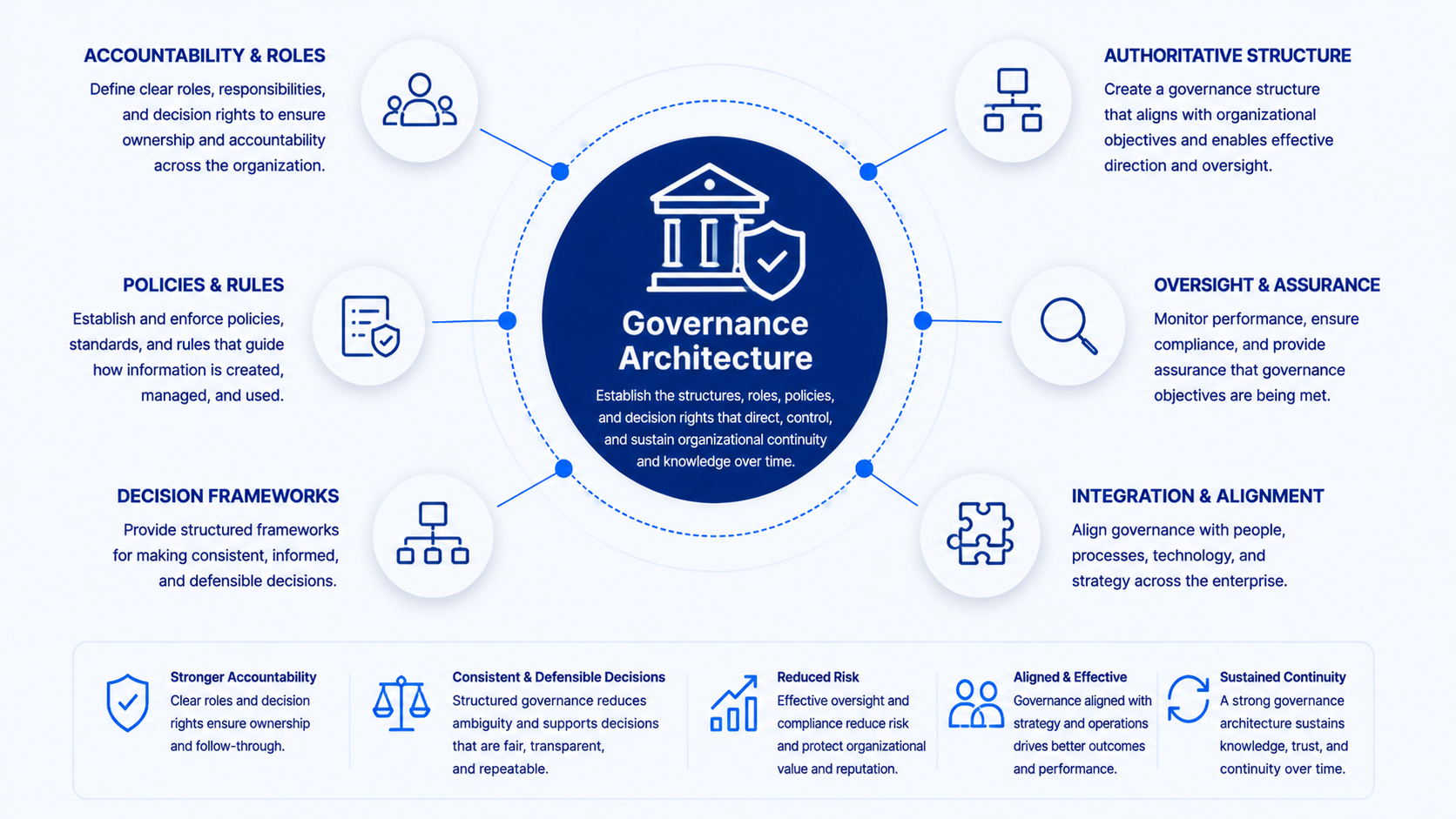
Governance Architecture
The Rule Existed. The Institution Could Not Prove the Decision Followed It.
An HHS OIG audit of Arizona Medicaid shows that policy authority is not operational governance by itself. Institutions must preserve evidence showing how governing requirements actually constrained decisions and actions.
Information Continuity
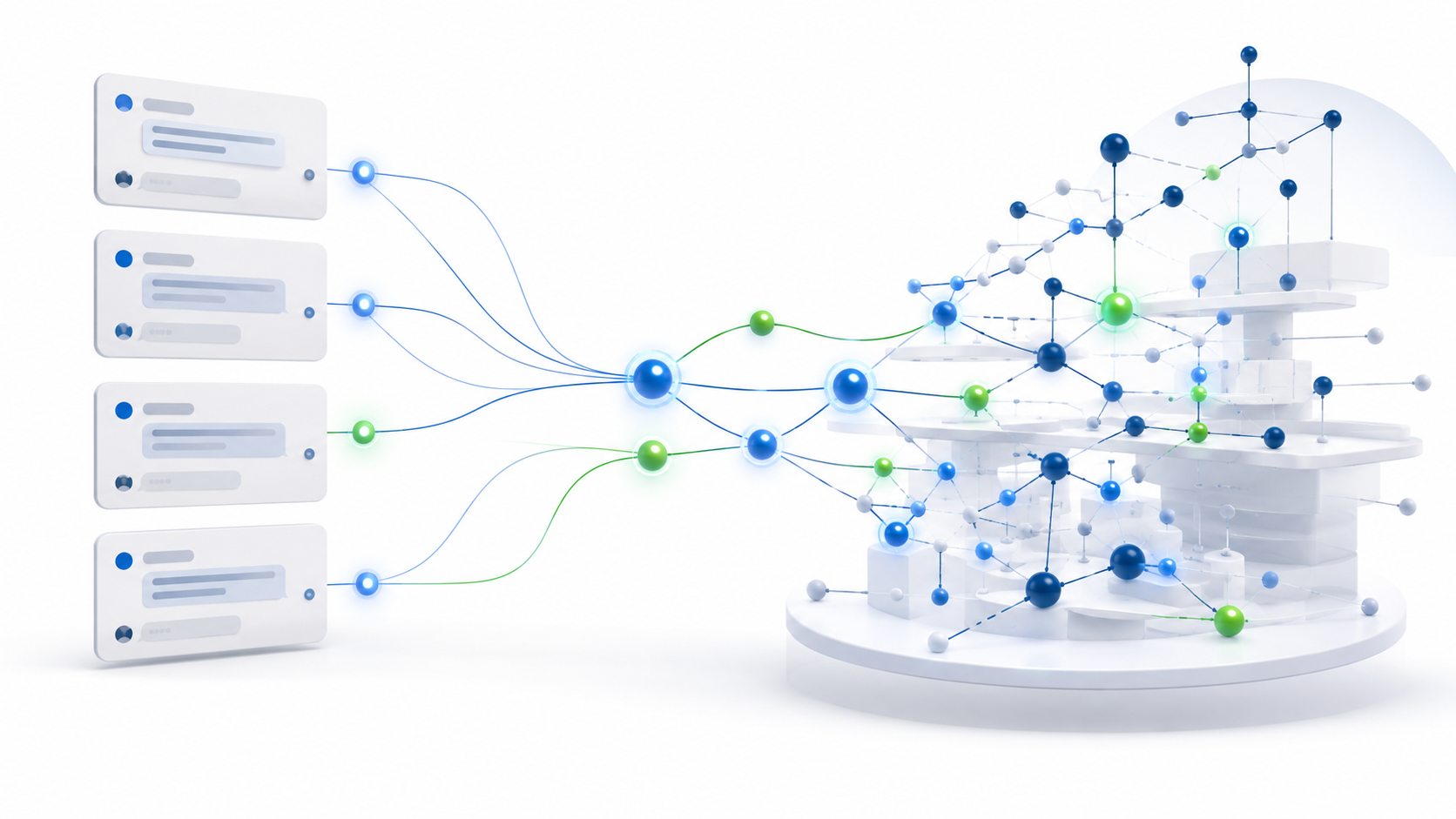
Your AI History Is Not Yet a Knowledge System
AI platforms can preserve, search, and export conversations. But a collection of retrievable chats does not preserve how a person’s ideas, evidence, corrections, decisions, and outputs develop across conversations and platforms. That requires continuity.
Corporate Operational Knowledge
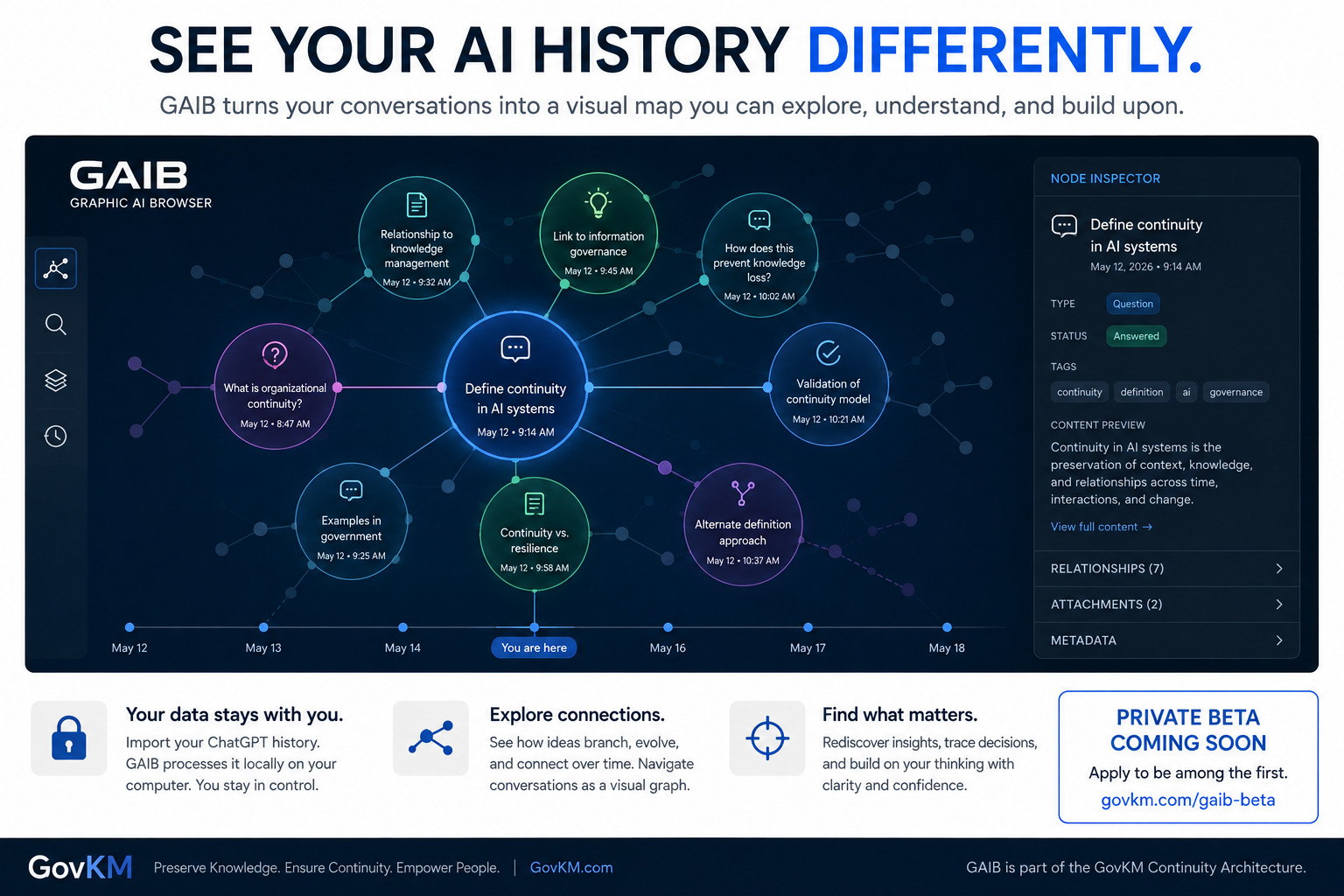
Your AI History Is Becoming Memory. Why Can't You See It?
Heavy AI users are accumulating valuable reasoning, decisions, corrections, and unfinished work inside linear chat histories. GovKM is preparing GAIB—the Graphic AI Browser—for a small private beta that turns supported AI history into a locally processed visual environment users can navigate and inspect.
Organizational Continuity
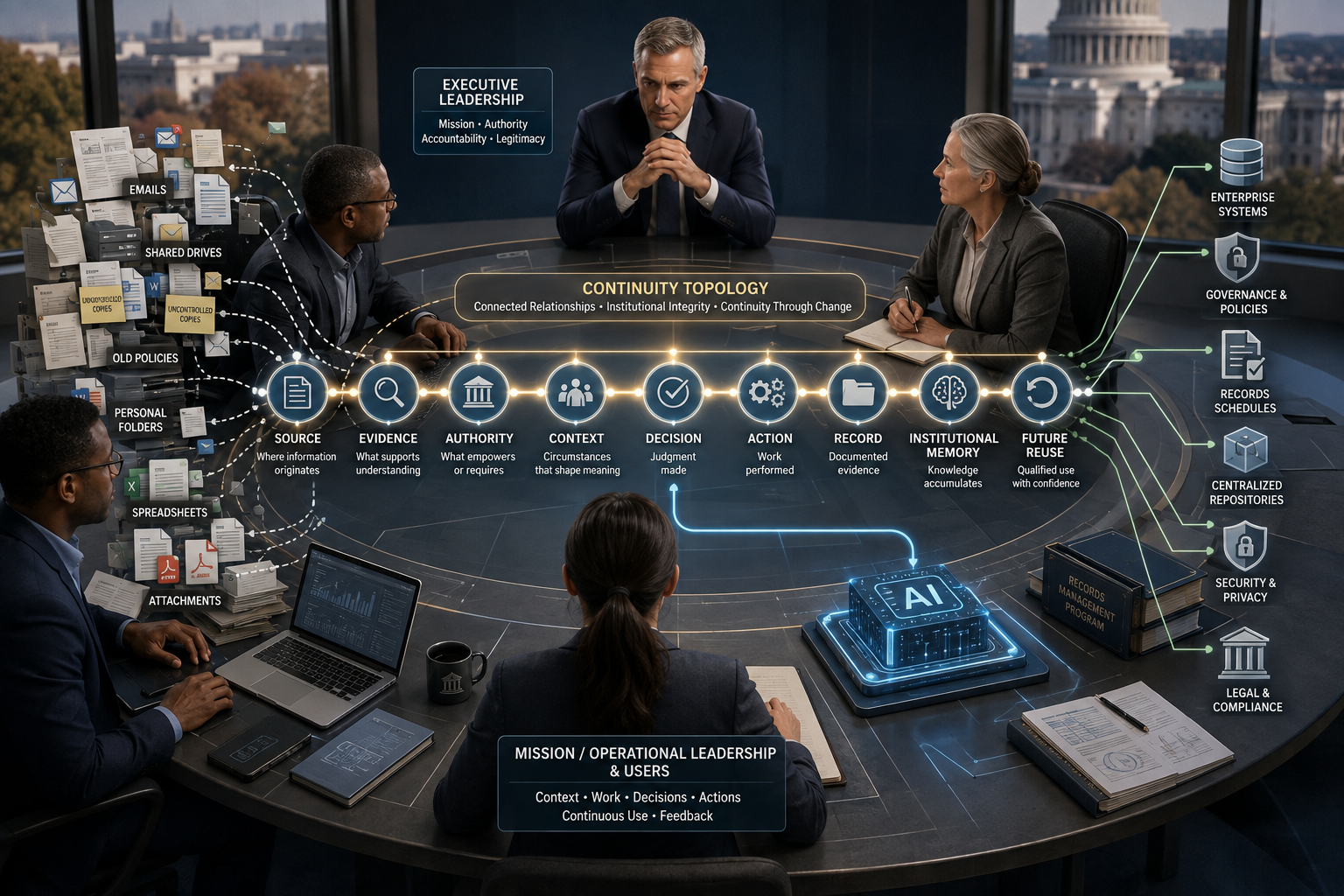
The Institution Must Agree Before the AI Can Know
Organizations already possess most of the information AI needs. What they often lack are durable relationships connecting sources, evidence, authority, context, decisions, actions, records, institutional memory, and future reuse. As AI replaces work once performed by people who informally carried those relationships, Continuity becomes an institutional mandate. GovKM proposes a Continuity Compact among executive leadership, technology, records management, mission leadership, and users to establish the authoritative information environment that humans and AI require to act legitimately through organizational change.
Organizational Continuity
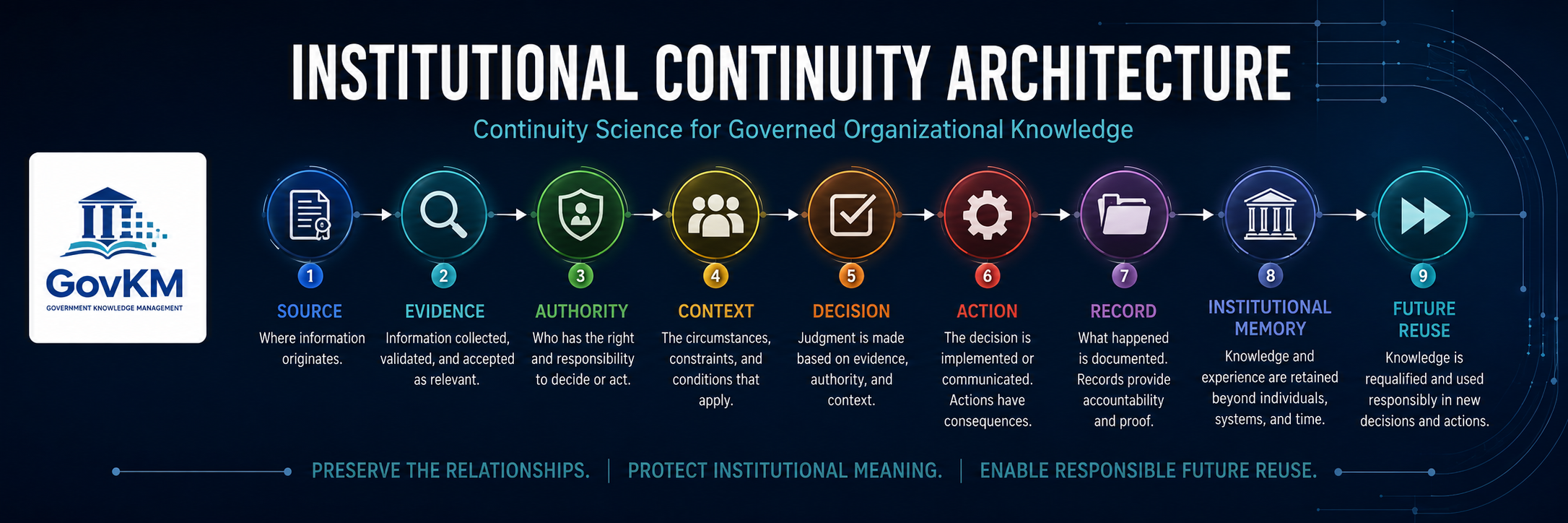
The Continuity Topology: How Institutional Knowledge Remains Trustworthy Across Time
A framework for preserving the relationships between sources, evidence, authority, context, decisions, actions, records, institutional memory, and future reuse
Governance Architecture
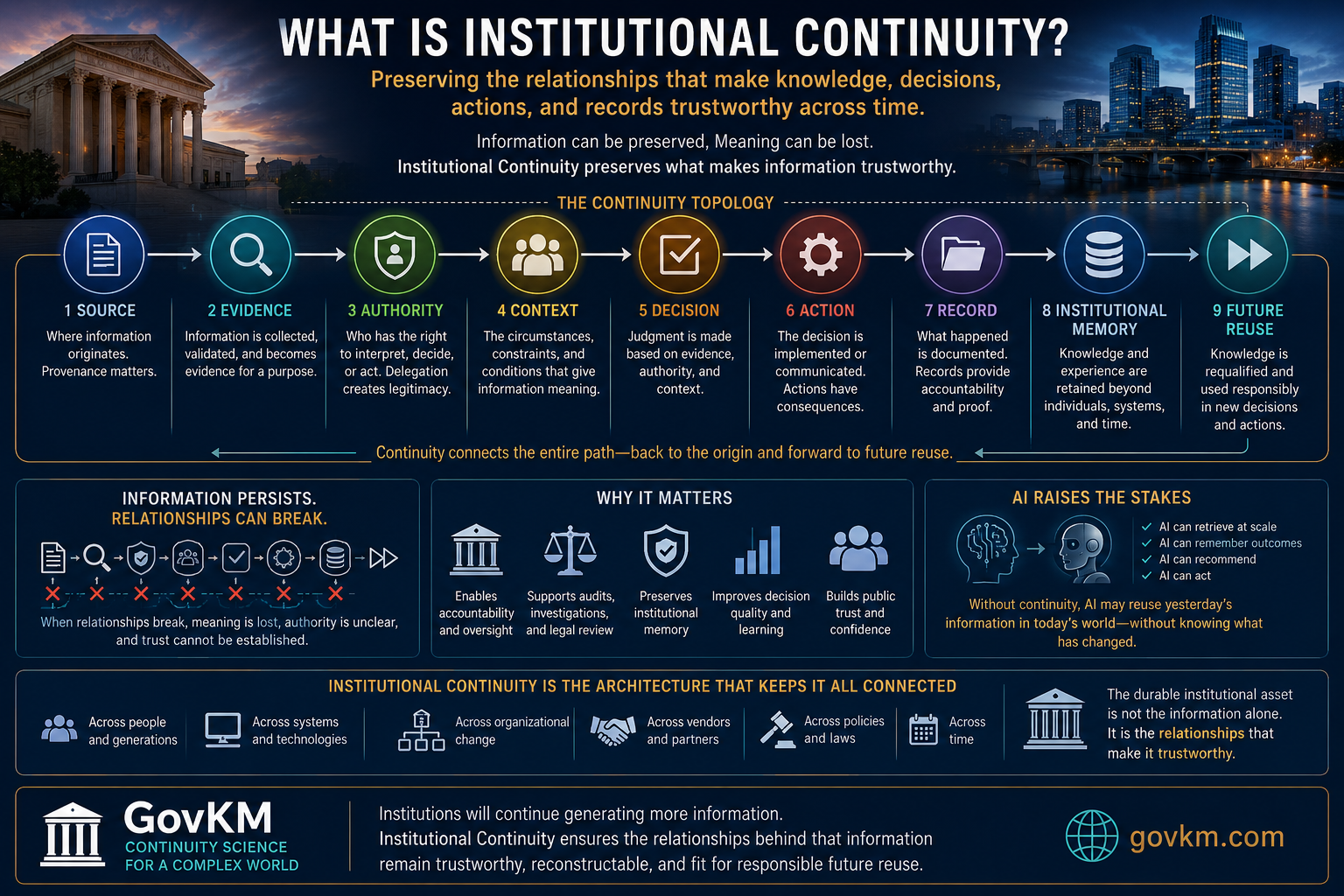
What Is Institutional Continuity?
Why preserving information is not enough—and why institutions must preserve the relationships that make knowledge trustworthy across time.
ARTICLES
Latest Research and Articles
Browse GovKM research, implementation guidance, continuity science, governance architecture, AI readiness, and organizational continuity.
AI Governance
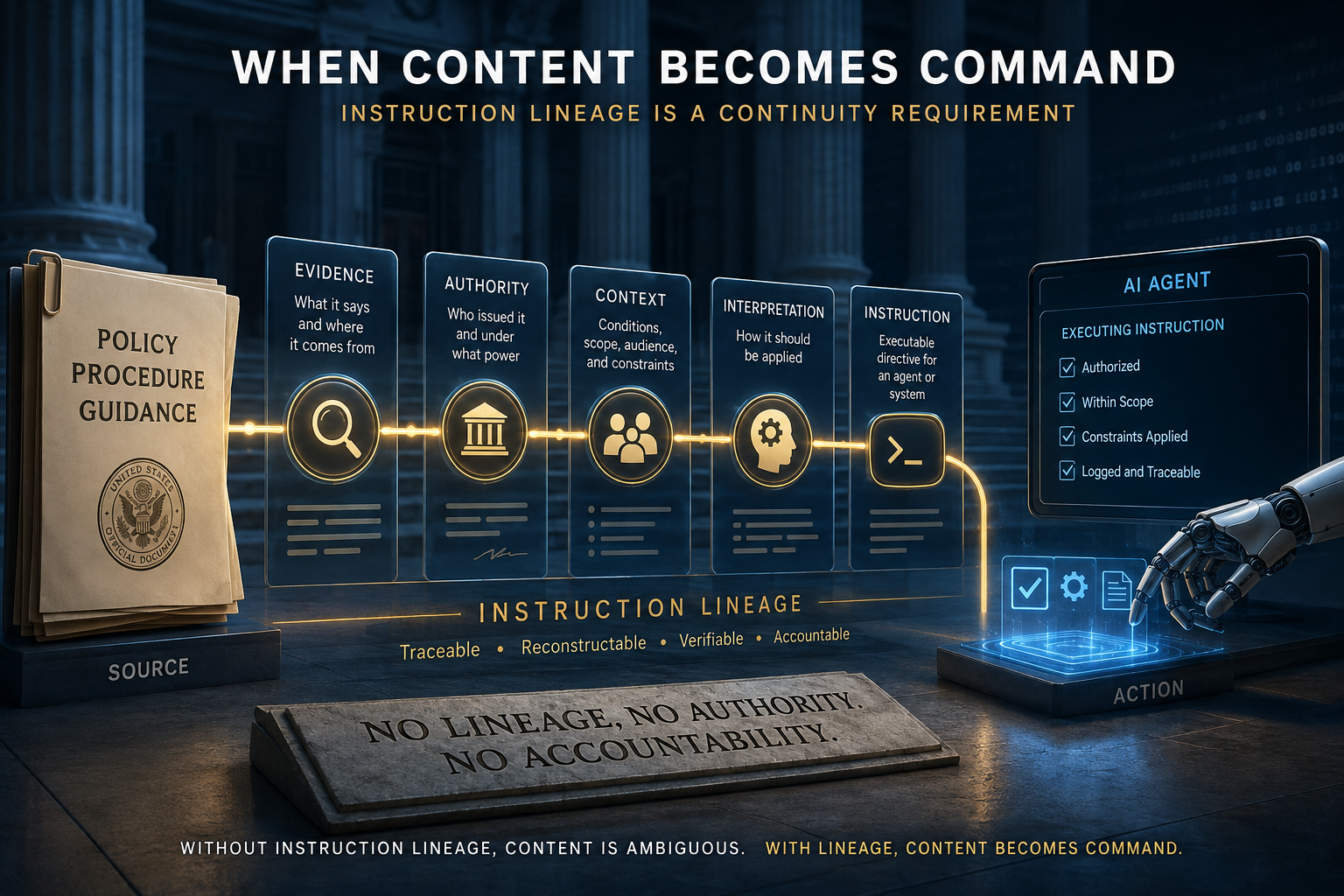
When Content Becomes Command: AI Agents Need Instruction Lineage
Indirect prompt injection exposes a deeper institutional problem: AI contexts mix evidence and commands without reliably preserving which sources possess authority to instruct action. Trustworthy agents need instruction lineage so content cannot silently become command.
Records Governance
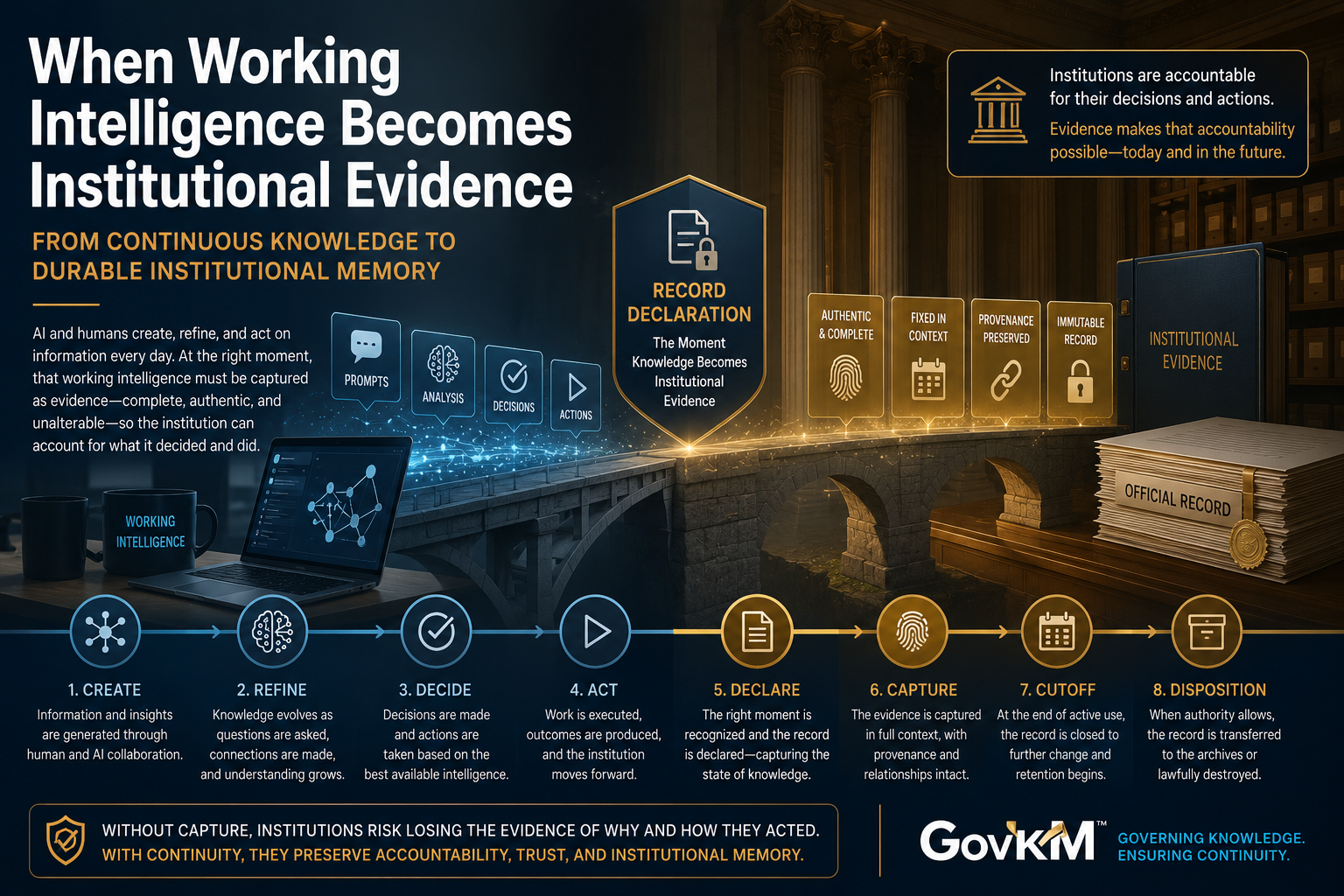
When Working Intelligence Becomes Institutional Evidence
AI-assisted work can remain fluid while analysis is developing, but institutional action eventually requires a durable evidentiary state. Continuity depends on making that transition explicit without confusing record capture, cutoff, retention, and final disposition.
AI Governance
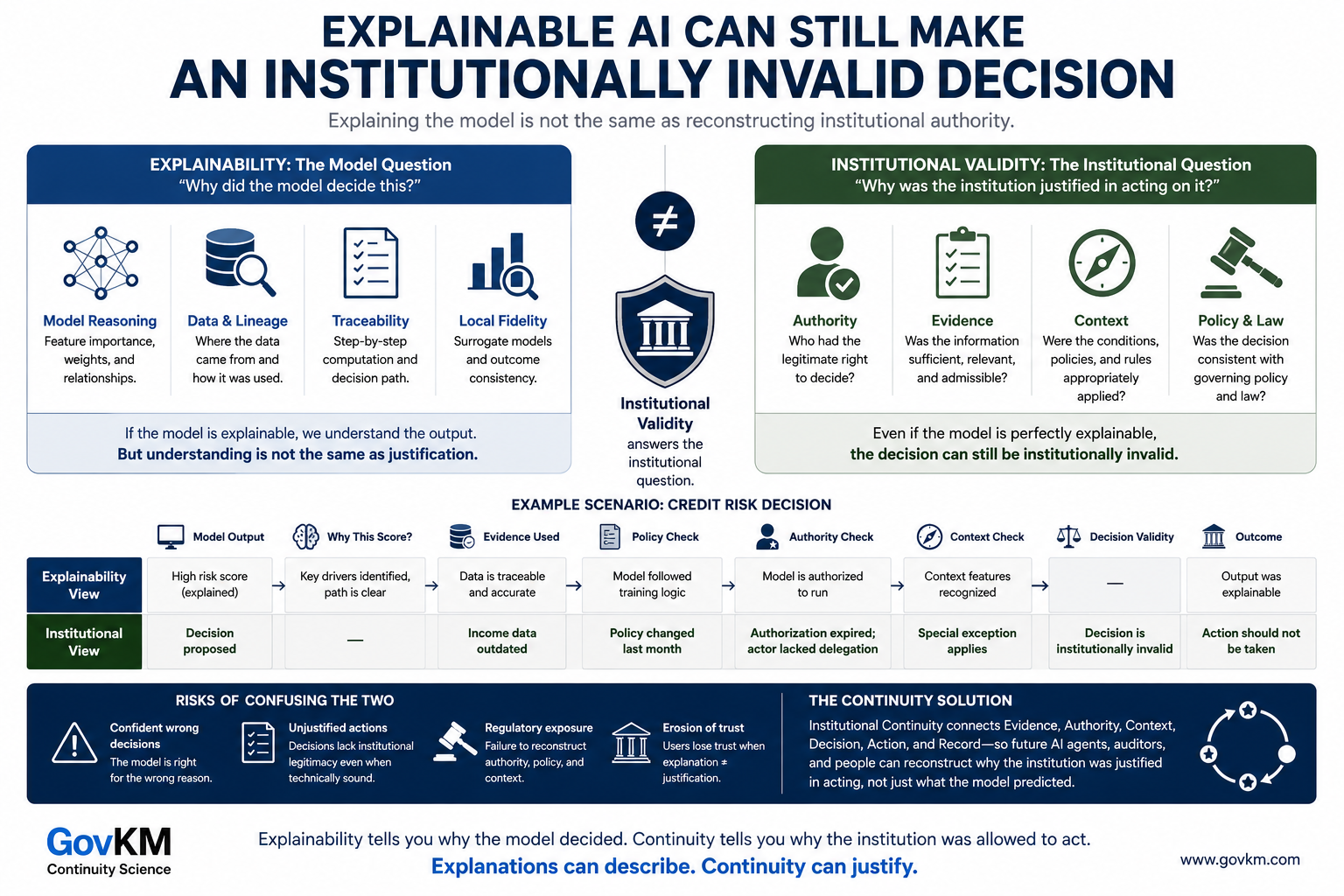
Explainable AI Can Still Make an Institutionally Invalid Decision
AI explainability can reveal why a model produced an output without establishing whether the institution was justified in acting on it. Institutional validity requires the surrounding evidence, authority, context, decision, action, and record to remain reconstructable.
Records Governance
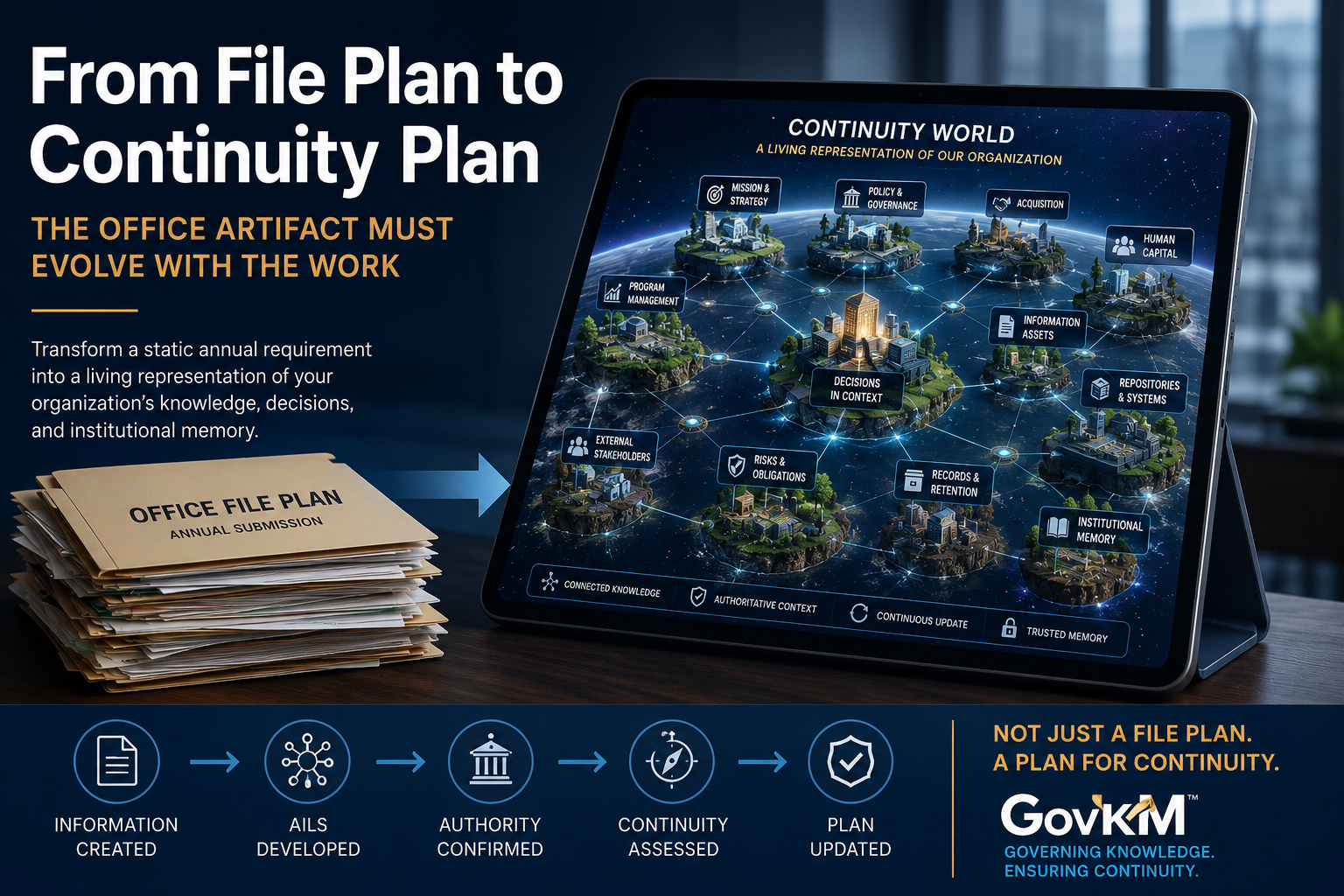
From File Plan to Continuity Plan: The Office Artifact Must Evolve With the Work
Federal file plans already connect office records to disposition authority. Continuity requires the same artifact to remain current as functions, systems, record series, and information domains change—and to distinguish the legal schedule from the operational view built on top of it.
Artificial Intelligence and Institutional Continuity
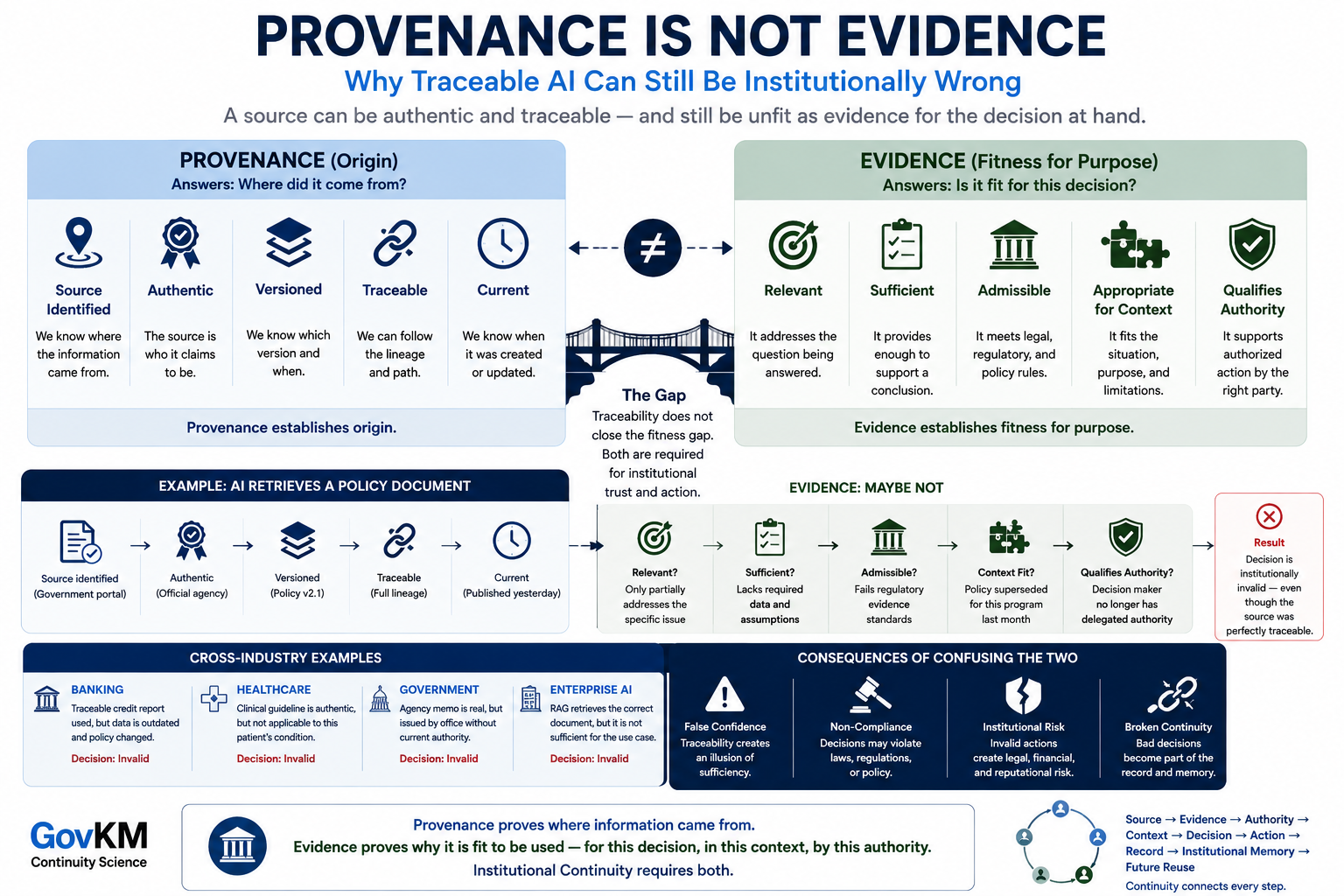
Provenance Is Not Evidence: Why Traceable AI Can Still Be Institutionally Wrong
Provenance proves where information came from; it does not prove that the information is sufficient, authorized, or contextually appropriate evidence for a particular institutional decision. Trustworthy AI must preserve the transition from Source to Evidence and then qualify that evidence through Authority and Context.
Continuity Research
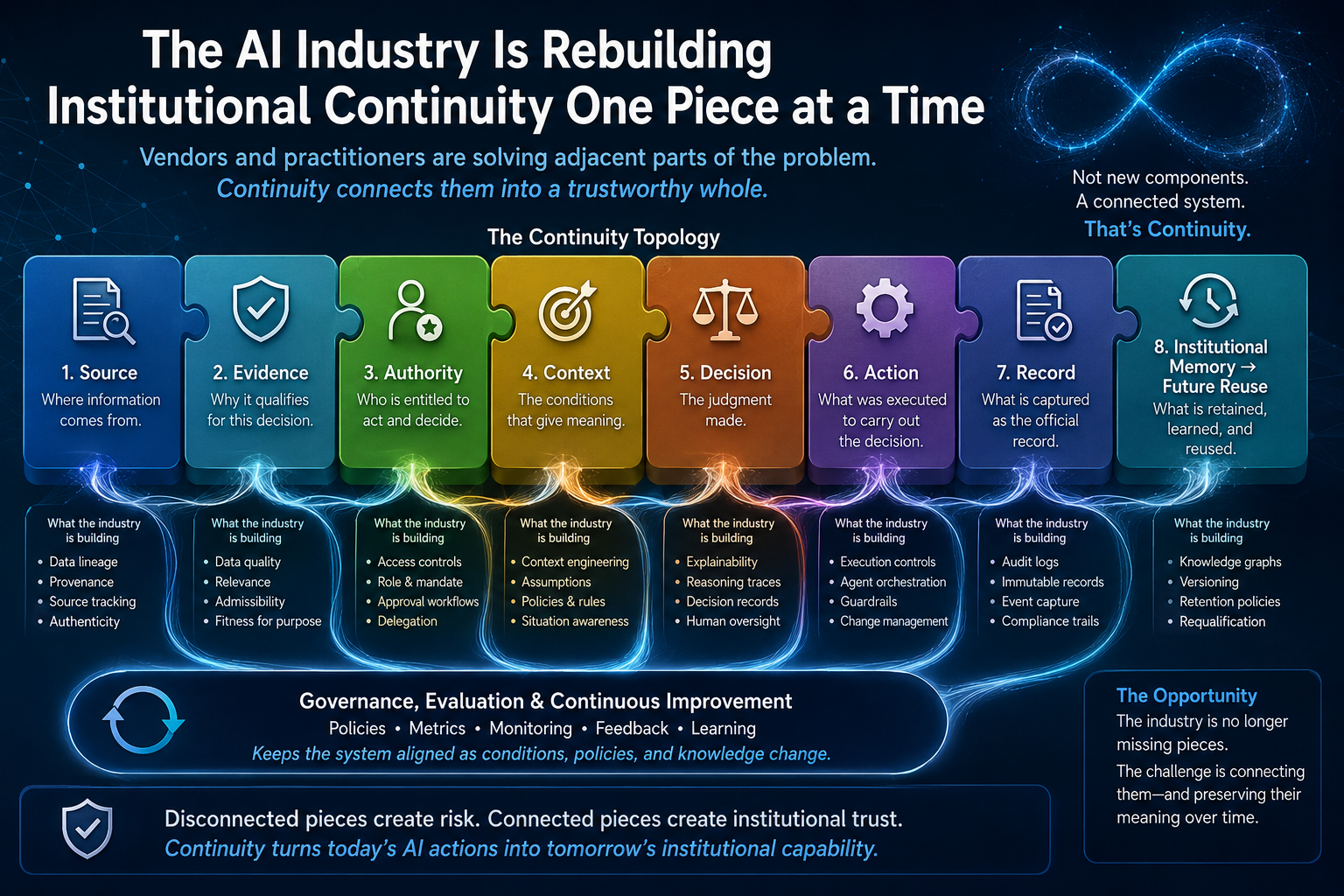
The AI Industry Is Rebuilding Institutional Continuity One Piece at a Time
Across enterprise AI, practitioners are independently building solutions for provenance, authority, context, explainability, execution, records, and memory. GovKM finds that these point solutions repeatedly map to different elements and adjacent relationships of the Continuity Topology, suggesting that the market is assembling Institutional Continuity in pieces without yet naming the connective architecture.
Artificial Intelligence and Institutional Continuity
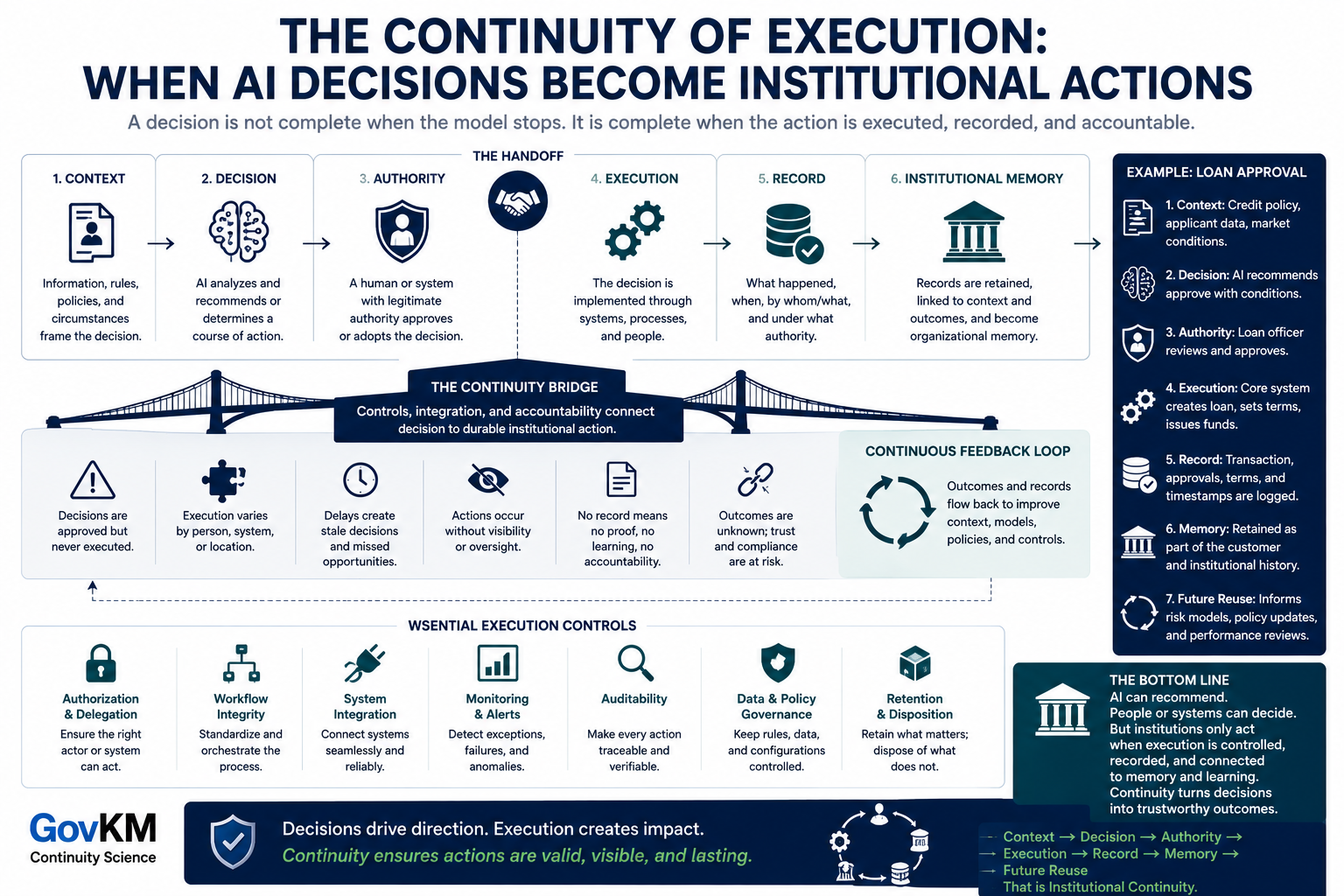
The Continuity of Execution: When AI Decisions Become Institutional Actions
As AI agents move from reasoning to real-world execution, governance must preserve the continuity between authorized decisions, runtime conditions, actual actions, and durable records. A correct decision is not enough if the executed action cannot be proven to have remained authorized, bounded, and reconstructable.
AI Governance
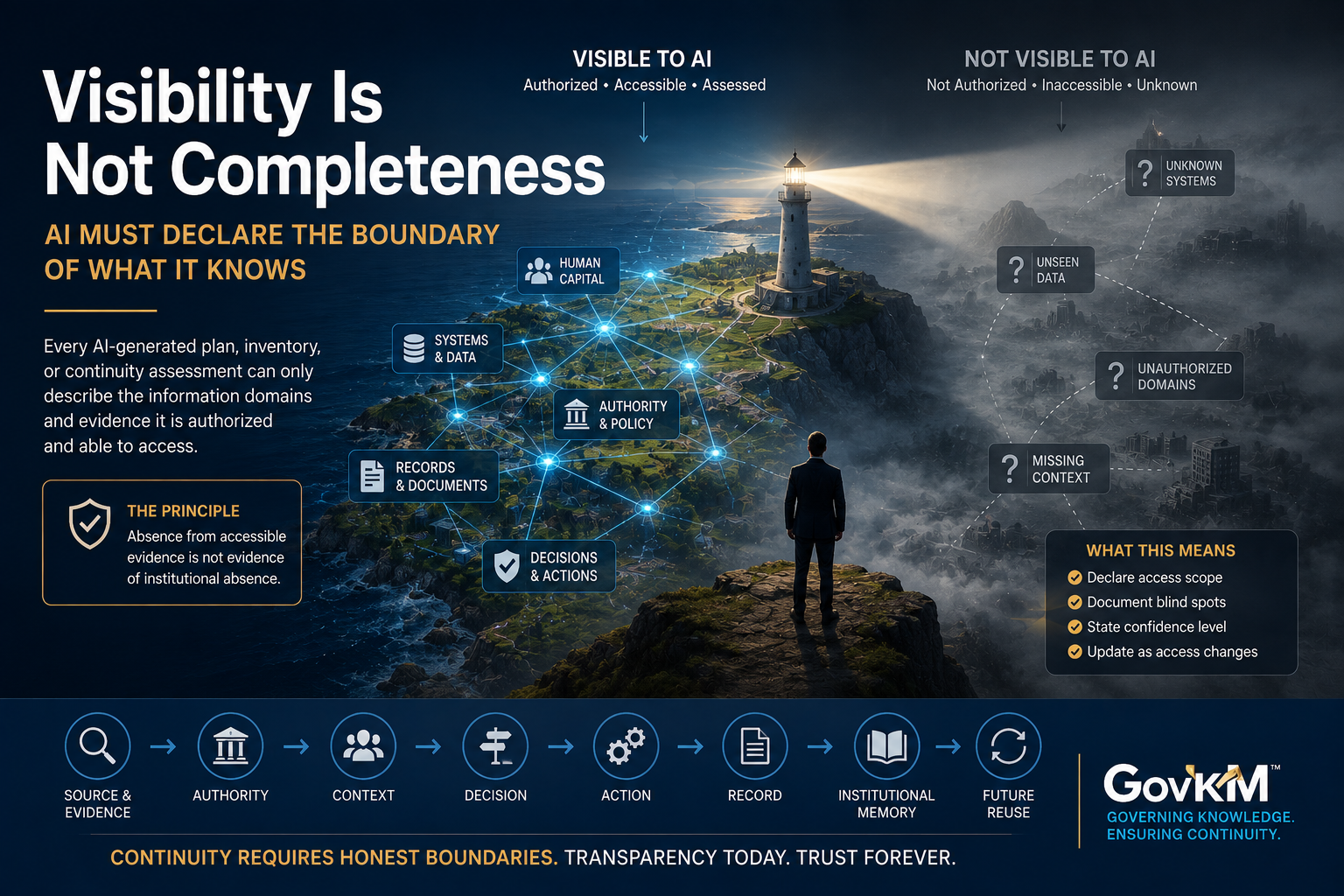
Visibility Is Not Completeness: AI Must Declare the Boundary of What It Knows
An AI system can only characterize the institutional environment represented in the evidence and systems it is authorized to access. Continuity claims therefore need explicit coverage boundaries so absence from visible evidence is never mistaken for absence from the institution.
Government AI
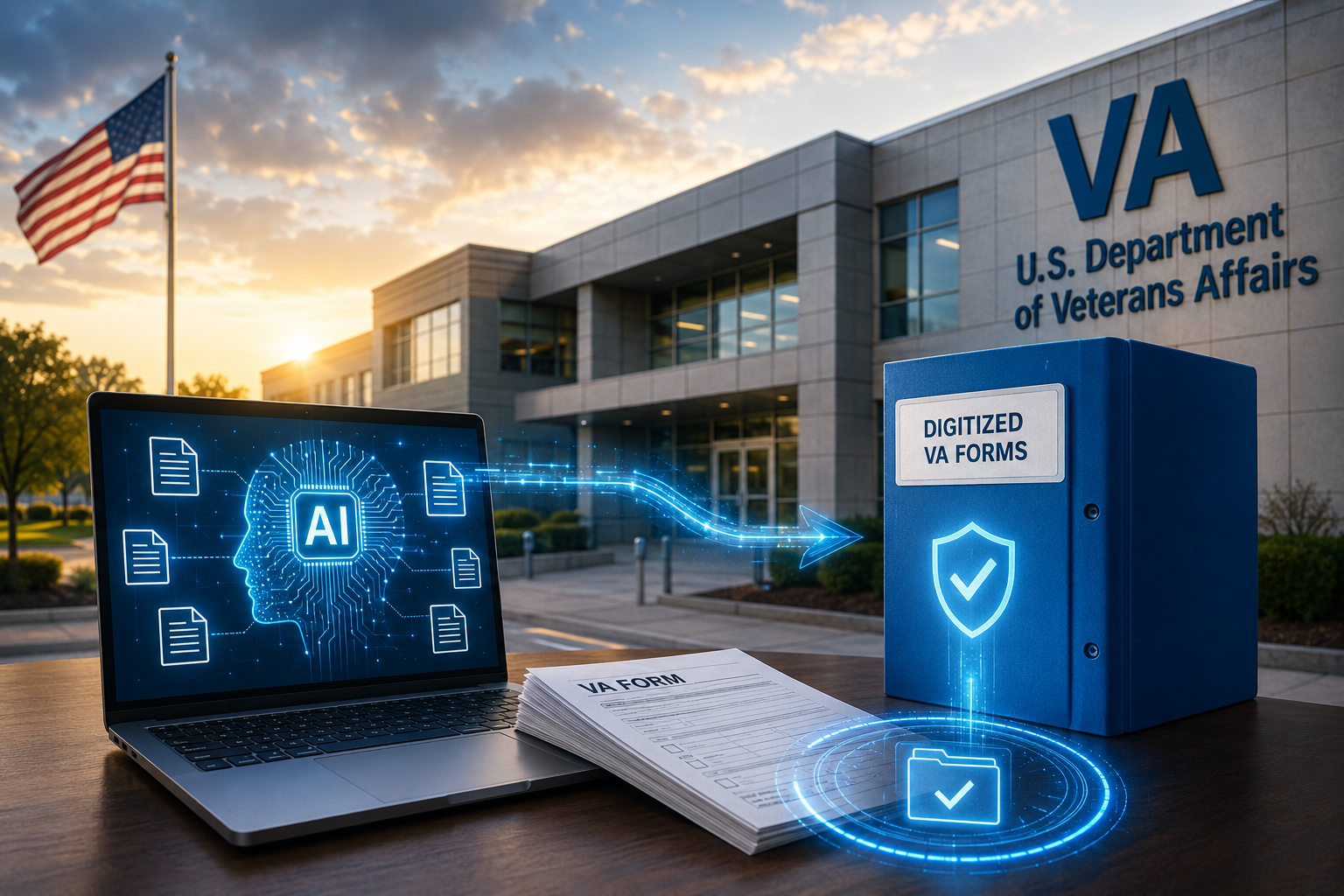
When AI Modernization Succeeds, What Happens to the Knowledge It Replaces?
The Department of Veterans Affairs' $7.4 million AI-supported effort to digitize and centralize forms demonstrates how government modernization can produce measurable public value, with the Technology Modernization Fund estimating more than 2,000 years of veteran time saved. GovKM examines the deeper question raised by that success: whether the evidence, authority, context, decisions, actions, and records behind today's modernization will remain connected well enough to become trustworthy Institutional Memory. Successful modernization improves current services; Institutional Continuity determines whether the institution can understand, govern, and responsibly reuse that success after its systems, policies, models, and people change.
next step
Continue Your Continuity Journey
Explore the GovKM Continuity Framework or connect with GovKM to discuss your organization’s continuity, governance, and AI-readiness priorities.
FRAMEWORK
Explore the GovKM Continuity Framework
Understand the domains, relationships, principles, and implementation architecture that support organizational continuity.
CONNECT
Talk With GovKM
Discuss organizational continuity, AI readiness, governance architecture, research collaboration, or implementation priorities.